

If you are searching for ProProfs alternatives in 2026, something has probably shifted in your organization.
Maybe your training programs have expanded. Maybe you need better reporting for leadership. Maybe your learners expect more interaction than simple quizzes and static modules. Or maybe pricing, integrations, or scalability are starting to matter more than they did a year ago.
ProProfs works well for straightforward training and assessments. As learning teams grow, so do their requirements: more structured learning paths, stronger compliance tracking, better automation, deeper analytics, and in some cases built-in monetization for selling courses.
This guide breaks down the 12 best ProProfs alternatives for 2026, with a clear look at who each platform is built for and where it performs best. Whether you manage corporate L&D, compliance programs, customer education, or a revenue-generating course business, the comparisons below help you choose the right fit.
Here is the breakdown.
Why Organizations Are Searching for ProProfs Alternatives in 2026
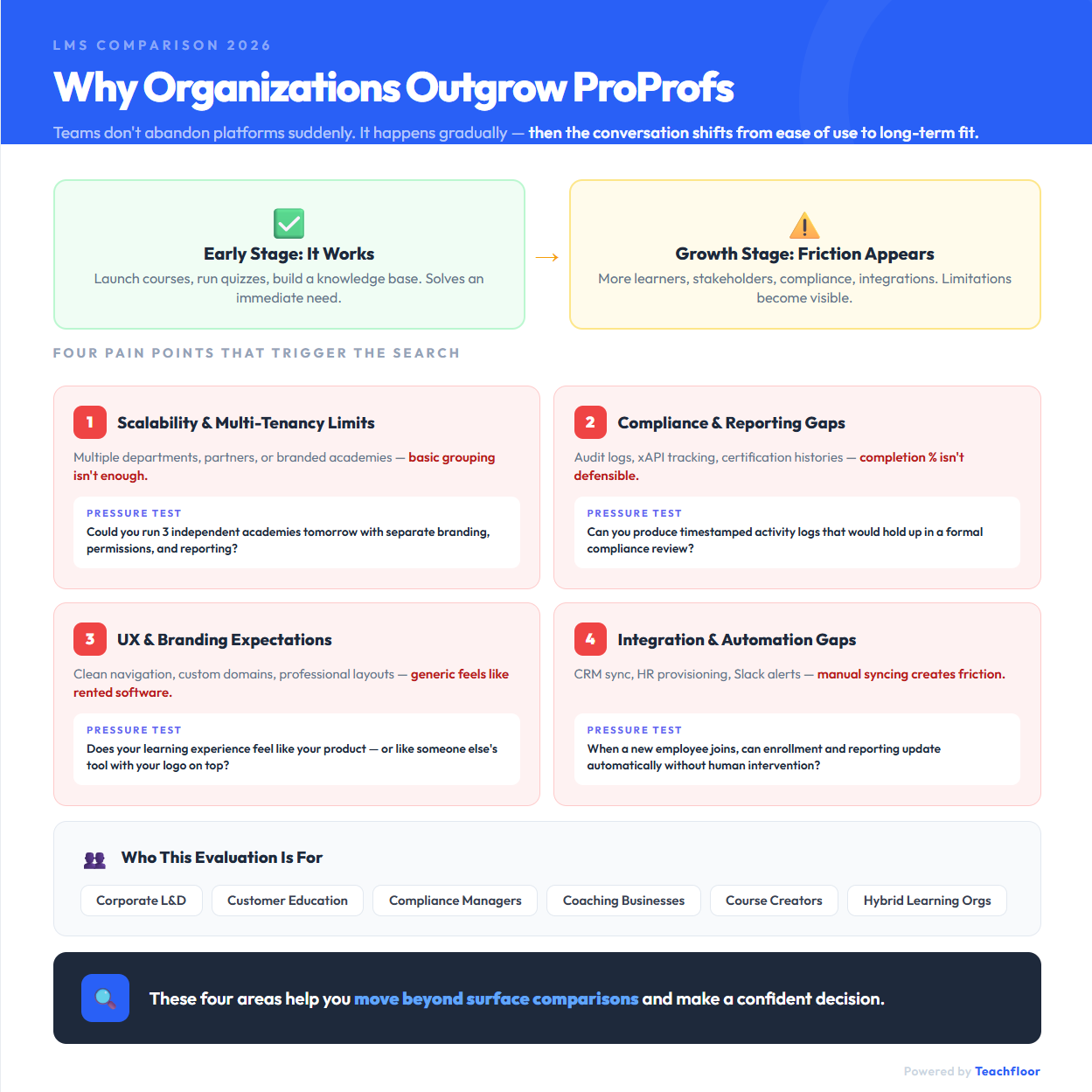
Most teams do not abandon a platform suddenly. It happens gradually.
At first, ProProfs works well. You launch courses, run quizzes, build a small knowledge base. It solves an immediate need.
Then the organization grows. More learners. More stakeholders. More compliance exposure. More systems to connect. That is when the conversation shifts from ease of use to long-term fit, and when teams begin seriously exploring ProProfs alternatives.
Scalability and Multi-Tenancy Limitations
Managing one training space is straightforward. Managing multiple departments, external partners, and branded academies under one structure is not.
Leaders start asking practical questions.
Can each department operate independently?
Can reporting be segmented without exporting spreadsheets?
Can branding differ across business units?
Basic grouping features often work early on. But when training expands across regions or revenue lines, structural limitations become visible.
What to pressure-test: If you needed to run three fully independent academies tomorrow, could your platform handle separate branding, permissions, and reporting without duplicating work?
Advanced Compliance and Reporting Needs
In regulated environments, training is not just educational. It is defensible documentation.
Compliance teams often require detailed SCORM or xAPI tracking, audit logs, version histories, and exportable certification records. A simple completion percentage is rarely enough.
When internal audits become more frequent or external reviews more demanding, reporting depth becomes critical.
What to pressure-test: Can your system produce timestamped activity logs and certification histories that would hold up in a formal compliance review?
User Experience and Branding Expectations
Training platforms increasingly reflect brand identity.
Employees expect clean navigation and responsive design. Partners expect something that looks professional. Marketing teams want control over white labelling features, such as, domains, layouts, and visual elements.
If the environment feels generic or rigid, it affects perception and engagement.
What to pressure-test: Does your learning experience feel like your product, or like rented software with your logo placed on top?
Integration and Automation Gaps
Learning does not operate in isolation. It connects to CRM systems, HR platforms, and internal communication tools.
Sales leaders want training progress visible inside Salesforce. HR wants automated user provisioning. Teams want Slack alerts instead of manual follow-ups.
When systems require manual syncing, operational friction increases.
What to pressure-test: If a new employee joins today, can enrollment, notifications, and reporting update automatically across your ecosystem without human intervention?
Who This List Is Best For
This evaluation is designed for corporate L&D teams, customer education leaders, compliance managers, coaching businesses, course creators, and hybrid learning organizations that need more structure, flexibility, and scalability than ProProfs may offer.
If you are seriously comparing ProProfs alternatives, these five areas will help you move beyond surface comparisons and make a confident decision.
How We Evaluated the Best ProProfs Alternatives
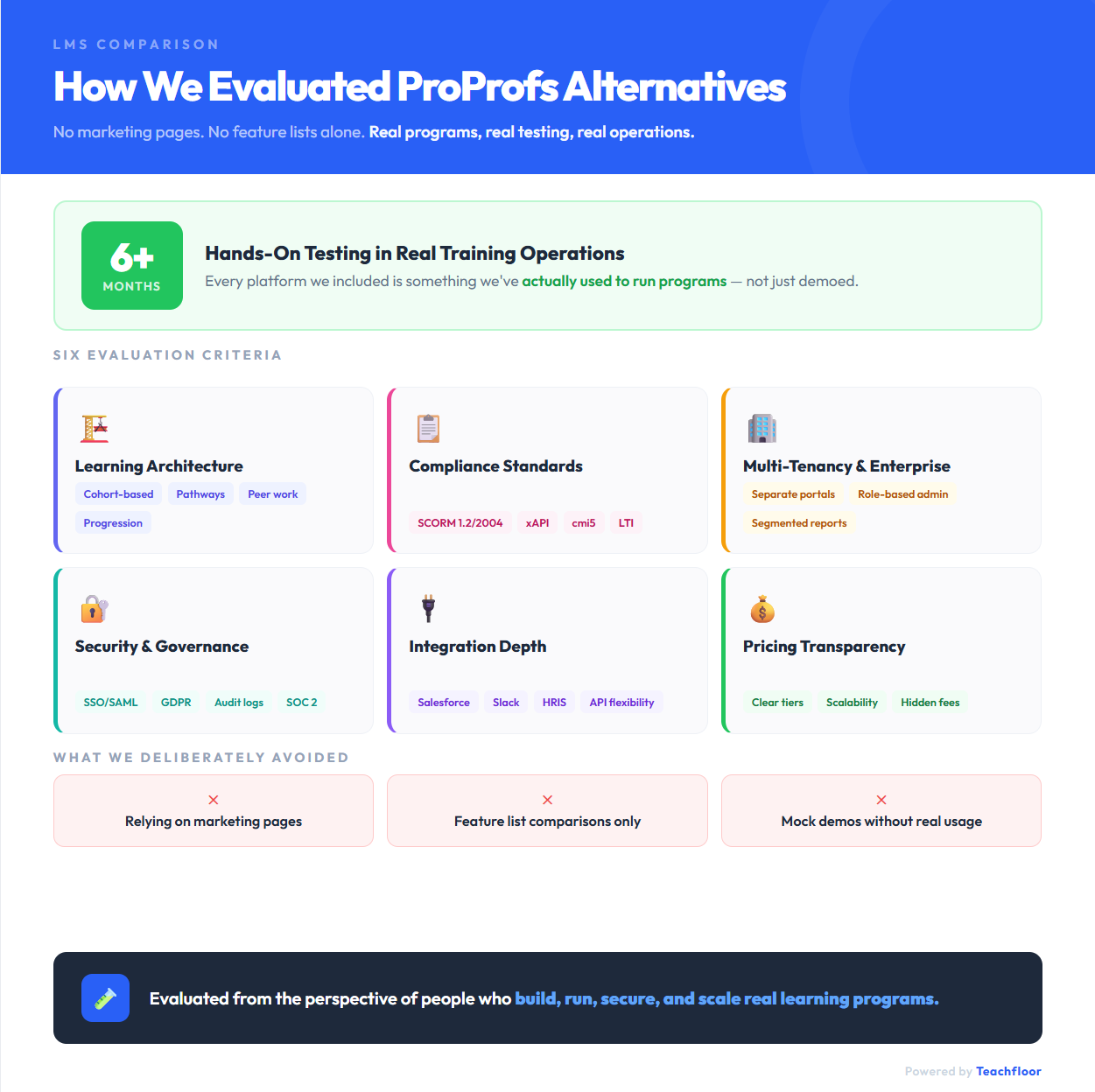
These tools were not picked based on marketing pages or feature lists alone. Each platform in this comparison has been used hands-on for more than six months in real training operations, which shapes a practical, no-fluff view of ProProfs alternatives.
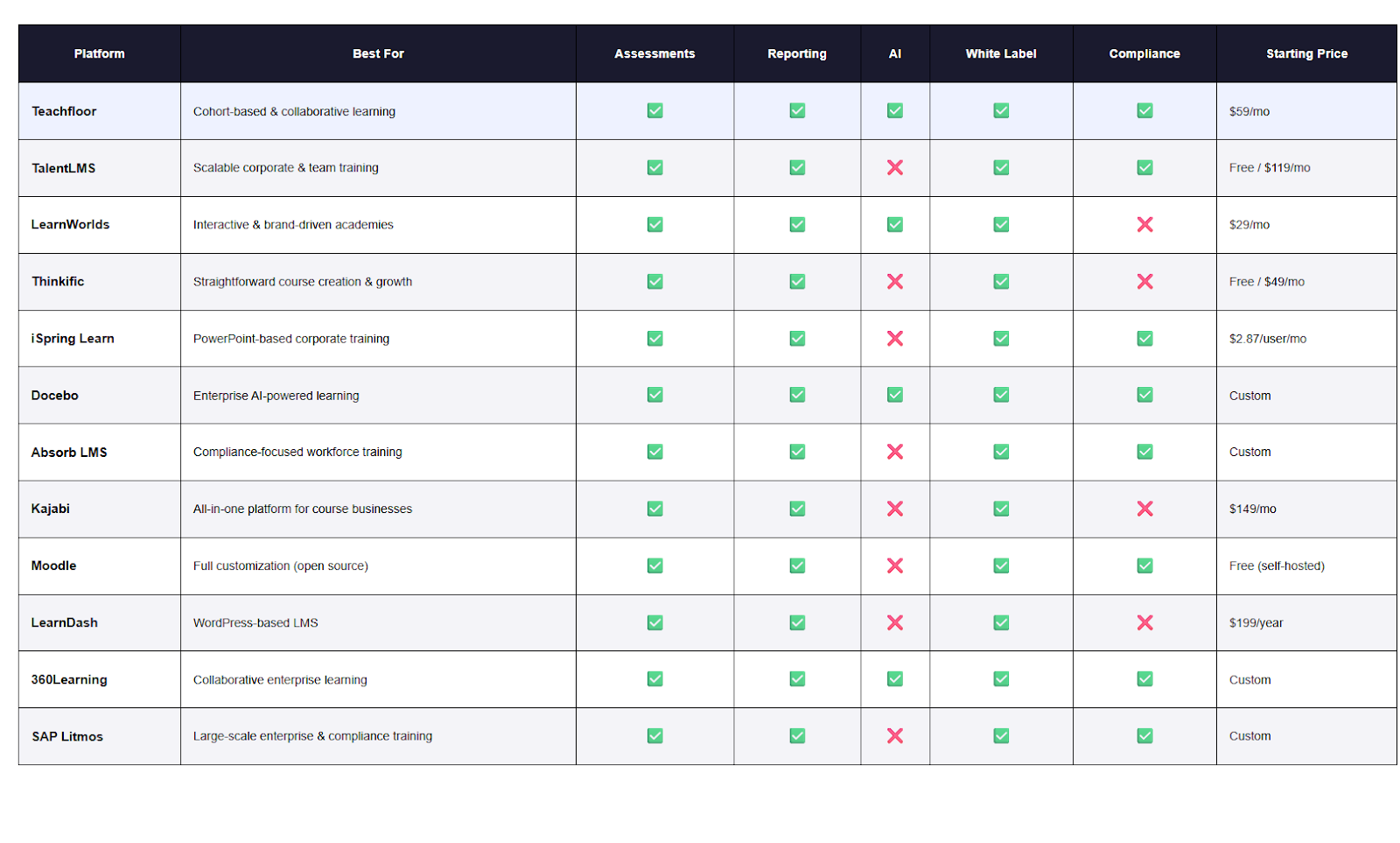
12 Best ProProfs Alternatives for 2026 (Detailed Comparison)
Here is a closer look at the 12 best ProProfs alternatives shortlisted for 2026. Each platform was tested hands-on for six months to a year, so these recommendations come from real usage, not surface-level research.
Teachfloor (Best for Cohort Based and Collaborative Learning)
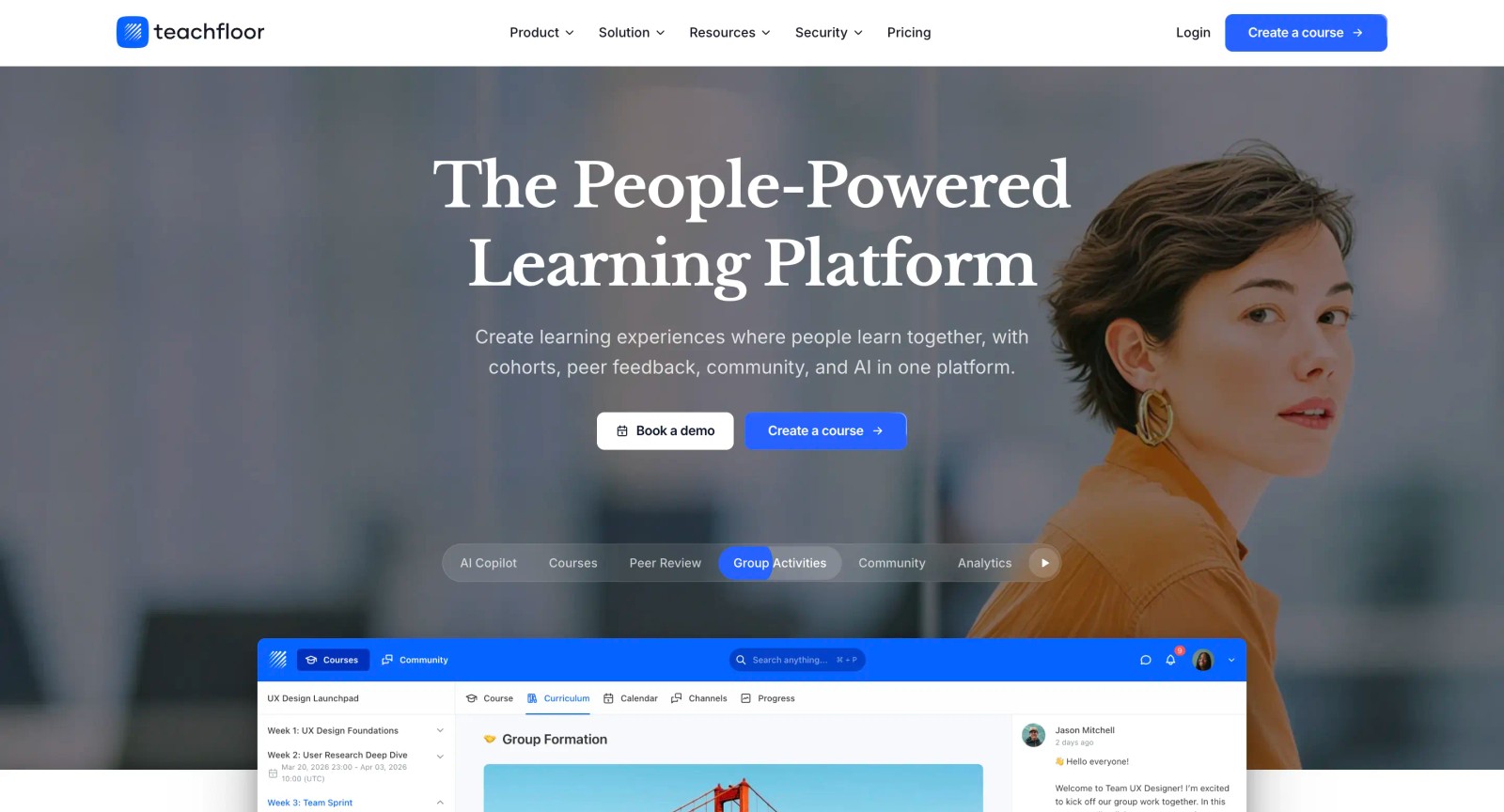
Teachfloor ranks first because it is built around structured, interactive learning journeys rather than simple course hosting. It supports collaboration, evaluation cycles, and blended formats from day one, which suits teams that want guided progression and deeper engagement instead of one-off quizzes.
Best for: Corporate training teams, bootcamps, higher education programs, and coaching businesses that want cohort-based learning with strong collaboration and feedback loops.
Teachfloor is a learning platform built for academies, corporate L&D teams, universities, and coaching businesses running structured programs. It combines cohort-based delivery with self-paced modules and layered evaluation workflows. The platform centers on curriculum design and learner interaction instead of standalone quizzes.
Standout features
Teachfloor includes a wide range of activity tools that allow you to design full learning journeys.
- Cohort management: Organize learners into time-bound groups with defined start and end dates. This allows you to run structured programs that move learners forward together.
- Blended learning support: Combine live sessions and self-paced content within the same curriculum. You can embed Zoom meetings or add meeting links directly inside modules.
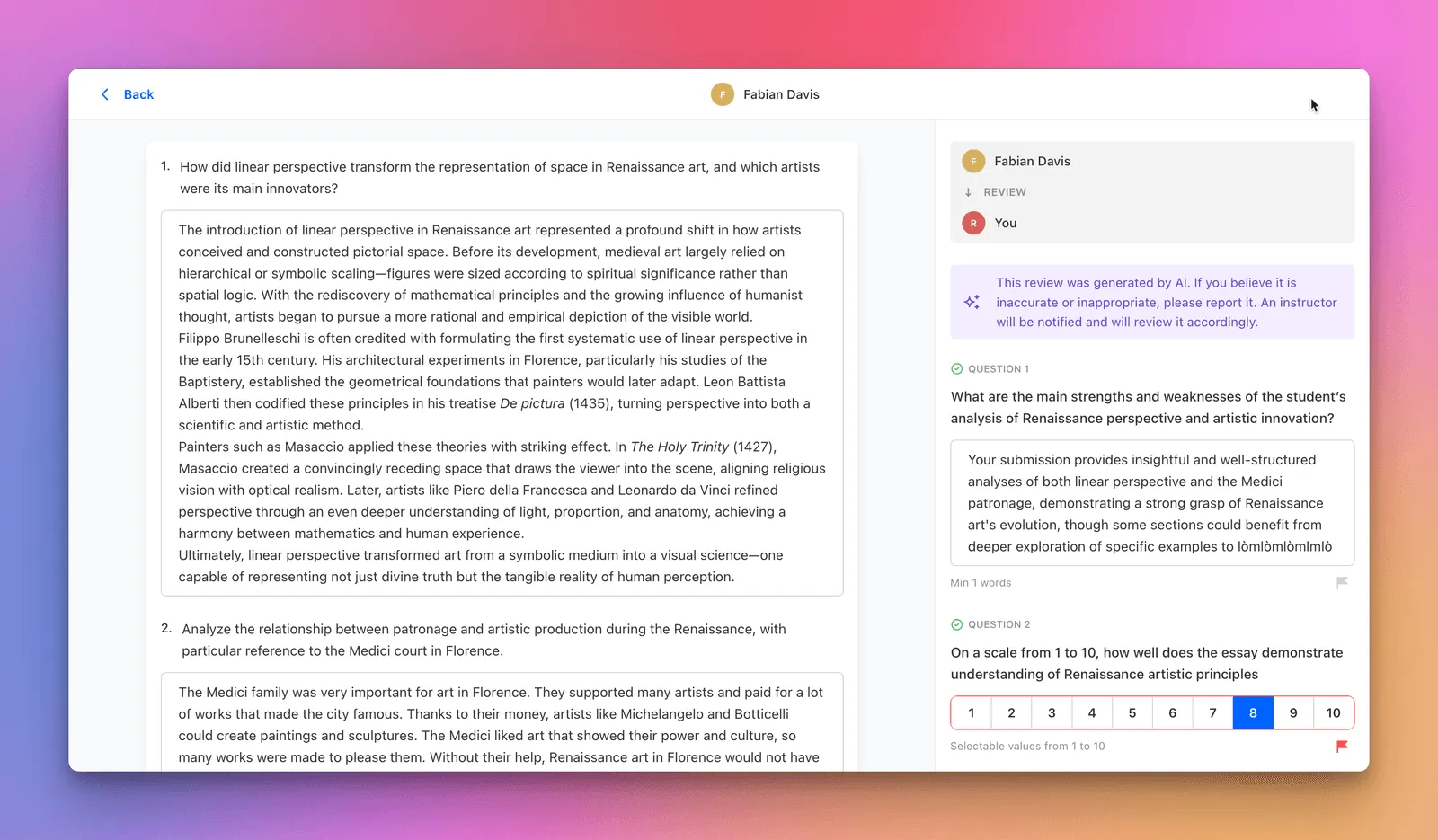
- Peer Review workflows: Learners can submit assignments and review each other’s work using structured rubrics. This supports critical thinking and collaborative learning.
- Self Review and Feedback Reflection: After peer or instructor feedback, learners can reflect on input and resubmit or document improvements, creating a full evaluation cycle.
- Discussion activities: Built directly into modules so conversation becomes part of the learning path rather than a separate forum.
- Structured curriculum builder: Organize courses into modules with clear sequencing, prerequisites, and activity flows.
- Activity tools: Add Content pages, Videos, SCORM packages, Embeds, File uploads, Checklists, Certificates, Tags, and Scoring elements to design varied learning experiences.
- Assignment submissions and grading controls: Instructors can grade work, provide feedback, and manage evaluation criteria inside the platform.
- Automated certificate generation: Issue certificates based on completion rules without manual processing.
- Learner impersonation: Admins can view the platform from a learner’s perspective to troubleshoot issues quickly.
- TeachAI support: AI assistance helps streamline content creation and instructional workflows.
- Progress tracking: Monitor learner activity and completion within structured programs.
Where Teachfloor outperforms ProProfs
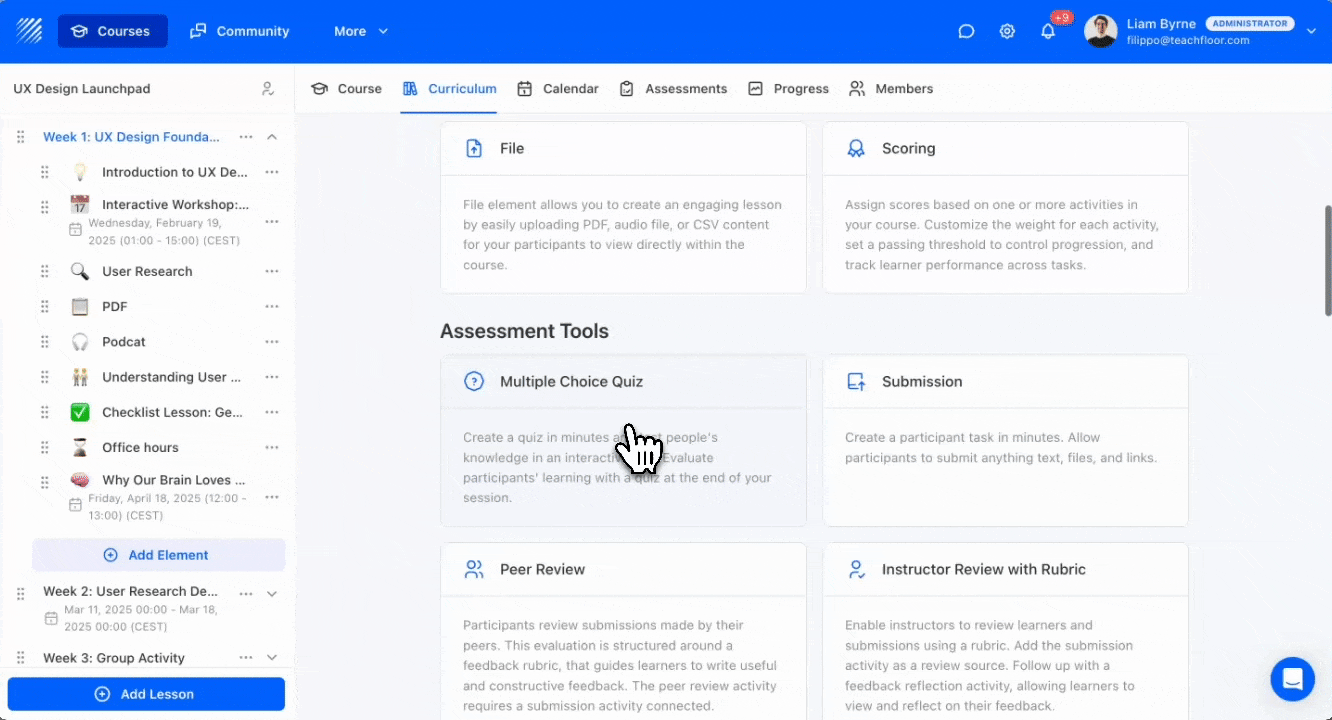
Teachfloor excels in structured social learning. While ProProfs focuses heavily on quizzes and straightforward delivery, Teachfloor enables layered assignments, peer evaluation, and cohort progression. It is better suited for programs that require collaboration and competency-based assessment.
Potential drawbacks
Teams looking for quick, lightweight quiz deployment may find Teachfloor more structured than necessary. It works best when instructional design is intentional.
Pricing overview
Teachfloor’s paid plans typically start at around $59 per month for smaller programs. Higher tiers increase based on active learners, advanced features, branding, and admin controls. Enterprise plans include SSO, API access, and custom integrations.
Insight: A free trial is available for teams that want to test the platform before committing.
TalentLMS (Best for Scalable Corporate and Team Training)
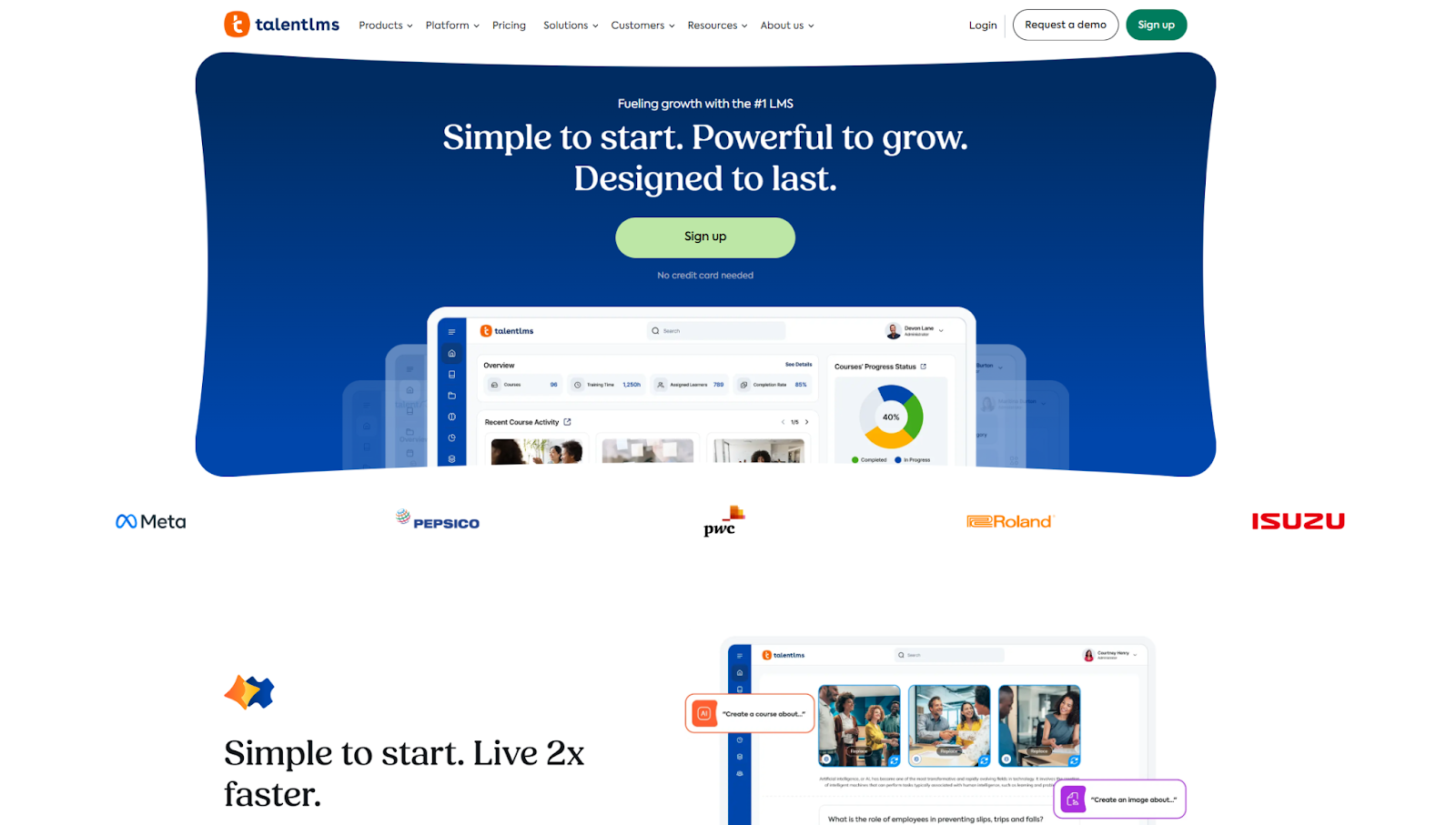
TalentLMS is a cloud-based learning management system used by tens of thousands of organizations to train employees, partners, and customers. It focuses on making course creation and delivery straightforward while still providing enough power for structured programs and team segmentation.
Best for: Corporate L&D teams, HR training programs, onboarding workflows, partner training, and organizations that need an easy-to-manage LMS with solid reporting.
Standout features
Below are the features that matter most for organizations comparing ProProfs alternatives:
- Intuitive course builder: Lets teams create, organize, and publish courses quickly, even without instructional design expertise.
- Learner portal and segmentation: Personalized dashboards and audience branches help tailor training for different roles and teams.
- Assessments and gamification: Built-in tests, quizzes, badges, and leaderboards encourage learner engagement.
- Progress tracking and reporting: Track completion, quiz results, and overall participation with exportable reports.
- Blended and mobile learning support: Mix live sessions with self-paced modules and enable mobile access for learners on the go.
- Integrations: Connect with Zoom, Salesforce, HR systems, and other tools via API or native connectors.
Where it outperforms ProProfs
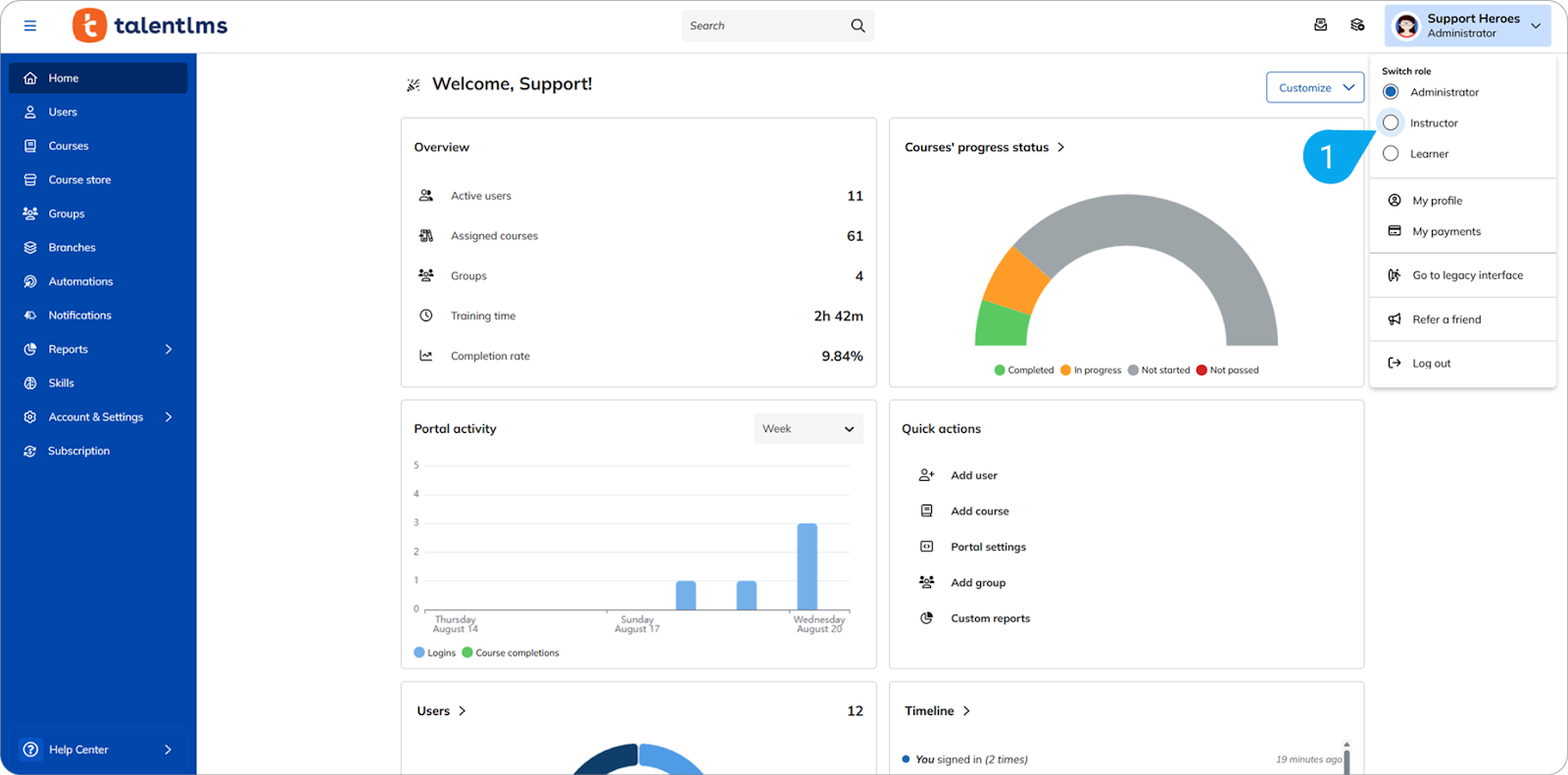
TalentLMS offers stronger learner segmentation, more strong progress tracking, and a clearer course creation experience than ProProfs. Its gamification features and learner portal also help boost engagement for larger teams.
Potential drawbacks
Some teams find customization options and advanced reporting limited compared to higher-end LMS platforms. A few reviewers also mention that deeper analytics and UI polish could be improved.
Pricing overview
TalentLMS has a free plan for up to 5 users and 10 courses, with paid tiers starting around $119 per month for the Core plan, followed by Grow and Pro plans that expand features and user limits.
LearnWorlds (Best for Interactive and Brand-Driven Online Academies)
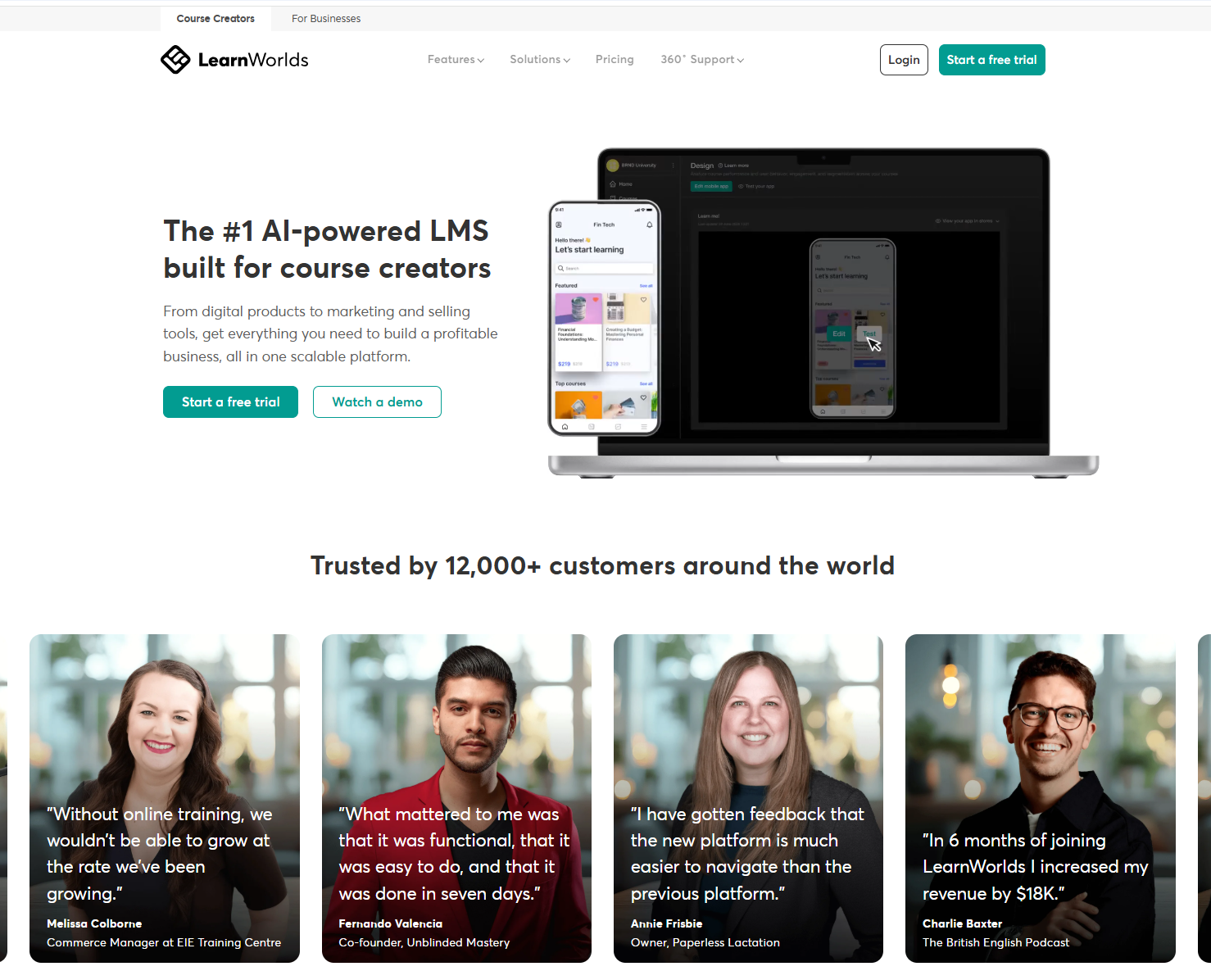
LearnWorlds is a learning platform built for organizations and creators who care about how their academy looks, feels, and performs commercially. It combines LMS functionality with website building and sales tools, making it a strong option for businesses that monetize education. Among ProProfs alternatives, it stands out for its interactive content capabilities and branding flexibility.
Best for: Training companies, professional educators, course creators, and organizations that want a fully branded online academy with built-in monetization tools.
Standout features
LearnWorlds focuses on engagement and presentation quality, while still offering structured course delivery:
- Interactive video editor: Add questions, overlays, transcripts, and clickable elements directly inside videos to increase participation.
- Custom website builder: Create a complete learning site with branded pages, blog sections, landing pages, and custom domains.
- Advanced assessments and certificates: Build quizzes, exams, and automated certificates tied to course completion rules.
- Community and social features: Encourage discussion and learner interaction within the platform.
- E-commerce engine: Sell courses, subscriptions, bundles, and memberships with flexible pricing models.
- Analytics dashboard: Track learner progress, course performance, and revenue metrics.
Where it outperforms ProProfs
LearnWorlds offers stronger customization, interactive video tools, and monetization features. It is better suited for organizations that treat courses as a revenue stream rather than just internal training.
Potential drawbacks
The platform can feel feature-heavy for simple corporate training use cases. Lower-tier plans may include transaction fees.
Pricing overview
Plans typically start around $29 per month. The Pro Trainer plan is around $99 per month, and the Learning Center plan is approximately $299 per month. Enterprise plans are custom priced.
Thinkific (Best for Straightforward Course Creation and Scalable Growth)
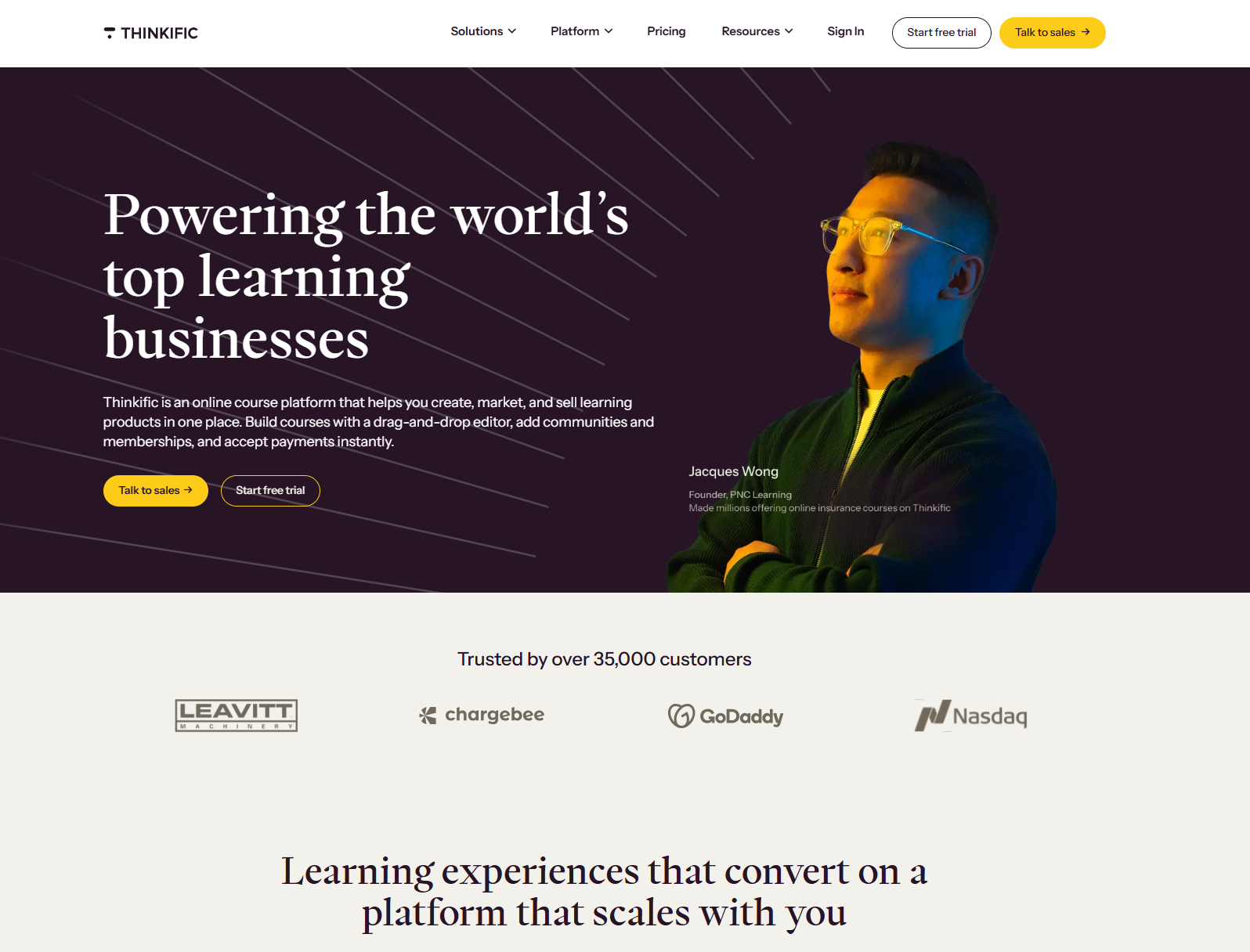
Thinkific is a course platform designed to help creators and organizations launch and grow online programs without complex setup. It combines ease of use with scalable infrastructure, making it appealing to teams that want to move quickly while maintaining control over content and sales.
Best for: Coaches, solo educators, small to mid-sized training businesses, and organizations launching digital learning products.
Standout features
Thinkific emphasizes usability and revenue support:
- Drag-and-drop course builder: Create structured lessons with videos, downloads, quizzes, and multimedia without coding.
- Unlimited courses and students: Most paid plans allow unlimited enrollments, which supports growth.
- Communities and memberships: Offer private communities and recurring subscription models.
- Sales and checkout tools: Create landing pages, bundles, coupons, and payment plans directly inside the platform.
- Integrations: Connect with email marketing tools, CRM systems, and analytics platforms.
- Progress tracking: Monitor student completion and engagement metrics.
Where it outperforms ProProfs
Thinkific makes launching and selling courses easier, especially for businesses focused on revenue generation. Its checkout flow and marketing integrations are more developed than ProProfs.
Potential drawbacks
It is less focused on advanced compliance management or complex corporate reporting. Organizations with strict regulatory needs may require additional tools.
Pricing overview
Thinkific offers a free plan with basic features. Paid plans generally start around $49 per month, with higher tiers at approximately $99 and $199 per month. Enterprise plans are available with custom pricing.
iSpring Learn (Best for PowerPoint-Based Corporate Training)
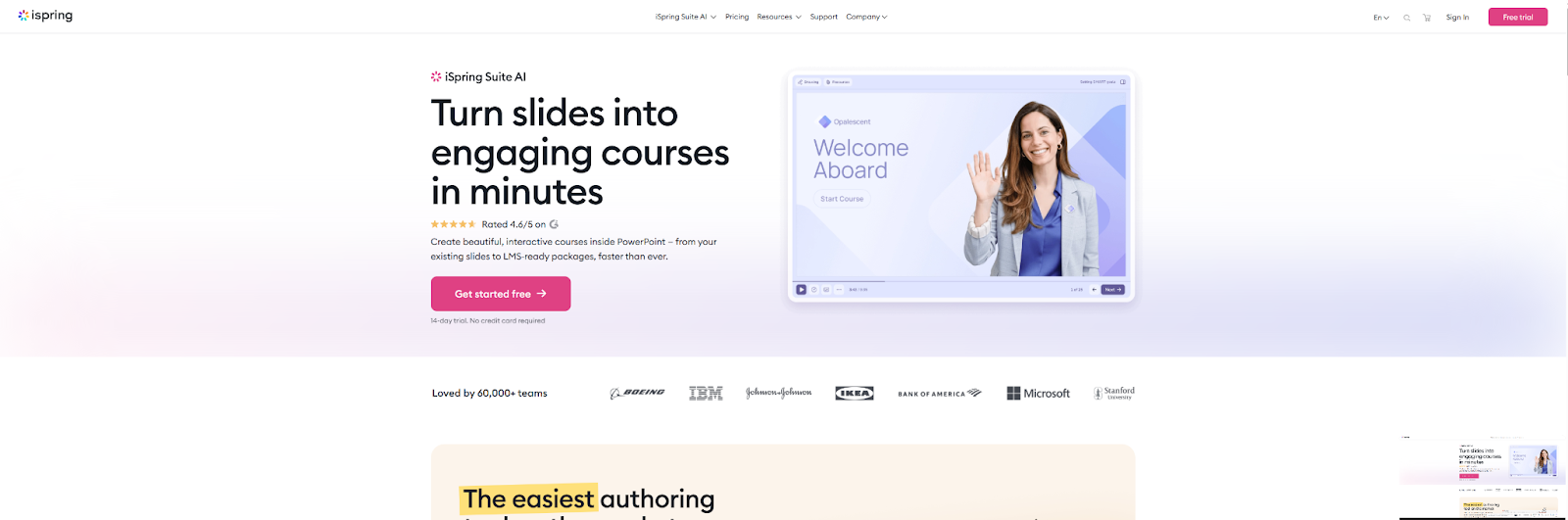
iSpring Learn is a corporate LMS designed to work closely with iSpring Suite, its PowerPoint-based authoring tool. It is widely adopted by companies that already build training materials in PowerPoint and want a structured system to distribute and track them. Among ProProfs alternatives, it is particularly strong in compliance-driven environments.
Best for: Corporate L&D teams, HR departments, and compliance managers that rely on structured internal training programs.
Standout features
iSpring Learn is built around efficient content deployment and formal training control. Its strength lies in structured delivery and certification management rather than social learning.
- PowerPoint integration: Convert existing presentations into SCORM-compliant eLearning courses directly from PowerPoint.
- SCORM and xAPI support: Upload and track standardized learning packages with detailed reporting.
- Certification management: Automatically issue certificates and track renewal deadlines.
- Detailed reporting: Monitor learner progress, quiz results, and compliance status by department.
- Mobile learning app: Provide offline access for learners in field-based roles.
- Role-based training assignment: Assign learning paths by job function or team.
Where it outperforms ProProfs
It handles SCORM content and compliance tracking more robustly. Organizations with strict audit requirements will find its reporting structure more suitable.
Potential drawbacks
It is less focused on collaborative learning or community engagement. Costs increase as user numbers grow.
Pricing overview
Pricing generally starts at approximately $2.87 per user per month when billed annually, with final cost depending on active users.
Docebo (Best for Enterprise AI-Powered Learning)
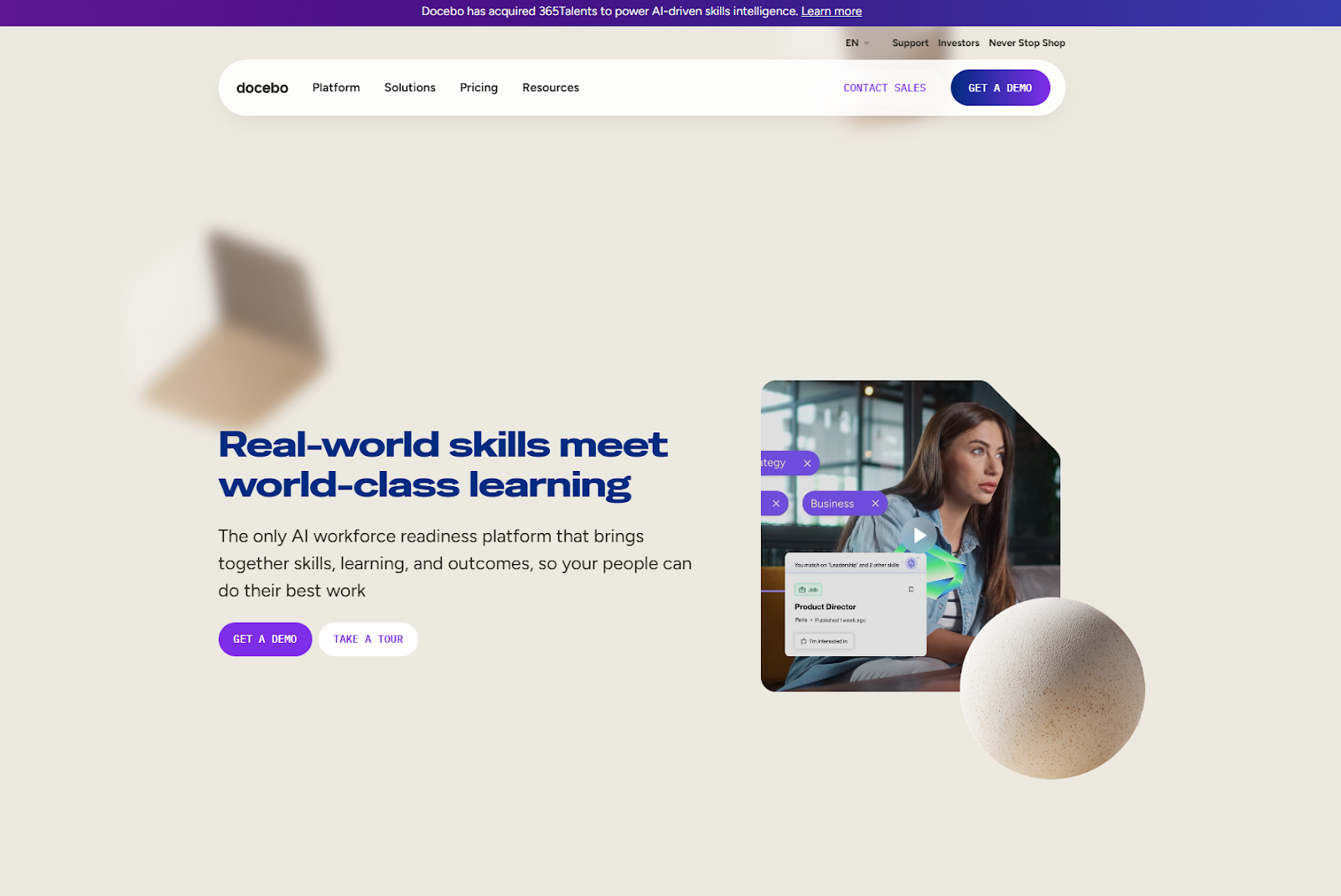
Docebo is an enterprise-level LMS designed for large organizations managing complex training ecosystems. It supports internal employees, partners, and customers within separate learning environments. For enterprises reviewing ProProfs alternatives, Docebo operates at a much larger scale.
Best for: Large enterprises, global companies, and organizations with multi-audience training needs.
Standout features
Docebo focuses on automation, AI support, and enterprise segmentation. It is designed for organizations that require scalability and structured governance.
- AI-powered learning recommendations: Suggest relevant content based on learner behavior and roles.
- Extended enterprise portals: Manage separate training environments for employees, partners, and customers.
- Advanced analytics dashboards: Customize reporting for leadership and performance tracking.
- Automation rules engine: Trigger enrollments, notifications, and workflows automatically.
- API and integration framework: Connect with HRIS, CRM, and other enterprise systems.
- Multilingual capabilities: Deliver global training across regions.
Where it outperforms ProProfs
Docebo provides significantly stronger automation, AI-driven insights, and enterprise segmentation. It is built for complex global deployments.
Potential drawbacks
Implementation requires planning and resources. Pricing is positioned for enterprise budgets.
Pricing overview
Docebo uses custom pricing based on user volume and required features. Quotes are provided through consultation.
Absorb LMS (Best for Compliance-Focused Workforce Training)
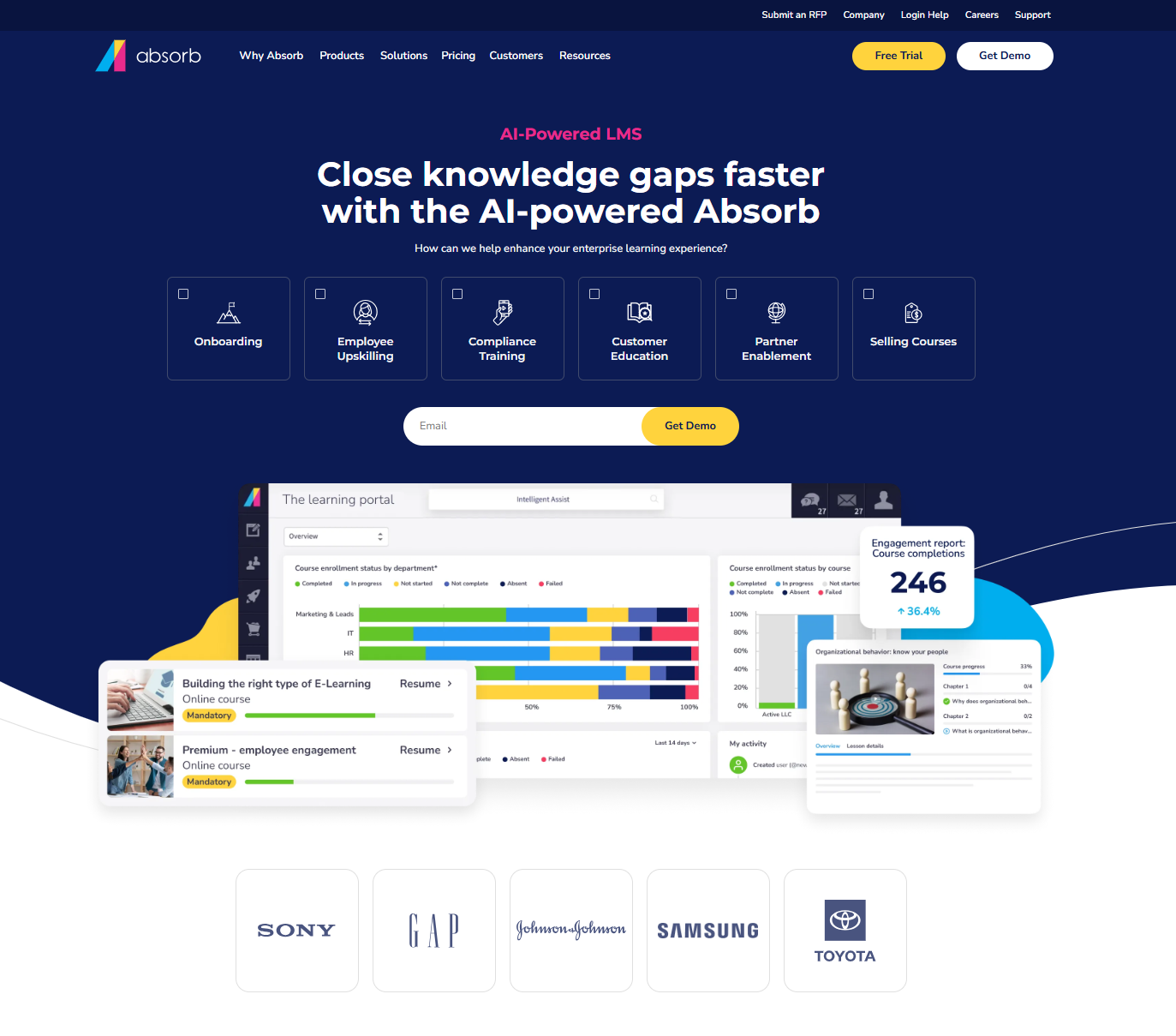
Absorb LMS is a corporate learning platform designed to balance usability with structured administrative control. It is widely used in industries where compliance tracking and reporting accuracy are critical. Among ProProfs alternatives, it stands out for reporting depth and certification management.
Best for: Mid-sized to large enterprises, regulated industries, and workforce training programs.
Standout features
Absorb LMS is built for organizations that require strong oversight and scalable administration. Its reporting engine is one of its key differentiators.
- Advanced reporting tools: Generate customizable compliance and performance reports.
- Automated certification tracking: Monitor expiration dates and send renewal reminders automatically.
- User segmentation: Assign training based on department, role, or geographic location.
- E-commerce capabilities: Sell courses externally if required.
- Third-party content integration: Connect external course libraries into your LMS.
- Mobile accessibility: Support training across devices.
Where it outperforms ProProfs
Absorb LMS offers more flexible reporting and structured compliance workflows. It handles complex organizational hierarchies more effectively.
Potential drawbacks
Configuration can require administrative setup time. Pricing is generally suited for larger teams rather than small businesses.
Pricing overview
Absorb LMS uses custom pricing based on active users and feature requirements. Organizations request a tailored quote.
Kajabi (Best All-in-One Platform for Course Businesses)
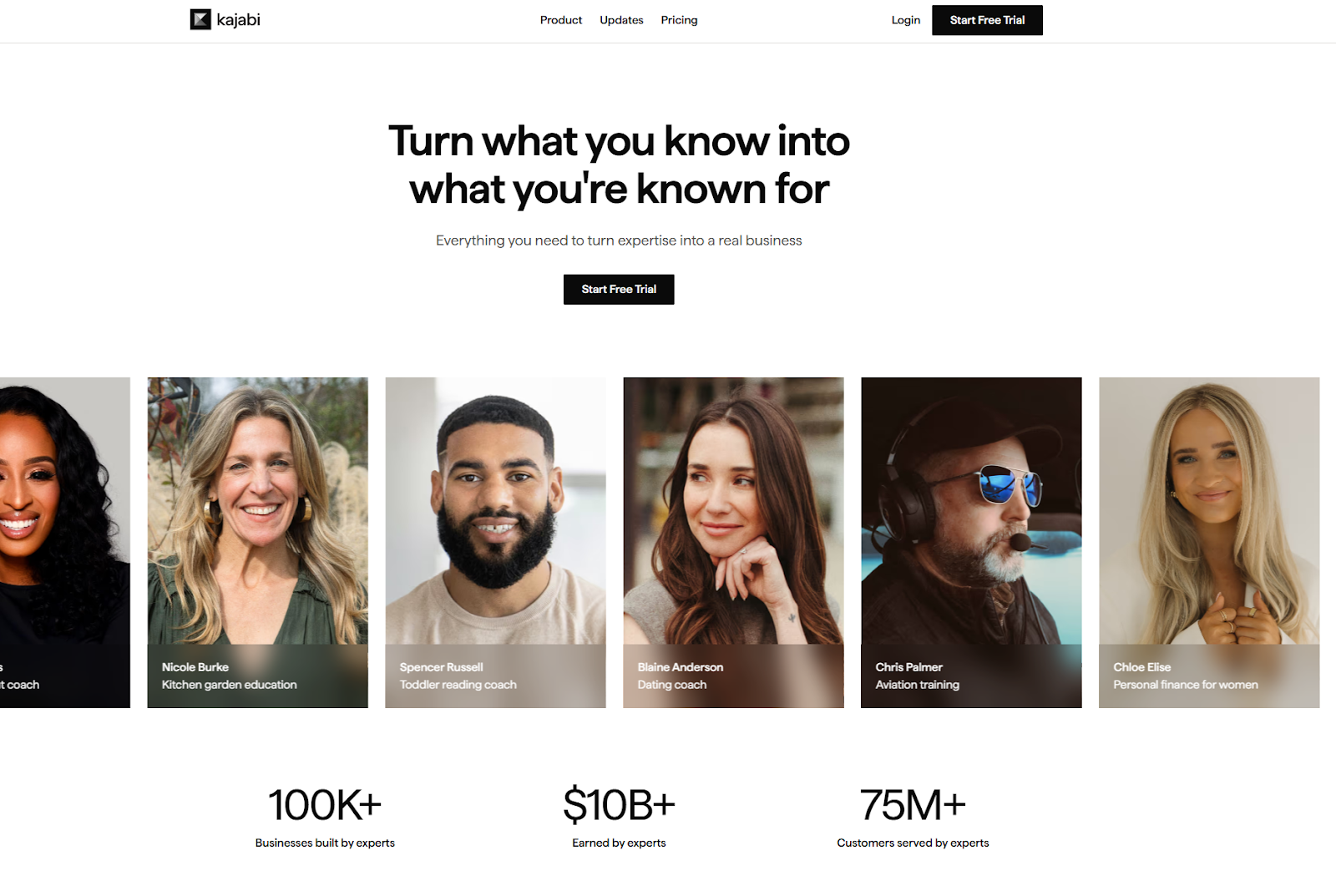
Kajabi is not just an LMS. It is a full business platform designed for creators who want to sell courses, memberships, coaching, and digital products in one system. Among ProProfs alternatives, Kajabi stands out because it combines learning delivery with marketing automation.
Best for: Course creators, coaches, consultants, and businesses focused on selling digital education products.
Standout features
Kajabi is built around monetization and audience growth. It integrates content delivery with marketing tools so you do not need multiple platforms.
- Course and membership builder: Create structured courses, drip content, and gated memberships.
- Email marketing automation: Build email sequences and nurture funnels inside the platform.
- Sales funnels and landing pages: Design conversion-focused pages without external tools.
- Payment processing: Accept one-time payments, subscriptions, and payment plans.
- Community features: Host private communities tied to courses or memberships.
- Analytics dashboard: Track revenue, subscriber growth, and learner engagement.
Where it outperforms ProProfs
Kajabi offers significantly stronger marketing and sales capabilities. It is built for revenue generation, not just training delivery.
Potential drawbacks
It is less focused on corporate compliance or structured internal workforce training.
Pricing overview
Kajabi plans typically start around $149 per month, with higher tiers at approximately $199 and $399 per month depending on contacts and features.
Moodle (Best Open-Source LMS for Full Customization)
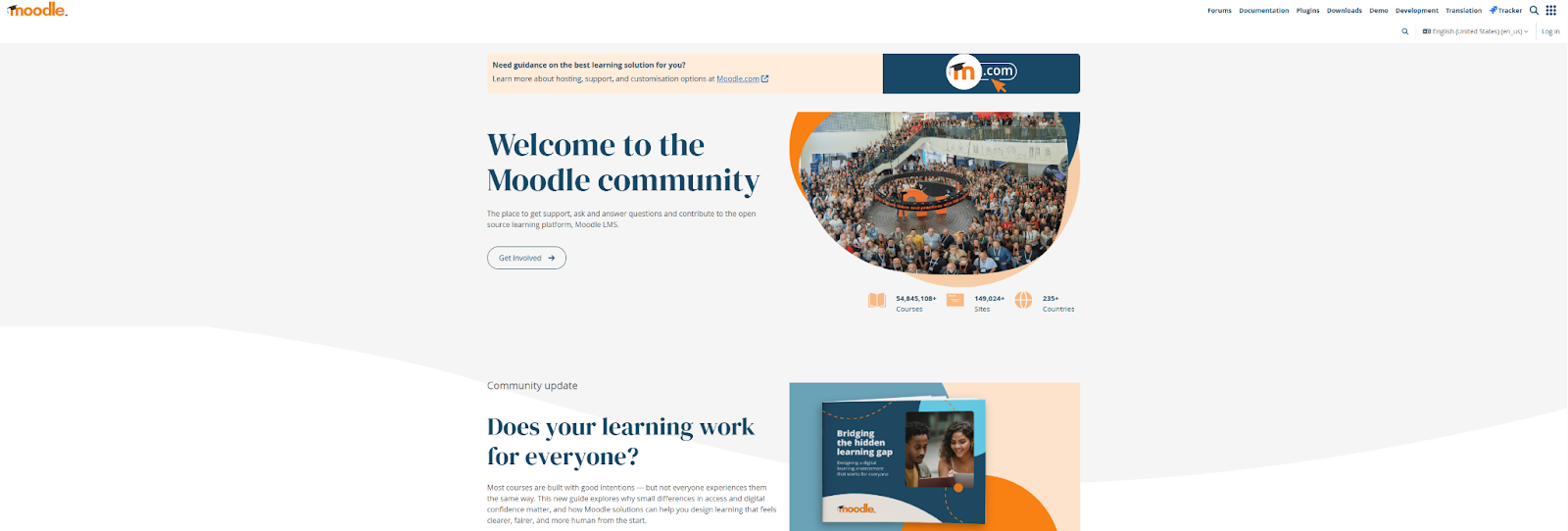
Moodle is one of the most widely used open-source learning management systems in the world. It allows organizations to host and customize their LMS environment completely. For teams seeking full control, it is a powerful alternative.
Best for: Universities, large institutions, and organizations with in-house technical resources.
Standout features
Moodle is flexible because it is open source. You can customize almost every aspect of the platform.
- Full customization: Modify themes, features, and workflows.
- Extensive plugin library: Add functionality through thousands of extensions.
- SCORM and compliance support: Handle standardized training packages.
- Advanced grading tools: Manage assignments, quizzes, and feedback.
- Role-based permissions: Control access at detailed levels.
- Community support ecosystem: Large global developer and educator community.
Where it outperforms ProProfs
Moodle offers far more customization and flexibility. It can be adapted to complex academic or enterprise environments.
Potential drawbacks
It requires technical setup and ongoing maintenance. It is not plug-and-play.
Pricing overview
Moodle itself is free as open-source software. Costs depend on hosting, development, and support services.
LearnDash (Best WordPress-Based LMS)
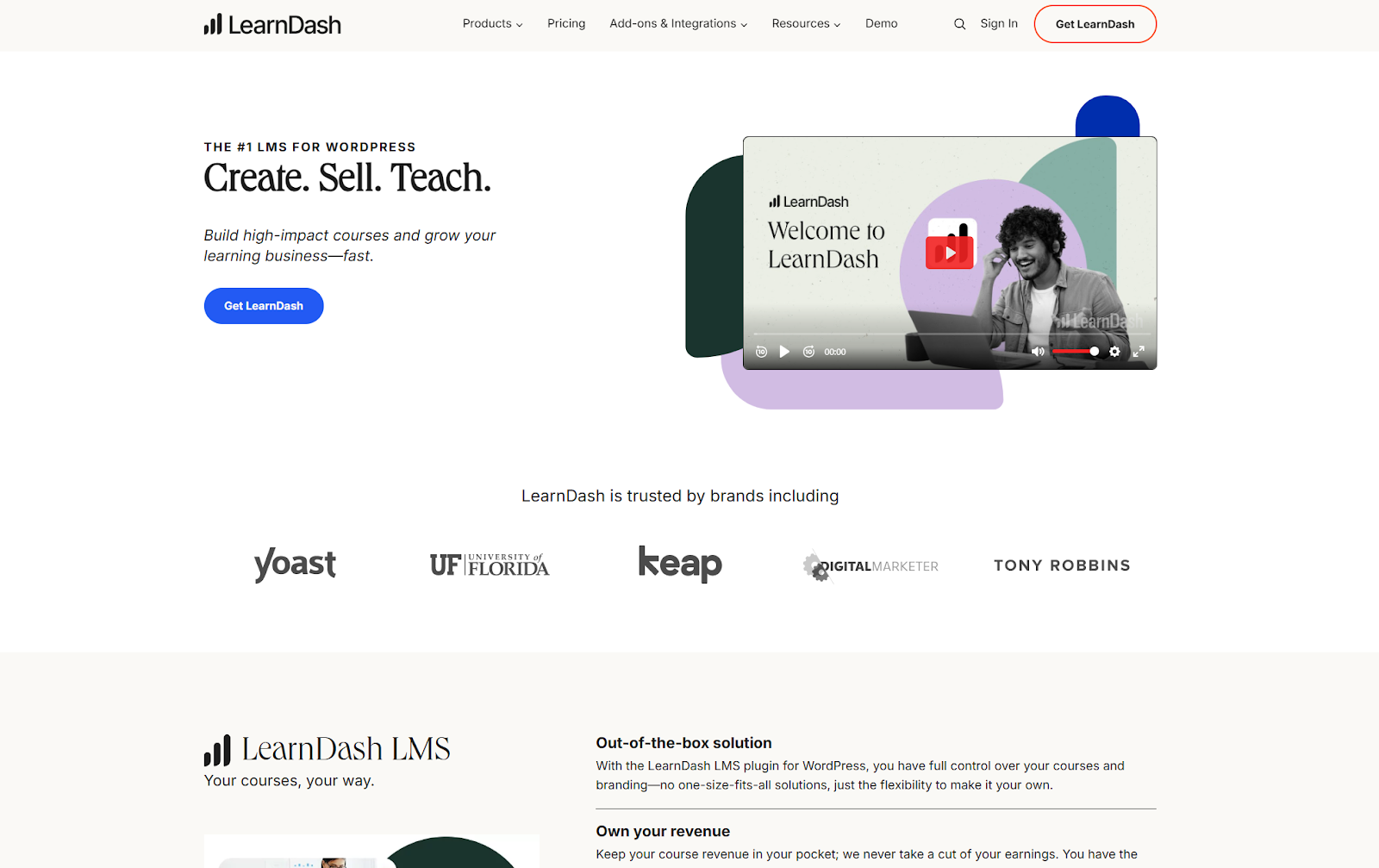
LearnDash is a WordPress plugin that transforms a WordPress website into a learning management system. It is popular among businesses that already use WordPress and want LMS functionality without migrating platforms.
Best for: WordPress-based businesses, training websites, and membership platforms.
Standout features
LearnDash integrates directly into the WordPress ecosystem.
- Drag-and-drop course builder: Structure lessons and modules inside WordPress.
- Drip content control: Release lessons over time.
- Advanced quiz builder: Create quizzes with grading logic and question banks.
- Membership and payment integration: Connect with WooCommerce and other tools.
- Gamification options: Award badges and certificates.
- Plugin ecosystem compatibility: Extend functionality through WordPress plugins.
Where it outperforms ProProfs
It provides deeper website control and integrates tightly with WordPress marketing and SEO tools.
Potential drawbacks
Performance and maintenance depend on your hosting setup and plugin management.
Pricing overview
LearnDash licenses typically start around $199 per year for a single site, with higher tiers for multiple sites.
360Learning (Best for Collaborative Enterprise Learning)
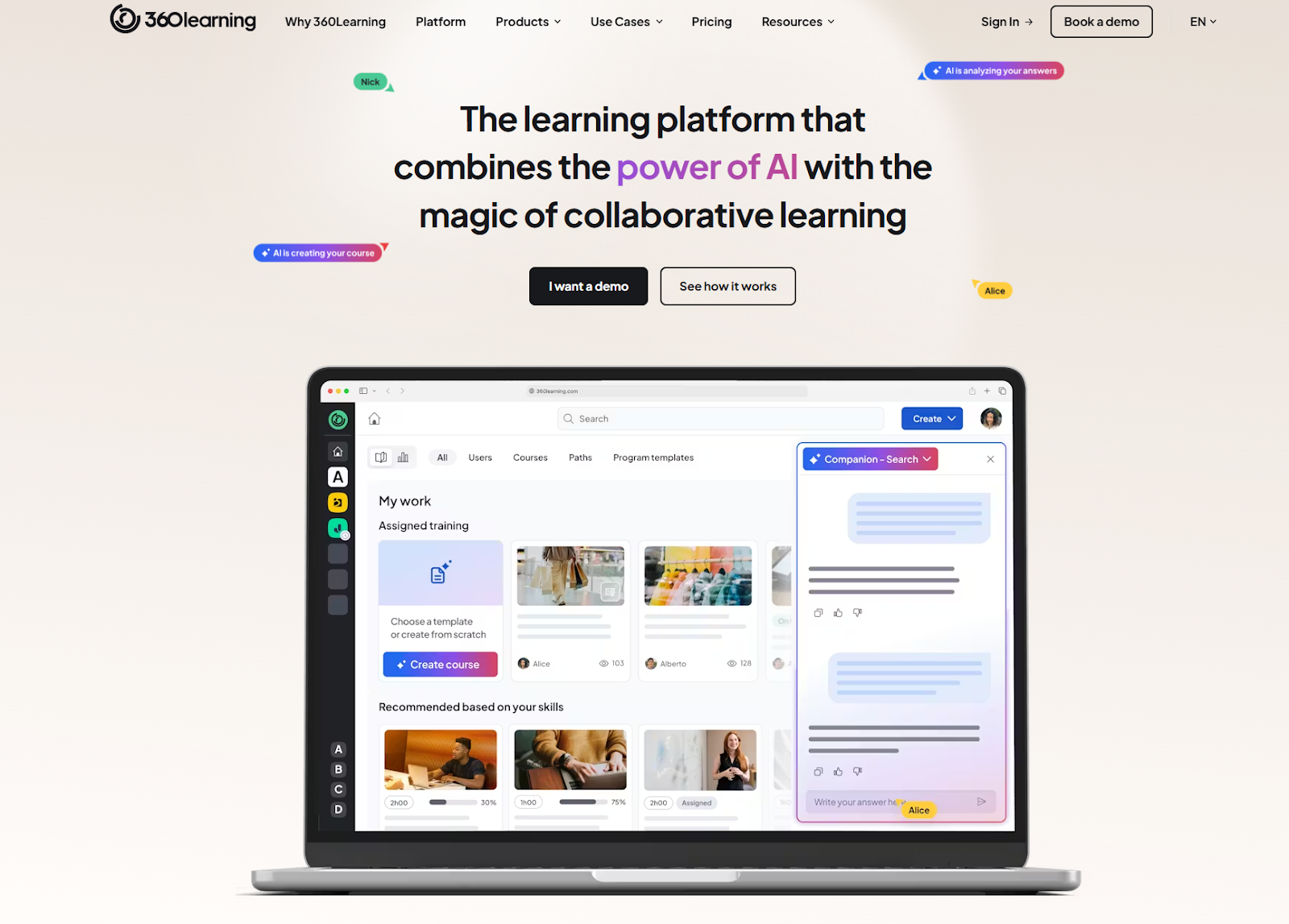
360Learning is an LMS focused on collaborative learning within organizations. It enables subject matter experts to contribute content and promotes peer-driven knowledge sharing.
Best for: Enterprises that want to empower internal experts and promote collaborative learning.
Standout features
360Learning centers learning around internal expertise and peer engagement.
- Collaborative course authoring: SMEs can create and update content directly.
- Peer feedback loops: Encourage comments and input within courses.
- Skill-based learning paths: Align courses with competency frameworks.
- Advanced analytics: Measure engagement and learning impact.
- Integration ecosystem: Connect with HR and business tools.
- Automation workflows: Trigger assignments and notifications.
Where it outperforms ProProfs
It provides stronger collaborative authoring and social engagement tools. It is designed for knowledge-sharing cultures.
Potential drawbacks
It may be more complex than needed for simple training programs.
Pricing overview
360Learning uses custom pricing based on active users and feature needs.
SAP Litmos (Best for Large-Scale Enterprise and Compliance Training)
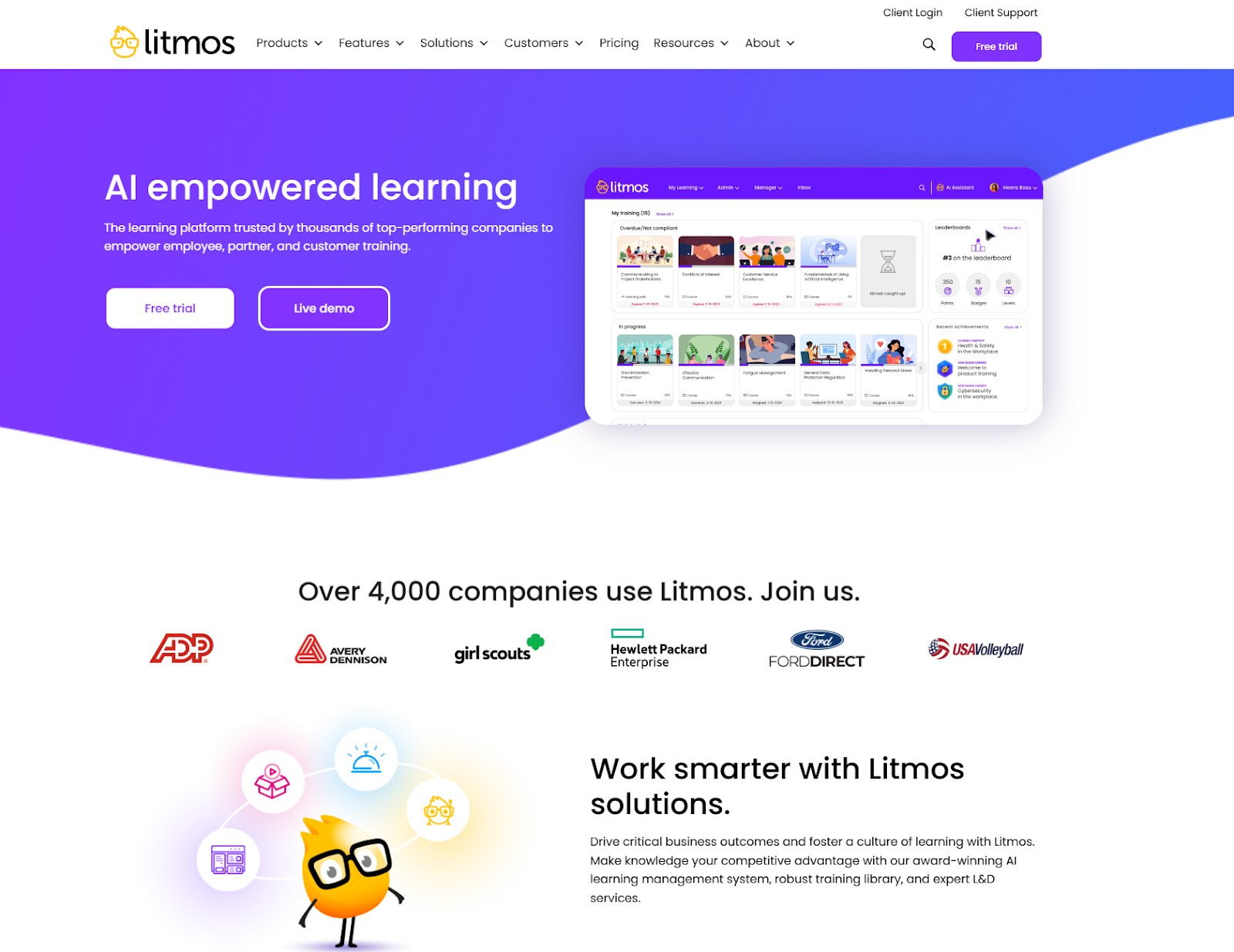
SAP Litmos is an enterprise-focused learning management system designed for large organizations that need structured training delivery across departments, regions, and partner networks. It is widely used in compliance-heavy industries and global companies. Among ProProfs alternatives, Litmos is positioned for scale, governance, and reliability.
Best for: Large enterprises, global organizations, and regulated industries that require structured compliance tracking and extended enterprise training.
Standout features
SAP Litmos focuses on scalability and administrative control. It is built to manage high user volumes while maintaining structured reporting and certification oversight.
- Compliance and certification management: Automate certification issuance, track expirations, and generate audit-ready reports.
- Extended enterprise training: Deliver training to employees, customers, and partners in segmented environments.
- Content library access: Integrate third-party course libraries directly into the LMS.
- Advanced reporting and dashboards: Monitor completion rates, assessment results, and compliance metrics across teams.
- Automation workflows: Trigger enrollments, reminders, and recertification notices.
- Mobile learning support: Provide responsive access across devices for distributed teams.
Where it outperforms ProProfs
SAP Litmos offers stronger enterprise governance, structured compliance workflows, and better scalability for large organizations managing thousands of learners.
Potential drawbacks
It may feel excessive for small teams or simple training needs. Implementation can require planning and internal alignment.
Pricing overview
SAP Litmos uses custom pricing based on active users, feature requirements, and deployment scale.
How to Choose the Right ProProfs Alternative
Choosing the right platform really comes down to one question: what are you trying to improve?
Not every team needs more features. Most teams need a better fit.
If You Need Better Engagement
If learners are just clicking through content, look at cohort-based or social platforms. You want built-in discussions, assignments, peer feedback, and structured timelines. Engagement does not come from more content. It comes from interaction.
If You Need Enterprise Compliance
If reporting and audits are your priority, focus on compliance-heavy LMS platforms. Look for strong tracking, automated certifications, renewal reminders, and clean exportable reports. The right system should make audits simple, not stressful.
If You Sell Courses
If revenue matters, choose a monetization-first platform. You will need checkout pages, subscriptions, bundles, and email tools built in. Selling courses requires different infrastructure than internal training.
If You Need Deep Customization
If you need full control over workflows or integrations, consider open-source or API-driven tools. They offer flexibility, but usually require technical support.
Start with your main goal. That clarity will narrow your best ProProfs alternatives quickly.
Migration Considerations Before You Switch
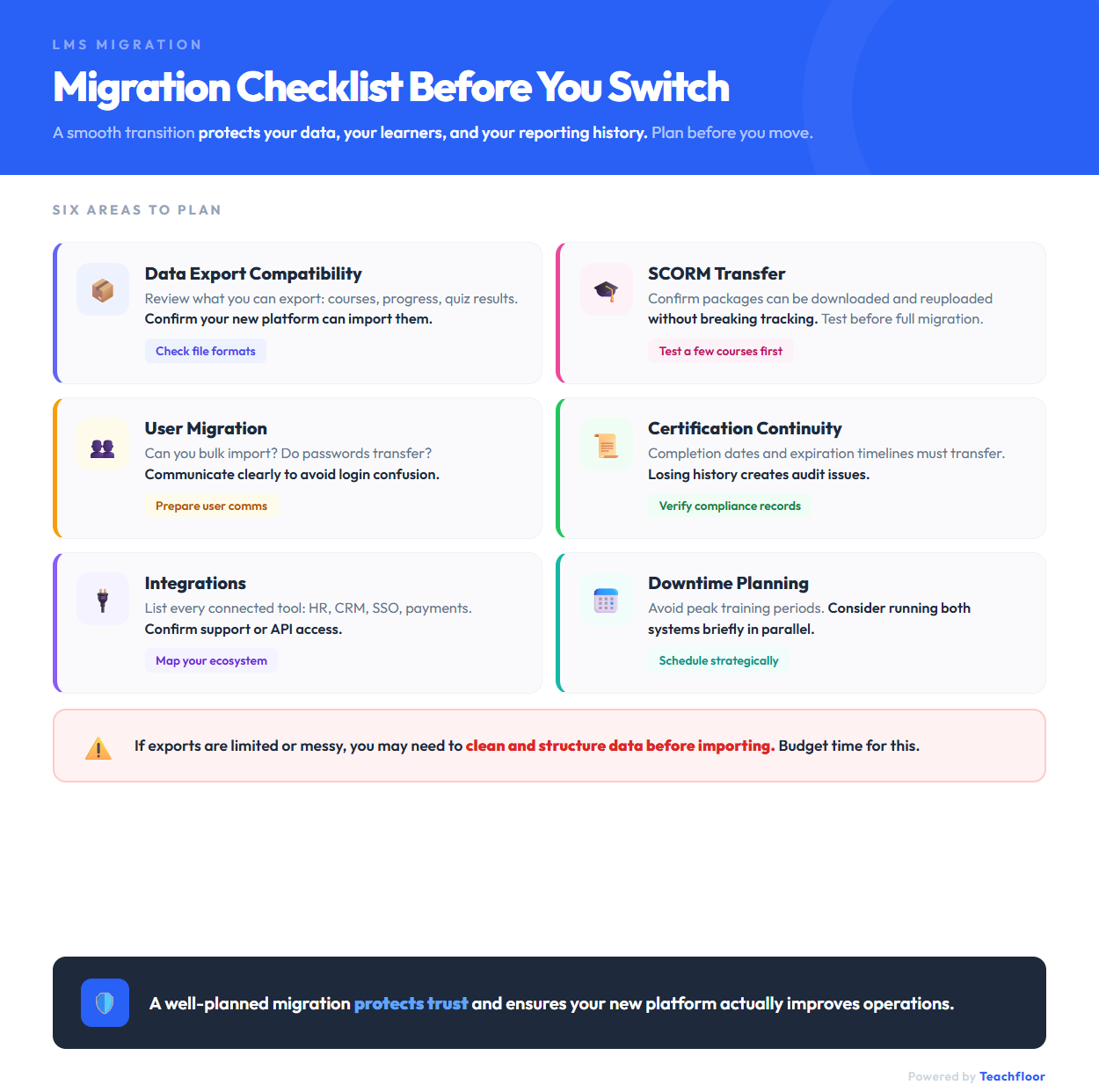
Switching to one of the many ProProfs alternatives can improve your learning operations. But the migration itself needs planning. A smooth transition protects your data, your learners, and your reporting history.
Here is what to think through before making the move.
Data Export Compatibility
Start by reviewing what data you can export from your current system. This includes course content, learner progress, quiz results, and completion records. Check the file formats available and confirm that your new platform can import them without manual rebuilding.
If exports are limited or messy, you may need to clean and structure the data before importing it.
SCORM Transfer
If you use SCORM packages, confirm they can be downloaded and reuploaded without breaking tracking. Not all LMS platforms interpret SCORM data the same way. Test a few courses before committing to a full migration.
User Migration
Plan how learner accounts will move. Can you bulk import users? Will passwords transfer, or will learners need to reset them? Communicate clearly with users so there is no confusion during login.
Certification Continuity
If certifications are tied to compliance or renewal cycles, make sure completion dates and expiration timelines transfer accurately. Losing that history can create audit issues.
Integrations
List every tool connected to your LMS. HR systems, CRM platforms, payment processors, SSO providers. Confirm your new system supports them or has API access.
Downtime Planning
Finally, schedule the migration carefully. Avoid peak training periods. Consider running both systems briefly in parallel to prevent disruption.
A well-planned migration protects trust and ensures your new platform actually improves operations instead of creating short-term chaos.
Conclusion
There is no universal winner for ProProfs alternatives. The right platform depends entirely on what you need it to do.
If your focus is engagement, look for tools built around collaboration and structured learning journeys. If compliance and reporting drive your decision, prioritize systems with strong certification tracking and clean data exports. If you sell courses, choose a platform designed for monetization. And if flexibility is critical, explore open-source or API-driven options.
The key is alignment. Do not switch platforms just because a competitor looks more advanced. Switch because it supports your learning model better.
Once you are clear on your priorities, narrowing down the best ProProfs alternative becomes much easier and far more strategic.


