

Why Look for a Sana Labs Alternative?
Sana Labs built its reputation on an AI-first approach to corporate learning, using machine learning to personalize content, surface relevant resources, and flag knowledge gaps. In 2026 the bigger story is ownership. Workday completed its acquisition of Sana in November 2025 for about $1.1 billion and has begun folding it into its HR and finance suite as "Sana from Workday." For teams that adopted Sana as an independent AI learning platform, that change is the main reason to evaluate alternatives now. For a deeper look at the product itself, see our Sana Labs review.
The Workday acquisition changes the roadmap. Sana is being integrated into Workday's broader platform rather than developed as a standalone product. Organizations that are not Workday customers, or that do not want their learning platform bundled into an HR suite, face real uncertainty around standalone availability, pricing, and long-term direction. That alone is pushing many teams to compare options.
Premium enterprise pricing with a 300-seat minimum. Sana Learn is built for large enterprises. Public estimates put its entry point at a 300-license minimum, roughly $47,000 per year, before implementation and add-ons. For mid-market companies, growing startups, or teams with tighter training budgets, that floor is hard to justify.
AI that depends on content volume. Sana's machine learning improves as it processes more data. Organizations with smaller content libraries, or those just starting to build their learning infrastructure, may not see the return they expect from the AI layer. The personalization works best when there is enough material to draw from, which creates a chicken-and-egg problem for teams with limited existing content.
Limited third-party integrations. Compared with more established platforms like Docebo or Cornerstone, Sana's set of pre-built connectors is narrower. Organizations that rely on specific HRIS systems, content providers, or productivity tools may find gaps that require custom development or workarounds.
Steep onboarding for AI features. Setting up and configuring Sana's AI capabilities takes time and internal expertise. Teams without dedicated L&D technologists or data-literate admins can struggle to get full value during the initial rollout, which lengthens time-to-value.
These are not universal deal-breakers. But if your organization wants a more accessible price point, broader delivery options, or a platform that is not being absorbed into a larger HR suite, the alternatives below address those gaps directly.
What to Look for in an AI-Powered Learning Platform
Switching learning platforms is a high-stakes decision that affects every learner in the organization. Before comparing individual tools, it helps to clarify the criteria that separate a strong AI-powered learning management system from one that simply markets itself as AI-enabled.
AI depth versus AI marketing. Many platforms now claim AI capabilities. The difference lies in whether the AI genuinely adapts content paths, identifies skill gaps, and generates actionable insights, or whether it just powers a chatbot and a search bar. Ask vendors to demonstrate how their AI works with your specific content types and learner volume.
Content flexibility. Some platforms lock you into their authoring tools or content marketplace. Others let you import SCORM, xAPI, video, PDFs, and third-party content libraries without friction. If your team already has a content stack, the platform should fit into it rather than replace it.
Integration stack. Check for native connections to your HRIS (Workday, BambooHR, SAP SuccessFactors), communication tools (Slack, Teams), and content providers (LinkedIn Learning, Coursera, Udemy Business). An open API is important, but pre-built integrations reduce implementation time significantly.
Reporting and analytics. The platform should go beyond completion rates. Look for skill gap analysis, learning path effectiveness, time-to-competency metrics, and manager-facing dashboards. Strong learning analytics capabilities turn an LMS from a content delivery system into a strategic L&D tool.
Total cost of ownership. Factor in implementation fees, per-user pricing tiers, content library costs, and ongoing support charges. A platform priced per active user behaves very differently at scale than one priced per seat or per organization.
Scalability and global readiness. If you operate across regions, verify multi-language support, localization capabilities, and data residency options. A platform that works well for 500 learners in one country may struggle with 10,000 across five.
10 Best Sana Labs Alternatives
The platforms below span the full spectrum of corporate learning, from AI-native systems to established enterprise LMS providers to content-focused libraries. Each one solves a different set of problems. The list is organized to cover distinct use cases so the comparisons stay practical.
| Tool | AI | Content approach | Integrations | Starting price | Free trial | Best for |
|---|---|---|---|---|---|---|
| Teachfloor | Built-in AI course creation | Authoring plus bring-your-own | Zoom, Stripe, Slack, Zapier | $89/mo | 14 days | Live, cohort, social and self-paced programs |
| Docebo | Strong (Docebo AI) | Marketplace | 400+ | ~$25,000/yr | Demo only | Mid-to-large enterprises wanting AI on a mature LMS |
| 360Learning | Moderate (AI authoring) | Collaborative | 40+ | $8/user/mo | 30 days | Peer-driven content creation |
| Absorb LMS | Moderate | Marketplace | 200+ | ~$14,400/yr | Demo only | Clean UX and fast mid-market setup |
| Degreed | Strong (skills AI) | Aggregation (LXP) | Thousands of sources | ~$40,000/yr | Demo only | Skill-based enterprise learning stacks |
| WorkRamp | Strong (AI Assist) | Authoring plus academies | Salesforce, Zoom, Slack | Custom | Demo only | Employee plus customer and partner training |
| Cornerstone OnDemand | Moderate (Skills Graph) | Built-in marketplace | 300+ | Custom | Demo only | Regulated, compliance-heavy enterprises |
| TalentLMS | Basic | Built-in | Zapier plus native | $149/mo | Free plan | SMBs needing affordability |
| Coursera for Business | Moderate | University catalog | LTI, SCORM, API | $399/user/yr | 14 days | University-grade external content |
| LinkedIn Learning | Moderate | Curated catalog | Microsoft stack | ~$400/seat/yr | 1 month | Microsoft-stack teams |
Teachfloor
Overview
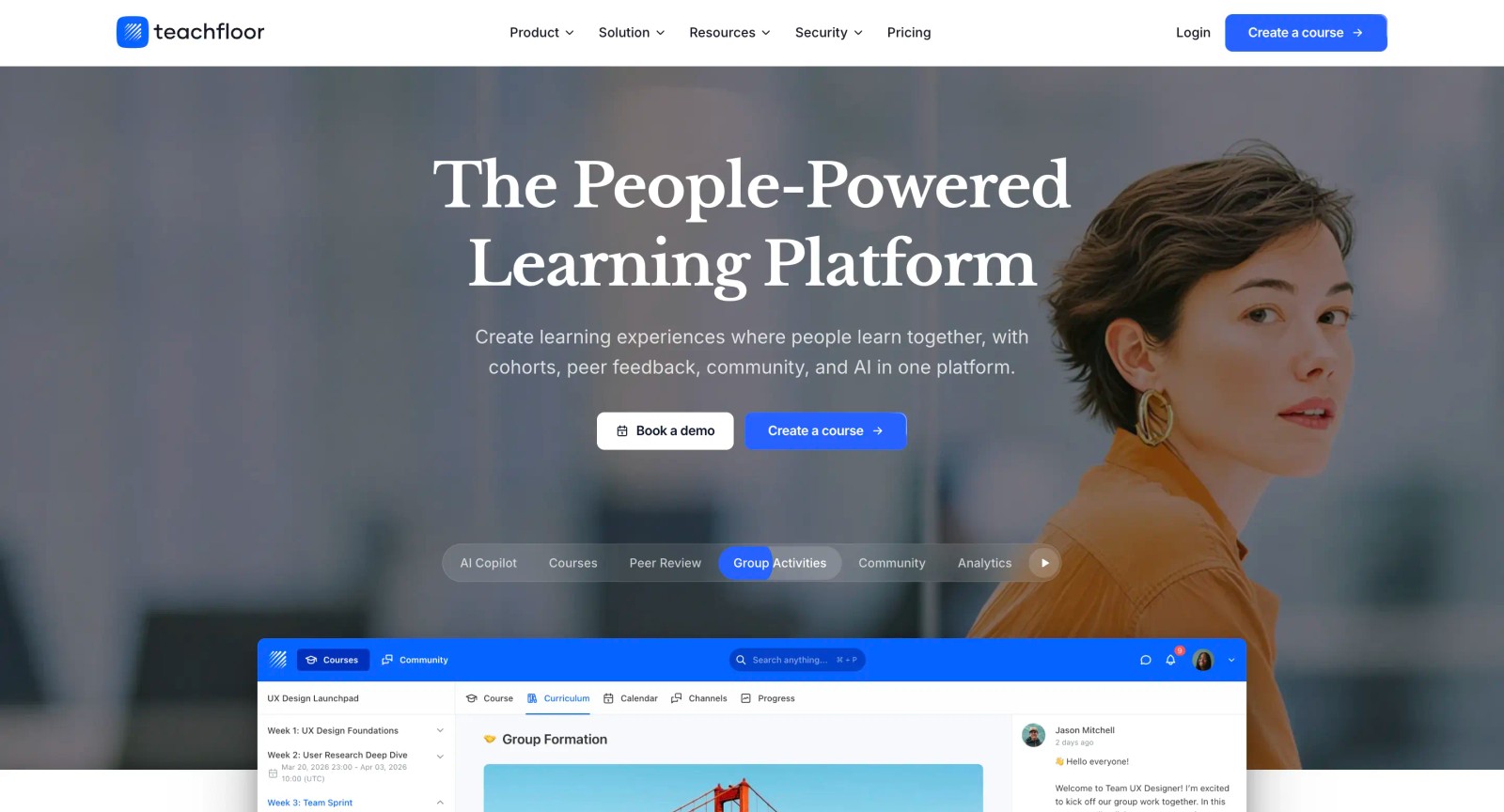
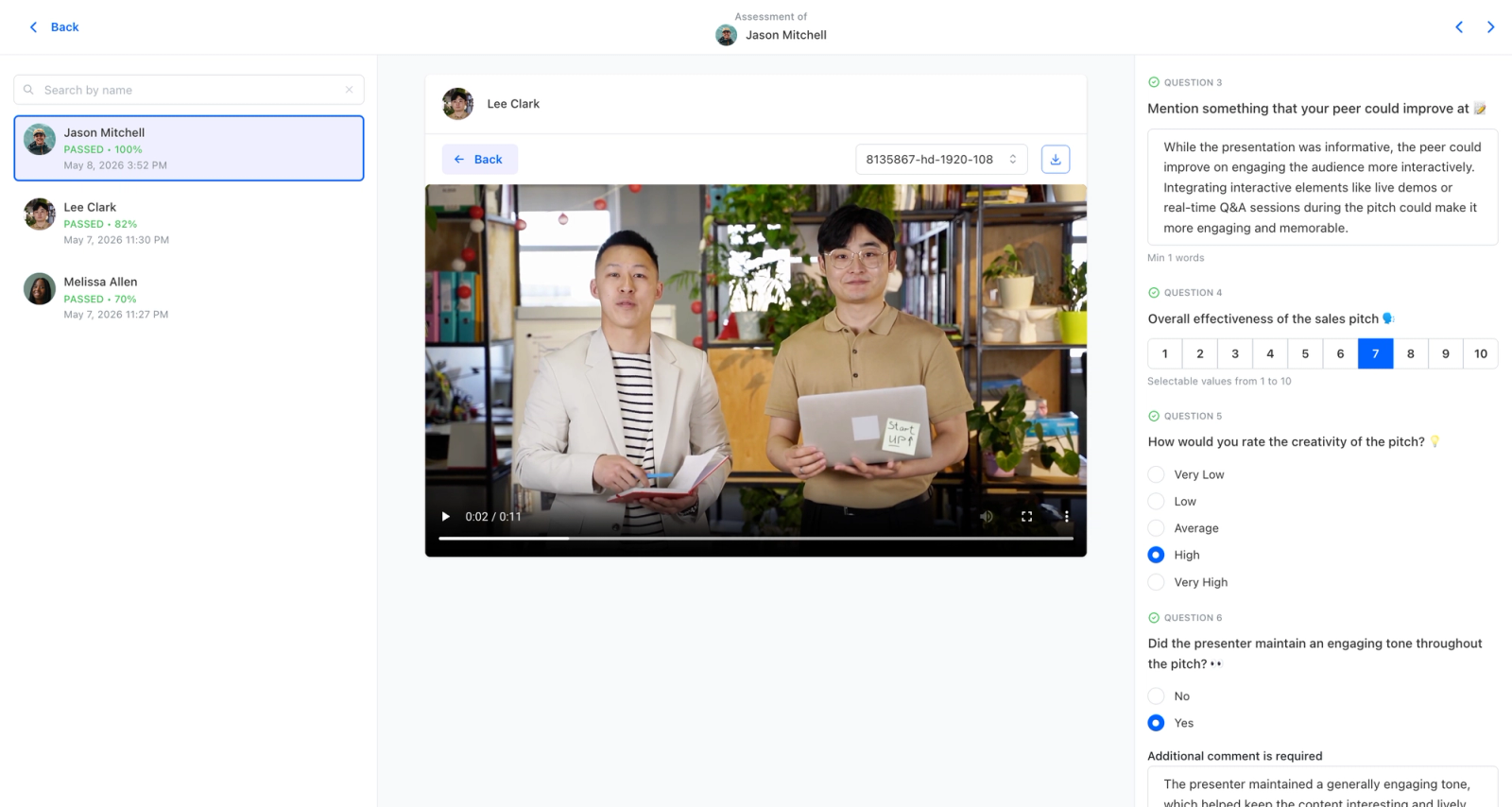
Teachfloor is an independent course platform with AI-assisted authoring, cohort delivery, and white-label customization. The AI assists with drafting lessons, questions, and course structure, while delivery options span self-paced, live, and cohort formats with built-in discussion and peer review. It operates as a standalone platform, not bundled into an HR or finance suite.
Core Capabilities
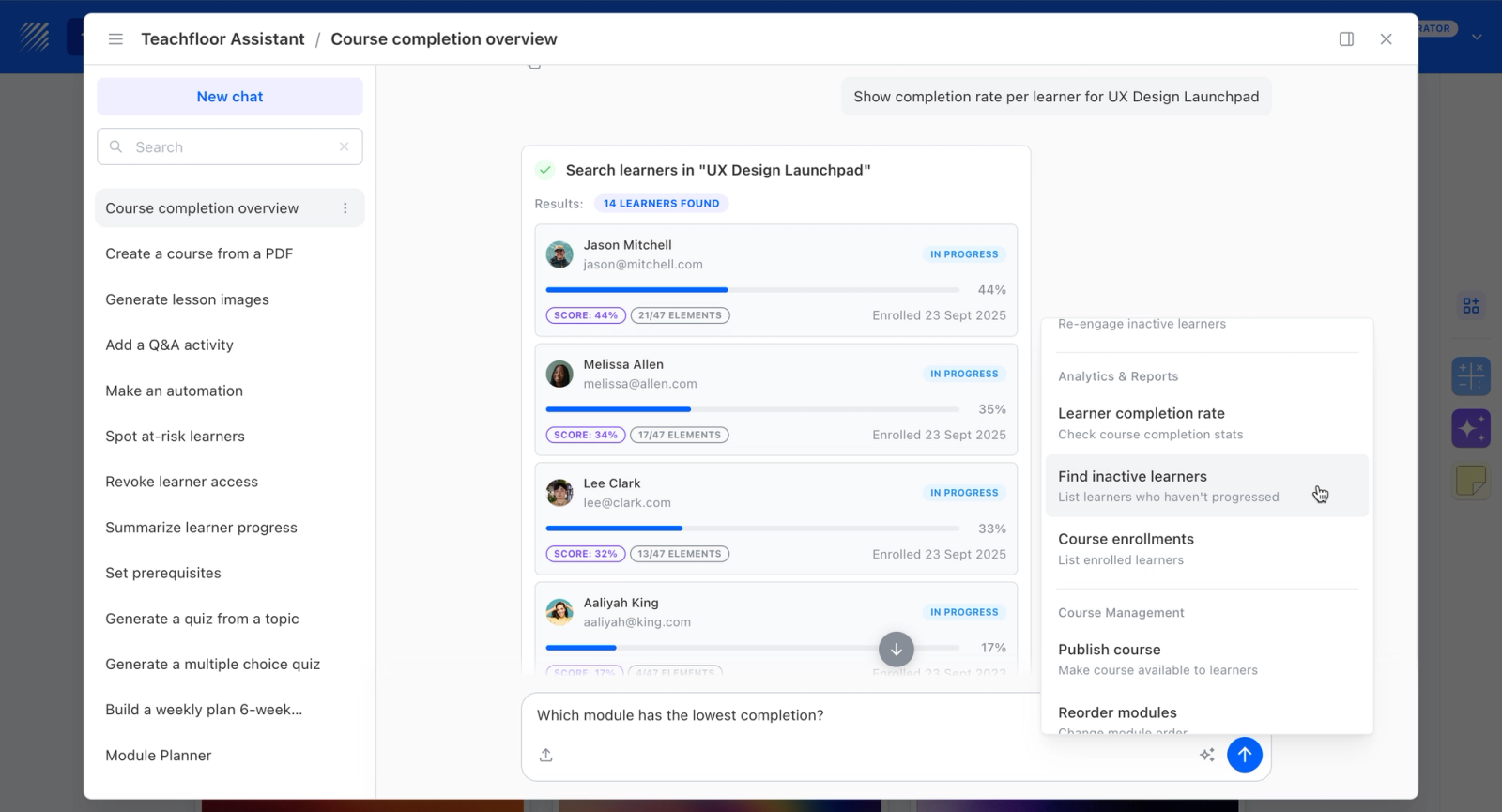
- AI-assisted authoring for drafting lessons, quizzes, and course structure
- Self-paced, live, and cohort delivery
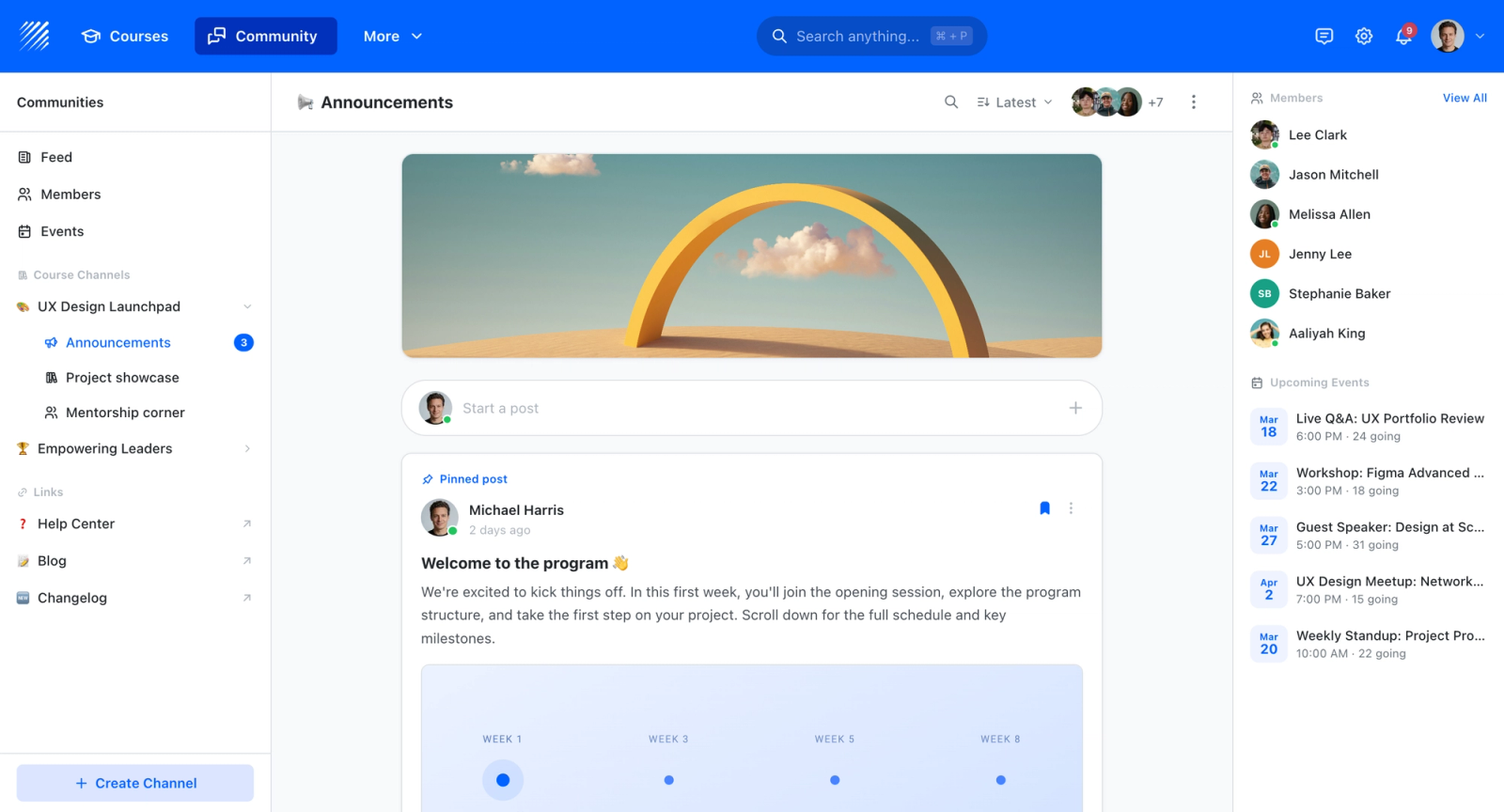
- Rubric-based peer review and in-lesson discussion
- White-label delivery on your own domain, independent of any HR suite
- Quizzes, certificates, and completion analytics
Best For
Teams that valued Sana's independence and want AI-assisted authoring on a standalone platform, rather than an LMS embedded in an HR suite.
Pricing Overview
- Startup plan from $89 per month for up to 50 learners
- Full Features plan with custom pricing, white-label, SSO, and advanced integrations
- 14-day free trial; no permanent free plan
- Nonprofit discounts available
Limitations
- The AI assists authoring; it is not the adaptive, ML-driven personalization engine Sana was known for
- No large-scale content-library recommendation across external sources, as an LXP offers
- No permanent free plan; mid-market focus rather than enterprise HCM scale
Quick Comparison Insight
Docebo and Cornerstone offer adaptive content recommendation across large libraries and enterprise HR integration. Teachfloor provides AI-assisted authoring and social, instructor-led delivery on an independent platform.
Docebo
Overview
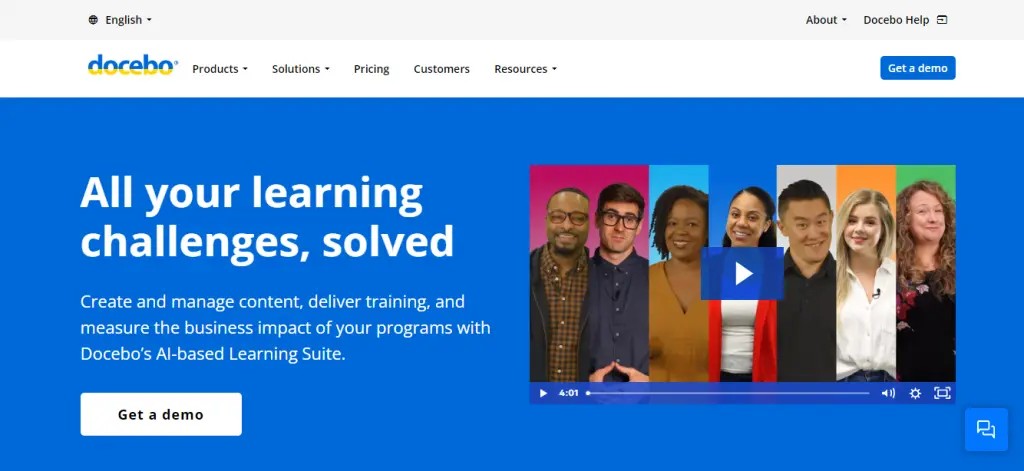
Docebo is one of the most widely adopted enterprise learning platforms globally, and it has invested heavily in AI over the past several years. Its AI layer, branded Docebo AI and applied across the platform, handles content tagging, personalized recommendations, auto-enrollment suggestions, and virtual coaching. Where Sana Labs built AI into a newer platform from scratch, Docebo layered AI onto an already mature LMS with deep feature coverage.
Docebo's most immediate characteristic is breadth. The platform covers formal learning, social learning, content marketplaces, extended enterprise training, and compliance workflows in a single system. For organizations that need a full-featured LMS with AI capabilities layered in, Docebo occupies a different position than Sana's more narrowly focused AI-first approach.
Core Capabilities
- AI-powered content tagging that auto-categorizes uploaded materials by topic, skill, and format
- Personalized learning recommendations based on role, skill profile, and learning history
- Docebo Shape for converting existing content (documents, presentations, videos) into structured learning modules
- Built-in content marketplace with access to third-party providers including LinkedIn Learning and Udemy Business
- Extended enterprise support for training partners, customers, and external audiences
- SCORM, xAPI, and AICC compliance for importing standards-based content
- Advanced reporting engine with custom dashboards, scheduled reports, and data export
- Gamification features including badges, leaderboards, and points systems
- Native mobile app with offline content access
- Over 400 integrations including Salesforce, Workday, MS Teams, Zoom, and BambooHR
Standout Strength
Docebo combines a mature enterprise LMS with meaningful AI automation. The platform does not force you to choose between AI personalization and traditional LMS administration. You get both, which matters for L&D teams that need compliance training alongside adaptive learning paths.
Best For
Mid-to-large enterprises with 500+ learners that need a full-featured LMS with AI capabilities layered in. Particularly strong for organizations with extended enterprise training needs (customer education, partner enablement) and those already using third-party content libraries.
Pricing Overview
- Custom enterprise pricing based on active users
- Typical starting point around $25,000 per year for mid-market deployments
- Free demo available; no self-serve free trial
Limitations
- The admin interface has a steep learning curve, particularly for custom reporting and workflow automation.
- AI features require sufficient content volume and learner activity data before delivering strong personalization, similar to Sana Labs.
- Pricing can escalate quickly as user counts grow, especially with add-on modules for content marketplace access.
Quick Comparison Insight
Broader feature set than Sana Labs with a more mature set of integrations, but less AI-native in its core architecture. Better for organizations that need an LMS first and AI second.
360Learning
Overview
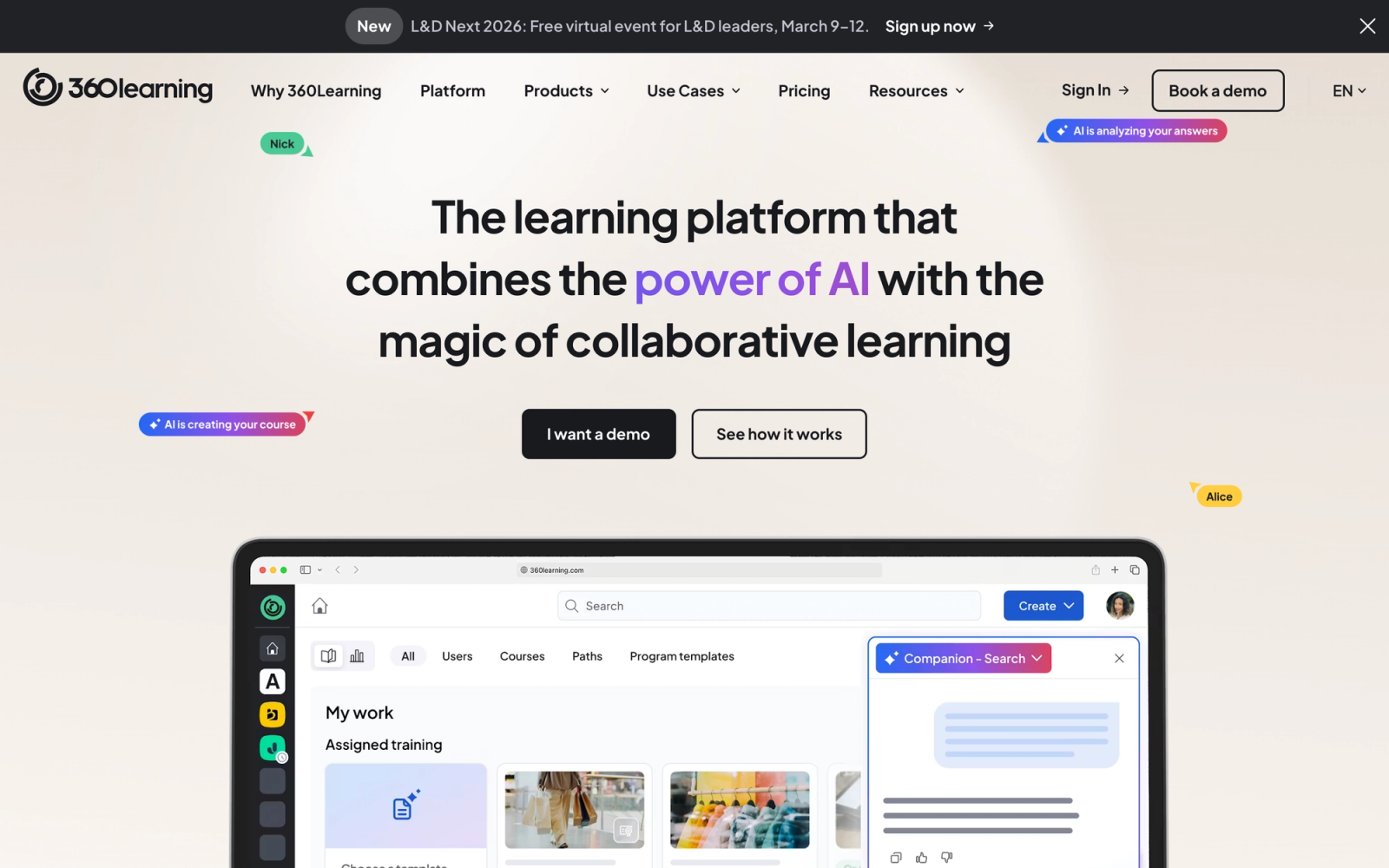
360Learning takes a fundamentally different approach to corporate learning. Instead of relying on AI to personalize top-down content, it focuses on collaborative authoring, where subject matter experts across the organization create, review, and iterate on courses. The platform calls this "collaborative learning," and it shifts the L&D model from centralized content creation to distributed knowledge capture.
Where Sana bets on AI to surface the right content at the right time, 360Learning bets on the people inside the organization to create contextually relevant material. The authoring workflow is built for speed. Verified user reviews on G2 and Capterra consistently highlight short time-to-publish as the platform's primary differentiator, with SMEs reporting they can draft and release a course in hours rather than weeks.
Core Capabilities
- Collaborative course authoring that allows SMEs to create courses without instructional design expertise
- Reaction-based feedback system where learners flag outdated or unclear content directly
- AI-assisted authoring that suggests course improvements, generates quiz questions, and identifies content gaps
- Built-in discussion forums and collaborative learning spaces within each course
- Automated course creation workflows with approval chains and version control
- SCORM import support for integrating externally authored content
- Integration with Salesforce, Workday, BambooHR, Slack, and Microsoft Teams
- Compliance training features with certification tracking and audit trails
- Learning Needs tool that captures training requests from managers and teams
- Mobile-responsive design with offline access on iOS and Android
Standout Strength
360Learning turns internal experts into course creators. For companies where institutional knowledge lives in people's heads rather than in a content library, this approach generates relevant training material faster than any AI personalization engine. It solves the content volume problem that both Sana Labs and Docebo face.
Best For
Mid-size to large companies (200-5,000 employees) with distributed expertise and a culture of knowledge sharing. Particularly effective for organizations where training needs change rapidly, such as fast-growing tech companies, sales teams that need product updates weekly, or corporate training teams that struggle to keep content current.
Pricing Overview
- Team plan starting at $8 per user per month (up to 100 users)
- Business plan with custom pricing for larger deployments
- Free 30-day trial available
Limitations
- The AI features are supplementary rather than central. If you are specifically looking for AI-driven adaptive learning paths, 360Learning is not designed for that.
- Reporting capabilities are adequate but not as deep as Docebo or Cornerstone for compliance-heavy organizations.
- Course quality depends on the willingness and skill of internal SMEs. Without organizational buy-in, the collaborative model underperforms.
Quick Comparison Insight
Opposite philosophy from Sana Labs. Where Sana personalizes existing content with AI, 360Learning focuses on creating better content through collaboration. Significantly more affordable, with a free trial.
Absorb LMS
Overview
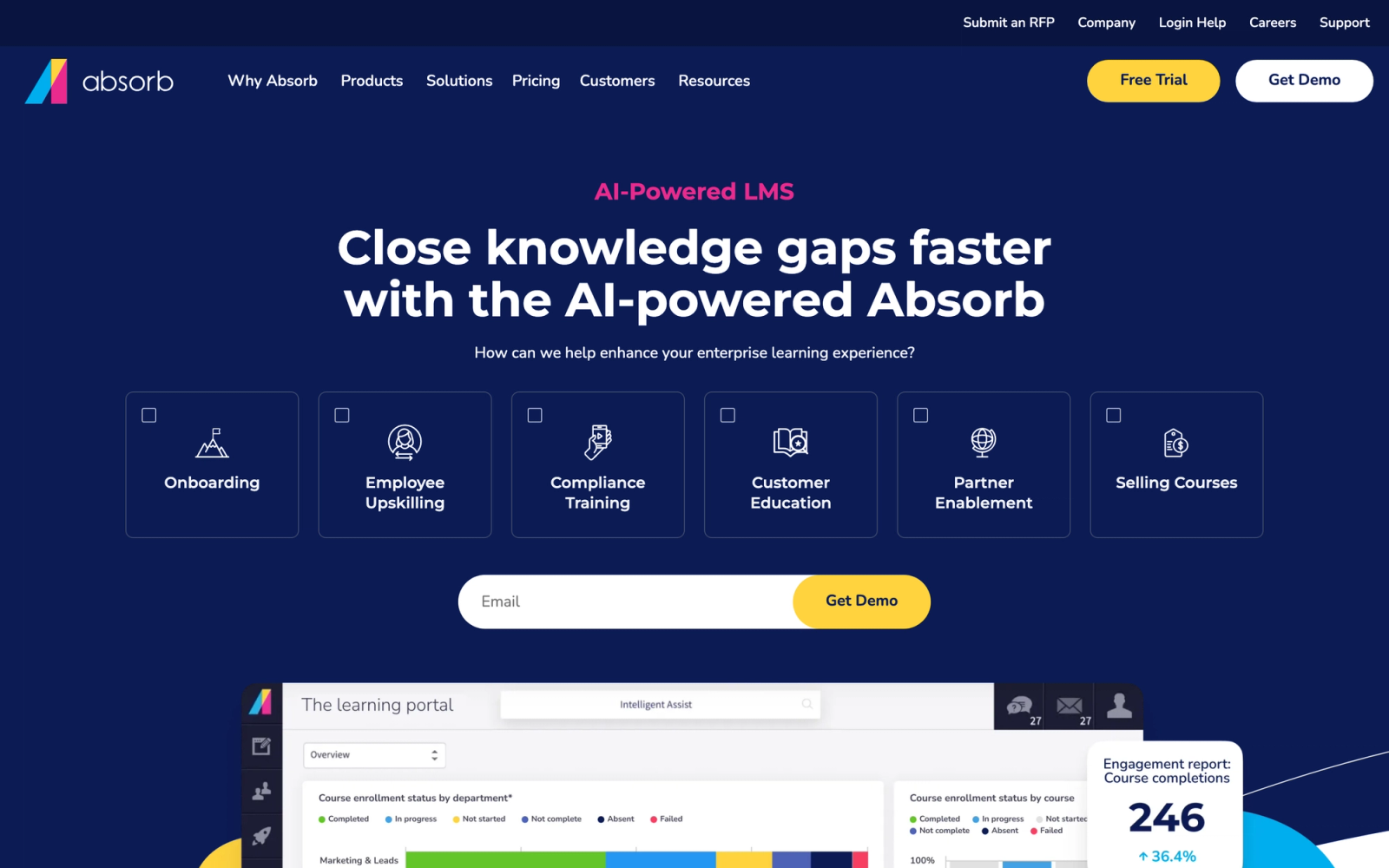
Absorb LMS positions itself as the "learner-first" enterprise LMS, and the interface reflects that claim. Absorb has one of the cleanest learner experiences on this list, with minimal navigation friction and a modern visual design that does not feel like enterprise software from a decade ago. The Absorb LMS alternatives comparison shows why the platform has built a strong mid-market following.
Compared to Sana Labs, Absorb takes a more traditional LMS approach with AI features layered in. Its Absorb Intelligence suite includes a recommendation engine, predictive analytics, and natural language search. The AI is practical rather than flashy, but it works reliably within the established LMS framework.
Core Capabilities
- Clean, modern learner interface with personalized dashboards and intuitive navigation
- Absorb Infuse for embedding learning directly into third-party applications and workflows
- Absorb Intelligence for AI-powered content recommendations and smart search
- Built-in content library (Absorb Amplify) with pre-built compliance and professional development courses
- SCORM 1.2, SCORM 2004, xAPI, and AICC content standard support
- eCommerce engine for selling courses externally with payment processing and tax handling
- Observation checklists for tracking hands-on competency in the field
- Custom reporting with scheduled delivery, visual dashboards, and data export
- Over 200 integrations including Salesforce, ADP, BambooHR, Zoom, and Webex
- Multi-tenant architecture for managing separate learning audiences from one admin panel
Standout Strength
Absorb's learner experience is polished enough to drive adoption without heavy change management. In corporate L&D, the biggest risk is not choosing the wrong features; it is choosing a platform that employees avoid using. Absorb reduces that friction.
Best For
Mid-market companies (200-5,000 employees) that need a full LMS with strong UX and fast deployment. Particularly appealing for organizations selling courses externally (customer education, continuing education) through the built-in eCommerce module, and for teams that want reliable employee training without months of configuration.
Pricing Overview
- Custom pricing based on user count and modules selected
- Typical starting range for mid-market: $14,400-$30,000+ per year
- Free demo available; no public free trial
Limitations
- AI capabilities are functional but not as deep as Sana Labs or Docebo for true adaptive learning paths.
- The admin interface, while improved, still has areas that feel less intuitive than the learner side.
- Pricing transparency is limited; you need to go through sales to get specific numbers.
Quick Comparison Insight
Better learner experience and faster deployment than Sana Labs, but less sophisticated AI. A strong choice when adoption and usability matter more than advanced personalization.
Degreed
Overview
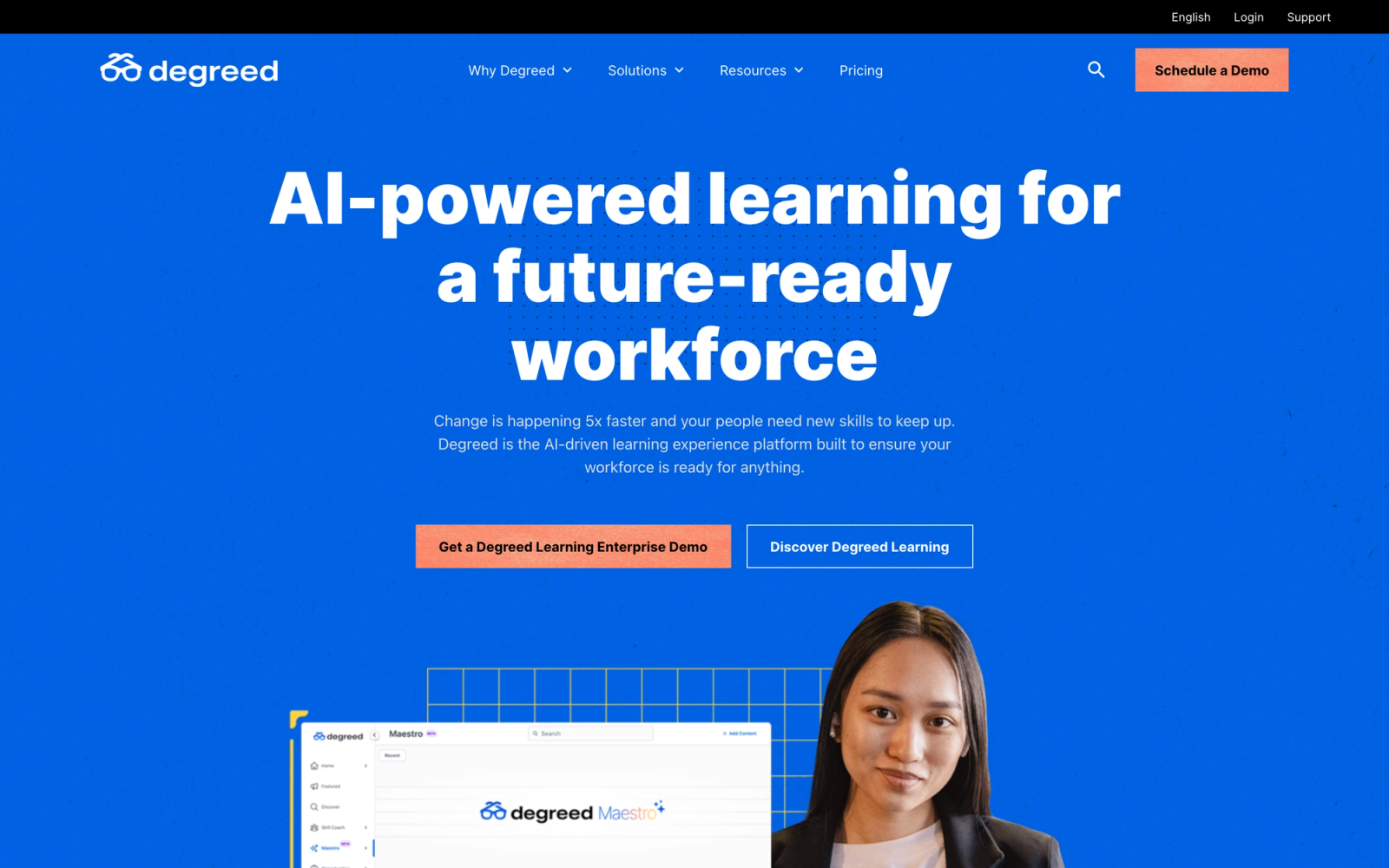
Degreed operates in a different category than traditional LMS platforms. It is a learning experience platform (LXP) that aggregates content from across the organization's learning stack, including internal courses, external content providers, articles, videos, podcasts, and informal learning activities. The platform then maps all of that to a skills framework, giving L&D leaders visibility into organizational capability gaps.
Where Sana Labs uses AI to personalize within its own content environment, Degreed uses AI to curate and connect resources from across the organization's entire learning stack. The skill mapping engine is the core differentiator: rather than tracking course completions, it tracks skill development across formal and informal channels, which changes how L&D leaders measure program impact.
Core Capabilities
- Skills-based learning architecture that maps all learning activities to an organizational skills taxonomy
- Content aggregation from thousands of providers including LinkedIn Learning, Coursera, Udemy, Pluralsight, and internal systems
- AI-powered content recommendations based on skill gaps, role requirements, and peer learning patterns
- Skill assessments and skill ratings that create a real-time view of workforce capabilities
- Learning pathways that combine content from multiple sources into structured development plans
- Manager-facing dashboards for tracking team skill development and identifying upskilling priorities
- Integration with HRIS platforms (Workday, SAP SuccessFactors) for aligning learning with talent management
- Social features including content sharing, peer recommendations, and expert identification
- Mobile app with offline access and push notifications for learning nudges
- Open API and pre-built connectors for embedding Degreed into existing workflows
Standout Strength
Degreed turns scattered learning investments into a unified skill development strategy. If your organization already pays for multiple content subscriptions and internal training programs, Degreed aggregates them into one interface where all of those activities are visible, measurable, and mapped to skills.
Best For
Large enterprises (5,000+ employees) with mature L&D functions that already invest in multiple content providers and need a way to unify learning data around skills. Particularly strong for organizations implementing skill-based talent strategies and those managing development programs across diverse content sources and delivery channels.
Pricing Overview
- Custom enterprise pricing based on user count and content provider integrations
- Typical starting point above $40,000 per year for enterprise deployments
- No public free trial; demo available on request
Limitations
- Not a replacement for an LMS. Degreed works alongside your existing LMS, not instead of it, which means you are managing two platforms.
- The skill taxonomy setup requires significant upfront investment in defining your organizational skills framework.
- Enterprise pricing puts it out of reach for mid-market companies and smaller L&D teams.
Quick Comparison Insight
More strategic than Sana Labs in terms of skill intelligence, but it is an LXP layer, not a standalone platform. Best for organizations that want to orchestrate their entire learning stack rather than manage a single LMS.
WorkRamp
Overview
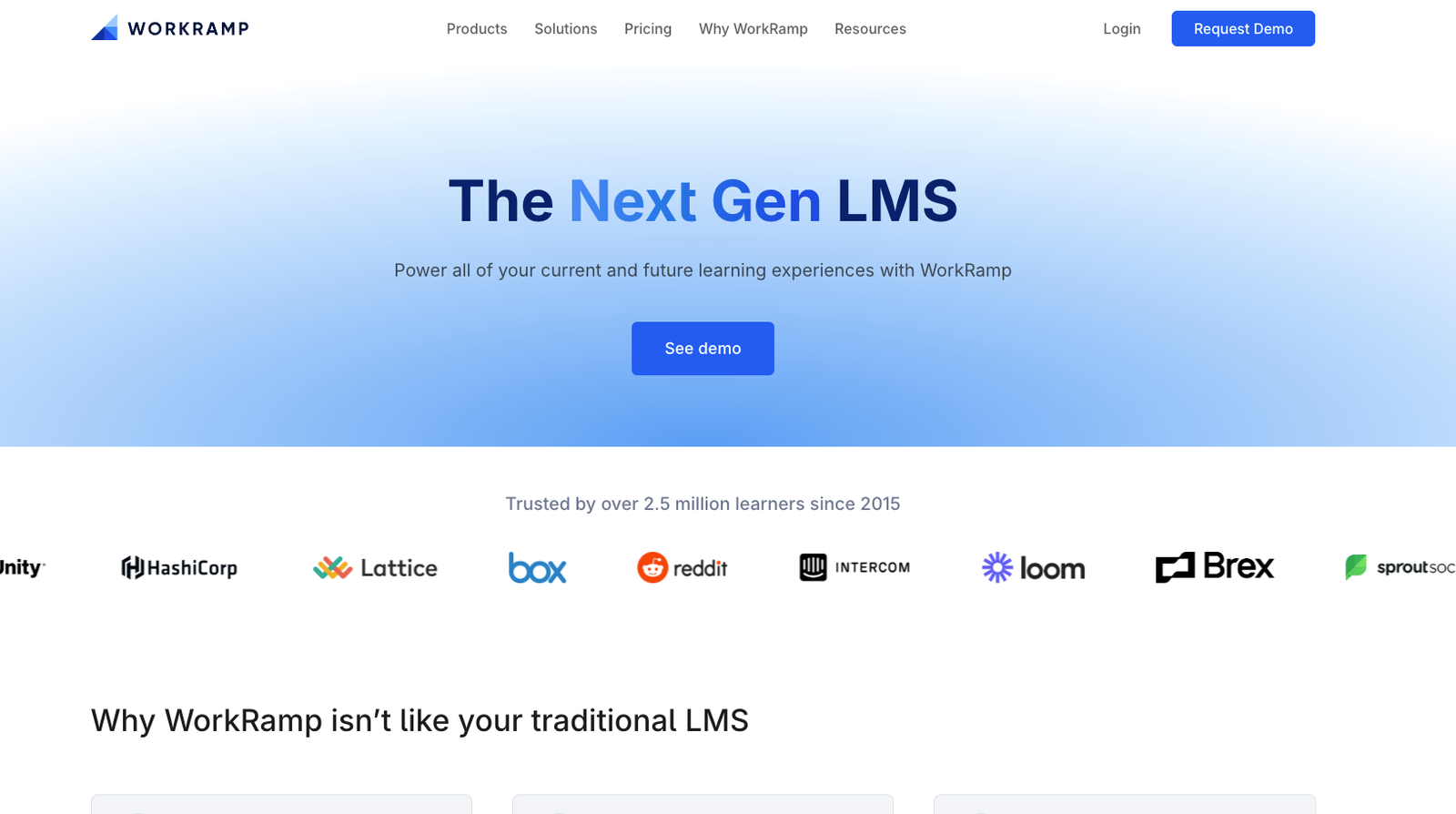
WorkRamp is an AI-first learning platform built around two products: an Employee Learning Cloud for internal training and a Customer Learning Cloud for customer and partner education. Where Sana Labs centers everything on AI personalization, WorkRamp pairs generative AI for content creation with branded academies you can run for very different audiences from one system.
Its AI Assist drafts and edits courses from your existing files, generates quizzes and Q&A, and handles captioning and translation, so L&D teams can move from raw material to a published course quickly. The platform is consistently rated near the top of enterprise LMS categories on review sites for ease of use.
Core Capabilities
- AI Assist for drafting, editing, and refining course content from existing files
- Separate Employee and Customer Learning Clouds for internal and external audiences
- Branded academies for customer, partner, and employee training
- Native course authoring plus SCORM support and instructor-led training
- Skills builder, badges, and certifications
- Reporting and dashboards with engagement and completion analytics
- Integrations with Salesforce, Zoom, Slack, and common business tools
- Localization and multi-language support
Standout Strength
WorkRamp is strong when one team needs to train both employees and customers without buying two platforms. The split between an Employee and a Customer Learning Cloud, combined with AI-assisted authoring, makes it practical to stand up internal onboarding and external customer academies side by side.
Best For
Mid-market and enterprise teams that run both internal enablement and external customer or partner education. Especially useful for software and SaaS companies that want product training, customer academies, and partner certification in one AI-first platform.
Pricing Overview
- Professional plan for customer and partner training with branded academies
- Enterprise plan adding WorkRamp AI, deeper analytics, and advanced integrations
- Custom pricing with no public self-serve tier
- Demo available on request
Limitations
- Pricing is not published; you need a sales conversation to scope cost.
- The two-cloud model is powerful but can be more than teams that only need simple internal training.
- Less suited to live, cohort-based programs than platforms built specifically for that.
Quick Comparison Insight
More flexible than Sana for organizations that train customers and partners as well as employees, with AI focused on speeding up content creation rather than personalizing delivery.
Cornerstone OnDemand
Overview
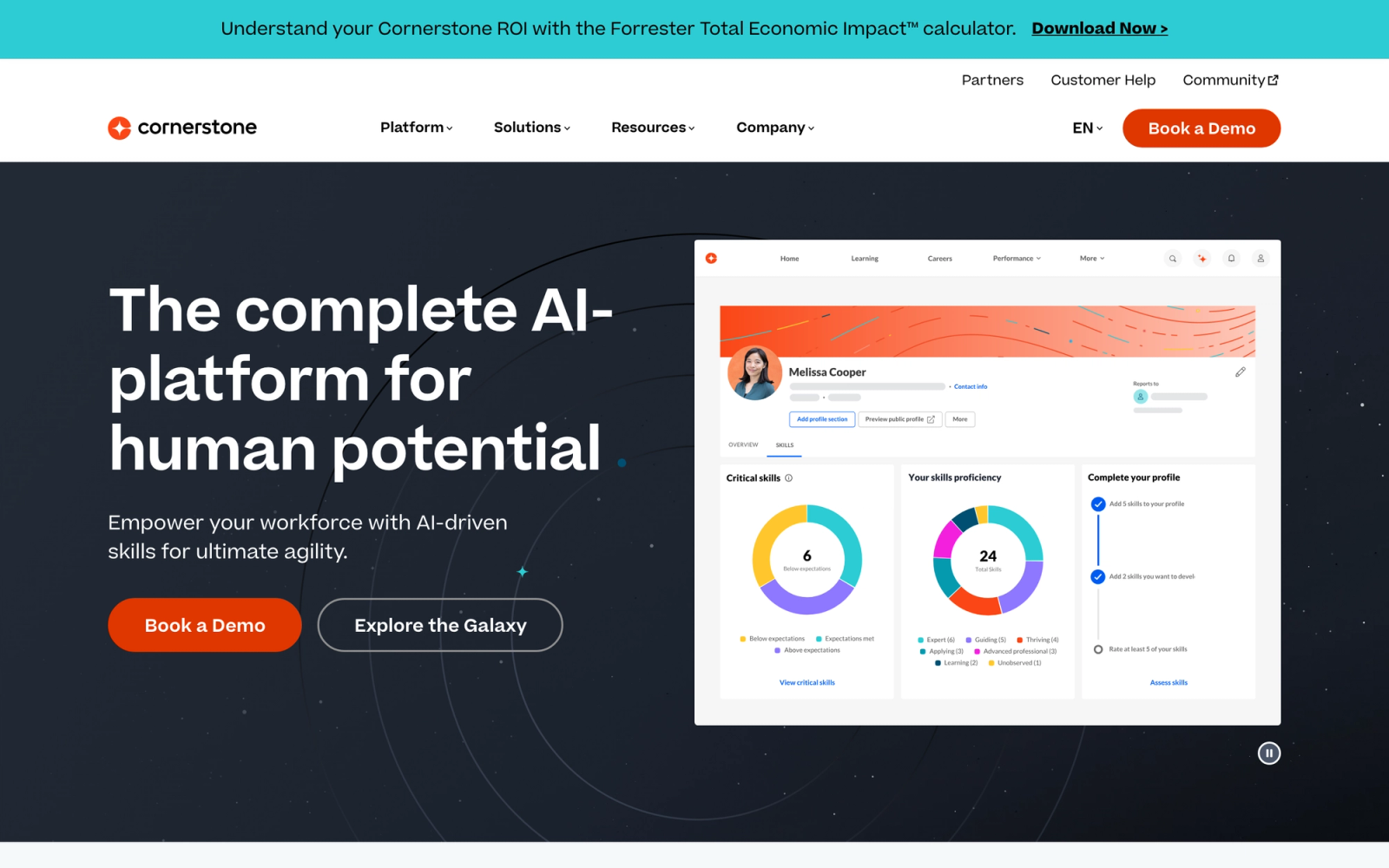
Cornerstone OnDemand is one of the most established names in enterprise learning and talent management. The platform covers the full lifecycle: learning management, performance management, recruiting, workforce planning, and HR administration. Where Sana Labs is narrowly focused on AI-driven learning, Cornerstone is a sprawling talent suite that includes learning as one major component.
Cornerstone's strength lies in its depth for regulated industries. Financial services, healthcare, manufacturing, and government organizations with complex compliance requirements rely on Cornerstone because it handles audit trails, certification management, and regulatory reporting at a level that newer platforms cannot match. The Cornerstone alternatives landscape reflects this positioning.
Core Capabilities
- Enterprise LMS with formal learning, ILT management, and virtual classroom integration
- Compliance engine with automated certification tracking, audit trails, and regulatory reporting
- Performance management with goal setting, reviews, and competency assessments
- Succession planning and talent pipeline management
- AI-powered skill identification and learning recommendations through the Cornerstone Skills Graph
- Content marketplace with access to curated third-party courses
- Extended enterprise support for training external partners, customers, and contractors
- Multi-language support covering 50+ languages for global deployments
- Advanced reporting with custom report builder, compliance dashboards, and scheduled delivery
- Over 300 pre-built integrations with HRIS, payroll, and productivity tools
Standout Strength
Cornerstone handles complexity that simpler platforms cannot. When you need to manage 100 different compliance certifications across 20 countries with different regulatory requirements, track ILT sessions alongside digital learning, and feed learning data into performance reviews, Cornerstone's depth is difficult to replicate.
Best For
Large enterprises (2,000+ employees) in regulated industries that need compliance management, talent management, and learning in a unified platform. Particularly strong for organizations with complex instructor-led training schedules, multi-country operations, and strict audit requirements.
Pricing Overview
- Custom enterprise pricing; contact sales for quotes
- Modular pricing allows organizations to select specific capabilities
- No public pricing or free trial; enterprise demo available
Limitations
- The user interface has improved but still feels heavy compared to modern platforms like Sana Labs or Absorb LMS.
- Implementation timelines are measured in months, not weeks. Expect significant professional services costs.
- The breadth of the platform means most organizations only use a fraction of available features, which raises questions about value for cost.
Quick Comparison Insight
Far broader than Sana Labs in scope, but significantly heavier in implementation and cost. The right choice when compliance and talent management integration are non-negotiable requirements.
TalentLMS
Overview
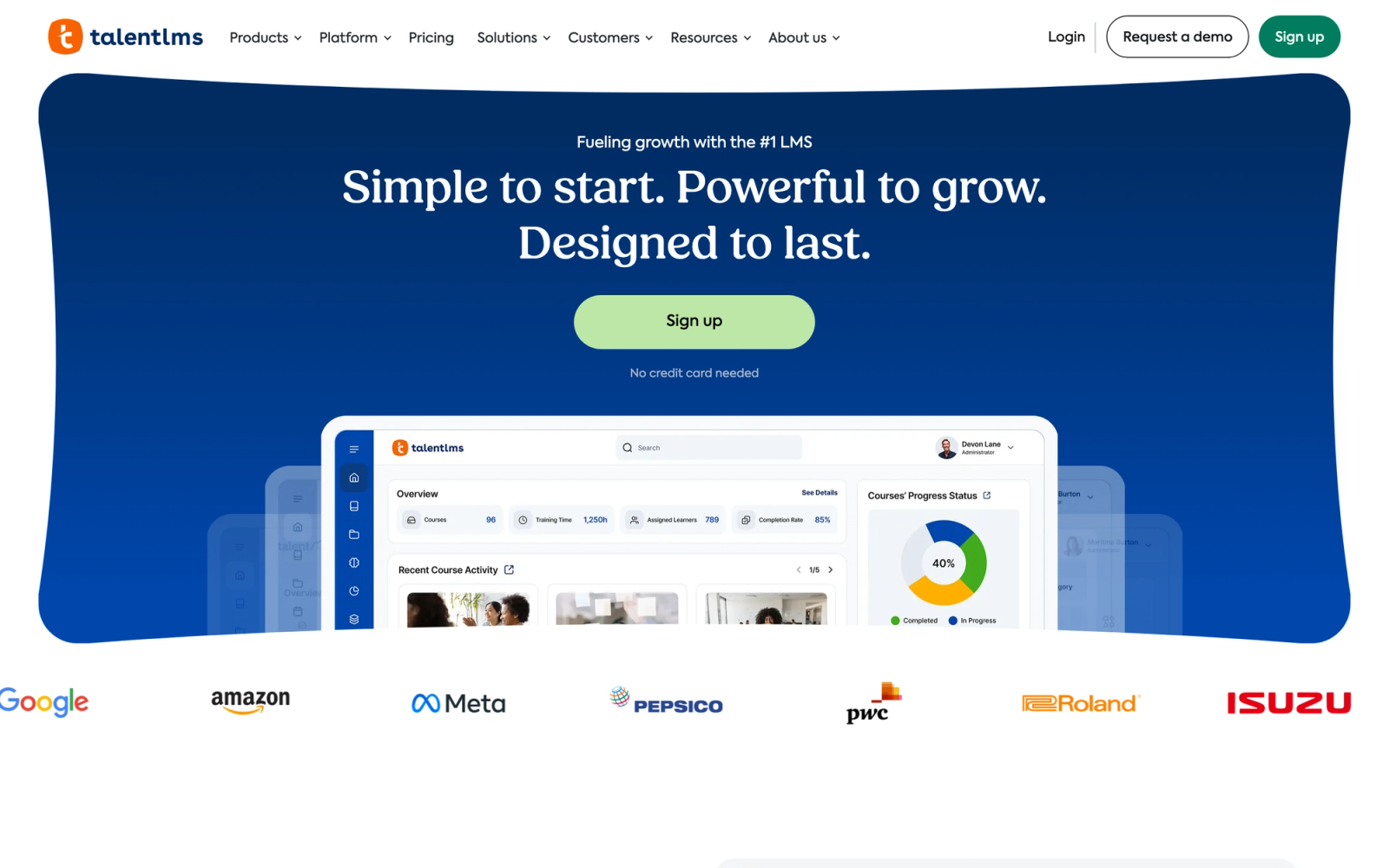
TalentLMS is the budget-conscious counterpoint to enterprise platforms like Sana Labs. Built by Epignosis, TalentLMS targets small and mid-size businesses that need a functional, easy-to-use LMS without the complexity or cost of enterprise tools. The platform offers a free tier for up to 5 users and 10 courses, which makes it one of the few options where you can start without a sales conversation.
What distinguishes TalentLMS from Sana Labs is straightforwardness. There is no sophisticated AI personalization engine, no skill mapping architecture, and no content aggregation layer. Instead, you get a clean course builder, SCORM support, built-in assessments, and enough reporting to track progress. The TalentLMS pricing model is transparent and scales predictably, which appeals to budget-sensitive teams.
Core Capabilities
- Intuitive course builder with support for text, video, presentations, and embedded content
- SCORM, xAPI, and cmi5 content standard support
- Built-in assessment engine with multiple question types, grading, and automatic scoring
- Gamification with points, badges, and leaderboards
- Certification management with automated renewal reminders
- User management with branches and groups for organizing learners by team or department
- Built-in videoconferencing integrations with Zoom, GoToMeeting, and BigBlueButton
- eCommerce features for selling courses with Stripe and PayPal integration
- REST API and over 200 integrations through Zapier and native connectors
- Mobile app with offline access for iOS and Android
Standout Strength
TalentLMS works out of the box. A non-technical HR manager can set up a course, enroll learners, and start tracking progress within a day. For small businesses where employee training needs to happen without a dedicated L&D team, that simplicity is the feature.
Best For
Small to mid-size businesses (10-500 employees) that need a functional LMS without enterprise complexity. Strong for teams running onboarding programs, basic compliance training, and internal knowledge sharing. A practical choice for organizations that have outgrown spreadsheets and shared drives but are not ready for platforms priced at $25,000+ per year.
Pricing Overview
- Free plan for up to 5 users and 10 courses
- Core plan at $149 per month
- Grow plan at $299 per month
- Pro plan at $579 per month, plus a custom Enterprise plan for 1,000+ users
- Annual billing saves around 20%
Limitations
- No meaningful AI-driven personalization. If adaptive learning paths are a core requirement, TalentLMS will not deliver.
- Reporting is adequate for basic needs but lacks the depth of enterprise platforms for cross-functional analytics.
- The free plan is useful for testing but too limited for any real deployment beyond a small pilot.
Quick Comparison Insight
The opposite end of the spectrum from Sana Labs. No AI sophistication, but ten times more accessible on price and setup speed. The right choice when "good enough and affordable" beats "advanced but expensive."
Coursera for Business
Overview
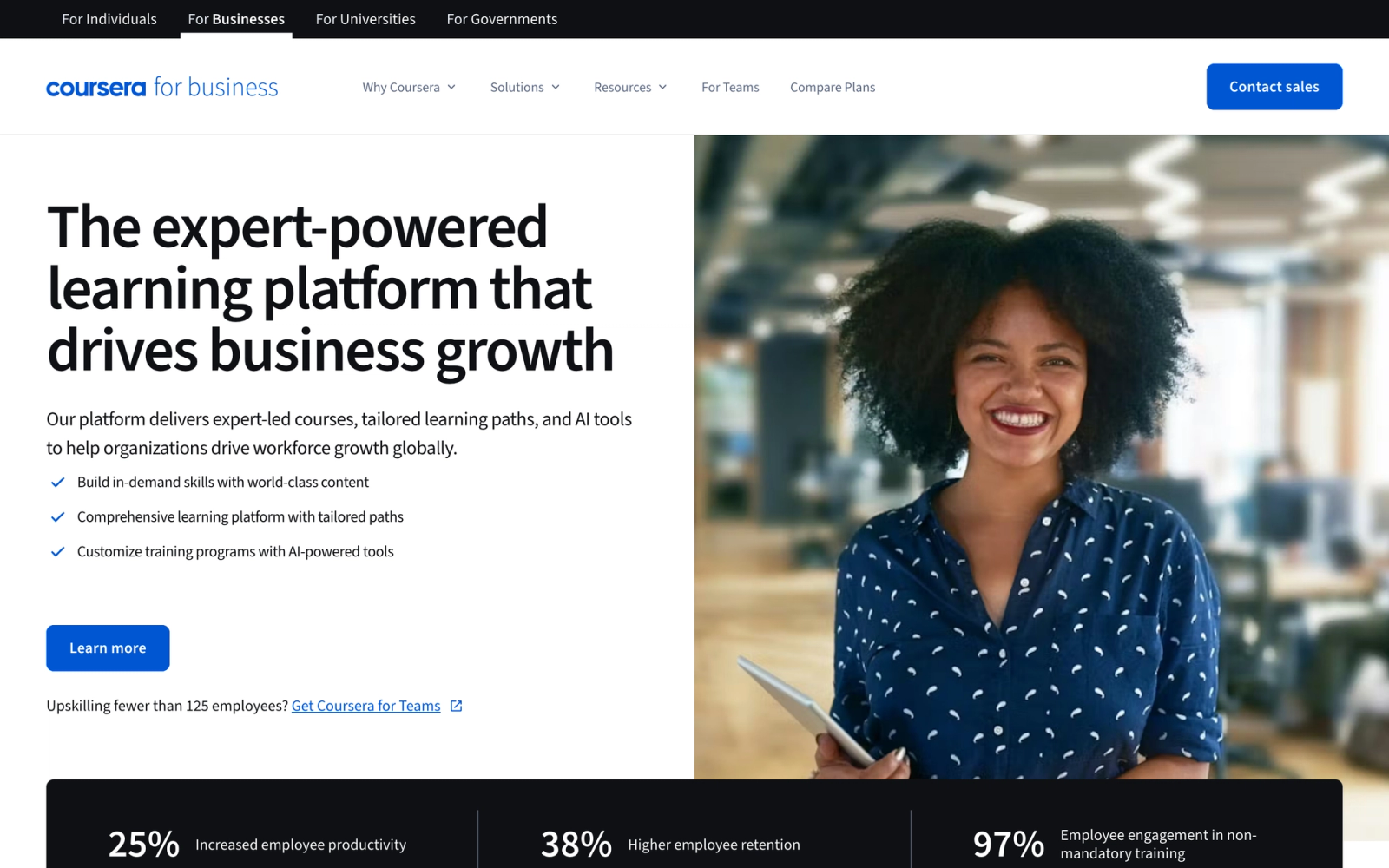
Coursera for Business (branded as Coursera for Teams and Coursera for Enterprise at different tiers) takes a different approach to the learning platform question. Instead of offering tools to build your own content, it provides access to a curated library of courses from universities (Stanford, Yale, University of Michigan) and industry partners (Google, IBM, Meta). The AI layer recommends courses based on role, skills, and organizational priorities.
The contrast with Sana Labs is structural. Sana is a platform for personalizing and delivering content you create or import. Coursera is a content library with a platform wrapped around it. For organizations that lack the resources to build custom training content but need high-quality learning material, Coursera solves a fundamentally different problem than an LMS or LXP.
Core Capabilities
- Access to 10,000+ courses and 2,000+ guided projects from top universities and companies
- Professional Certificates and Specializations that provide credential-worthy learning paths
- SkillSets feature that bundles courses into role-based learning journeys
- AI-driven course recommendations based on skill gaps and role profiles
- Clips feature for short-form, job-relevant video content designed for just-in-time learning
- Custom learning academies that organizations can brand and curate for specific teams
- Integration with LMS platforms via LTI, SCORM, and API for feeding completion data into existing systems
- Analytics dashboard tracking enrollment, completion, skill development, and ROI indicators
- Multi-language content with courses available in English, Spanish, French, Chinese, and more
- Mobile app with offline course download
Standout Strength
Coursera's content quality carries the weight of university credentials. When a sales team completes a negotiation course from Yale or an engineering team earns a Google Cloud certificate, that carries different credibility than an internally authored module. For upskilling initiatives tied to industry-recognized credentials, this is a genuine advantage.
Best For
Organizations (500+ employees) that need high-quality external content without building a content creation team. Particularly strong for technical upskilling (data science, cloud computing, cybersecurity), leadership development, and companies that want to offer learning benefits that double as employee retention tools.
Pricing Overview
- Teams plan at $399 per user per year (5-125 users) with access to the full catalog
- Enterprise plan with custom pricing for 125+ users including additional admin features
- Free 14-day trial for Teams plan
Limitations
- You cannot create your own content on the platform. If you need custom onboarding, company-specific compliance, or proprietary training, Coursera does not cover that.
- The content is general, not tailored to your organization's specific context, tools, or processes.
- At $399 per user per year, costs add up quickly for large organizations, particularly if utilization rates are uneven.
Quick Comparison Insight
Solves the content problem that Sana Labs users face (needing enough material for AI personalization), but trades platform flexibility for content quality. Best used alongside an LMS rather than as a standalone solution.
LinkedIn Learning
Overview
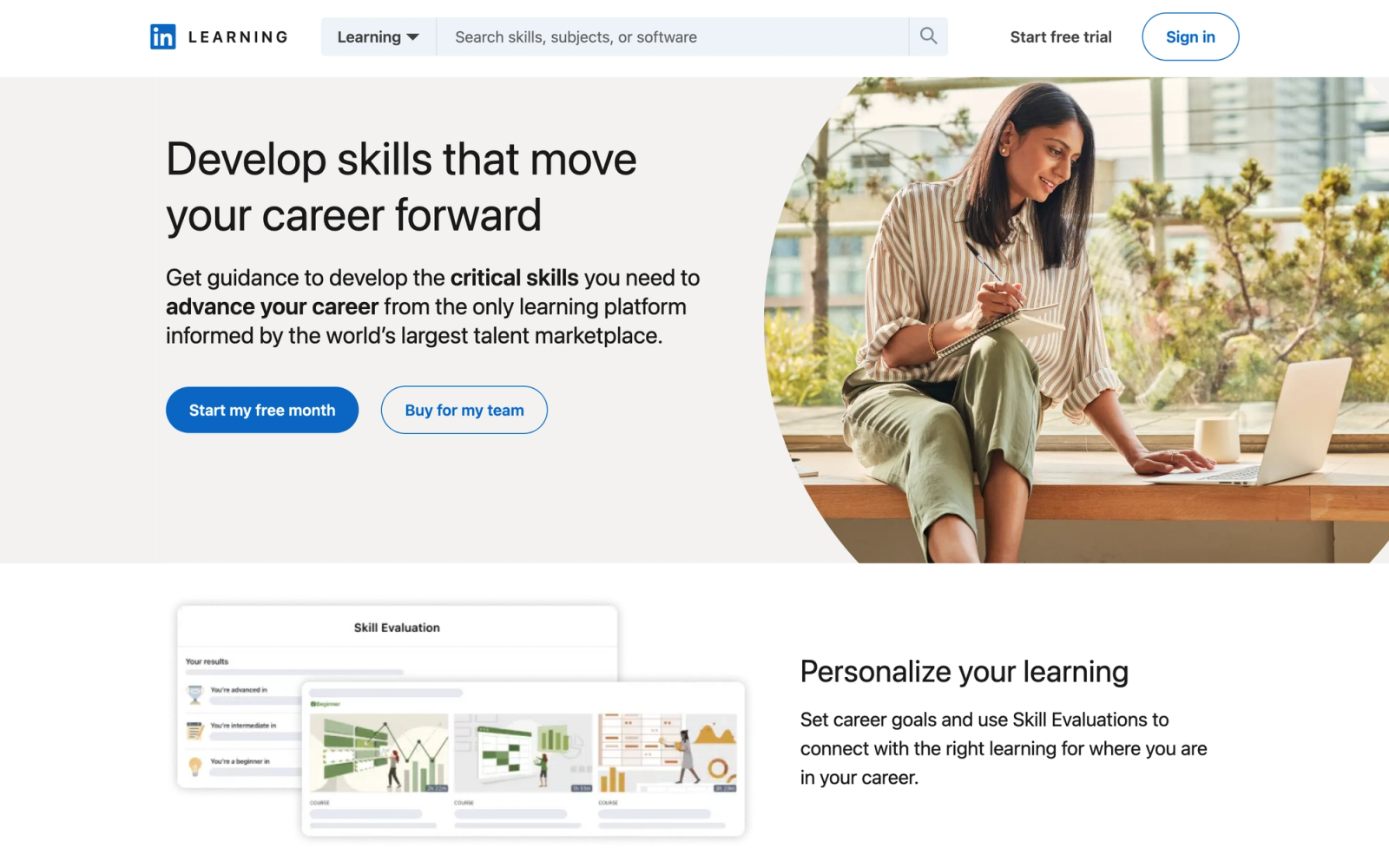
LinkedIn Learning provides access to over 25,000 courses spanning business, technology, and creative skills, delivered by industry practitioners. What makes it distinct from other content libraries is the LinkedIn stack integration. Course completions appear on learner profiles, skills are mapped to LinkedIn's economic graph data, and recommendations are informed by hiring trends and job market signals.
For organizations already embedded in the Microsoft stack (Teams, Outlook, Viva), LinkedIn Learning fits naturally into existing workflows. Compared to Sana Labs, it is not a platform where you build and personalize your own content. It is a content subscription that draws on LinkedIn's unique data on skills demand to guide recommendations. That data advantage is real, and no other learning platform can replicate it.
Core Capabilities
- Library of 25,000+ courses covering business, technology, creative, and soft skills
- AI-driven recommendations informed by LinkedIn profile data, job titles, and industry hiring trends
- Learning paths that group courses into structured development journeys by role or skill
- Integration with Microsoft Teams, Viva Learning, and Microsoft 365 for in-flow-of-work learning
- Admin dashboard with engagement analytics, skill insights, and team-level reporting
- Custom learning collections that admins can curate for specific teams or initiatives
- Certificates of completion that appear on LinkedIn profiles automatically
- Multi-language support with courses available in 7+ languages
- Mobile app with offline download capability
- LMS integration via SCORM, LTI, and direct API connectors for feeding data into external systems
Standout Strength
LinkedIn Learning's skill-to-career mapping is hard to match. The platform knows which skills are in demand across industries, which roles are emerging, and what top performers in specific functions are learning. That intelligence, drawn from LinkedIn's 1 billion+ member network, gives recommendations a context that no internal LMS can replicate.
Best For
Organizations of any size that want a plug-and-play content library with minimal administration. Especially effective for companies in the Microsoft stack, teams needing broad professional development coverage, and HR leaders who want learning analytics tied to market-relevant skill trends. Also works as a content layer feeding into an existing LMS or LXP.
Pricing Overview
- Individual plan at $29.99 per month
- Teams plan with custom pricing starting around $400-$500 per seat per year for enterprise
- Enterprise plan with custom pricing including Viva Learning integration
- Free 1-month trial for individual plan
Limitations
- No custom content creation. You are limited to LinkedIn's library and curated collections.
- Course depth varies. Some topics have excellent coverage; others are surface-level and more suited to awareness than mastery.
- The value proposition is strongest in the Microsoft stack. Organizations on Google Workspace or other stacks get less integration benefit.
Quick Comparison Insight
Less platform, more content library, but the LinkedIn data layer adds intelligence that Sana Labs cannot match for skill-to-market alignment. Best as a complement to an LMS, not a replacement.
How to Choose the Right Alternative
The decision depends less on which platform has the longest feature list and more on which one matches your specific context. Here is a practical framework for narrowing the field.
Start with your learning model. If your training is primarily self-paced content consumption at scale, platforms like Docebo, Absorb, or Cornerstone are the right category. If your programs are instructor-led and cohort-based, Teachfloor is built for that. If you need both, you may need two platforms, and that is a legitimate answer.
Determine whether you need AI or content. Sana Labs, Docebo, and Degreed offer AI personalization, but AI only works when there is sufficient content and learner data. If your organization lacks a mature content library, Coursera for Business or LinkedIn Learning solves the content problem first. 360Learning solves it by turning internal experts into content creators.
Match the platform to your team size. TalentLMS serves small businesses with transparent pricing and minimal setup. Docebo and Absorb target the mid-market. Cornerstone, Degreed, and WorkRamp serve large enterprises with the budget for custom implementations. Choosing a platform designed for a different scale creates friction in either direction.
Assess integration requirements. If your organization runs on the Microsoft stack, LinkedIn Learning's native Teams integration is a significant advantage. If you need HRIS integration with Workday or SAP SuccessFactors, Cornerstone and Docebo have the deepest pre-built connectors. If your LMS integrations requirements are minimal, lighter platforms save you from paying for complexity you will not use.
Consider total cost of ownership. The subscription price is the beginning, not the end. Factor in implementation costs, content library fees, admin training, and the opportunity cost of a 6-month deployment versus a 2-week setup. A platform that costs more monthly but goes live in two weeks may deliver better ROI than one that costs less but takes six months to configure.
FAQ
What happened to Sana Labs after the Workday acquisition?
Workday acquired Sana Labs in November 2025 for about $1.1 billion and is integrating it into its HR and finance platform as “Sana from Workday.” The standalone product still exists for now, but its roadmap, pricing, and long-term availability are tied to Workday, which is why many teams are evaluating alternatives.
How much does Sana Labs cost?
Sana Learn uses enterprise pricing with a 300-license minimum, which puts the entry point at roughly $47,000 per year before implementation and add-ons. Pricing is custom and quote-based, with no public self-serve tier.
What is the best Sana Labs alternative?
It depends on your learning model. For flexible, interactive, and cohort-based programs with community and AI course creation, Teachfloor is the strongest pick. For large enterprises that want AI on a mature LMS, Docebo or Cornerstone fit better. For ready-made content libraries, Coursera for Business or LinkedIn Learning.
Is Sana Labs good for small businesses?
Sana Labs targets enterprise buyers with custom pricing. Small businesses with fewer than 200 employees and limited content libraries are unlikely to see strong returns from its AI personalization engine. TalentLMS or Teachfloor are more practical options for smaller teams.
Can I use Sana Labs for compliance training?
Sana Labs supports basic compliance workflows, but it is not built with the depth of audit trails, automated certification renewal, and regulatory reporting that compliance-heavy industries require. Cornerstone OnDemand or Docebo handle compliance at a more mature level.
What is the difference between an LMS and an LXP?
An LMS (learning management system) manages structured courses, tracks completions, and handles administration. An LXP (learning experience platform) aggregates content from multiple sources, uses AI to recommend resources, and focuses on the learner experience over admin control. Degreed is an LXP; Docebo, Absorb, and WorkRamp are LMS platforms with LXP and AI features. Understanding the LMS fundamentals helps clarify which model fits your organization.
Do I need AI in my learning platform?
Not necessarily. AI-driven personalization delivers the most value when you have thousands of learners, a large content library, and enough data for the algorithms to identify meaningful patterns. Organizations with smaller teams or training programs built around live facilitation often get better results from simpler platforms. The question is not whether AI is impressive but whether it improves outcomes for your specific learner population.
Can I combine multiple platforms from this list?
Yes, and many organizations do. A common pattern is pairing an LMS (Docebo, Absorb, Cornerstone) with a content library (Coursera, LinkedIn Learning) and optionally adding a cohort-based platform (Teachfloor) for programs that require live facilitation. The key is ensuring data flows between systems, either through native integrations or an LXP layer like Degreed.


