


Why Look for a SAP SuccessFactors Learning Alternative?
SAP SuccessFactors Learning is an enterprise LMS tightly integrated with the broader SAP Human Capital Management suite. For organizations already running SAP HCM, it offers a logical extension for managing compliance training, certifications, and structured learning programs. But that tight coupling with the SAP stack is also the source of most complaints.
Implementation timelines that stall projects. Deploying SuccessFactors Learning is not a quick setup. Organizations routinely report implementation cycles of 6 to 12 months, sometimes longer when complex integrations with other SAP modules are involved. For L&D teams that need to launch training programs on a shorter timeline, that delay is a real operational cost.
Expensive licensing. SAP's pricing model bundles SuccessFactors Learning into broader HCM suite licensing, which makes it difficult to isolate the cost of the LMS alone. For organizations that only need a learning management system and not the full HCM suite, this means paying for capabilities they will never use.
Heavy IT dependency. Configuring courses, adjusting workflows, and building reports in SuccessFactors Learning often requires SAP technical expertise. L&D teams that want to manage their own platform without submitting IT tickets for routine changes find this frustrating. The admin experience assumes familiarity with SAP's configuration logic, which is a steep learning curve for non-technical staff.
A user interface that feels dated. Compared to modern LMS platforms built in the last five to seven years, SuccessFactors Learning's interface lacks the polish and intuitiveness that learners and admins now expect. Navigation can feel clunky, and the learner experience does not match what employees encounter in consumer-grade applications.
Limited standalone value. SuccessFactors Learning works best when it sits inside the SAP stack. If your organization is not running SAP HCM, or is considering moving away from SAP for HR, the LMS loses much of its integration advantage. Running it as a standalone learning platform exposes its weaknesses without the benefits.
These are not minor inconveniences. They affect adoption rates, administrative efficiency, and the speed at which L&D teams can respond to business needs. The alternatives below address these specific gaps.
What to Look for in an Enterprise LMS
Before comparing platforms, it helps to define the criteria that matter most when replacing an enterprise learning system. The right choice depends on your organization's size, technical resources, and how much independence your L&D team needs.
Time to value. How quickly can you go from contract signing to running live training? Platforms with guided setup, pre-built templates, and intuitive admin interfaces reduce the implementation burden. If your current deployment took half a year, look for alternatives that measure onboarding in weeks, not months.
Admin autonomy. Can your L&D team create courses, assign learning paths, and pull reports without IT support? The best modern platforms give instructional designers direct control over content and program management. This is one of the sharpest contrasts with SuccessFactors Learning.
Learner experience. Employee engagement with training depends heavily on the platform interface. Look for mobile-responsive design, clean navigation, personalized dashboards, and content discovery features. If learners avoid logging in because the interface feels like enterprise software from a decade ago, completion rates suffer.
Content flexibility. Does the platform support SCORM, xAPI, video, documents, and external content integrations? Organizations with diverse training content needs should verify that the LMS handles multiple formats without workarounds.
Compliance and certification management. For regulated industries, automated recertification tracking, audit trails, and compliance reporting are non-negotiable. Verify that the platform handles these natively rather than through manual processes.
Integration stack. Check for pre-built connectors to your HRIS, CRM, content providers, and communication tools. An open API matters if you need custom workflows. The goal is to avoid recreating the vendor lock-in that makes SAP environments difficult to change.
Total cost of ownership. Look beyond the per-user license fee. Factor in implementation consulting, admin training, content migration, and ongoing support costs. A platform with a lower sticker price but expensive professional services can end up costing more than a higher-priced option with self-service setup.
10 Best SAP SuccessFactors Learning Alternatives
The platforms below range from enterprise-grade systems designed for global organizations to mid-market solutions built for speed and simplicity. Each one addresses a different combination of the pain points outlined above, covering a broad spectrum of company sizes, industries, and L&D maturity levels.
Tool Enterprise Scale Compliance Content Authoring Social Learning Best For Cornerstone OnDemand ✓ ✓ ✓ ✓ Large enterprises with complex compliance and global workforce training Docebo ✓ ✓ ✓ ✓ Mid-to-large companies wanting AI-driven learning and content curation Absorb LMS ✓ ✓ ✓ ✗ Organizations prioritizing admin usability and clean learner UX Workday Learning ✓ ✓ ✗ ✓ Companies already running Workday HCM needing native LMS integration Oracle Learning ✓ ✓ ✗ ✓ Oracle HCM customers needing embedded learning within their HR stack TalentLMS ✗ ✓ ✓ ✗ SMBs and mid-market companies needing fast deployment at low cost LearnUpon ✓ ✓ ✓ ✗ Multi-audience training: employees, partners, and customers from one platform 360Learning ✓ ✓ ✓ ✓ L&D teams wanting SMEs to create and own training content Bridge LMS ✗ ✓ ✓ ✓ Mid-market companies focused on employee development and performance alignment Teachfloor ✗ ✗ ✓ ✓ Teams running cohort-based, instructor-led, or collaborative training programs
Teachfloor
Overview
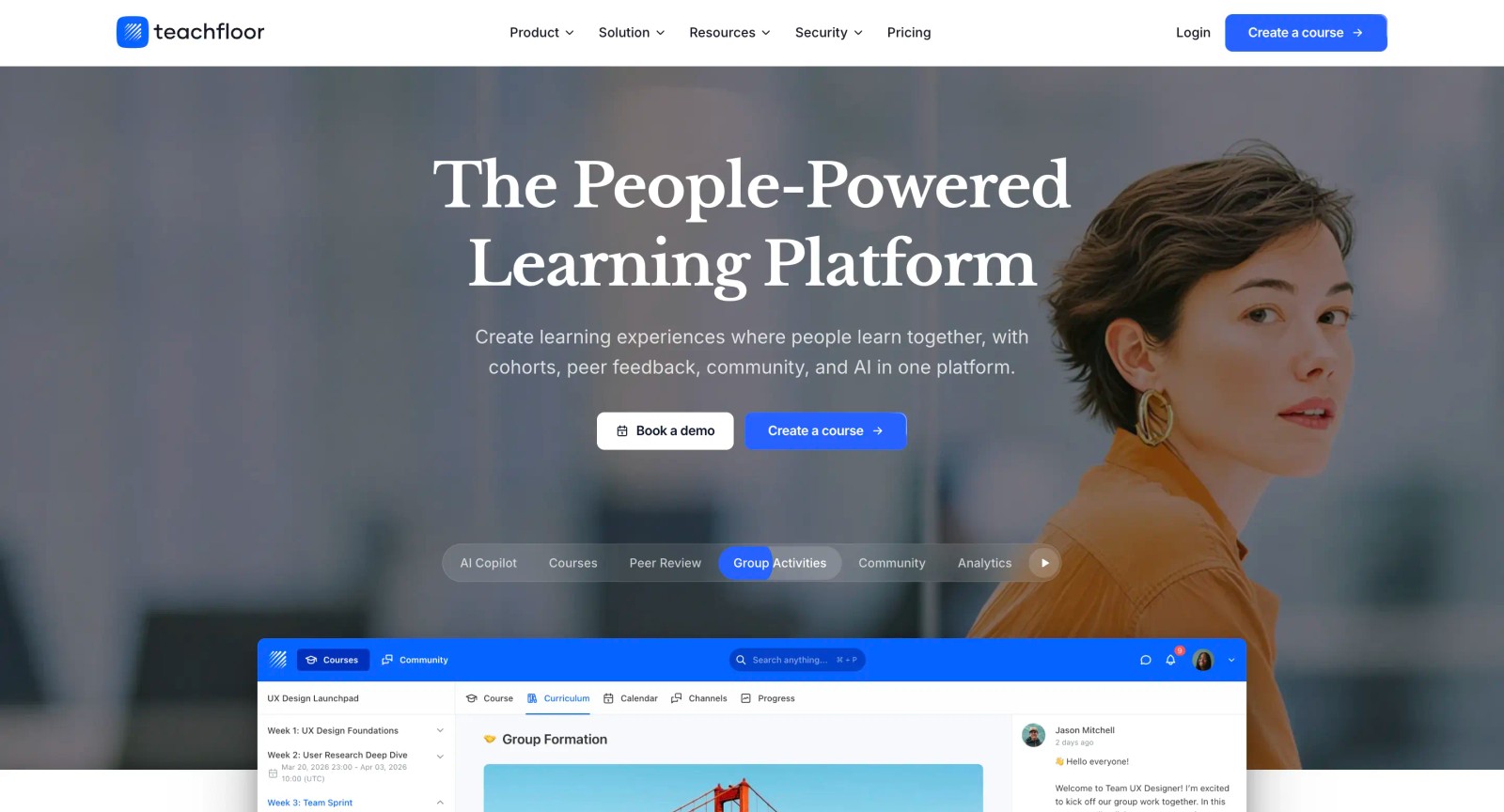
Teachfloor is a standalone learning platform that runs without an HCM system underneath it. It supports self-paced, live, and cohort courses with white-label branding, multi-branch workspaces, certificates, and analytics. L&D teams get a fully operational environment that does not depend on an HR stack for basic functions. It targets mid-market scale rather than large enterprise deployments.
Core Capabilities
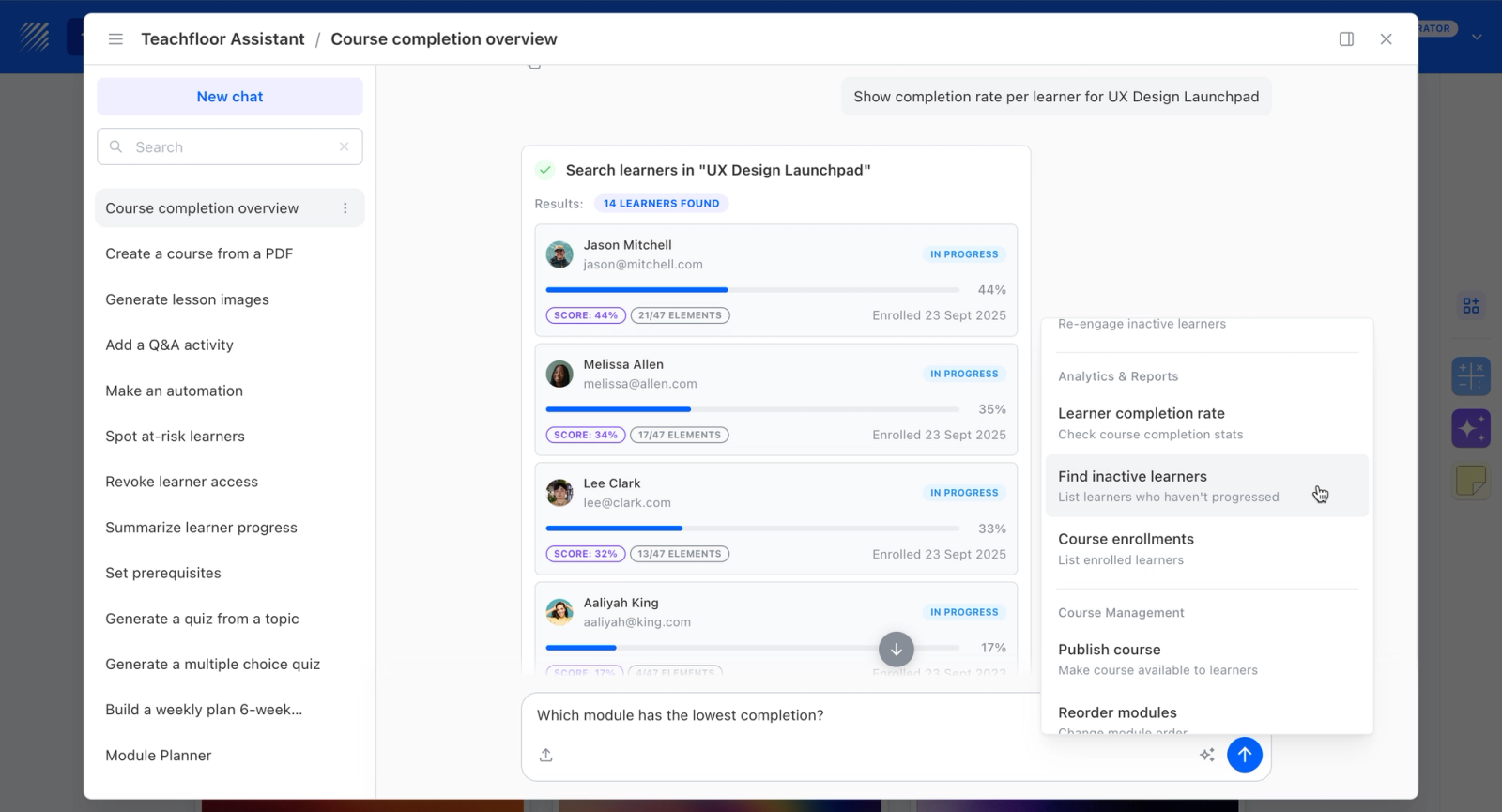
- Standalone operation that does not depend on an HCM platform
- Self-paced, live, and cohort delivery
- White-label portal and multi-branch workspaces
- Certificates, quizzes, and SCORM support
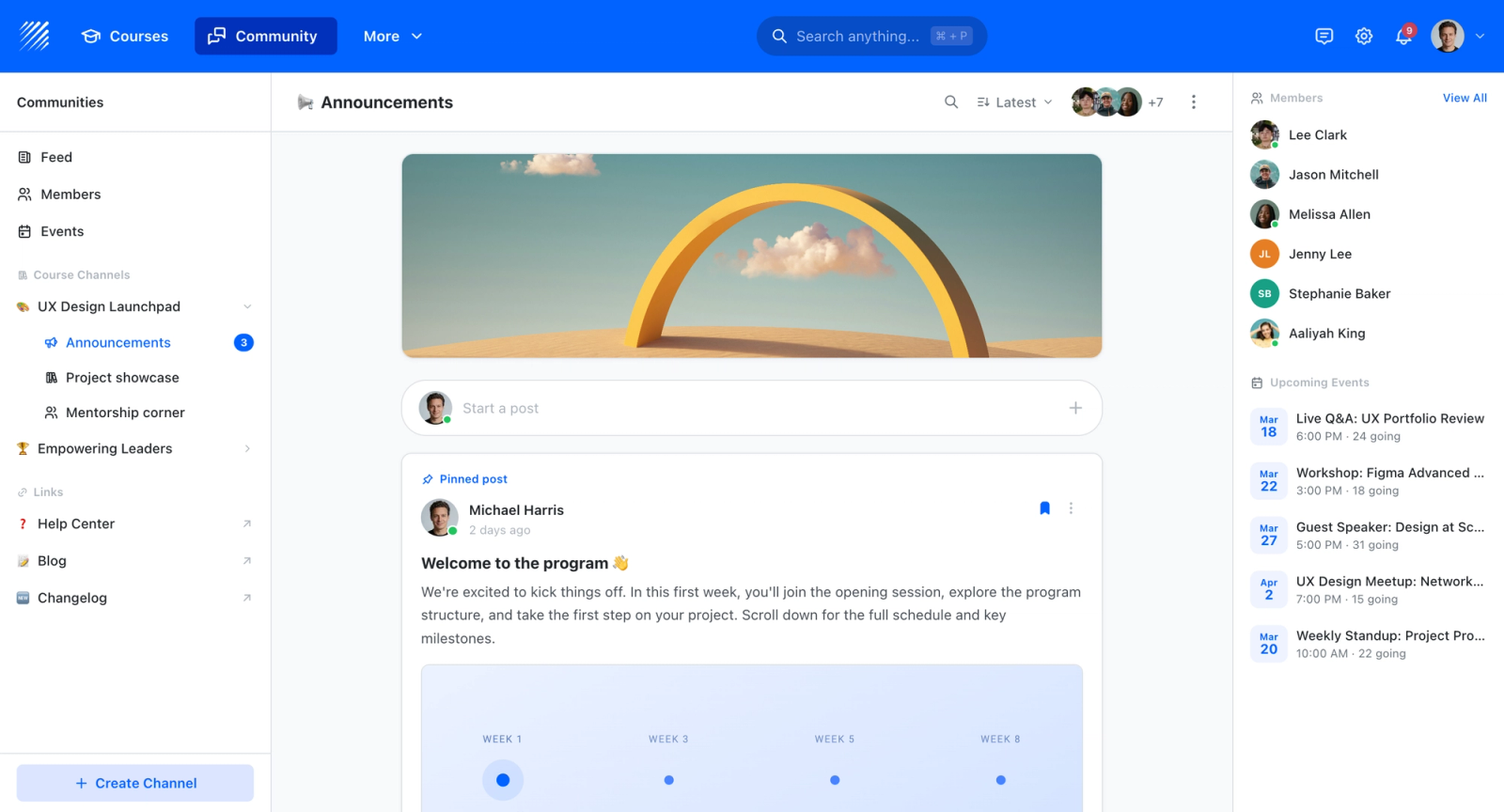
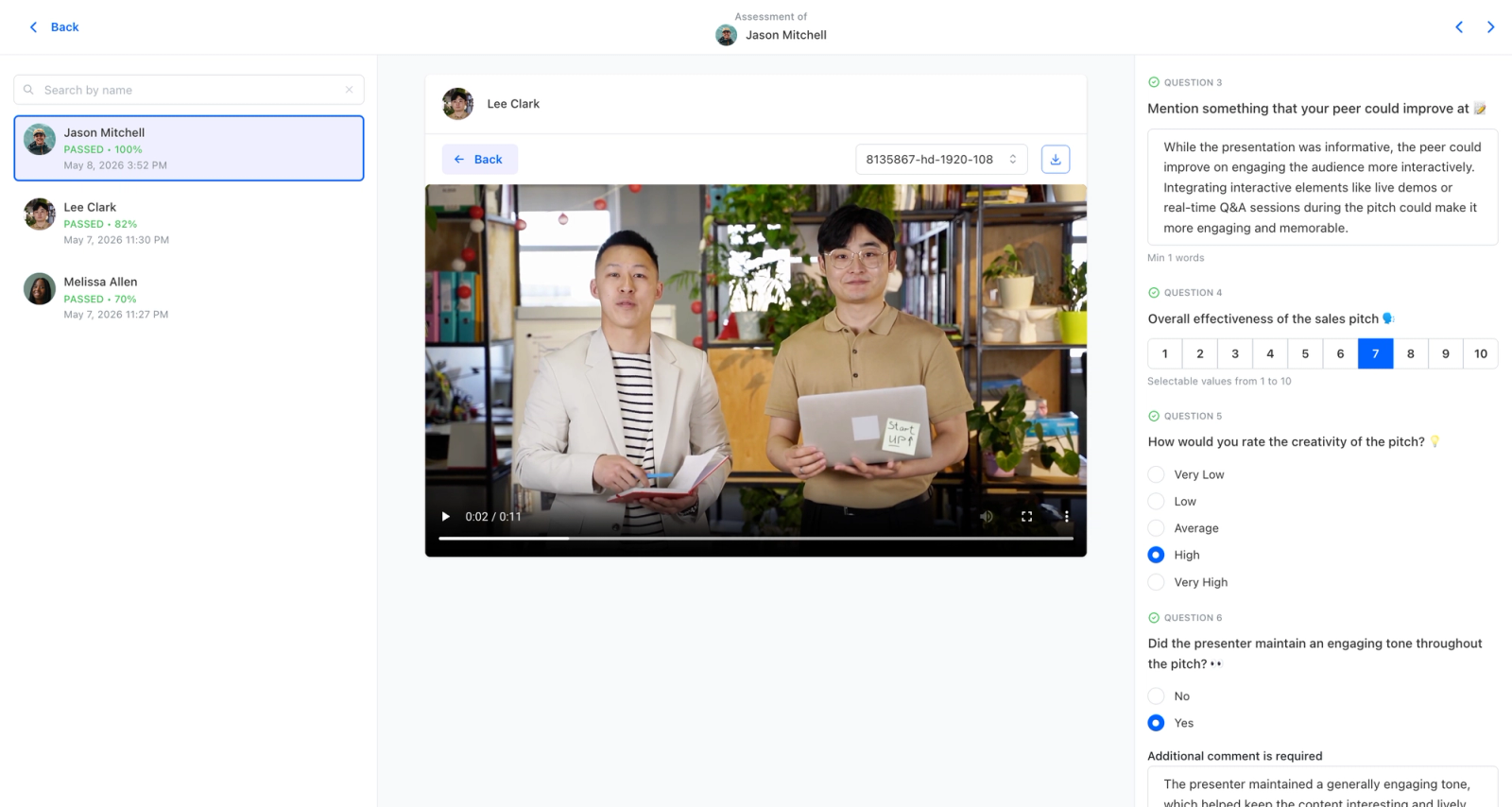
- Peer review and community discussion for collaborative programs
- Completion and engagement analytics
Best For
Teams that want a learning platform separate from their HR system, or organizations not standardized on SAP that need branded, flexible course delivery without HCM coupling.
Pricing Overview
- Startup plan from $89 per month for up to 50 learners
- Full Features plan with custom pricing, white-label, SSO, and advanced integrations
- 14-day free trial; no permanent free plan
- Nonprofit discounts available
Limitations
- Without HCM embedding, employee data, org charts, and compliance records do not flow automatically the way they do inside SuccessFactors
- Teachfloor is mid-market in scale and does not match the enterprise reporting and integration depth of Cornerstone, Oracle, or Workday Learning
- No permanent free plan; large multinational rollouts may need integration work Teachfloor does not provide out of the box
Quick Comparison Insight
Cornerstone, Oracle Learning, and Workday Learning are alternatives that keep learning close to HR data, while TalentLMS, LearnUpon, 360Learning, and Bridge are standalone like Teachfloor; among those, Teachfloor emphasizes flexible delivery modes and branded, collaborative courses.
Cornerstone OnDemand
Overview
Cornerstone OnDemand is one of the most established enterprise talent management platforms on the market, and its learning module is where most organizations start. It competes directly with SAP SuccessFactors Learning in large-scale deployments, handling compliance training, skills development, and extended enterprise learning for organizations with thousands or tens of thousands of employees.
What makes Cornerstone a natural alternative to SuccessFactors Learning is that it delivers comparable enterprise functionality without requiring the SAP stack. You get deep compliance management, configurable learning paths, and global scalability, but the platform operates independently of any specific HCM vendor. For organizations looking to decouple their LMS from their HR stack, that independence is the primary draw.
Core Capabilities
- Compliance management with automated recertification, audit trails, and regulatory tracking across multiple jurisdictions
- Configurable learning paths with prerequisite logic, branching, and role-based assignment rules
- Content management supporting SCORM 1.2, SCORM 2004, xAPI, AICC, video, and document-based training
- Extended enterprise learning portals for training partners, vendors, contractors, and franchisees
- Skills intelligence engine that maps learning activities to organizational skill taxonomies
- Built-in content marketplace with access to thousands of off-the-shelf courses from providers like LinkedIn Learning and Coursera
- Advanced reporting and analytics dashboards with scheduled report delivery and custom data exports
- Mobile learning app for iOS and Android with offline content access
- Multi-language support for global deployments across different regions and regulatory environments
- Integration framework connecting to major HRIS platforms, including Workday, ADP, and SAP HCM itself
Standout Strength
Organizations choose Cornerstone when they need an enterprise LMS that handles compliance at scale across global operations. The combination of automated recertification tracking, multi-jurisdiction regulatory support, and an extensive content marketplace makes it a reliable choice for heavily regulated industries like healthcare, finance, and manufacturing.
Best For
Large enterprises with 5,000 or more employees operating in regulated industries that need compliance tracking, global deployment capabilities, and the ability to train extended workforces. Strong fit for L&D teams with dedicated administrators who can manage a feature-rich platform.
Pricing Overview
- Custom enterprise pricing based on module selection and user count
- Pricing is not published publicly; expect a multi-step sales process
- Free demo available upon request
Limitations
- The platform's depth comes with complexity. Configuration and initial setup often require Cornerstone consulting or a certified implementation partner, which adds cost.
- The admin interface can feel overwhelming for smaller L&D teams without dedicated LMS administrators.
- Pricing is opaque and tends to be at the higher end of the market, making it difficult to compare directly with mid-market alternatives.
Quick Comparison Insight
Comparable to SuccessFactors Learning in enterprise depth and compliance capabilities, but operates independently of any HCM stack. A lateral move for organizations that want similar power without the SAP dependency.
Docebo
Overview
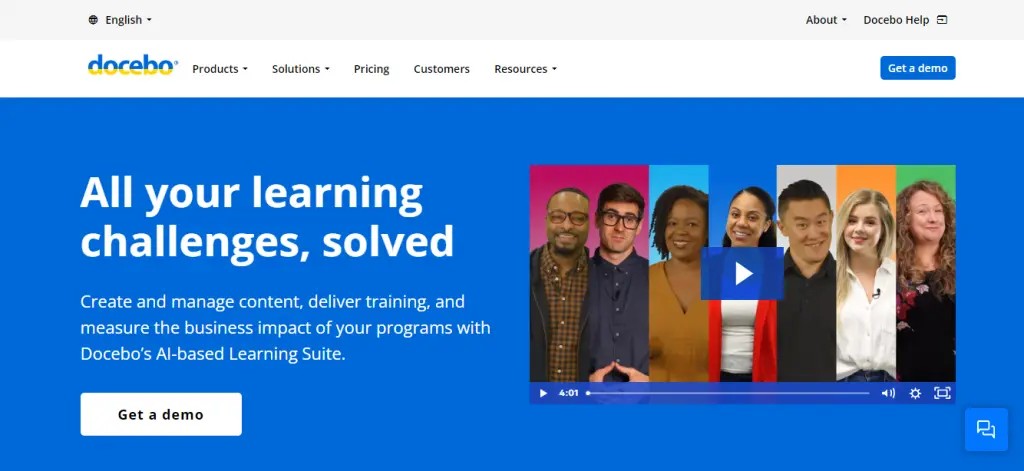
Docebo is an AI-powered enterprise learning platform that uses machine learning to personalize content recommendations, auto-tag learning assets, and surface skill gaps across the organization. It sits in the enterprise tier but with a noticeably more modern interface than legacy systems like SuccessFactors Learning.
Where SAP's structured, top-down model pushes learners through assigned catalogs, Docebo surfaces relevant content based on role, skills profile, and learning history. This content discovery approach shifts the flexible from mandatory consumption to voluntary engagement, which is a meaningful difference in how learners interact with training material.
Core Capabilities
- AI-powered content recommendations that personalize the learner experience based on role, skills, and behavior patterns
- Auto-tagging engine that applies metadata to uploaded content, reducing manual cataloging effort
- Multi-audience portal support for employees, partners, customers, and external learners under separate branded experiences
- Built-in content authoring tools for creating courses directly inside the platform without third-party software
- Social learning features including user-generated content channels, Q&A feeds, and peer knowledge sharing
- SCORM, xAPI, and AICC support alongside native video hosting and document management
- Compliance training workflows with automated enrollment, recertification reminders, and audit reporting
- Pre-built integrations with Salesforce, Workday, BambooHR, Microsoft Teams, and over 400 other platforms
- Gamification engine with points, badges, leaderboards, and custom reward structures
- Advanced analytics with configurable dashboards, learning impact reports, and data export to BI tools
Standout Strength
Docebo's AI layer is what sets it apart from traditional LMS platforms. The content recommendation engine and auto-tagging system reduce the manual work that bogs down L&D teams. For organizations managing large content libraries where learners struggle to find relevant material, Docebo's approach to content discovery addresses a problem that SuccessFactors Learning handles poorly.
Best For
Mid-to-large enterprises with 1,000 or more employees that manage large content libraries and want to move beyond static course assignments toward personalized, AI-driven learning experiences. Particularly strong for organizations with distributed workforces and multiple learning audiences, such as companies that train both employees and external partners.
Pricing Overview
- Custom pricing based on active user count and selected modules
- Pricing starts in the mid-enterprise range; expect quotes tailored to organization size
- Free trial and demo available
Limitations
- The breadth of features means a learning curve for administrators, particularly around configuring the AI recommendation engine and multi-portal setups.
- Reporting, while improving, has historically been a pain point for users who need highly customized compliance reports without workarounds.
- Pricing can escalate quickly for organizations with large user counts across multiple portals.
Quick Comparison Insight
More modern and AI-forward than SuccessFactors Learning, with significantly better content discovery. Requires less SAP-specific expertise to administer, but still carries enterprise-level complexity in its own right.
Absorb LMS
Overview
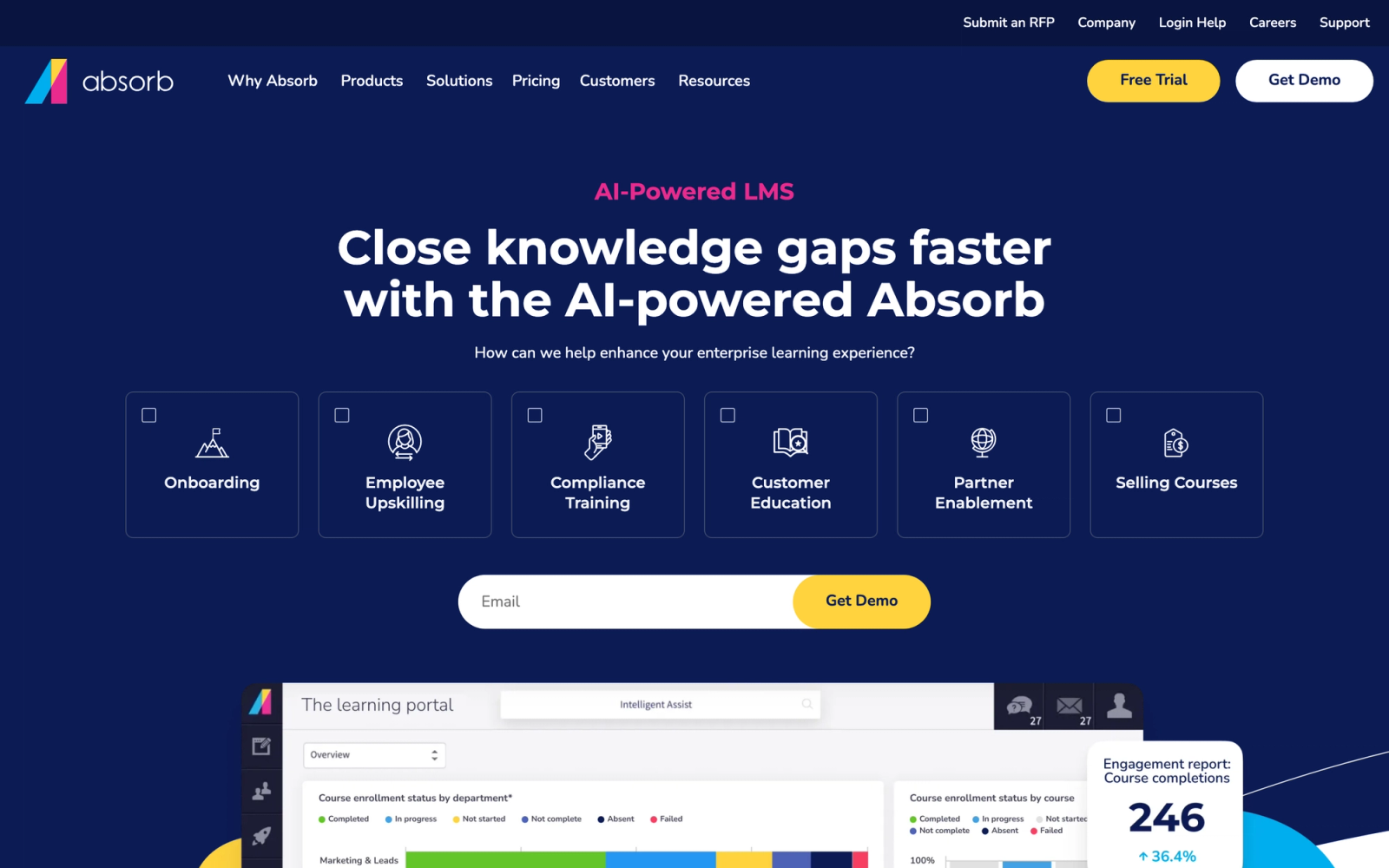
Absorb LMS has built its reputation on combining enterprise capability with admin usability. Many enterprise LMS platforms offer deep functionality at the cost of ease of use; Absorb deliberately balances both, making it a practical choice for organizations where L&D teams need to manage the platform without constant IT support.
The contrast with SuccessFactors Learning is immediate. Where SAP's LMS requires technical expertise for basic configuration tasks, Absorb gives administrators a clean, drag-and-drop interface for building courses, managing enrollments, and generating reports. Routine tasks that require IT involvement in SuccessFactors Learning are self-service in Absorb, with workflows designed for instructional designers rather than SAP-certified consultants.
Core Capabilities
- Intuitive admin dashboard with drag-and-drop course builder and visual enrollment management
- SCORM, xAPI, AICC, and CMI5 content support with native video hosting
- Absorb Infuse, an API-based tool that embeds learning content directly into other applications like CRMs and intranets
- Absorb Create, a built-in authoring tool for building interactive courses without external software
- eCommerce module for selling courses with built-in payment processing, discount codes, and bundling options
- Automated enrollment rules based on user attributes, department, role, or completion of prerequisite courses
- Compliance tracking with recertification workflows, expiration alerts, and audit-ready reporting
- Branded learner portals with customizable themes, logos, and domain mapping
- Observation checklists for assessing hands-on skills and in-person training completion
- Pre-built integrations with BambooHR, ADP, Salesforce, Zoom, Microsoft Teams, and Zapier
Standout Strength
The admin experience is what sets Absorb apart. L&D teams can manage courses, learners, and reporting independently without relying on IT. For companies leaving SuccessFactors Learning because of heavy IT dependency, Absorb directly addresses that problem while still handling enterprise-scale deployments.
Best For
Mid-to-large organizations with 500 to 10,000 employees that need a capable LMS their L&D team can manage without dedicated technical administrators. Strong fit for organizations running compliance training, onboarding, and professional development programs that want fast time-to-value without sacrificing feature depth.
Pricing Overview
- Custom pricing based on user count
- Pricing is not publicly listed; request a quote through the website
- Free demo and guided trial available
Limitations
- Social learning and peer collaboration features are less developed compared to platforms like 360Learning or Docebo.
- Advanced reporting customization, while functional, sometimes requires support assistance for complex multi-dimensional reports.
- The eCommerce module, while useful, is not as mature as dedicated course marketplace platforms.
Quick Comparison Insight
Significantly easier to administer than SuccessFactors Learning, with comparable compliance and enrollment capabilities. Trades some enterprise depth for genuine usability. The right choice when admin independence is a priority.
Workday Learning
Overview
Workday Learning is the LMS module built natively into the Workday HCM platform. If your organization runs Workday for HR, payroll, and talent management, Workday Learning sits directly inside that stack with no integration layer, no data sync, and no separate login. Learner profiles, organizational hierarchies, job roles, and skills data all flow directly from Workday HCM into the learning module.
This is relevant for SAP SuccessFactors Learning users because the value proposition is similar: a learning system embedded in your HCM stack. The difference is that Workday's interface is considerably more modern, and the learner experience reflects the consumer-grade design standards that Workday applies across its platform. For organizations actively migrating from SAP HCM to Workday HCM, adding Workday Learning is the path of least resistance.
Core Capabilities
- Native integration with Workday HCM, pulling employee data, org structures, and skills profiles directly without middleware
- Learning campaigns that enable L&D teams to assign, track, and report on training initiatives tied to business goals
- Content management supporting SCORM, video, external links, and Workday-native content types
- Peer-generated content with the ability for employees to share videos, articles, and learning resources with colleagues
- Skills-based learning recommendations connected to Workday Skills Cloud, mapping learning activities to skills development
- Compliance tracking with automated enrollment, recertification alerts, and audit trail reporting
- Mobile access through the Workday mobile app with a consistent experience across devices
- Manager dashboards showing team learning progress, skill gaps, and compliance status
- External content provider integrations with LinkedIn Learning, Coursera, and other third-party libraries
- Unified reporting across learning, performance, and talent data within the Workday analytics engine
Standout Strength
The native HCM integration is the reason companies choose Workday Learning. There is no data replication, no integration middleware, and no sync lag. Learning data lives alongside performance reviews, succession plans, and compensation data in a single system. For organizations that have standardized on Workday, this eliminates the operational overhead that comes with maintaining a separate LMS.
Best For
Organizations already running Workday HCM that want their learning system embedded in the same platform. Particularly strong for companies that connect learning directly to employee development and skills planning. Not practical for organizations that do not use Workday for HR.
Pricing Overview
- Bundled as part of Workday HCM licensing; pricing is not available as a standalone module
- Custom enterprise pricing based on organization size and modules selected
- Demo available through Workday's sales process
Limitations
- Workday Learning is only viable for Workday HCM customers. It does not function as a standalone LMS.
- The learning module is less feature-rich than dedicated LMS platforms. Content authoring, gamification, and extended enterprise capabilities are more limited.
- Organizations with complex compliance requirements across multiple regulatory frameworks may find the compliance tools less granular than specialized platforms like Cornerstone.
Quick Comparison Insight
Replaces the HCM-embedded learning model of SuccessFactors with a more modern interface, but only works for Workday customers. A direct swap if you are migrating your entire HR stack from SAP to Workday.
Oracle Learning
Overview
Oracle Learning is the LMS component within Oracle Fusion Cloud HCM, and it follows a similar logic to both SAP SuccessFactors Learning and Workday Learning: learning is embedded within the broader HR technology stack. For organizations running Oracle Cloud HCM, the learning module connects directly to employee profiles, organizational data, and talent management workflows.
The value of Oracle Learning lies in that unified data layer. Training completions feed into talent reviews, skill assessments connect to succession planning, and compliance certifications appear in employee records without manual data entry. It is a compelling model for Oracle HCM customers, but the standalone learning capabilities are modest compared to dedicated LMS platforms.
Core Capabilities
- Native integration with Oracle Fusion Cloud HCM, synchronizing employee, role, and organizational data automatically
- Learning catalog management with support for SCORM, video, virtual classroom links, and blended learning programs
- Compliance and certification tracking with automated enrollment based on job role, location, or regulatory requirement
- AI-driven learning recommendations powered by Oracle's AI infrastructure, surfacing relevant content based on role and career goals
- Skills management that ties learning completions to skill profiles and talent assessments within Oracle HCM
- Communities feature enabling peer discussions, content sharing, and collaborative learning spaces
- Manager and team dashboards showing training progress, compliance status, and development tracking
- Embedded learning journeys that structure multi-step development programs with required and elective components
- Integration with third-party content providers including LinkedIn Learning and custom SCORM packages
- Mobile access through Oracle's mobile HCM application
Standout Strength
Oracle Learning's advantage is identical to its positioning: it is the learning system for Oracle HCM customers. The unified data model eliminates integration overhead and creates a single source of truth across HR, talent, and learning functions. For organizations already invested in Oracle's cloud stack, adding a separate LMS creates unnecessary complexity.
Best For
Organizations running Oracle Fusion Cloud HCM that want learning embedded in their existing HR platform. Strong fit for companies where learning data needs to flow directly into performance reviews, succession planning, and compliance auditing without middleware.
Pricing Overview
- Included as part of Oracle Fusion Cloud HCM licensing
- Custom enterprise pricing; not available as a standalone purchase
- Contact Oracle for demo and pricing details
Limitations
- Like Workday Learning, Oracle Learning is practical only for Oracle HCM customers. It is not a viable standalone LMS.
- Content authoring capabilities are basic compared to dedicated platforms. Most organizations supplement with third-party authoring tools.
- The user interface, while improved in recent updates, still carries the utilitarian design patterns common across Oracle's cloud applications.
Quick Comparison Insight
The Oracle equivalent of SAP SuccessFactors Learning. Makes sense if you are migrating from SAP HCM to Oracle HCM. Not a consideration otherwise.
TalentLMS
Overview
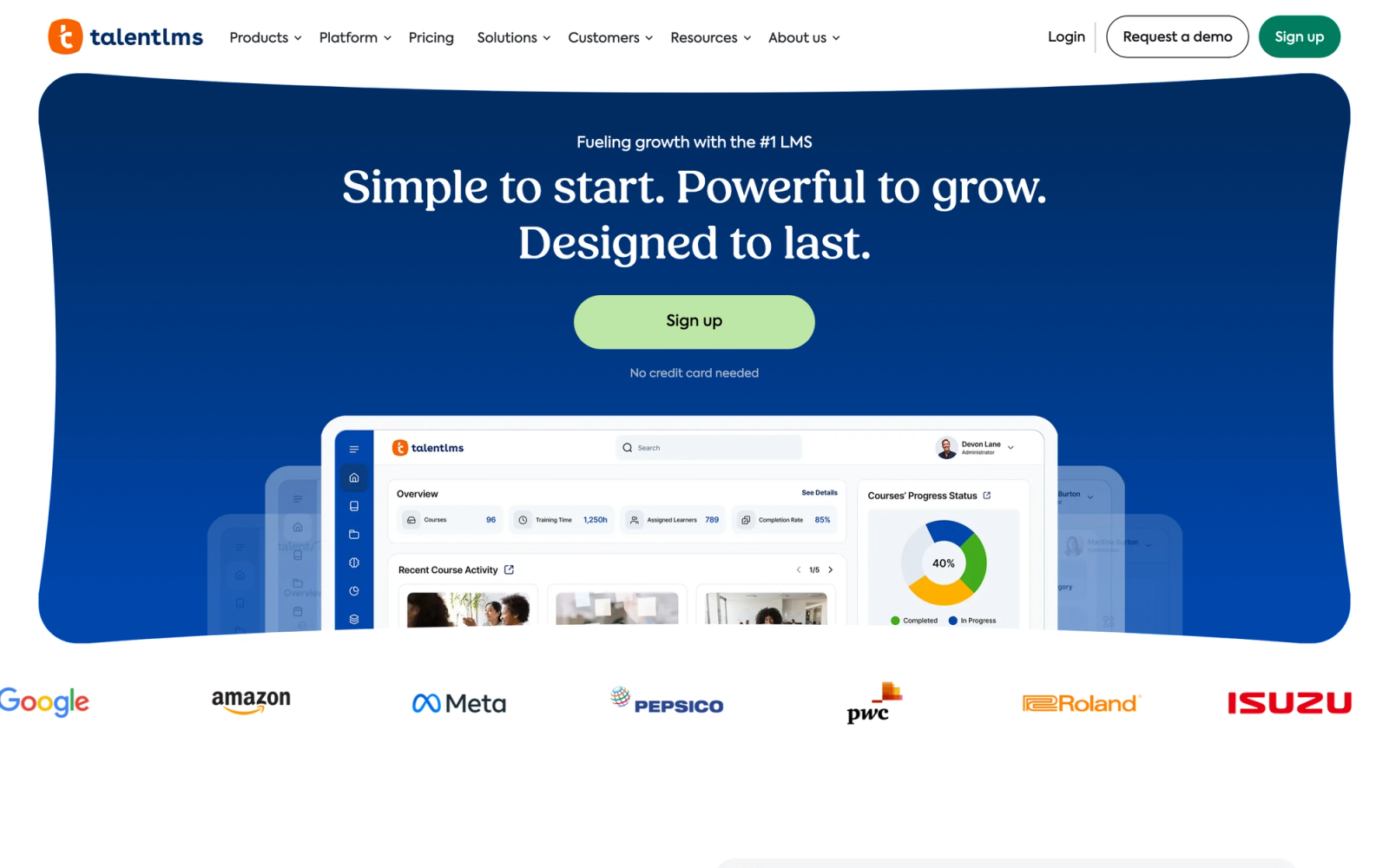
TalentLMS sits at the opposite end of the spectrum from SAP SuccessFactors Learning. Where SAP's LMS is built for global enterprise deployments with complex configuration requirements, TalentLMS is designed to get a training program running in a single afternoon. It is a cloud-based LMS from Epignosis focused on simplicity, speed, and affordability.
The platform is built around the principle that a complete course with quizzes, certificates, and learner enrollments should take minutes to configure, not months. For organizations leaving SuccessFactors Learning because implementation stalled projects and routine changes required IT tickets, TalentLMS operates in a fundamentally different register of complexity.
Core Capabilities
- Fast course creation with a built-in content builder supporting text, video, presentations, SCORM, and xAPI packages
- Ready-made course library with pre-built content covering compliance, soft skills, and professional development topics
- Branches feature that creates separate branded learning portals for different teams, departments, or client groups
- Automated enrollment and training assignment based on user groups, roles, or custom rules
- Certification and compliance training management with expiration tracking and recertification workflows
- Gamification with points, badges, leaderboards, and level-up mechanics to drive engagement
- Built-in assessment engine with multiple question types, randomization, and pass/fail thresholds
- Video conferencing integrations with Zoom, Microsoft Teams, and GoToMeeting for live sessions
- REST API and pre-built integrations with Zapier, BambooHR, Salesforce, and Slack
- Mobile-responsive design with dedicated iOS and Android apps
Standout Strength
Speed to deployment is what makes TalentLMS stand out. Teams can go from signup to live training in hours, not months. For L&D teams without dedicated administrators or IT support, the self-service setup and intuitive interface remove the barriers that make enterprise platforms like SuccessFactors Learning so resource-intensive.
Best For
Small to mid-size organizations with 50 to 1,000 employees that need a functional LMS without enterprise complexity or enterprise pricing. Strong fit for companies launching their first formal employee training program, running onboarding at scale, or managing compliance training across distributed teams.
Pricing Overview
- Free plan available for up to 5 users and 10 courses
- Paid plans start at $69 per month (billed annually) for up to 40 users
- Scales through several tiers based on active user count
- Unlimited users plan available at higher tiers
Limitations
- Enterprise features like advanced compliance workflows, extended enterprise learning, and multi-jurisdiction regulatory tracking are limited compared to Cornerstone or Docebo.
- Reporting is functional but basic. Organizations that need detailed learning analytics or BI integration will find it insufficient.
- The platform is not designed for complex learning programs with multi-step approval workflows, branched certifications, or deep skills mapping.
Quick Comparison Insight
The fastest and most affordable alternative on this list. Trades enterprise depth for immediate usability. A strong choice when SuccessFactors Learning was overkill for your actual training needs.
LearnUpon
Overview
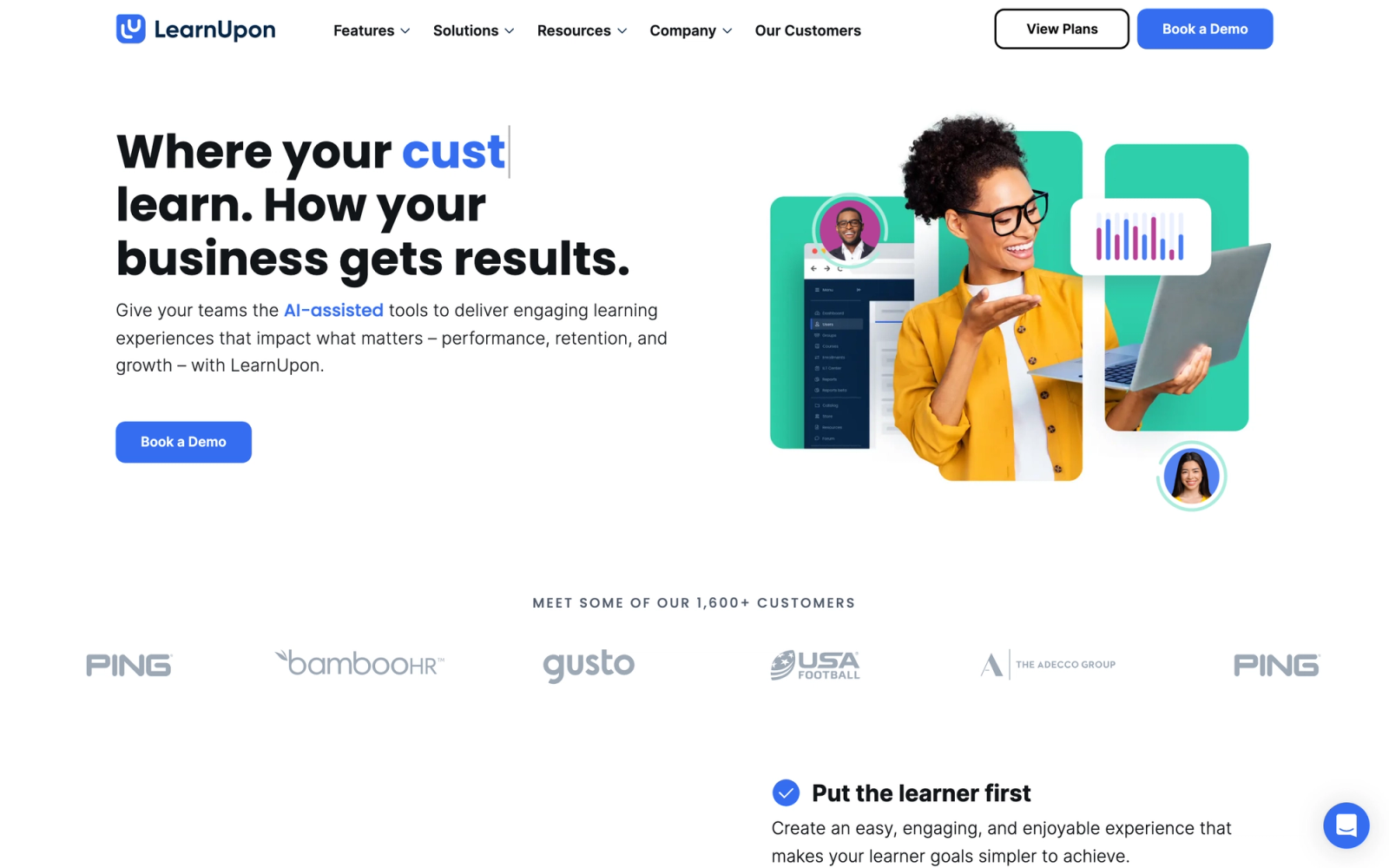
LearnUpon is an LMS designed for organizations that need to train multiple audiences from a single platform. Where most LMS platforms focus primarily on employee learning, LearnUpon's architecture is built around the concept of portals, each one a separate branded learning environment with its own courses, users, and reporting. This makes it particularly effective for companies that train employees, partners, resellers, and customers simultaneously.
The multi-portal approach is where LearnUpon differentiates itself from SuccessFactors Learning most clearly. SAP's LMS is fundamentally an employee learning system connected to HCM data. LearnUpon treats each audience as a first-class learning population with tailored experiences, content libraries, and completion tracking. For organizations with significant external training requirements, this is a meaningful architectural difference.
Core Capabilities
- Multi-portal architecture allowing separate branded learning environments for employees, partners, customers, and other audiences
- Course builder with support for SCORM, xAPI, video, documents, and blended learning formats
- Automated enrollment workflows triggered by user attributes, group membership, or integration events
- Learning paths that sequence courses with prerequisites, required modules, and elective content
- eCommerce functionality for selling courses with Stripe and PayPal integration
- Exam engine with multiple question formats, question banks, randomization, and configurable grading
- White-labeling options including custom domains, branding, and SSO configuration per portal
- Pre-built integrations with Salesforce, BambooHR, Zapier, Microsoft Teams, and Zoom
- Compliance management with recertification tracking, automated reminders, and audit reporting
- Detailed reporting dashboards with scheduled report delivery and data export capabilities
Standout Strength
The multi-portal architecture is LearnUpon's defining feature. Each portal operates independently with its own branding, courses, and user base, while all reporting rolls up to a central admin view. This lets companies deliver distinct training experiences to different audiences without managing separate LMS instances, something SuccessFactors Learning handles poorly without significant customization.
Best For
Mid-to-large organizations that train external audiences (partners, resellers, customers) alongside employees and need separate branded learning environments managed from a single platform. Strong fit for SaaS companies, franchise operations, and organizations with channel partner training and development programs.
Pricing Overview
- Custom pricing based on user count and number of portals
- Pricing is not publicly listed; request a quote from LearnUpon's sales team
- Free trial available
Limitations
- The content authoring tools, while functional, are less sophisticated than what dedicated authoring platforms or Docebo's built-in tools offer.
- Social learning and peer collaboration features are minimal compared to platforms like 360Learning.
- Pricing can increase significantly as portal count and user numbers scale, particularly for organizations with large external audiences.
Quick Comparison Insight
Stronger than SuccessFactors Learning for multi-audience training scenarios. Less integrated with HCM data, but far more flexible for delivering branded learning experiences to partners, customers, and external stakeholders.
360Learning
Overview
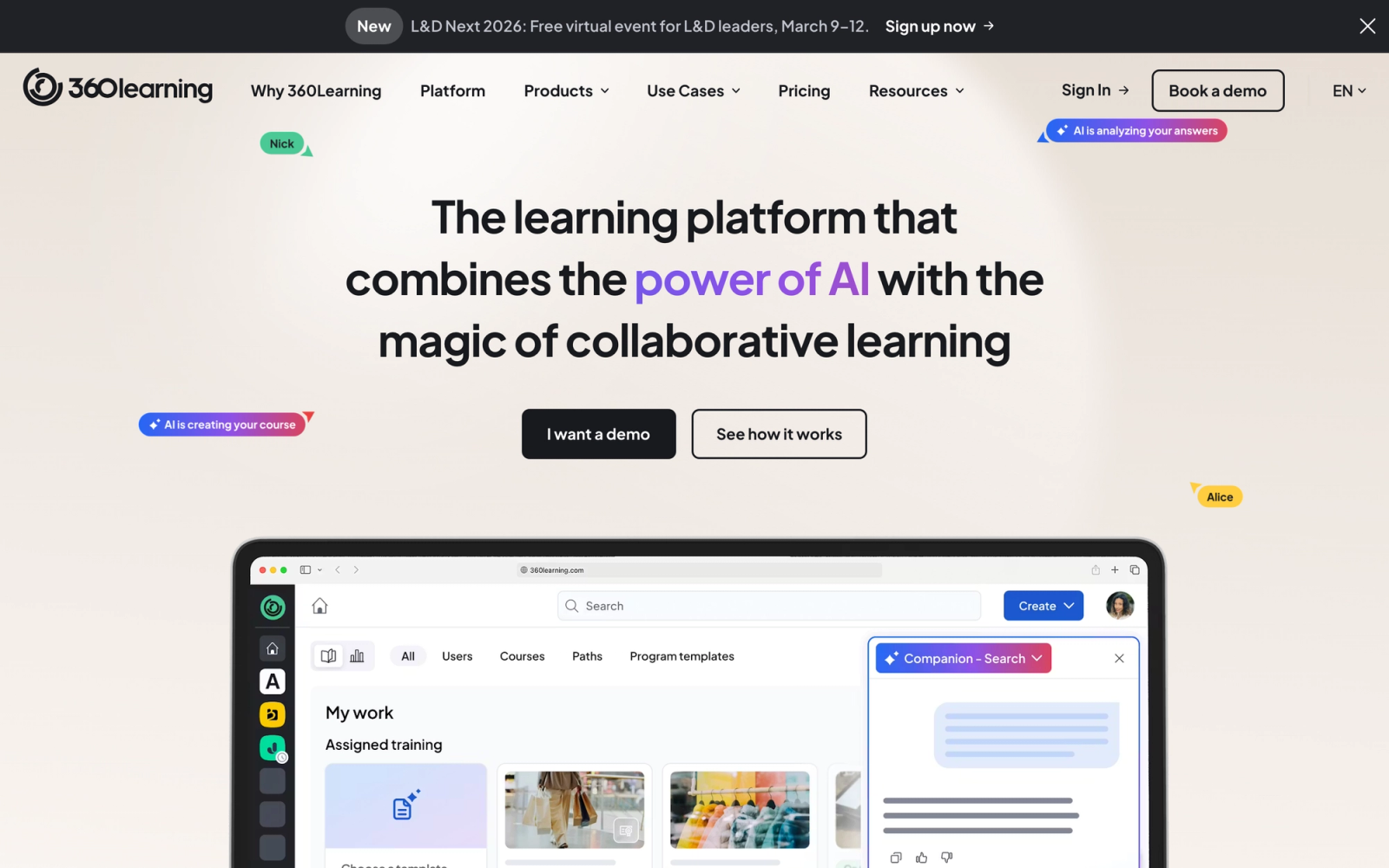
360Learning takes a fundamentally different approach to enterprise learning. Instead of treating L&D as the sole content creator and the LMS as a delivery mechanism, 360Learning is built on the premise that subject matter experts across the organization should create, review, and iterate on training content collaboratively. The platform calls this "collaborative learning," and it changes the dynamics of how content gets produced.
This is a sharp contrast to SuccessFactors Learning, where content creation typically sits with a small L&D team using separate authoring tools, then uploads courses to the LMS for distribution. In 360Learning, the authoring, feedback, and iteration happen inside the platform. SMEs can draft a course, colleagues can review and comment, and the published version reflects actual operational knowledge rather than polished but potentially disconnected L&D materials.
Core Capabilities
- Collaborative authoring tools that allow subject matter experts to create courses with text, video, quizzes, and documents
- Peer review and feedback workflows where colleagues comment on courses before publication, improving accuracy and relevance
- Reaction-based feedback system where learners flag content that is outdated, confusing, or needs improvement
- Discussion forums embedded at the course and module level, enabling peer learning and knowledge exchange
- Learning needs identification through employee-submitted training requests that L&D teams can prioritize and assign to SMEs
- SCORM and xAPI support for importing existing eLearning content alongside natively authored courses
- Compliance training management with automated enrollment, deadlines, and completion tracking
- Pre-built integrations with HRIS platforms (BambooHR, Workday), communication tools (Slack, Teams), and content libraries
- Analytics dashboards tracking not just completion rates but content quality scores, learner satisfaction, and knowledge retention
- Academy feature for creating structured learning programs with multiple courses and progression requirements
Standout Strength
360Learning works well for organizations that want to decentralize content creation and draw on expertise distributed across departments. The collaborative authoring model keeps courses current because the people closest to the work are directly involved in building and maintaining them. For L&D teams dealing with content bottlenecks in centralized models, this represents a structural change to how training gets produced.
Best For
Organizations with 200 or more employees where internal subject matter expertise is distributed across departments and L&D teams need to scale content production without proportionally scaling headcount. Strong fit for companies with fast-changing operational knowledge, such as technology firms, professional services, and organizations investing in knowledge management practices.
Pricing Overview
- Team plan starts at $8 per registered user per month
- Business plan with advanced features available at custom pricing
- Free trial available
Limitations
- The collaborative model requires organizational buy-in from subject matter experts. If SMEs are not willing or able to create content, the platform's core value proposition weakens.
- For organizations with primarily compliance-driven, top-down training needs, the collaborative features may add complexity without proportional benefit.
- Enterprise compliance features, while present, are not as deeply developed as in dedicated compliance-focused platforms like Cornerstone.
Quick Comparison Insight
A philosophical departure from SAP's top-down learning model. Stronger for decentralized content creation and keeping training material current. Less suited for organizations that primarily need a structured compliance delivery system.
Bridge LMS
Overview
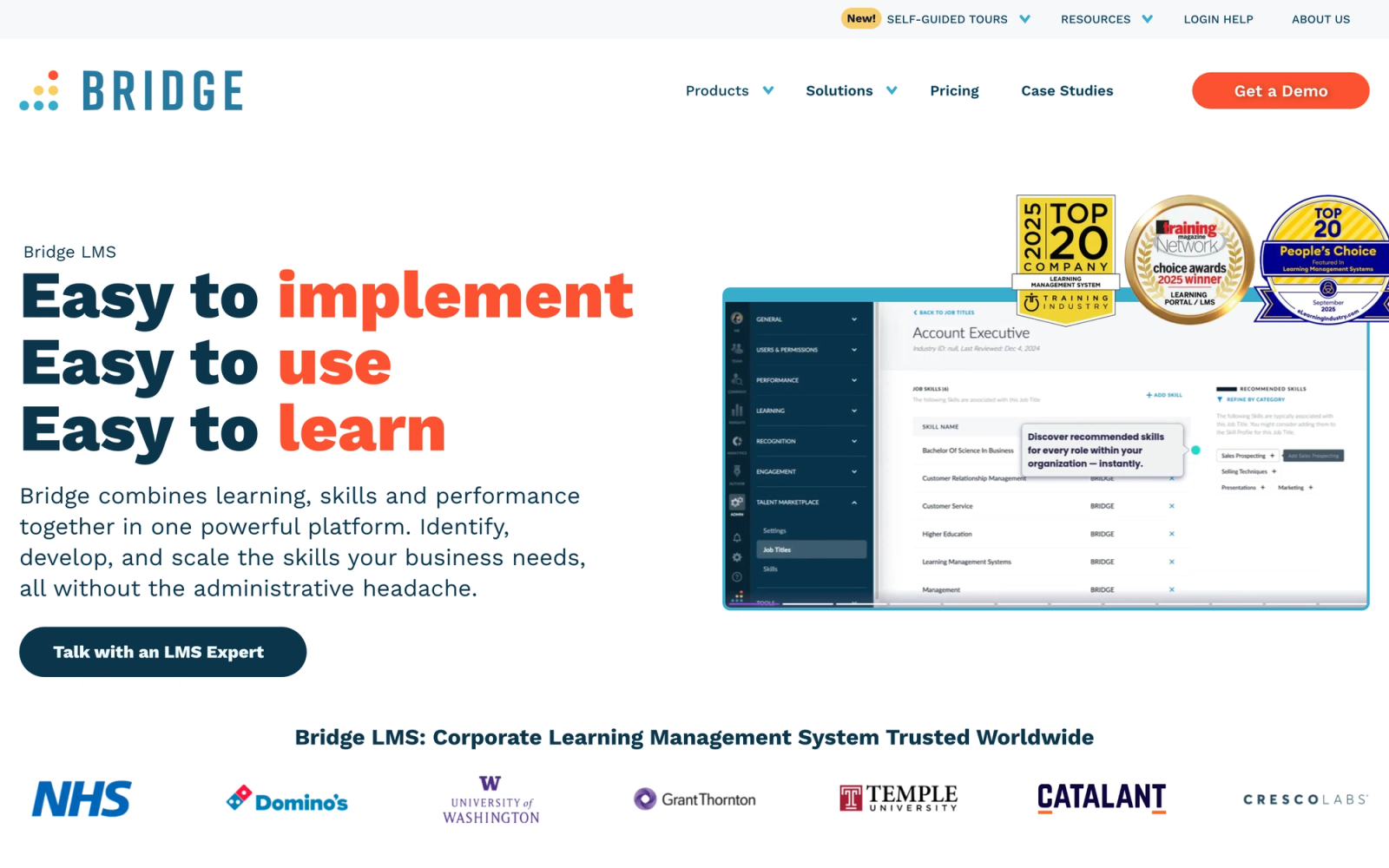
Bridge, by Instructure (the company behind Canvas LMS), occupies a specific niche in the LMS market. It positions itself not just as a learning management system but as a platform that connects learning, performance, and employee engagement. The idea is that training should not exist in isolation; it should tie directly to performance conversations, goal tracking, and manager-employee development dialogue.
This integrated approach matters for organizations leaving SuccessFactors Learning. SAP's LMS is primarily a course delivery and compliance tracking system. Bridge deliberately blurs the line between learning and performance management, offering tools for one-on-ones, goal setting, and skills assessment alongside traditional LMS functionality. The result is a platform that appeals to mid-market companies building a holistic employee development program.
Core Capabilities
- Course authoring with a built-in content builder supporting text, video, quizzes, and SCORM/xAPI packages
- Learning paths that structure multi-course development programs with sequencing and prerequisites
- Performance management tools including one-on-one meeting templates, goal tracking, and feedback workflows
- Skills assessment and mapping that connects learning activities to skill development objectives
- Employee engagement surveys with pulse check tools and sentiment tracking
- Manager dashboards showing team learning progress, performance data, and development recommendations
- Live training management with scheduling, attendance tracking, and calendar integration
- Video practice and coaching tools where employees record responses to prompts and receive peer or manager feedback
- Pre-built integrations with BambooHR, ADP, Slack, Microsoft Teams, Zoom, and Google Workspace
- Clean, modern learner interface designed with simplicity and minimal navigation friction
Standout Strength
Bridge's defining characteristic is the tight integration between learning and performance. The platform is designed so that training feeds directly into performance reviews, skills tracking, and manager coaching conversations. In platforms that treat learning as a standalone function, this connection requires workarounds; SuccessFactors Learning in particular has no native path to link course completions to performance management without custom integration.
Best For
Mid-market companies with 200 to 5,000 employees that want a combined learning and performance development platform. Strong fit for organizations where L&D reports to HR and the priority is connecting learning outcomes to employee development goals, not just delivering compliance content.
Pricing Overview
- Custom pricing based on user count and module selection (Learn, Perform, or combined)
- Pricing is not publicly listed; request a demo for a quote
- Free trial available
Limitations
- The learning module alone is less feature-rich than dedicated enterprise LMS platforms. Organizations with complex compliance requirements or large content libraries may find it limiting.
- Reporting capabilities, while adequate for mid-market needs, do not match the depth of enterprise analytics in platforms like Cornerstone or Docebo.
- The platform is strongest when both Learn and Perform modules are used together. Purchasing only the learning module reduces the value proposition.
Quick Comparison Insight
Broader than SuccessFactors Learning in employee development scope (performance, goals, engagement), but narrower in pure LMS functionality. Best when the goal is to integrate learning with performance management, not just to manage course delivery.
How to Choose the Right Alternative
The right replacement for SAP SuccessFactors Learning depends less on feature checklists and more on what actually drove you to look for an alternative.
If your main issue is SAP lock-in: Cornerstone OnDemand or Docebo give you enterprise depth without vendor stack dependency. Both operate independently of any HCM platform and integrate broadly with HRIS systems from multiple vendors.
If you are migrating your entire HR stack: Workday Learning or Oracle Learning make sense if your organization is already committed to those HCM platforms. The learning module comes as part of the broader stack, similar to how SuccessFactors Learning worked within SAP, but with more modern interfaces.
If IT dependency is the primary frustration: Absorb LMS and TalentLMS are designed for L&D teams to manage independently. Both prioritize admin usability over configuration complexity. TalentLMS offers this at a lower price point for smaller teams; Absorb handles larger deployments.
If you need to train audiences beyond employees: LearnUpon's multi-portal architecture is purpose-built for organizations that train partners, customers, and channel resellers alongside their internal workforce. SuccessFactors Learning handles external training poorly without significant customization.
If content creation is the bottleneck: 360Learning's collaborative authoring model lets subject matter experts across your organization contribute training content without going through a centralized L&D team. This is a structural solution to the content bottleneck that many enterprise LMS deployments create.
If you want learning tied to performance: Bridge LMS connects training directly to performance conversations, goals, and skills development. It is a strong choice for mid-market organizations that want a unified employee development platform rather than a standalone course delivery system.
If your programs are cohort-based and interactive: Teachfloor is the right fit when your training depends on group dynamics, live facilitation, and peer interaction, not self-paced content consumption.
The worst approach is to replace one oversized system with another. Match the platform to how your organization actually delivers learning, not to the longest feature list.
FAQ
Can I migrate content from SAP SuccessFactors Learning to another LMS?
Most enterprise LMS platforms support SCORM and xAPI content imports, so any training content built in those formats transfers. The larger challenge is migrating historical completion records, learner data, and compliance documentation. Work with your new vendor's implementation team to map data fields and plan the migration before committing. Some platforms offer dedicated migration support; others expect you to handle it via CSV exports.
Do I need to replace SAP SuccessFactors Learning entirely, or can I run both?
Running both is possible during a transition period, but it adds administrative overhead and learner confusion. A phased approach works: migrate one training category at a time (for example, start with onboarding, then move compliance training, then professional development) while keeping SuccessFactors active for the remaining programs. Set a clear cutoff date.
What about SCORM compliance? Will my existing courses work?
Every platform on this list supports SCORM 1.2 at minimum, and most support SCORM 2004 and xAPI as well. Before migrating, test a sample of your SCORM packages in the new platform's sandbox or trial environment. Occasionally, content built with specific authoring tools has compatibility quirks that surface during import.
How long does implementation take for these alternatives?
Implementation timelines vary widely. TalentLMS and Teachfloor can be operational in days. Absorb LMS and LearnUpon typically take two to six weeks. Cornerstone OnDemand, Docebo, and the HCM-embedded options (Workday Learning, Oracle Learning) take one to four months depending on configuration complexity and data migration scope. All of these are significantly faster than the 6 to 12 month deployment cycle typical of SuccessFactors Learning.
Is it worth switching to another HCM-embedded LMS like Workday Learning?
Only if you are already migrating to that HCM platform. Switching from SAP SuccessFactors to Workday Learning just for the LMS does not make sense. The value of HCM-embedded learning systems comes from the unified data model. If you are moving to Workday or Oracle for HR anyway, adding their learning module is low friction. If you are keeping a non-SAP HRIS, a standalone LMS gives you more flexibility and avoids recreating the vendor lock-in problem.


