


Why Look for an Oracle Learning Alternative?
Oracle Learning Cloud is part of Oracle's broader HCM Cloud suite, and it delivers solid compliance tracking and enterprise-grade reporting for organizations already embedded in the Oracle stack. But the platform has specific limitations that push L&D teams to explore Oracle Learning alternatives.
Dependency on the Oracle HCM stack. Oracle Learning Cloud is designed to work as a module within Oracle HCM Cloud, not as a standalone learning platform. Organizations that do not use Oracle for HR, payroll, or talent management lose much of the integration value. If your tech stack runs on different HR infrastructure, Oracle Learning becomes an expensive island.
Complex implementation. Deploying Oracle Learning Cloud is not a quick rollout. Implementation timelines frequently stretch to six months or longer, requiring dedicated IT resources, external consultants, and significant configuration effort. For L&D teams that need to move fast, this timeline creates real friction.
Expensive licensing. Oracle's enterprise pricing model means high per-user costs, multi-year contracts, and limited flexibility for organizations that want to scale usage up or down. Smaller business units or mid-market companies often find the cost disproportionate to what they actually use.
Dated learner interface. The learner-facing experience in Oracle Learning Cloud has not kept pace with modern LMS platforms. Navigation feels utilitarian rather than intuitive, and the overall experience lacks the polish that drives voluntary learner engagement. When employees find the platform frustrating to use, completion rates and satisfaction drop.
Limited content authoring. Oracle Learning Cloud relies heavily on third-party content or imported SCORM packages. The built-in authoring tools are minimal compared to platforms that offer native course builders with rich media, interactive elements, and assessment design. Teams that want to create custom training content in-house often need to purchase a separate authoring tool.
Slow feature updates. Oracle's release cycle for Learning Cloud trails the pace of innovation you see from SaaS-native LMS vendors. Features that competitors ship quarterly may take Oracle a year or more to deliver, leaving L&D teams waiting for capabilities they need now.
None of these are deal-breakers for every organization. But if your team has outgrown Oracle's learner experience, needs a standalone platform, or wants faster time to value, the alternatives below address those gaps directly.
What to Look for in an Enterprise Learning Platform
Switching learning platforms is a significant operational decision that affects every employee who touches training. Before comparing individual tools, it helps to anchor on the criteria that actually matter.
Standalone viability. Can the platform deliver full value without requiring a specific HR suite? The best Oracle Learning alternatives work independently while still integrating with your existing HRIS, whether that is Workday, SAP, BambooHR, or something else. Look for platforms with open APIs and pre-built connectors.
Implementation timeline. Ask vendors directly: how long does a typical deployment take for an organization your size? Factor in data migration, SSO configuration, content import, and employee training on the new platform. Some modern LMS tools can get you live in weeks rather than months.
Content authoring depth. If your team builds internal training, evaluate the built-in authoring tools carefully. Can you create interactive modules, assessments, and multimedia content without a separate tool? Or will you still need Articulate, Captivate, or another authoring suite? The total cost of ownership changes significantly depending on the answer.
Learner experience. The interface employees see daily determines whether they engage or avoid the platform. Test the learner portal yourself. Is navigation intuitive? Does it work well on mobile? Can learners find assigned training without filing a help desk ticket? Modern platforms treat learner experience design as a core priority, not an afterthought.
Reporting and compliance. Enterprise organizations need audit-ready compliance reporting, custom dashboards, and the ability to track certifications across business units. Evaluate whether the platform's analytics go beyond basic completion data to include skill gaps, learning paths, and learning analytics that inform business decisions.
Scalability and pricing model. Oracle's pricing works for large enterprises with predictable budgets. But if your organization needs flexibility, look for per-user, per-active-user, or tiered models that align cost with actual usage. A platform that costs less per seat but charges for every feature as an add-on may end up costing more.
Integration stack. Check for native connections to your HRIS, content libraries, video platforms, and communication tools. An LMS with strong integrations reduces manual data entry and keeps learning data connected to the rest of your people infrastructure.
10 Best Oracle Learning Cloud Alternatives
The tools below range from enterprise HCM suites to agile SaaS platforms built specifically for learning. Each addresses a different combination of the gaps outlined above, covering a wide spectrum of organization sizes, budgets, and operational needs.
Teachfloor
Overview
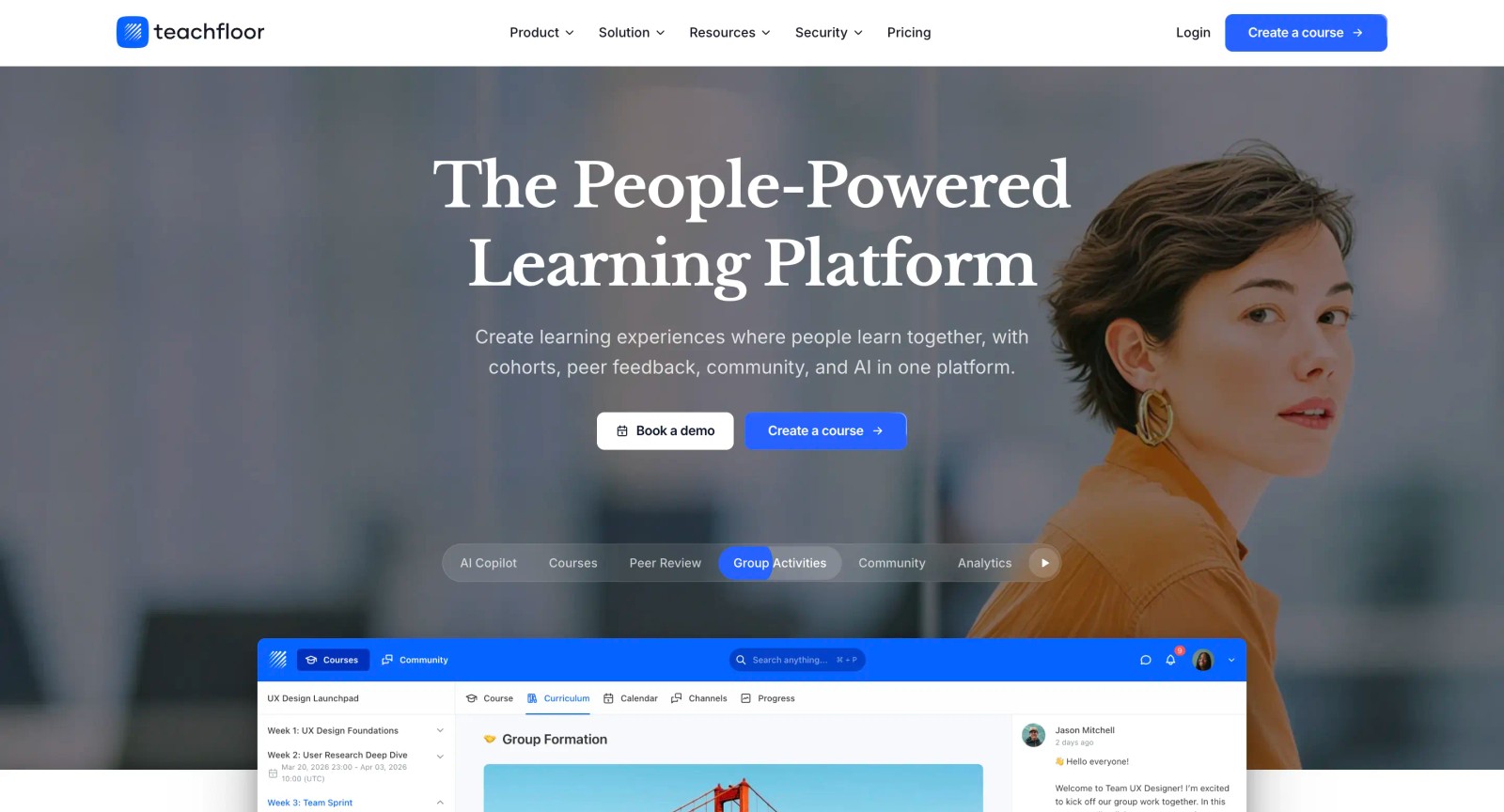
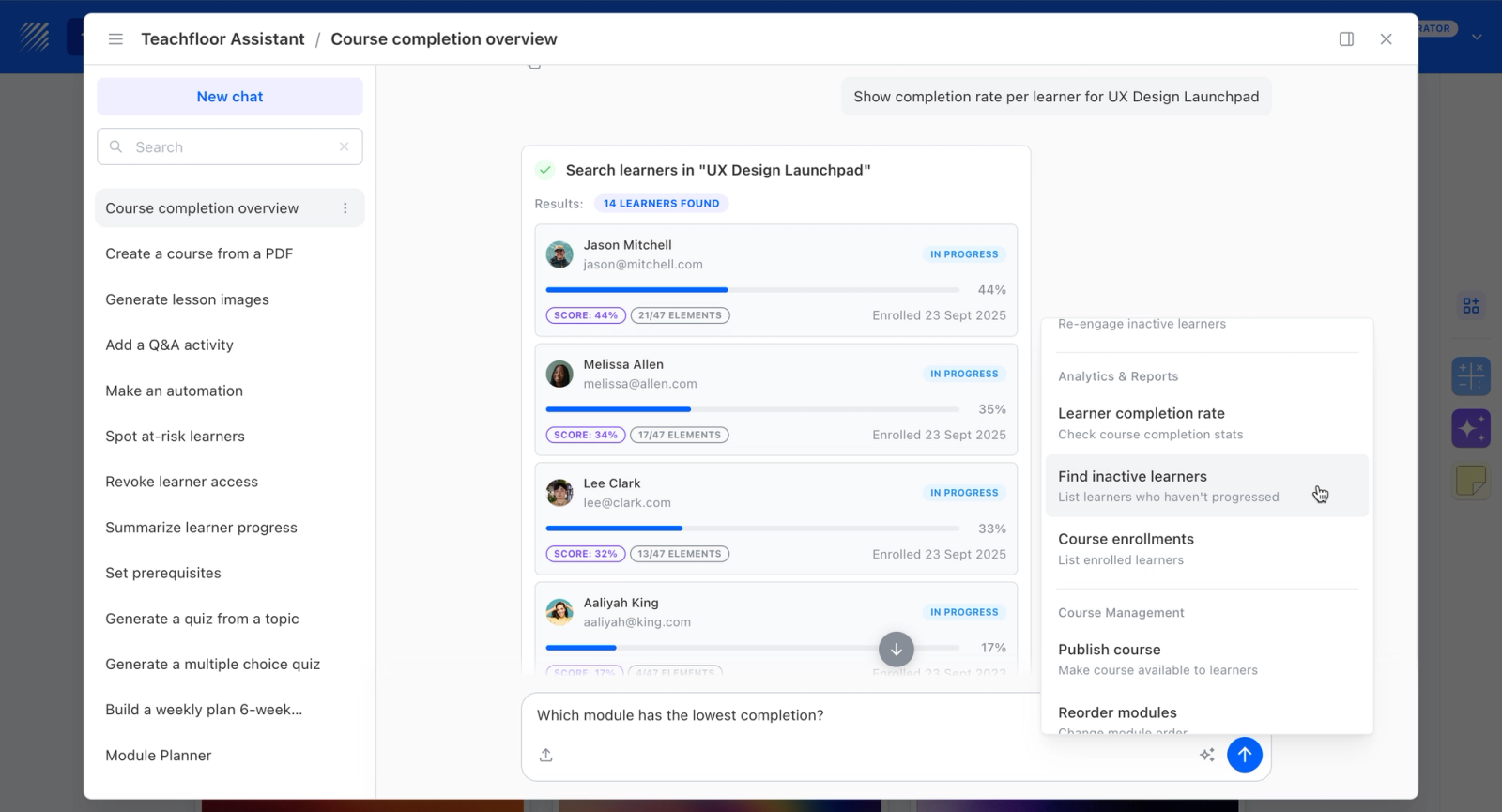
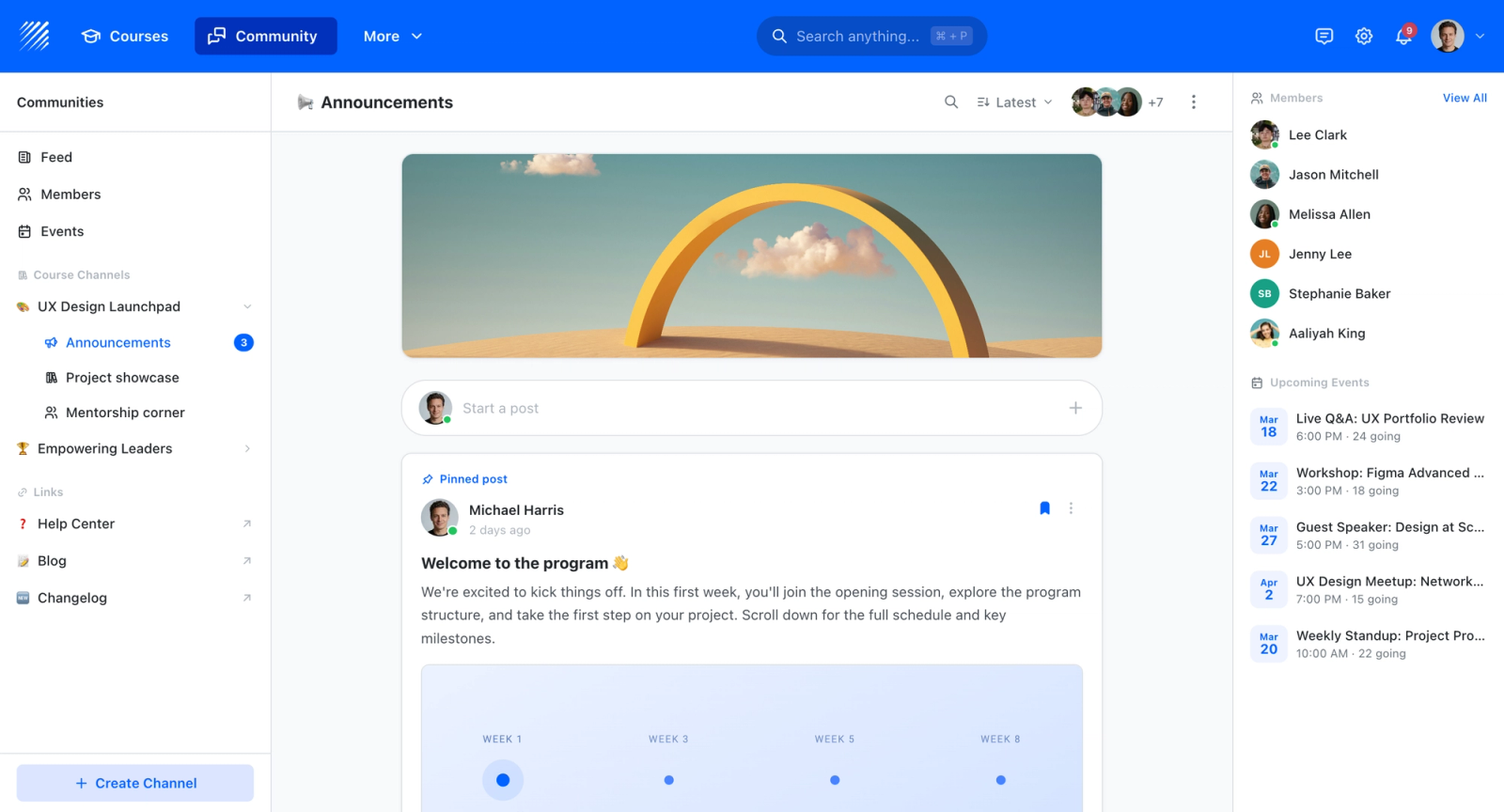
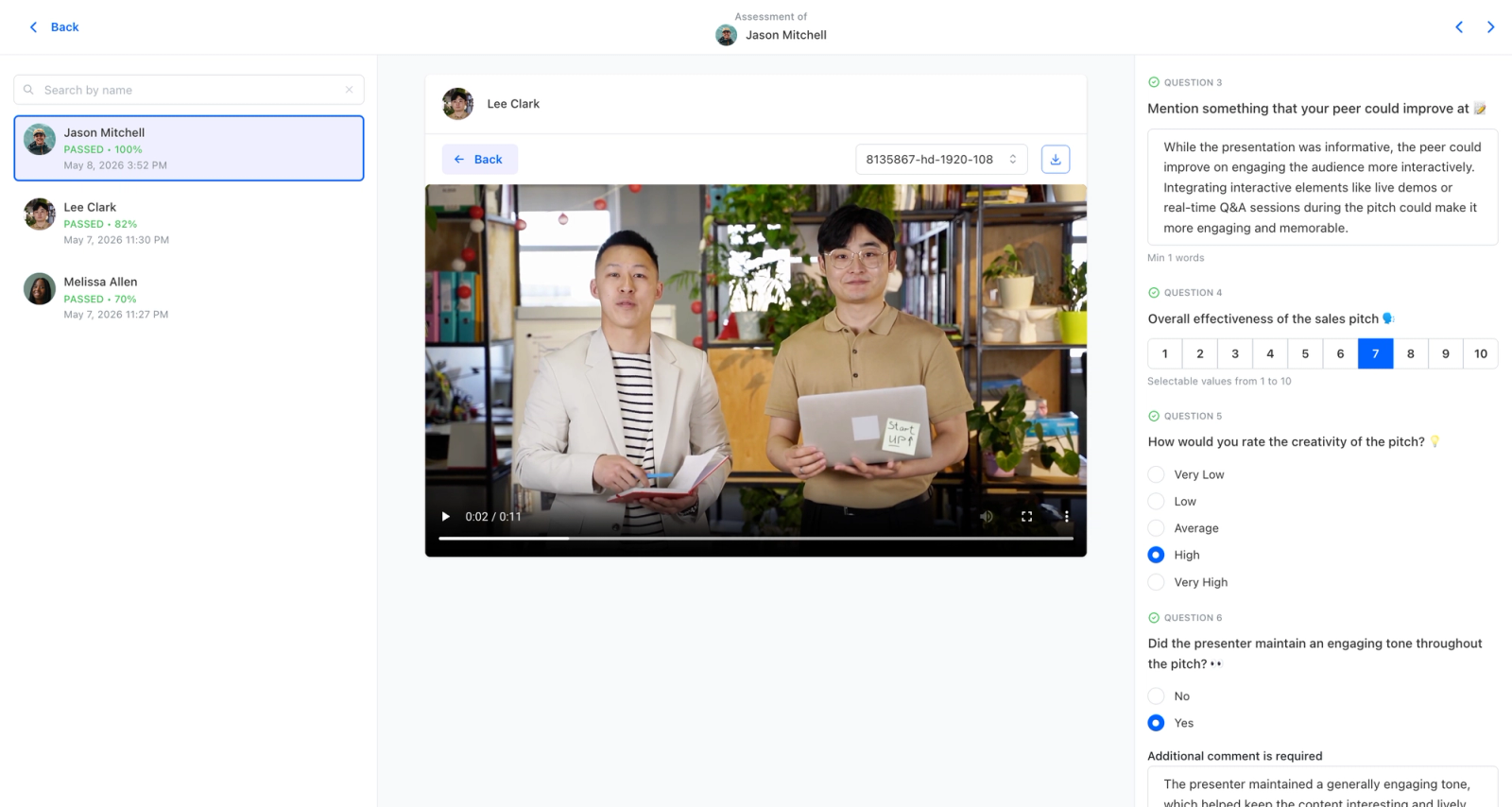
Teachfloor is a standalone learning platform that operates entirely outside any HCM suite. Teams leaving Oracle typically want learning to run independently of their HR system, and Teachfloor is built for exactly that setup. L&D teams can author courses with AI assistance, deliver them self-paced or in live cohort runs, and publish them under a white-label domain, while retaining SCORM support, multi-branch separation, certificates, and analytics. It covers the learning function on its own and does not replace Oracle HCM's performance, succession, or compensation modules.
Core Capabilities
- Standalone delivery independent of any HCM suite, with multi-branch separation for distinct departments or business units
- SCORM support, certificates, and analytics for compliance and completion tracking without the enterprise-suite overhead
- White-label academy on your own domain with AI-assisted authoring for building courses in-house
Best For
L&D teams leaving an HCM-bundled LMS who want a dedicated, brandable learning platform they control, while keeping core HR elsewhere.
Pricing Overview
- Startup plan from $89 per month for up to 50 learners
- Full Features plan with custom pricing, white-label, SSO, and advanced integrations
- 14-day free trial; no permanent free plan
- Nonprofit discounts available
Limitations
- Not a talent-management suite, no performance, succession, or compensation modules to match Oracle HCM
- No native, pre-built Oracle HCM connector; data sync runs through API or standards rather than a turnkey integration
- Built for mid-market scale rather than the tens of thousands of seats the largest Oracle deployments serve
Quick Comparison Insight
Teachfloor is a dedicated learning platform separate from any HCM suite. Cornerstone or SuccessFactors are the options when learning needs to be bundled with full talent management.
Cornerstone OnDemand
Overview
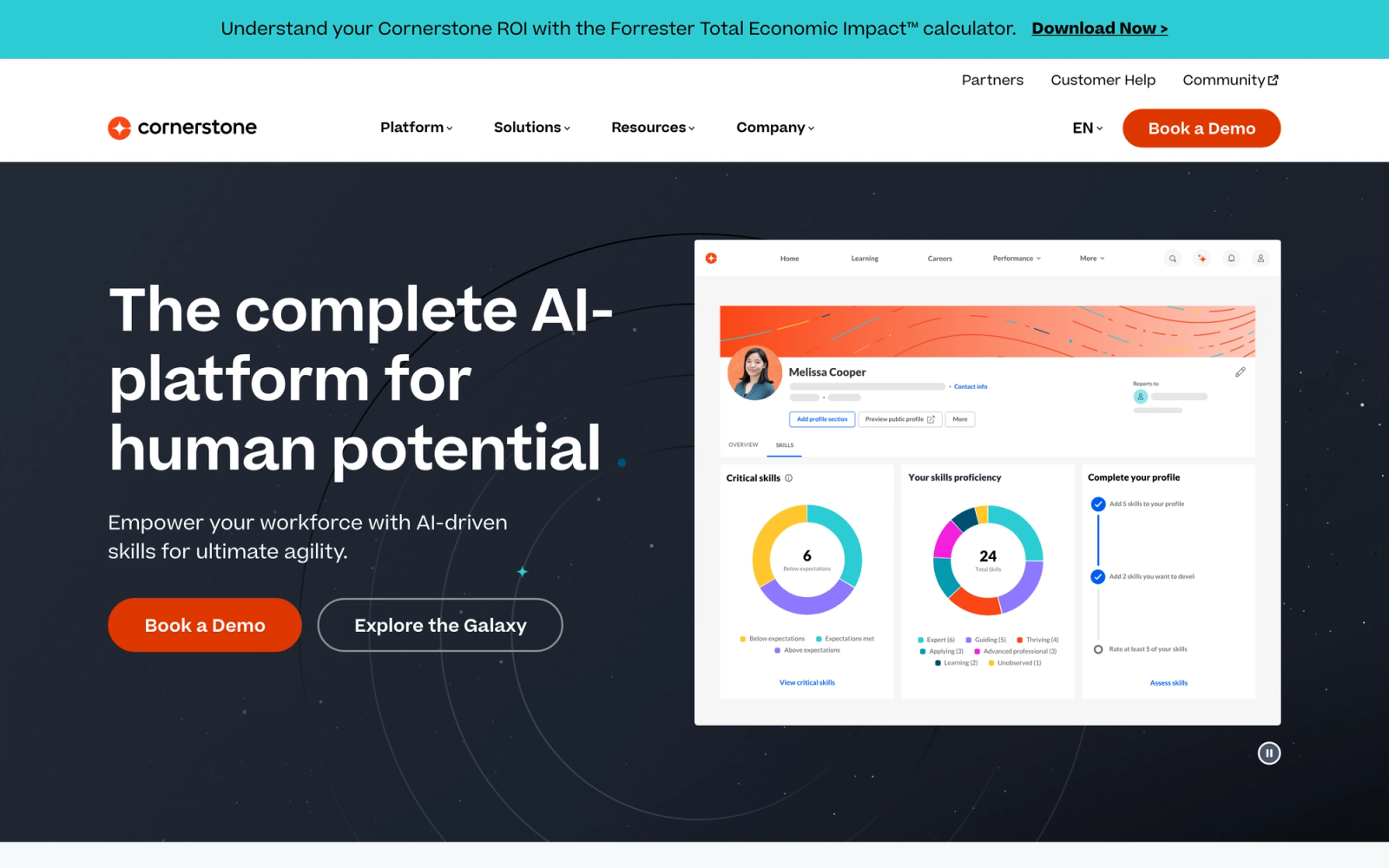
Cornerstone OnDemand is one of the most established enterprise talent management platforms on the market. Its learning module sits within a broader suite that includes performance management, recruiting, HR planning, and content subscriptions. For organizations leaving Oracle Learning Cloud, Cornerstone is often the most direct replacement because it operates at the same scale and serves similar compliance-heavy industries.
Cornerstone's defining characteristic is the sheer depth of its configuration options. This is not a platform deployed in an afternoon. That configurability is also its strength: every workflow, notification rule, and compliance escalation path can be tailored to match complex organizational structures. Where Oracle Learning Cloud ties you to its HCM stack, Cornerstone functions as a standalone learning platform while still integrating with most major HRIS providers.
Core Capabilities
- Extended enterprise learning with support for employees, partners, customers, and franchisees in a single instance
- Compliance management with automated certification tracking, audit trails, expiration alerts, and regulatory reporting
- Content marketplace (Cornerstone Content Anytime) with subscriptions from Skillsoft, LinkedIn Learning, Coursera, and other providers
- AI-driven skill mapping that connects learning content to organizational skill frameworks
- Advanced reporting engine with custom dashboards, scheduled reports, and data visualization
- SCORM, xAPI, AICC, and LTI support for importing third-party courseware
- Configurable learning paths, prerequisites, and automated enrollment rules
- Mobile learning app with offline content access for deskless workers
- Performance and development integration linking learning completions to talent reviews
- Multi-language and multi-tenant support for global deployments across regions
Standout Strength
Cornerstone fits organizations that need enterprise-scale compliance management alongside a broad talent suite. The ability to manage regulated training across thousands of employees, track certifications automatically, and produce audit-ready reports is where it consistently outpaces lighter platforms. For industries like healthcare, finance, and manufacturing where compliance failures carry real consequences, that depth matters.
Best For
Large enterprises with 1,000+ employees in regulated industries (healthcare, financial services, manufacturing, government) that need compliance-heavy learning management alongside performance and talent features. Strong fit for global organizations requiring multi-tenant, multi-language deployments.
Pricing Overview
- Custom enterprise pricing based on modules selected and user count
- Pricing is not publicly listed; expect annual contracts
- Content subscriptions (Cornerstone Content Anytime) are an additional cost
- Free demo available on request
Limitations
- Implementation complexity rivals Oracle. Deployment timelines of three to six months are common, and ongoing administration requires dedicated staff or a certified partner.
- The admin interface has improved but still carries legacy UX patterns that new administrators find unintuitive compared to modern SaaS tools.
- Pricing opacity makes budget planning difficult. Total cost can escalate quickly when adding modules, content subscriptions, and professional services.
Quick Comparison Insight
The closest enterprise-scale alternative to Oracle Learning Cloud, with the advantage of functioning as a standalone platform. Equally complex to implement, but not locked to a single HCM stack.
SAP SuccessFactors Learning
Overview
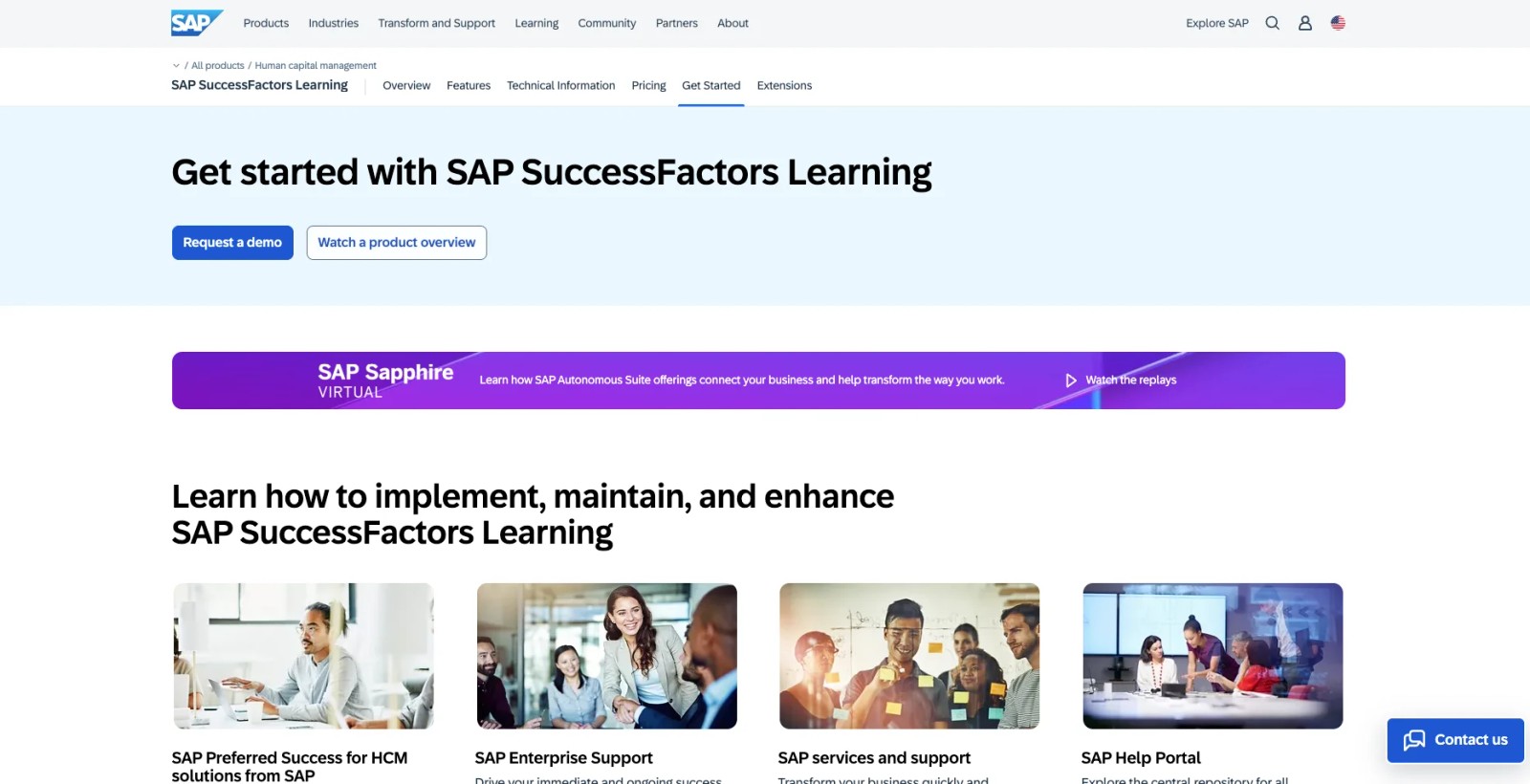
SAP SuccessFactors Learning is the learning management module within SAP's SuccessFactors HCM suite. If Oracle Learning Cloud is the learning arm of Oracle HCM, SuccessFactors Learning plays the same role for SAP. Organizations evaluating it are typically already running SAP for ERP, HR, or payroll, which makes the integration story compelling.
What distinguishes SuccessFactors Learning from many alternatives on this list is its deep compliance orientation and its native connection to SAP's broader talent management, succession planning, and workforce analytics modules. On the admin side, the compliance configuration options are extensive: automated recertification, instructor-led training scheduling, and detailed audit trails that satisfy regulatory requirements in healthcare, manufacturing, and government.
Core Capabilities
- Native integration with SAP SuccessFactors HCM for unified employee data, org structure, and role-based training assignments
- Compliance and certification management with automated renewal tracking, expiration alerts, and regulatory audit reports
- Instructor-led training management with room booking, waitlists, instructor scheduling, and attendance tracking
- Support for SCORM, AICC, and xAPI content standards
- Curriculum and learning path management with prerequisites and conditional assignments
- Reporting dashboards with integration into SAP Analytics Cloud for advanced workforce analytics
- Content management system for organizing, versioning, and distributing learning materials
- Extended enterprise support for training external audiences (partners, distributors, contractors)
- Mobile access through SAP SuccessFactors mobile app
- Multi-language support for global organizations with localized content delivery
Standout Strength
SuccessFactors Learning is chosen primarily for the way it connects training data directly to SAP's talent and workforce planning tools. When a certification expires, it surfaces in succession planning. When an employee completes a leadership program, it feeds into performance reviews. That closed-loop between learning, talent, and HR data is difficult to replicate with a standalone LMS connected to an SAP environment via API.
Best For
Large enterprises already using SAP SuccessFactors for HCM that need a learning module tightly integrated with their existing HR infrastructure. Particularly strong for global organizations in regulated industries where compliance tracking, instructor-led training logistics, and workforce planning alignment are priorities.
Pricing Overview
- Custom enterprise pricing as part of the SAP SuccessFactors suite
- Typically sold as a module within a broader HCM contract
- Pricing is not publicly listed; request a quote from SAP sales
- Free trial not available; demo on request
Limitations
- Shares the same stack dependency problem as Oracle. Organizations not already on SAP SuccessFactors get limited value from the integration story, and the platform is less competitive as a standalone LMS.
- The learner interface is functional but visually dated, particularly compared to modern SaaS learning platforms. Engagement-focused features like social learning and gamification are minimal.
- Implementation and configuration require SAP-certified consultants, adding significant cost and timeline to deployments.
Quick Comparison Insight
Trades the Oracle stack lock-in for SAP stack lock-in. If your organization already runs SAP, this is a natural fit. If not, standalone platforms offer better value.
Workday Learning
Overview
Workday Learning is the learning management module built into the Workday HCM platform. Unlike bolt-on integrations, Workday Learning shares the same data model, user interface, and reporting infrastructure as Workday's core HR, payroll, and talent management tools. For organizations already running Workday, the learning module is the path of least resistance.
The learner interface in Workday Learning is cleaner and more modern than Oracle's, borrowing the same design language Workday uses across its entire platform. Because employee data, org hierarchy, and role definitions already live in Workday, configuring a learning campaign is faster than a comparable setup in Oracle Learning Cloud. That shared data model eliminates the sync issues that arise when organizations connect separate HR and LMS systems.
Core Capabilities
- Unified data model with Workday HCM, sharing employee profiles, org charts, job roles, and manager hierarchies
- Native content authoring for creating simple training modules, quizzes, and video-based learning directly within the platform
- Learning campaigns that auto-assign training based on role, location, department, or custom criteria
- Compliance tracking with certification management, due date monitoring, and automated escalation notifications
- Peer-recommended content where employees can share learning resources and endorse skills
- Integration with third-party content providers including LinkedIn Learning, Coursera, and Skillsoft
- Reporting through Workday's unified analytics engine, combining learning data with HR and talent metrics
- Mobile learning through the Workday mobile app with a consistent cross-device experience
- External learning tracking so employees can log conferences, books, and self-directed learning
- Manager dashboards showing team learning progress, compliance status, and skill development
Standout Strength
The unified data model is what makes Workday Learning compelling. There is no integration layer, no data sync to manage, and no reconciliation between HR records and learning records. When someone changes roles, their training assignments update automatically. When a manager reviews team performance, learning completions appear alongside other talent data. That level of native integration reduces administrative overhead significantly compared to connecting a standalone LMS to Workday via API.
Best For
Mid-to-large enterprises already using Workday HCM that want learning management embedded in their existing HR workflow. Ideal for organizations where the primary learning use case is employee onboarding, compliance training, and role-based skill development, and where a unified reporting view across HR and learning data is a priority.
Pricing Overview
- Included as a module within Workday HCM subscriptions (pricing varies by contract)
- Not available as a standalone purchase
- Pricing is not publicly listed; negotiate as part of your Workday HCM agreement
- Free trial not available; demo on request
Limitations
- Not available standalone. If you do not use Workday HCM, you cannot use Workday Learning. This limits it to existing Workday customers.
- Content authoring is basic compared to dedicated authoring platforms. Complex interactive modules still need external tools like Articulate or Adobe Captivate.
- Advanced learning features like AI-powered recommendations, gamification, and social learning are less developed than in dedicated LMS platforms like Docebo or 360Learning.
Quick Comparison Insight
The cleanest transition for Workday HCM customers. Less feature-rich than a dedicated LMS, but the unified data model eliminates integration headaches that Oracle Learning Cloud creates when connected to non-Oracle systems.
Docebo
Overview
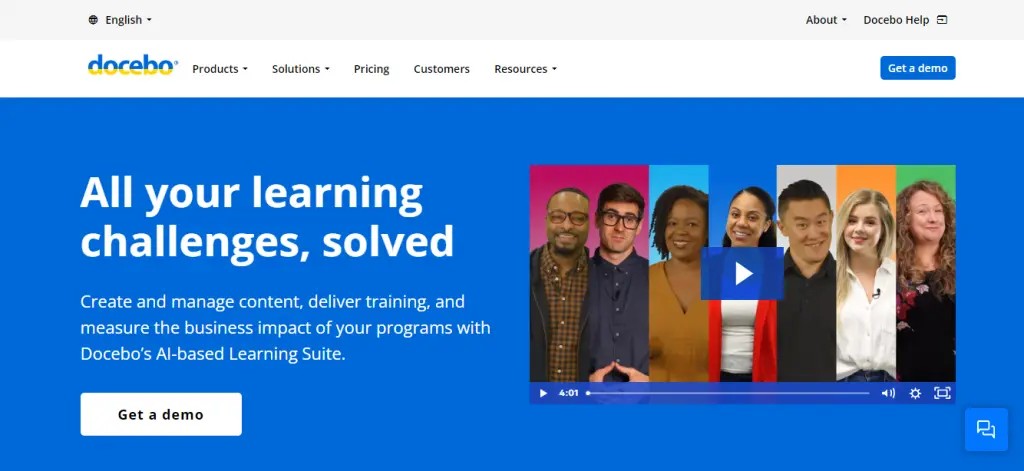
Docebo is an AI-powered learning platform that has grown from a mid-market LMS into an enterprise contender. Unlike Oracle Learning Cloud, which is a module inside an HCM suite, Docebo is purpose-built for learning and positions itself as a standalone platform that serves internal employees, external partners, and customers from a single environment.
What stands out about Docebo is how broadly AI is used across the platform. Content recommendations, automated tagging, virtual coaching, and skill-matching are functional capabilities visible in the admin panel, not marketing-page claims. For L&D teams frustrated by Oracle Learning Cloud's limited personalization, Docebo's approach to surfacing relevant content per learner produces a measurable difference in engagement rates.
Core Capabilities
- AI-powered content recommendations that personalize the learner experience based on role, skills, and learning history
- Multi-audience architecture supporting employees, partners, customers, and franchisees with separate branded portals
- Built-in content authoring with drag-and-drop course builder, assessment tools, and multimedia support
- Learning impact measurement connecting training completions to business KPIs and performance data
- Content marketplace integrations with LinkedIn Learning, Coursera, Udemy Business, and OpenSesame
- Social learning features including channels, expert Q&A, and user-generated content sharing
- Compliance management with automated certification tracking, audit logs, and retraining triggers
- SCORM, xAPI, AICC, and CMI5 content standard support
- Extensive integration library with 400+ connectors including Salesforce, Workday, BambooHR, and Slack
- White-label branding for customer education and partner enablement portals
Standout Strength
Docebo fits organizations that need one platform to handle multiple distinct audiences without separate systems. Running employee compliance training, partner certification, and customer education from a single instance, each with its own branding and content rules, is where it outpaces single-purpose enterprise LMS tools. The AI capabilities add real personalization based on role and skill history rather than generic catalog sorting.
Best For
Mid-to-large enterprises with 500 to 50,000+ learners that need a standalone LMS for multi-audience training. Particularly strong for organizations running customer education or partner enablement alongside internal L&D, and for teams that want AI-driven personalization without the overhead of an HCM suite.
Pricing Overview
- Custom pricing based on the number of active users and modules selected
- Plans start at roughly $25,000 per year for smaller deployments
- Enterprise tiers scale based on user count and feature requirements
- Free 14-day trial available
Limitations
- Pricing scales steeply at higher user counts. Organizations with tens of thousands of learners should negotiate carefully to avoid budget surprises.
- The admin interface, while powerful, has a learning curve. New administrators need time to understand the configuration options and page builder logic.
- Some advanced features (like Learning Impact, Docebo Connect, and extended enterprise portals) are gated behind higher-tier plans, increasing total cost.
Quick Comparison Insight
More modern, more flexible, and more learner-friendly than Oracle Learning Cloud. Costs more than lightweight LMS tools but delivers genuine enterprise capabilities without requiring an HCM stack.
Absorb LMS
Overview
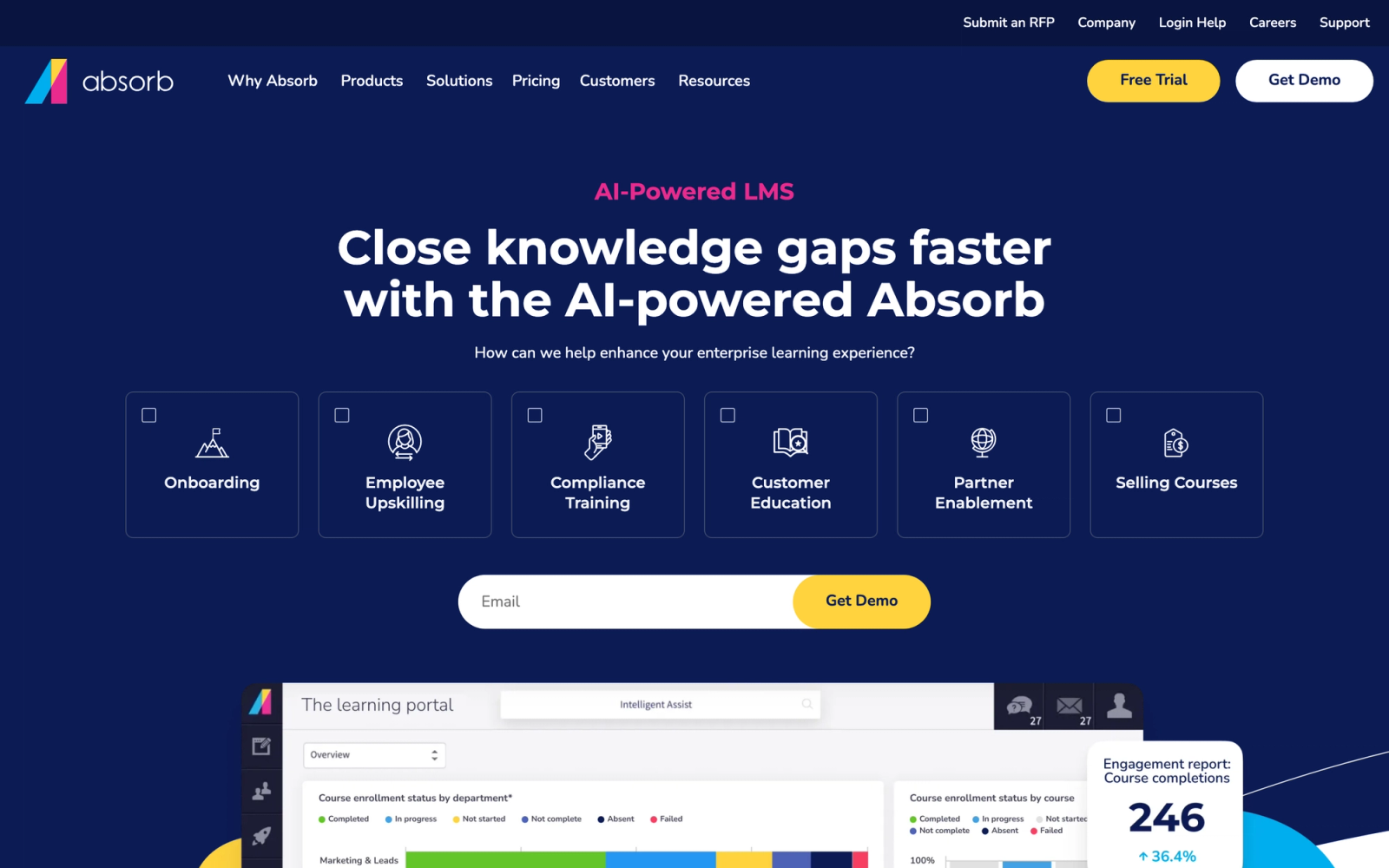
Absorb LMS positions itself as the enterprise LMS that does not feel like one. It targets mid-market and enterprise organizations that want serious functionality, including compliance tracking, e-commerce, and multi-tenant deployments, without the implementation burden that platforms like Oracle Learning Cloud impose.
Absorb's most notable quality is its admin experience. The interface is clean and logically organized, a direct contrast to the cluttered panels common in legacy enterprise systems. Building a course, configuring enrollment rules, and generating compliance reports all follow a predictable workflow with no hidden configuration layers. For L&D administrators familiar with Oracle's complexity, Absorb covers comparable ground with considerably less friction.
Core Capabilities
- Intelligent Assist feature using AI to automate repetitive admin tasks like enrollment, notifications, and report scheduling
- Compliance management with certification tracking, recertification automation, and audit trail reports
- Built-in content authoring with SCORM, xAPI, video, and document-based course creation
- E-commerce module for selling courses with payment processing, discount codes, and bundled pricing
- Absorb Engage (microlearning and reinforcement module) for post-training knowledge retention
- Multi-tenant (Absorb Infuse) for embedding learning into external applications and workflows
- Branded learner portals with custom domains, themes, and navigation for different audiences
- Reporting dashboard with pre-built and custom reports, scheduled delivery, and data export options
- Integration with HRIS platforms (Workday, BambooHR, ADP), CRM tools, and content providers
- Mobile app with offline learning support and push notifications
Standout Strength
Absorb's competitive advantage is the balance between enterprise-grade features and usability. The Intelligent Assist AI reduces routine admin workload, the interface is accessible to non-technical L&D staff, and the platform handles compliance, e-commerce, and extended enterprise use cases without requiring a dedicated LMS administrator. For organizations coming from Oracle Learning Cloud's complexity, Absorb delivers comparable functionality with significantly less friction.
Best For
Mid-market companies and growing enterprises with 500 to 20,000 learners that need compliance tracking, content delivery, and potentially course sales in a single platform. Strong fit for organizations where the L&D team manages the LMS directly without dedicated IT support, and for companies selling training as a revenue stream.
Pricing Overview
- Custom pricing based on user count and modules selected
- Pricing is not publicly listed; request a quote
- Free demo and guided trial available on request
- Add-on modules (Engage, Infuse, e-commerce) carry additional costs
Limitations
- Content authoring is functional for basic courses but lacks the depth of dedicated authoring tools. Complex branching scenarios and simulations still require external software.
- Some reporting customization requires support assistance rather than self-service configuration.
- The platform's breadth means some features feel surface-level compared to best-of-breed tools in specific categories (e.g., social learning is limited compared to 360Learning).
Quick Comparison Insight
Significantly easier to implement and administer than Oracle Learning Cloud, with a modern learner interface. Less depth in HR integration, but better standalone value for organizations not tied to an HCM suite.
TalentLMS
Overview
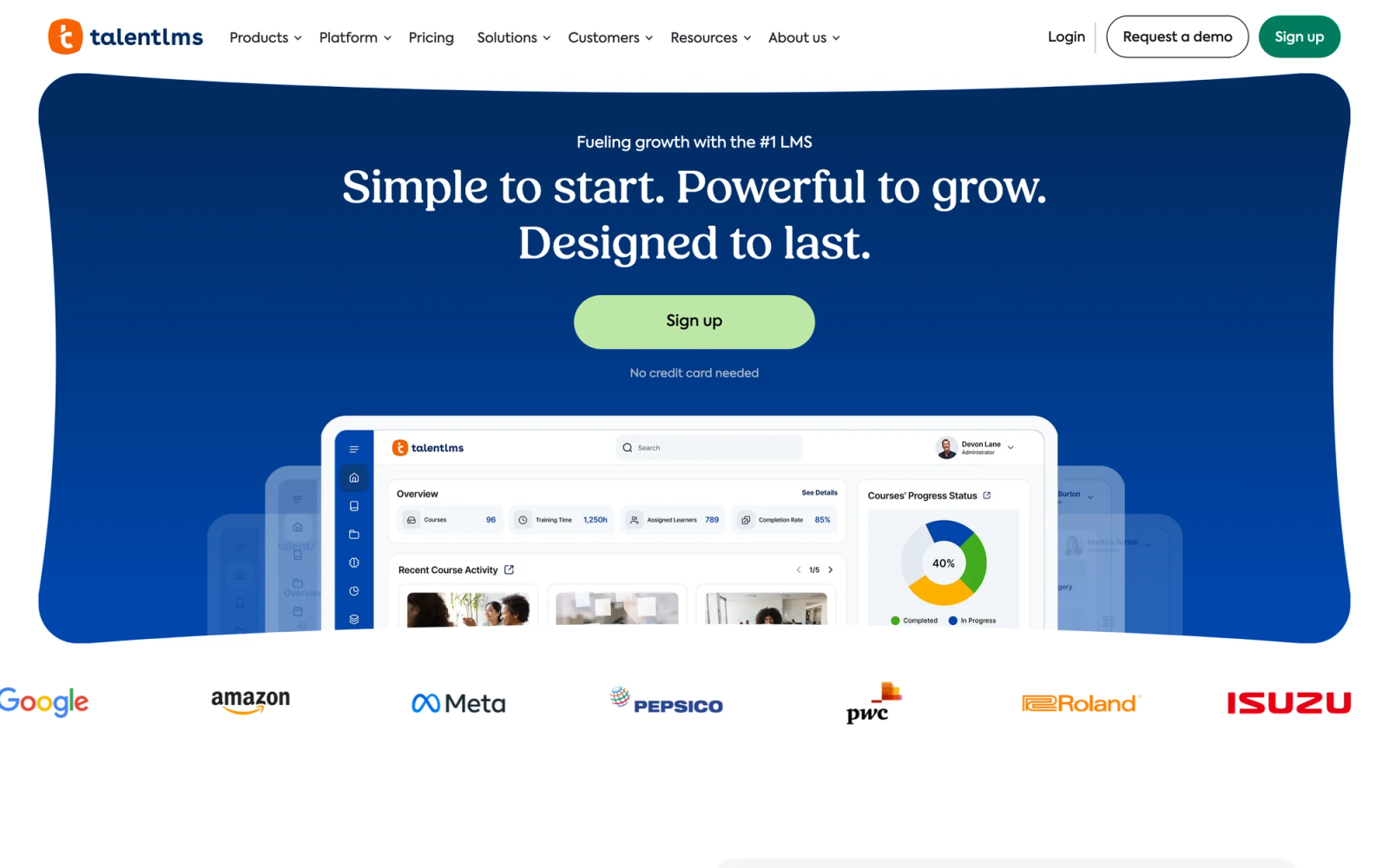
TalentLMS by Epignosis is built for a different buyer than Oracle Learning Cloud. Where Oracle targets large enterprises with complex HR stacks, TalentLMS serves small and mid-sized businesses that need a functional, affordable LMS without a multi-month deployment. It is one of the fastest platforms to go live on, and its transparent per-user pricing makes professional training software accessible to organizations that cannot justify enterprise contracts.
Getting a working environment with courses, users, and a branded portal in TalentLMS takes under an hour for most administrators. The platform is designed for L&D teams and HR managers who need to launch training quickly without IT involvement. For teams leaving Oracle Learning Cloud because of implementation burden, TalentLMS sits at the opposite end of the complexity spectrum.
Core Capabilities
- Intuitive course builder with support for SCORM, xAPI, video, documents, and native content creation
- Pre-built course library with ready-made training content for compliance, soft skills, and onboarding
- Gamification features including points, badges, leaderboards, and learning streaks
- Automated training workflows for onboarding sequences, certification renewals, and assignment rules
- Branch functionality creating separate branded portals for different departments, teams, or external audiences
- Built-in assessment engine with quizzes, surveys, and assignment submissions
- Reporting dashboard with completion tracking, test scores, login activity, and progress timelines
- Integration with Zapier, BambooHR, Salesforce, Slack, and other business tools
- E-commerce support for selling courses with Stripe and PayPal integration
- REST API for custom integrations and data exchange
Standout Strength
Speed and simplicity. TalentLMS gets organizations from sign-up to live training faster than almost any other platform on this list. The combination of an intuitive interface, a free tier for small teams, and transparent pricing makes it the go-to choice for organizations where the L&D function does not have dedicated technology resources. Compared to Oracle Learning Cloud's months-long implementation, TalentLMS can be running in a single day.
Best For
Small and mid-sized businesses with 20 to 1,000 employees that need affordable, easy-to-manage training delivery for onboarding, compliance, and skills development. Ideal for HR managers and L&D generalists who manage training as part of a broader role, not as a full-time function.
Pricing Overview
- Free plan available for up to 5 users and 10 courses
- Paid plans start at $89 per month (billed annually) for up to 40 users
- Pricing scales with user count across Starter, Basic, Plus, and Premium tiers
- Custom enterprise pricing available for large deployments
- Free trial available on all paid plans
Limitations
- Reporting is adequate for SMB needs but lacks the depth and customization that enterprise organizations expect. Advanced cross-departmental analytics and audit-grade compliance reports are limited.
- Gamification and engagement features, while present, are basic compared to platforms like Docebo that use AI-driven personalization.
- The platform's simplicity means fewer configuration options for complex organizational structures, multi-level approval workflows, or advanced role-based training assignments.
Quick Comparison Insight
The fastest, most affordable path away from Oracle Learning Cloud. Trades enterprise depth and HR integration for simplicity, speed, and transparent pricing. The right choice when you need training running this week, not this quarter.
360Learning
Overview
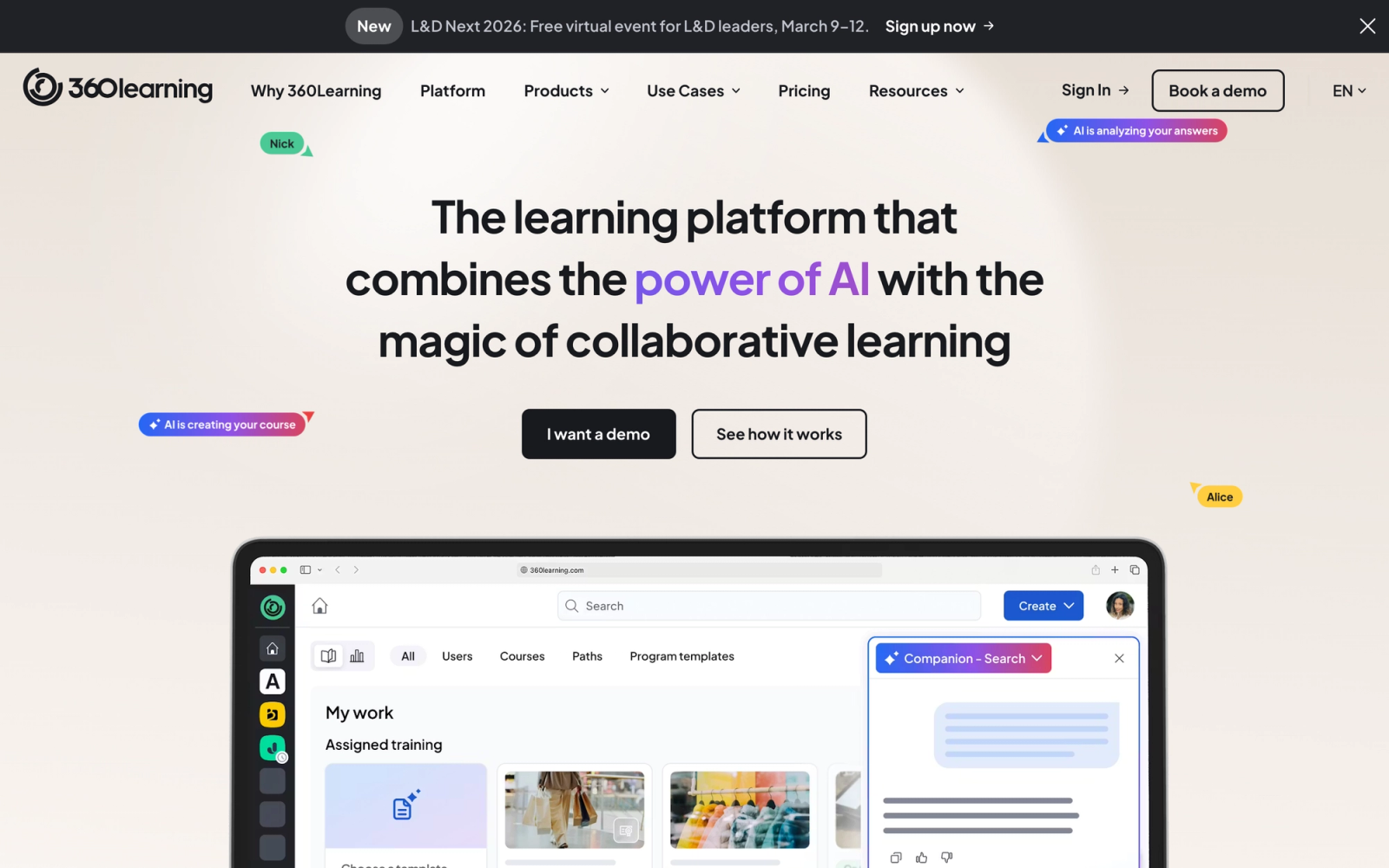
360Learning operates on a different content model than most enterprise LMS platforms. While tools like Oracle Learning Cloud follow a top-down structure where L&D creates and pushes content to learners, 360Learning inverts this by enabling subject matter experts across the organization to build and iterate on courses directly.
The platform calls this "collaborative learning," and the workflow bears that out. The course creation interface is designed for non-instructional designers: SMEs draft a course, peers comment on specific slides, and the L&D team reviews and approves, all within the platform. For organizations where Oracle Learning Cloud's limited authoring forced reliance on external tools and slow production cycles, 360Learning moves content creation to the people who hold the knowledge.
Core Capabilities
- Collaborative authoring where subject matter experts create courses with built-in review, feedback, and approval workflows
- Reaction-based feedback system where learners flag outdated or unclear content, triggering course updates
- AI-powered course creation assistant that helps authors generate outlines, quizzes, and content suggestions
- Built-in assessment tools with quizzes, peer evaluations, and practical assignments
- Learning path management with sequential or flexible course grouping and prerequisite logic
- Compliance training support with certification tracking, automated reminders, and audit logs
- Analytics dashboard showing engagement metrics, content quality scores, and learner feedback patterns
- Integration with HRIS platforms (Workday, BambooHR, SAP), communication tools (Slack, Teams), and content standards (SCORM, xAPI)
- Mobile app for learning on the go with push notifications
- Academy feature for structuring multi-course programs around specific roles or skills
Standout Strength
Organizations choose 360Learning when they realize that the bottleneck in their training operation is content production, not content delivery. By making it easy for internal experts to create, review, and update training content, 360Learning reduces the time from knowledge gap identification to training availability. The feedback loop where learners can flag problems with specific content sections keeps courses accurate and relevant, something that top-down content models struggle with at scale.
Best For
Mid-to-large organizations with 200 to 10,000+ employees where internal expertise is distributed across departments and the L&D team cannot be the sole content producer. Strong fit for fast-growing companies, tech firms, and professional services organizations where knowledge changes rapidly and subject matter experts need to contribute directly to training content.
Pricing Overview
- Team plan starts at $8 per registered user per month
- Business plan with advanced features available at custom pricing
- Free 30-day trial available
- No free tier
Limitations
- The collaborative model requires organizational buy-in. If subject matter experts are not willing or incentivized to create content, the platform's core value proposition weakens.
- Less suited for organizations that primarily consume external content libraries rather than building custom training. The platform's strength is authoring, not aggregation.
- Compliance features, while solid, are not as deep as Cornerstone or SAP SuccessFactors for highly regulated industries with complex audit requirements.
Quick Comparison Insight
Solves a problem Oracle Learning Cloud ignores entirely: fast, collaborative content creation by non-L&D staff. Less depth in compliance management, but fundamentally better at keeping training content current and relevant.
LearnUpon
Overview
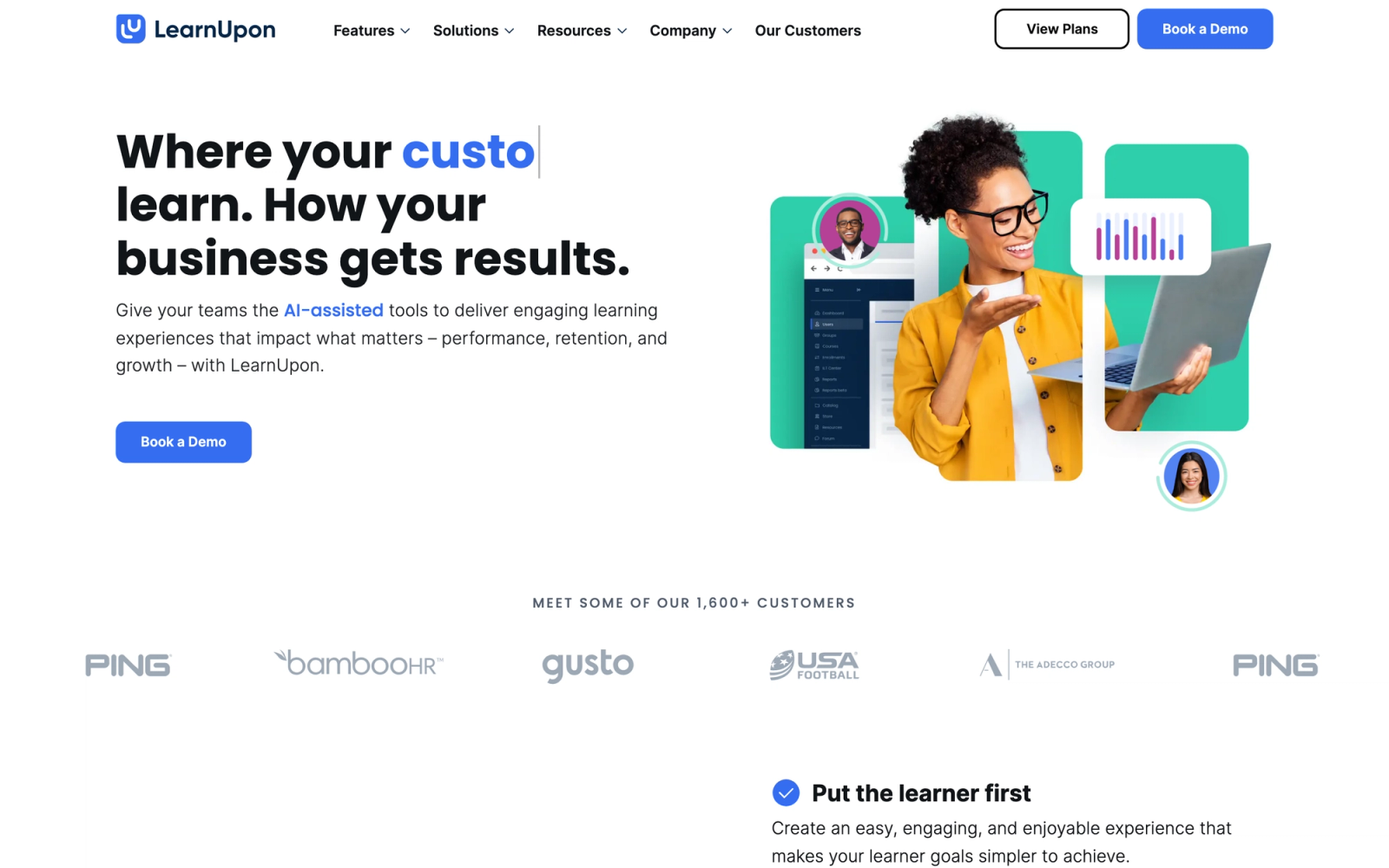
LearnUpon is a cloud-based LMS built for organizations that need to train multiple distinct audiences from a single platform. Employees, partners, customers, and members each get their own branded learning portal, but administrators manage everything from one backend. This multi-audience architecture is what differentiates LearnUpon from both Oracle Learning Cloud and many of the other tools on this list.
Setting up separate learning portals in LearnUpon is straightforward. Each portal carries its own branding, course catalog, user groups, and certification rules, while administrators maintain a unified view of all learners and content from one backend. For organizations that left Oracle Learning Cloud partly because it was designed only for internal employees, LearnUpon covers partner enablement and customer training without adding a second platform.
Core Capabilities
- Multi-portal architecture with separate branded environments for employees, partners, customers, and other audiences
- Course builder with support for SCORM, xAPI, video, webinars, ILT sessions, and blended learning paths
- Automated enrollment rules based on user groups, roles, or custom attributes
- Certification and compliance tracking with expiration alerts, re-enrollment triggers, and audit trails
- Built-in e-commerce for selling courses with payment processing and coupon management
- White-label branding with custom domains, logos, colors, and email templates per portal
- Reporting engine with pre-built reports, custom report builder, and scheduled report delivery
- Integration with Salesforce, Workday, BambooHR, Zapier, and a REST API for custom connections
- Webinar integration with Zoom and Microsoft Teams for live virtual training
- Gamification features including badges, points, and leaderboards
Standout Strength
LearnUpon's multi-portal architecture lets organizations run distinct training programs for every audience type without managing multiple platforms. A single content library feeds all portals, but each audience sees only what is relevant to them. This reduces content duplication, simplifies administration, and makes it practical to extend learning beyond employees. For companies that need employee onboarding and customer training under one roof, LearnUpon handles the split cleanly.
Best For
Mid-market companies and enterprises with 100 to 10,000+ learners across multiple audiences. Particularly strong for SaaS companies running customer onboarding and certification, organizations with partner and channel training needs, and membership associations delivering continuing education.
Pricing Overview
- Custom pricing based on the number of learners and portals
- Plans start at roughly $599 per month for up to 150 users
- Enterprise pricing scales with user count and portal requirements
- Free trial available on request
Limitations
- Content authoring capabilities are functional but not advanced. Organizations building complex interactive content still need external authoring tools.
- The reporting engine, while improved, does not match the depth of platforms like Cornerstone or Docebo for enterprise-grade analytics and custom dashboards.
- Per-user pricing at higher learner counts can become expensive, particularly for extended enterprise use cases with thousands of external learners.
Quick Comparison Insight
Better than Oracle Learning Cloud for multi-audience training scenarios. Less depth in HR integration and compliance configuration, but significantly faster to deploy and easier to manage for organizations that need to train beyond their own employees.
Degreed
Overview
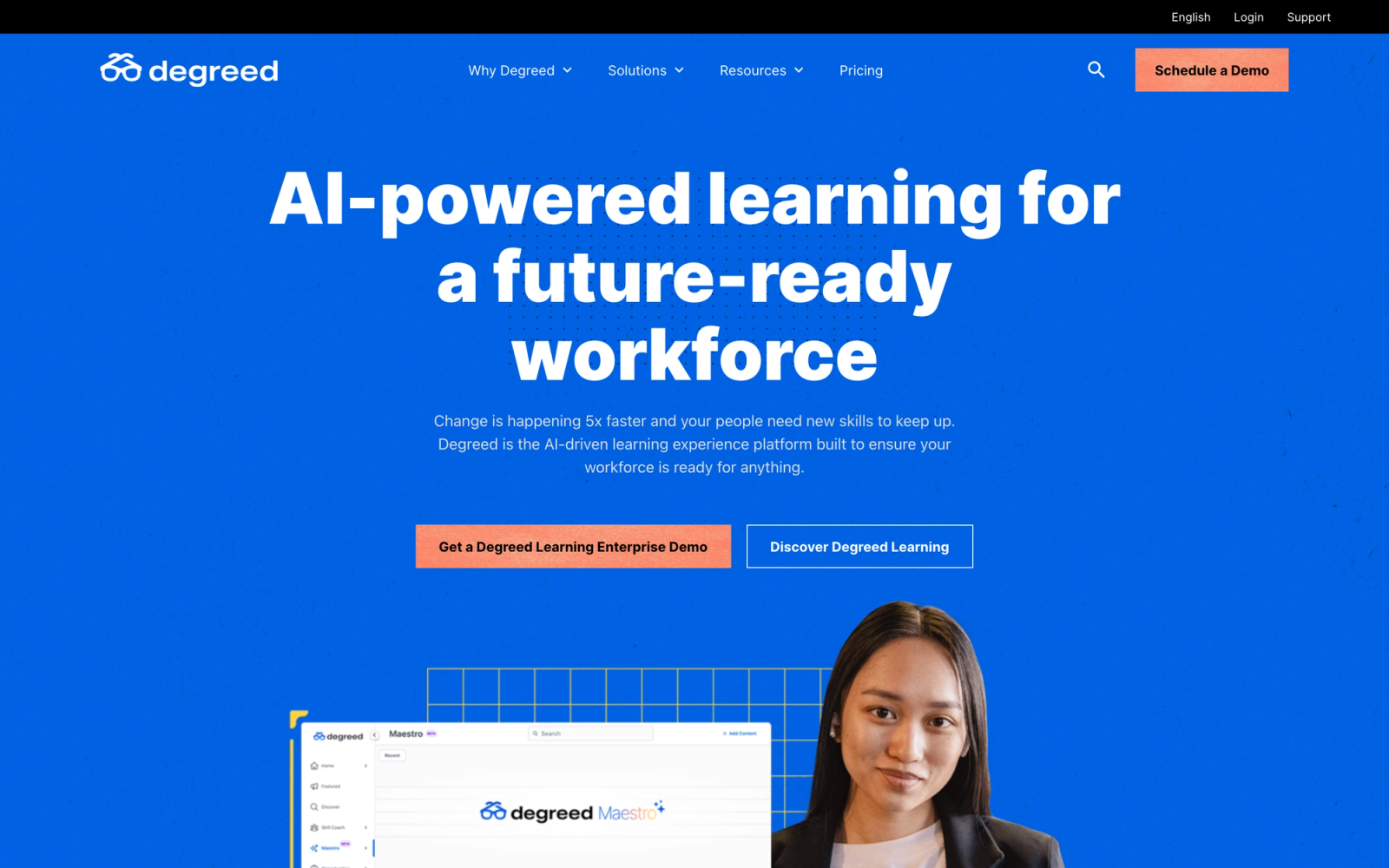
Degreed is not a traditional LMS. It positions itself as a workforce upskilling platform that aggregates learning content from any source, maps it to organizational skill frameworks, and helps employees build careers around skill development rather than course completions. Where Oracle Learning Cloud focuses on assigning and tracking training, Degreed focuses on helping people discover what to learn next and why it matters.
The experience of using Degreed as a learner is closer to a content discovery engine than a course catalog. The platform pulls in content from internal libraries, LinkedIn Learning, Coursera, Udemy, YouTube, articles, podcasts, and books, then uses AI to recommend relevant resources based on each person's role, skill profile, and career aspirations. For organizations where Oracle Learning Cloud felt like a compliance checkbox rather than a development tool, Degreed reframes learning as a continuous, skill-driven practice.
Core Capabilities
- Skill profiles for every employee, mapping current capabilities against organizational skill frameworks and career paths
- Content aggregation from 30+ providers including LinkedIn Learning, Coursera, Udemy, Pluralsight, and internal libraries
- AI-powered recommendations that surface relevant content based on skill gaps, role requirements, and career goals
- Skill assessments and manager endorsements that create a verified picture of each employee's capabilities
- Learning pathways curated by L&D teams or generated automatically based on skill targets
- Analytics connecting skill development data to business outcomes, talent mobility, and workforce planning
- Integration with HRIS platforms (Workday, SAP, Oracle HCM) and talent management tools
- Social features including peer recommendations, shared collections, and group challenges
- Career mobility tools showing employees what skills they need for internal role transitions
- API and connector framework for feeding learning data into broader learning and development stacks
Standout Strength
Degreed is the strongest platform on this list for organizations moving away from compliance-driven training toward skill-based workforce development. The skill mapping, content aggregation, and career pathing capabilities create a learning experience that is structurally unlike a traditional LMS. The platform is built around the question "what should I learn next?" rather than "what am I required to complete?"
Best For
Large enterprises with 5,000+ employees that are investing in workforce upskilling, internal mobility, and skills-based talent strategies. Strong fit for organizations where the learning strategy extends beyond compliance into employee development, career growth, and retention, and where L&D leadership has executive support for a skills-first approach.
Pricing Overview
- Custom enterprise pricing based on user count and content provider integrations
- Pricing is not publicly listed; expect annual contracts starting in the six-figure range for large deployments
- Free trial not available; demo on request
Limitations
- Not a replacement for a traditional LMS if your primary need is compliance tracking and course administration. Degreed's compliance features are limited compared to Cornerstone or SAP SuccessFactors.
- High price point puts it out of reach for mid-market organizations. This is an enterprise investment that requires executive sponsorship and clear ROI expectations.
- Requires organizational change management. Moving from course-completion culture to skill-development culture is not just a technology decision; it demands L&D strategy alignment, manager buy-in, and sustained communication.
Quick Comparison Insight
Not a direct LMS replacement for Oracle Learning Cloud, but a distinct approach to workforce learning. Choose Degreed when the goal is building organizational capabilities, not tracking course completions.
How to Choose the Right Alternative
The right Oracle Learning Cloud replacement depends less on feature checklists and more on understanding what kind of learning operation you are building.
If you need a direct enterprise LMS replacement, Cornerstone OnDemand or Docebo give you comparable scale with standalone flexibility. Cornerstone is the safer choice for compliance-heavy regulated industries. Docebo is the better choice for multi-audience training with AI-driven personalization.
If you are locked into an HCM stack, SAP SuccessFactors Learning and Workday Learning are the obvious options for their respective platforms. They offer less standalone value but eliminate integration overhead for organizations already committed to those HR suites.
If you want faster time to value, Absorb LMS and TalentLMS represent different points on the speed-versus-depth spectrum. Absorb handles enterprise requirements without enterprise-level implementation pain. TalentLMS gets the smallest teams running in hours, not months.
If your content creation process is the bottleneck, 360Learning changes the model entirely by turning subject matter experts into course creators. This works when organizational culture supports distributed authoring.
If you train multiple audiences, LearnUpon's multi-portal architecture handles employees, partners, and customers from one platform without the complexity of managing separate systems.
If your focus is workforce development over compliance, Degreed reframes learning around skills and careers rather than course assignments. This is a strategic shift, not just a technology swap.
If you want a dedicated learning platform outside your HCM suite, with the option to run both self-paced and cohort-based programs under your own brand, Teachfloor is purpose-built for that setup. Use your LMS evaluation checklist to map each option against your specific requirements.
Start with the pain point, not the feature list. If the reason you are leaving Oracle Learning Cloud is stack dependency, do not choose another stack-locked platform. If the problem is implementation complexity, prioritize platforms with transparent onboarding timelines. If the issue is learner engagement, test the learner interface yourself before committing.
FAQ
Can I migrate my content from Oracle Learning Cloud to another platform?
Most Oracle Learning Cloud content in standard formats (SCORM, xAPI, AICC) can be exported and imported into any LMS that supports those standards. Custom Oracle-specific content may require conversion. Work with your new vendor's migration team to map content, user data, and completion records before cutover. Plan for a transition period where both systems run in parallel.
Do any of these alternatives integrate with Oracle HCM Cloud?
Yes. Cornerstone OnDemand, Docebo, Absorb LMS, and Degreed all offer Oracle HCM Cloud integrations, either through pre-built connectors or API-based connections. This means you can replace the learning module while keeping Oracle for core HR functions. Evaluate the depth of each integration carefully, as some only sync basic user data while others support full role-based assignment rules.
Which alternative is best for regulated industries?
Cornerstone OnDemand and SAP SuccessFactors Learning offer the deepest compliance and audit capabilities for heavily regulated environments. Both support automated certification tracking, regulatory reporting, and detailed audit trails. Absorb LMS is a strong mid-market option that handles compliance without the implementation overhead of the larger platforms.
How long does it typically take to switch from Oracle Learning Cloud?
Timeline varies significantly by platform. TalentLMS can be operational in days. Absorb LMS and LearnUpon typically deploy in four to eight weeks. Cornerstone OnDemand and SAP SuccessFactors may take three to six months for full enterprise deployment. The biggest variable is not the platform itself but the scope of your content migration, custom integrations, and organizational change management.
Can I use a standalone LMS alongside Oracle HCM Cloud?
Yes, and many organizations do. Keeping Oracle HCM for core HR while using a dedicated LMS for training is a common architecture. The key is ensuring clean data sync between the two systems, particularly for employee records, org hierarchy, and role assignments. Platforms with strong Oracle HCM connectors make this architecture practical without manual data reconciliation.


