


Why Look for an Honor Education Alternative?
Honor Education is a mobile-first social learning platform that blends asynchronous peer interaction, social annotation, real-time instructor feedback, and AI course enhancement. Founded in 2021 by Joel Podolny (the founding dean of Apple University and former dean of the Yale School of Management), it raised a $38M Series A in July 2025 and works with organizations and program teams that want high engagement and strong completion rather than passive content libraries.
It is a credible product, but it is not the right fit for every team. Buyers compare Honor against other social and peer learning platforms for a few recurring reasons.
You want pricing transparency and a lower entry point. Honor Education sells through sales conversations with custom, enterprise-style contracts. Smaller teams, course creators, and training businesses that want a published starting price and a self-serve trial often look for an alternative they can evaluate without a procurement cycle.
You need flexible delivery, not just one model. Honor leans into mobile-first, asynchronous, social learning. Teams that also run live cohorts, instructor-led sessions, or self-paced tracks (and want to mix those formats in one program) need a platform built for that range. For background on the format, see our guide to cohort-based learning.
You want to own the brand and the domain. Many organizations want learners to experience the academy as their own product, on their own domain, with their own branding. A white-label learning platform matters more here than a vendor-branded app.
You sell or monetize courses. Honor is built around organizational and program learning, not creator monetization. If you need built-in payments, enrollment, and certificates to run paid programs, a platform built for course creators is a closer fit.
These are not universal deal-breakers. But if any of them describe your situation, the platforms below address those gaps directly, and several do so at a fraction of the cost.
What to Look for in an Honor Education Alternative
Honor Education competes in the social and peer learning category, where engagement comes from interaction rather than content volume. When you evaluate alternatives, weigh these factors before committing.
Delivery flexibility. Can the platform run self-paced, social, live, and cohort-based programs, and can it mix them in a single course? Single-model tools force you to adapt your program to the software rather than the other way around.
Peer interaction and community. The whole point of this category is learning from other people. Look for discussion spaces, peer review, group projects, and social features that are core content types, not bolt-ons.
AI course creation. Honor uses AI to enhance courses. The best alternatives use AI to speed up authoring, turning your documents, videos, and outlines into structured courses. Our roundup of the best AI LMS platforms covers this in depth.
Live and instructor-led support. If your programs include live sessions, check for native Zoom or Google Meet integration and scheduling tied to the course flow.
Branding and white-label. For external academies, customer training, and partner programs, custom domains and full branding keep the experience yours.
Pricing and trial. Compare published starting prices and free trials against custom enterprise quotes. For mid-market and creator budgets, a transparent entry tier and a self-serve trial save weeks. Our LMS pricing guide breaks down what drives cost.
10 Best Honor Education Alternatives at a Glance
| Platform | Best for | Peer / social learning | AI course creation | Starting price | Free trial |
|---|---|---|---|---|---|
| Teachfloor | Flexible social, cohort, live, and self-paced programs | Yes (discussion, peer review, groups) | Yes | $89/mo | 14 days |
| NovoEd | Enterprise cohort and collaborative programs | Yes | Limited | Custom | Demo only |
| 360Learning | Collaborative authoring from internal experts | Yes | Yes (AI authoring) | $8/user/mo | 14 days |
| Mighty Networks | Community-led courses and memberships | Yes | Yes (AI assist) | $49/mo | 14 days |
| Maven | Live cohort-based courses for creators | Yes | Limited | 10% of revenue | No (free to start) |
| Skool | Community plus simple courses | Yes | No | $99/mo | 14 days |
| Circle | Community-first brands adding courses | Yes | Yes (AI features) | $49/mo | 14 days |
| Coursera for Business | University-grade catalog content | Limited | Limited | $399/user/yr | Demo only |
| Thinkific | Self-paced course creators and communities | Limited | Yes (AI tools) | Free / $49/mo | Free plan |
| Eduflow | Peer review and social course activities | Yes | Limited | Free / paid tiers | Free plan |
The 10 Best Honor Education Alternatives
Teachfloor
Overview
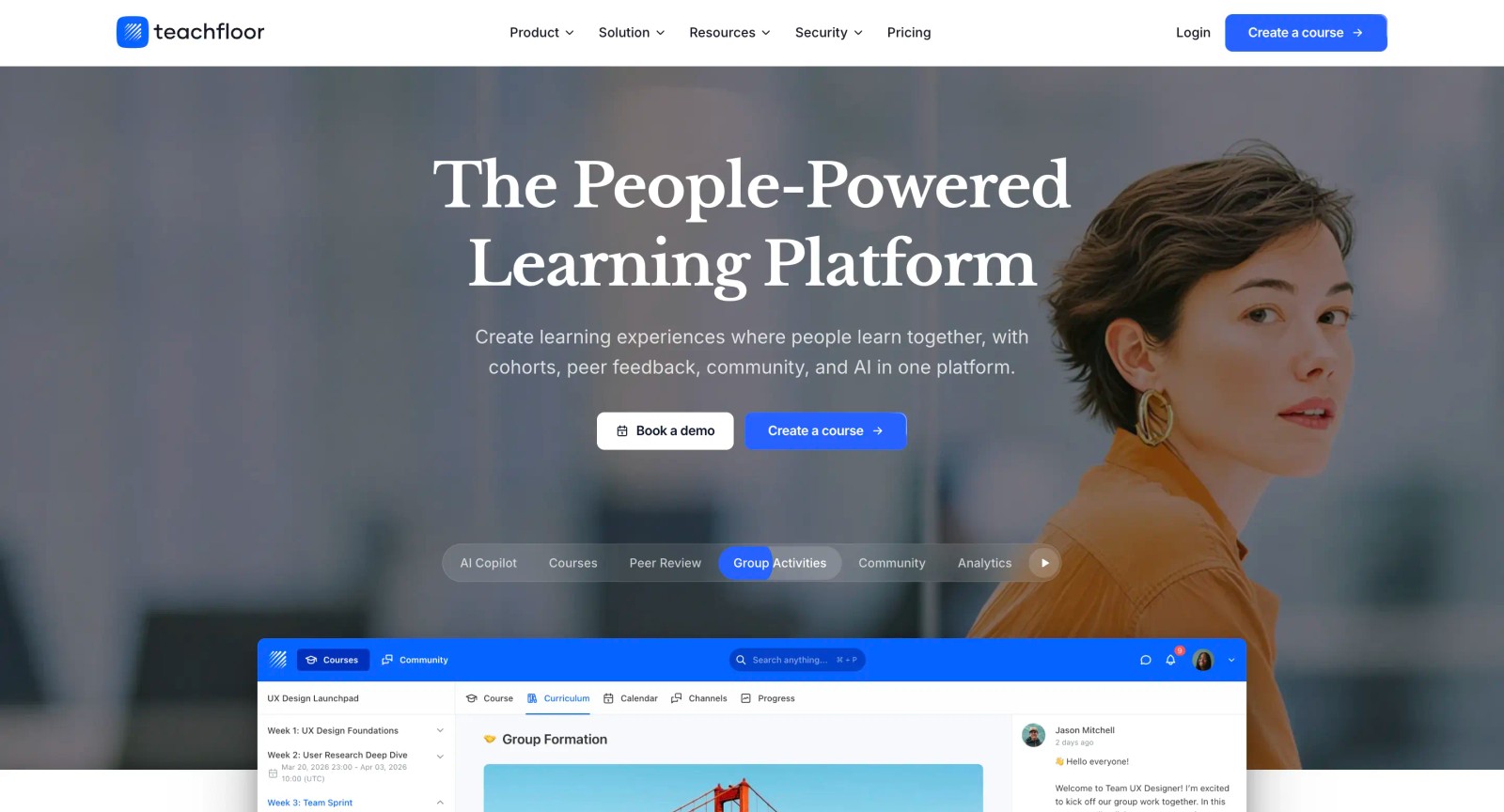
Teachfloor is a social learning platform built around the idea that people learn better together. Structured social interaction sits at the center of every program: cohorts move through material as a group, discussion threads live inside lessons rather than in a separate feed, and learners review each other's work through rubric-based peer review that can be weighted directly into a final grade. The platform combines self-paced modules, live sessions, and cohort scheduling in a single course, all published white-label on your own domain.
Core Capabilities
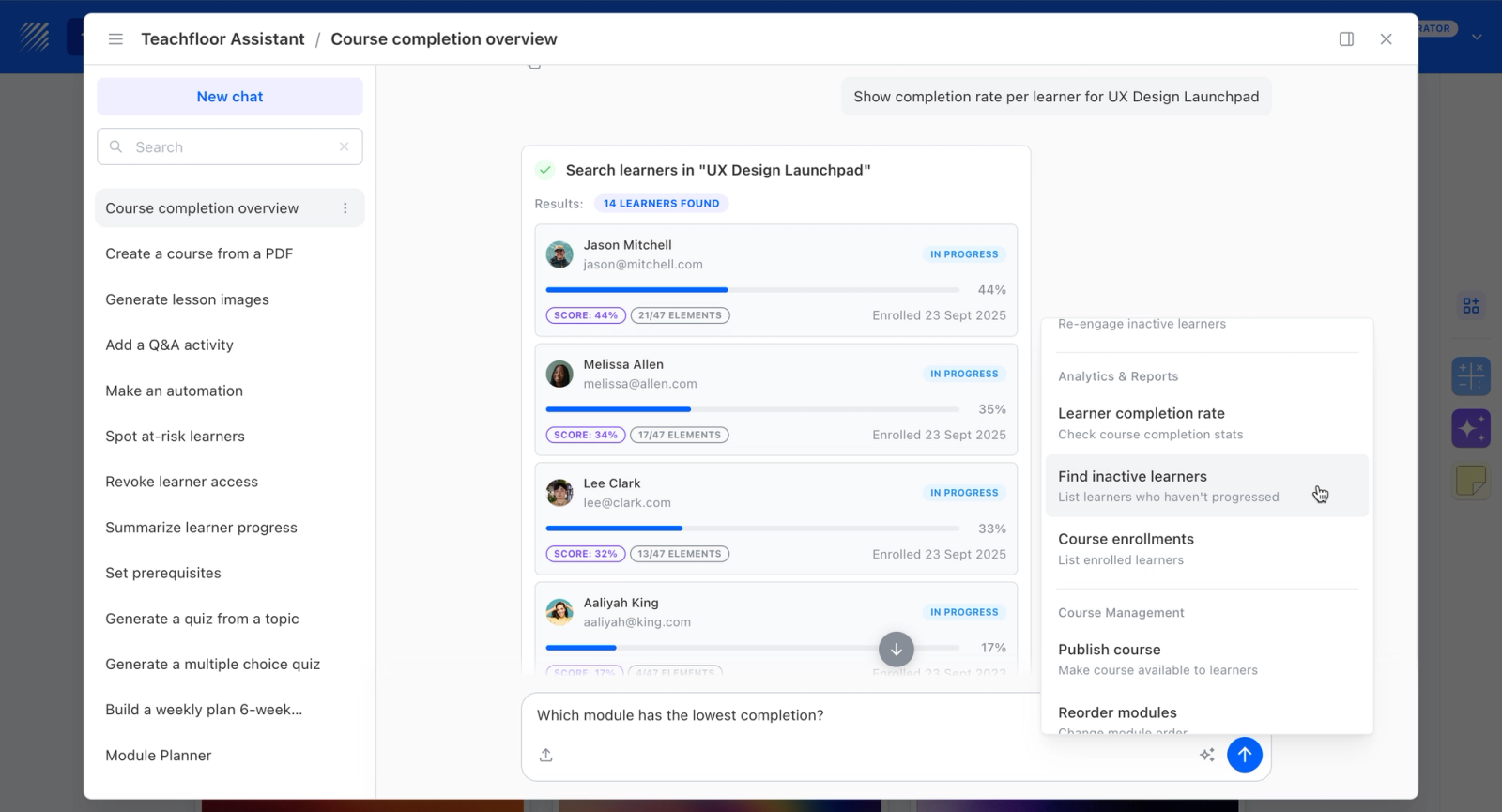
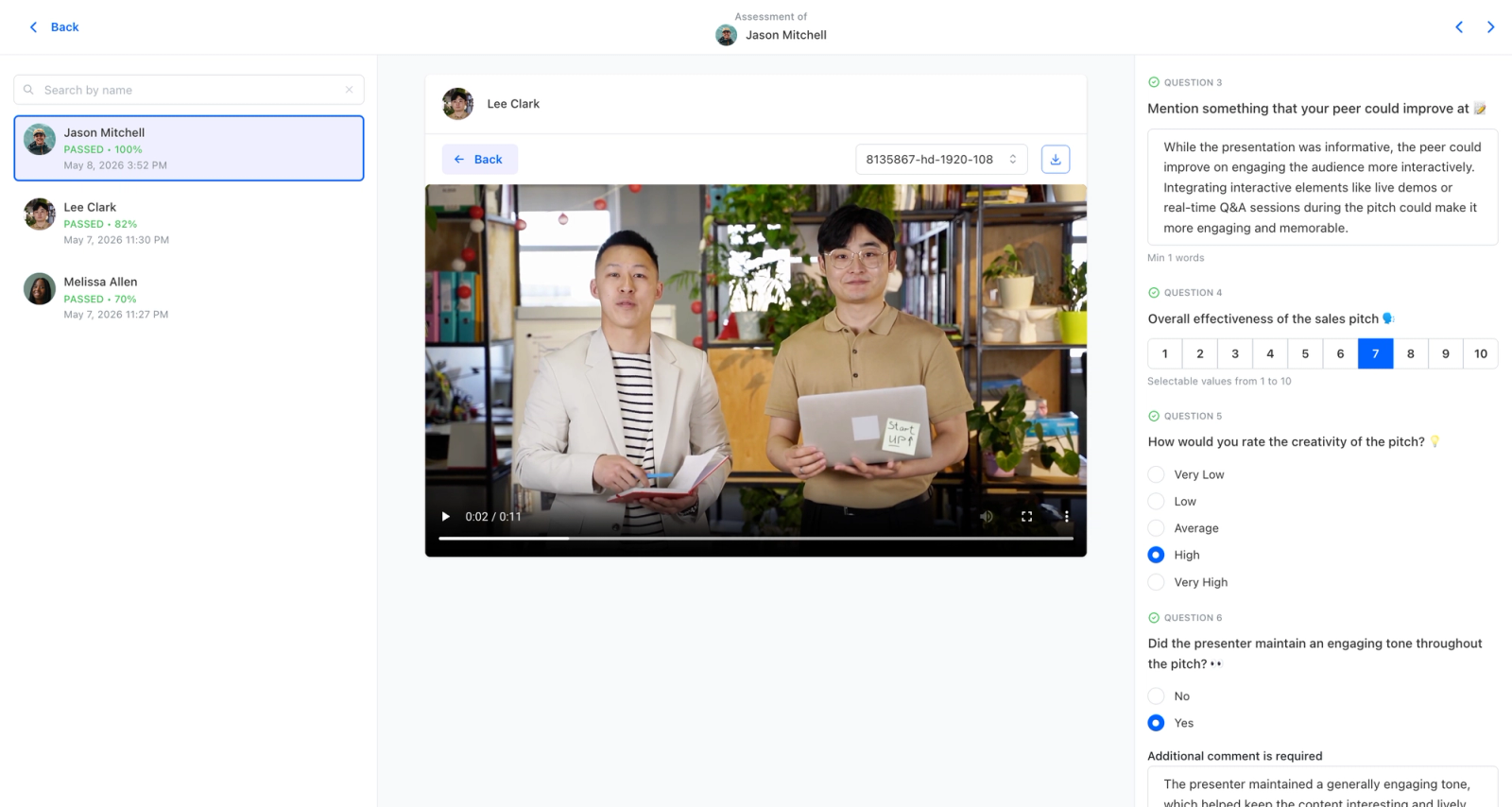
- Advanced peer review with custom rubrics, where reviewer scores can be weighted into a learner's final grade
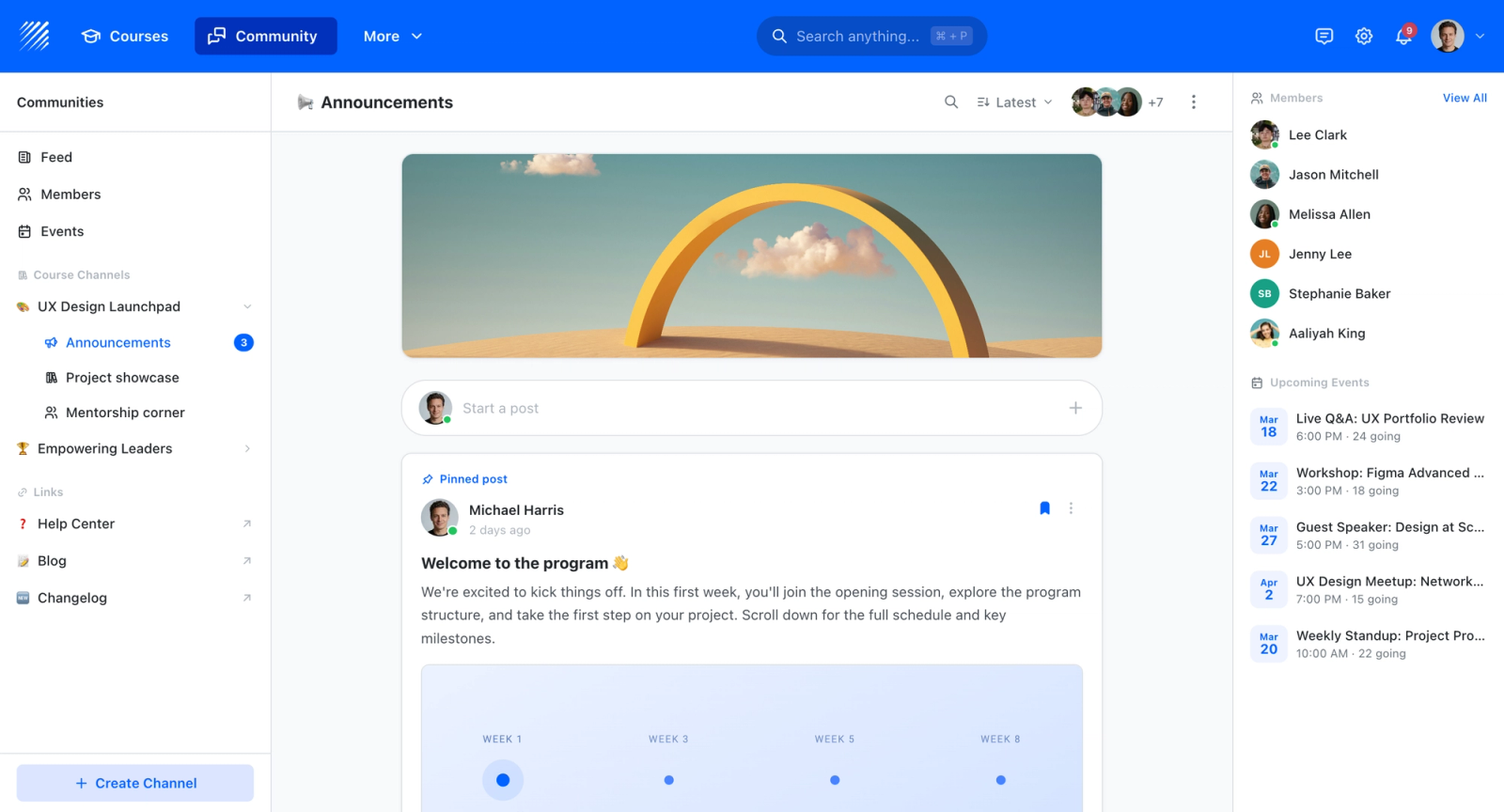
- In-lesson discussion and a community space that keeps conversation attached to the content rather than in a separate feed
- Cohort, self-paced, and live delivery in one program, so engagement-heavy formats are not locked to a single mode
Best For
Program teams and academies that want Honor's high-engagement social learning but also need cohort scheduling, graded peer review, and their own branded domain.
Pricing Overview
- Startup plan from $89 per month for up to 50 learners
- Full Features plan with custom pricing, white-label, SSO, and advanced integrations
- 14-day free trial; no permanent free plan
- Nonprofit discounts available
Limitations
- No mobile-first native app experience to match Honor's phone-centric design; Teachfloor is responsive web first
- No free plan, paid plans start at $89/mo for up to 50 learners
- Less focused on AI-driven course enhancement than Honor's pitch, authoring AI assists with drafting rather than reshaping content
Quick Comparison Insight
Teachfloor covers cohort scheduling, graded peer review, and a mix of live and self-paced delivery under your own brand. Teams that need a mobile-first, app-centric experience for async social learning will find that model elsewhere.
NovoEd
Overview
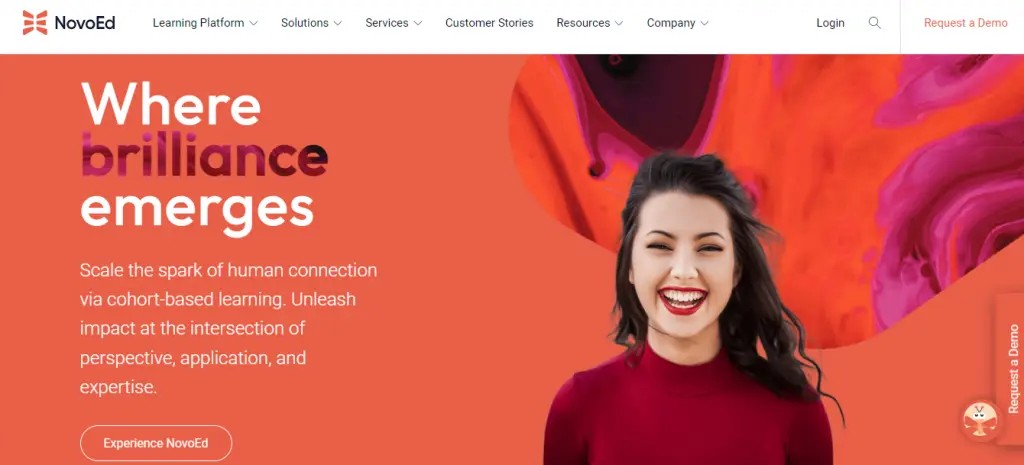
NovoEd is an enterprise collaborative learning platform built around cohorts, group projects, and social interaction. Like Honor, it treats learning as a social activity, with discussion, peer feedback, and team-based exercises at the center rather than passive video. It is used by large organizations and executive education providers including Stanford, Comcast, and Kraft Heinz.
NovoEd is designed for high-stakes capability building: leadership development, transformation programs, and other initiatives where applying ideas with peers matters as much as absorbing content.
Core Capabilities
- Cohort-based program management with scheduling and segmented communication
- Group projects, peer review, and collaborative assignments
- Discussion spaces and social annotation tied to course content
- Virtual presentations and structured peer feedback
- Mentorship and coaching workflows
- Analytics on engagement and program completion
- Integrations with enterprise systems and video conferencing
Standout Strength
NovoEd is built specifically for collaborative, cohort-based learning at enterprise scale. For organizations running leadership or transformation programs where peers learn from each other, its group and peer-review structures are mature and well tested.
Best For
Large enterprises and executive education providers running cohort-based leadership and capability programs where collaboration and peer learning drive outcomes.
Pricing Overview
- Custom enterprise pricing only; no public self-serve tier
- Annual, monthly, and perpetual license options have been offered
- Demo available on request
Limitations
- No published pricing, so evaluation requires a sales conversation.
- Built for enterprise budgets; smaller teams and creators may find it heavy.
- Less suited to lightweight self-paced or creator-monetized courses.
Quick Comparison Insight
Closer to Honor than most alternatives on collaborative learning depth, but priced and scoped for large enterprise budgets. Teams that need similar peer and cohort capabilities at a published price point will find more delivery flexibility elsewhere.
360Learning
Overview
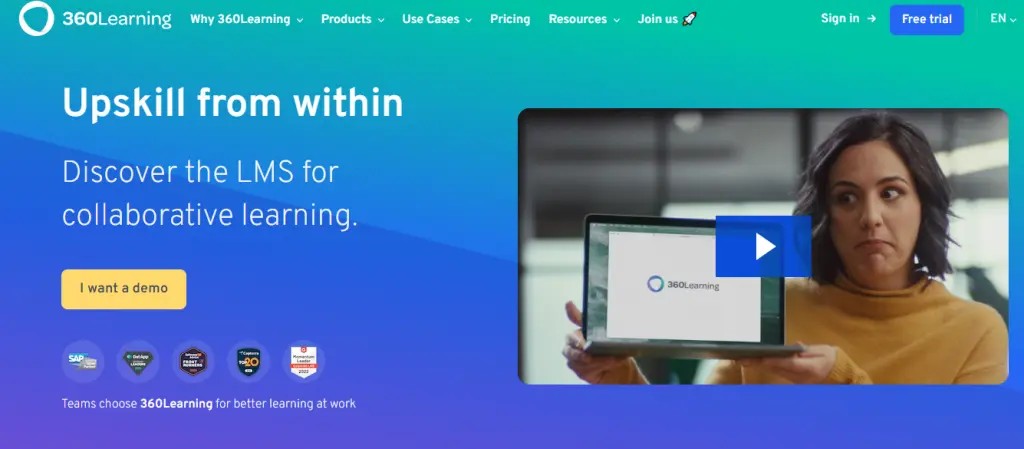
360Learning is a collaborative learning platform built on the idea that the best training often comes from internal experts. It combines an LMS with collaborative authoring, so subject-matter experts co-create courses, and learners contribute questions, feedback, and discussion directly inside the content.
Its AI authoring tools help teams turn existing material into courses quickly, which lines up well with Honor's AI course-enhancement angle while adding a stronger bottom-up, peer-driven workflow.
Core Capabilities
- Collaborative course authoring with input from internal experts
- AI-assisted authoring that drafts courses from existing documents
- Discussion and Q&A embedded directly in course content
- Peer feedback and upvoting on learner questions
- Skills-based learning paths and academies
- Reporting on engagement, completion, and contribution
- Integrations with 40+ business and HR tools
Standout Strength
360Learning treats employees as contributors, not just consumers. The collaborative authoring model makes it faster to capture internal knowledge and keep content current, something top-down production workflows rarely achieve once the initial course ships.
Best For
Mid-market and enterprise teams that want to scale internal training by tapping subject-matter experts and building a culture of peer-created content.
Pricing Overview
- Team plan at $8 per user per month for up to 100 users
- Enterprise plan with custom pricing
- 14-day free trial on the Team plan; no permanent free plan
Limitations
- Best value comes from the collaborative authoring model; teams that only want top-down content may not use its strengths.
- Per-user pricing can add up quickly as headcount grows.
- Less focused on live cohort delivery than dedicated cohort platforms.
Quick Comparison Insight
Stronger than Honor on collaborative, expert-led authoring, with transparent per-user pricing. A good fit when internal knowledge sharing is the priority.
Mighty Networks
Overview
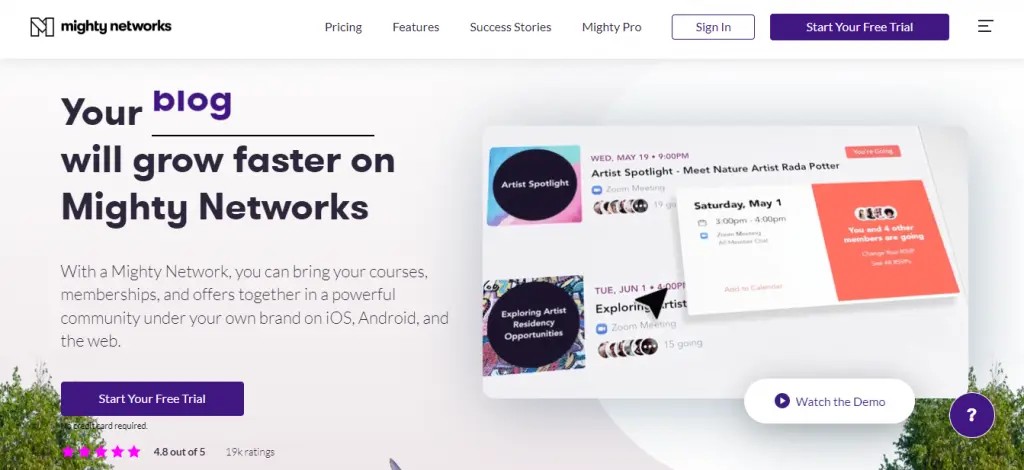
Mighty Networks is a community platform with courses built in. It puts community first, then layers on courses, live events, and memberships, which makes it a natural alternative for teams that, like Honor, believe engagement comes from people rather than passive content.
Creators and brands use Mighty Networks to run paid memberships, cohort courses, and ongoing communities under their own branding, including native mobile apps on higher tiers.
Core Capabilities
- Community spaces with discussion, feeds, and member profiles
- Courses, including cohort-based and self-paced formats
- Live events and live streaming
- Paid memberships and bundled subscriptions
- AI assistance for community and course setup
- Branded web presence and native mobile apps on higher plans
- Analytics on member activity and engagement
Standout Strength
Mighty Networks is built to make community the engine of learning. For creators who want members talking to each other every day, with courses as one part of a broader membership, it is one of the strongest community-first options.
Best For
Creators, coaches, and brands building a paid community where courses, events, and discussion live together under one brand.
Pricing Overview
- Community plan from $49 per month (billed annually)
- Higher tiers add courses, branded apps, and more advanced features
- 14-day free trial
Limitations
- Course and assessment tools are lighter than dedicated LMS platforms.
- Peer review and structured assignments are limited compared with social-learning LMS tools.
- Best when community is the core, with courses as a complement.
Quick Comparison Insight
More membership-centric than Honor, with creator-friendly pricing. The better choice when discussion and belonging are what members pay for, and courses are one benefit among several.
Maven
Overview
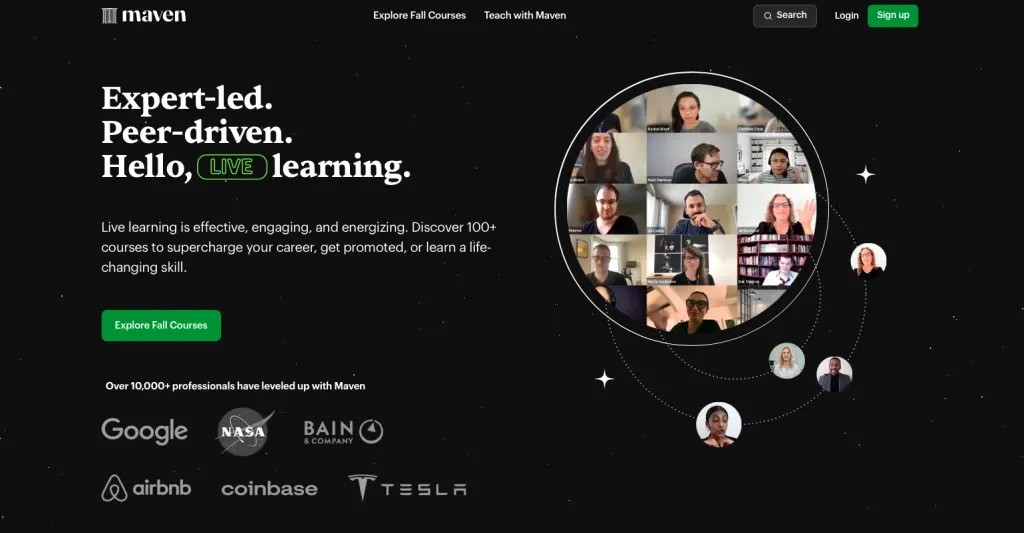
Maven is a marketplace and platform for live, cohort-based courses. It is built for expert instructors who teach in cohorts, with live sessions, assignments, and peer interaction at the center, which echoes Honor's bet on social, high-engagement learning.
Maven handles the course landing page, syllabus, live scheduling, and email automation, and it can also surface courses to its marketplace audience. It is creator-first rather than enterprise-first.
Core Capabilities
- Live cohort-based course delivery with multi-week syllabi
- Live sessions, assignments, and peer collaboration
- Course landing pages and enrollment management
- Automated email sequences for learners
- Marketplace exposure to Maven's audience
- Instructor analytics on enrollment and engagement
Standout Strength
Maven removes the financial risk of getting started. There is no upfront fee; the platform earns only when instructors earn, taking a revenue share on enrollments while creators keep the majority. For independent experts launching a live cohort, that model is attractive.
Best For
Independent instructors and experts launching live, cohort-based courses who want a creator-friendly platform with built-in audience reach.
Pricing Overview
- No monthly platform fee; Maven takes roughly 10% of revenue per paid student
- Higher revenue shares apply to marketplace-sourced and promoted enrollments
- Free to start; instructors set their own course prices
Limitations
- Built around live cohorts; not ideal for self-paced or always-on content.
- Revenue-share economics can cost more than a flat subscription at high volume.
- Less control over branding than a white-label platform.
Quick Comparison Insight
A creator-first option for live cohorts specifically, with revenue-share economics that suit independent instructors early on. Teams that also need self-paced tracks and their own branded domain will need a platform with a broader delivery range.
Skool
Overview
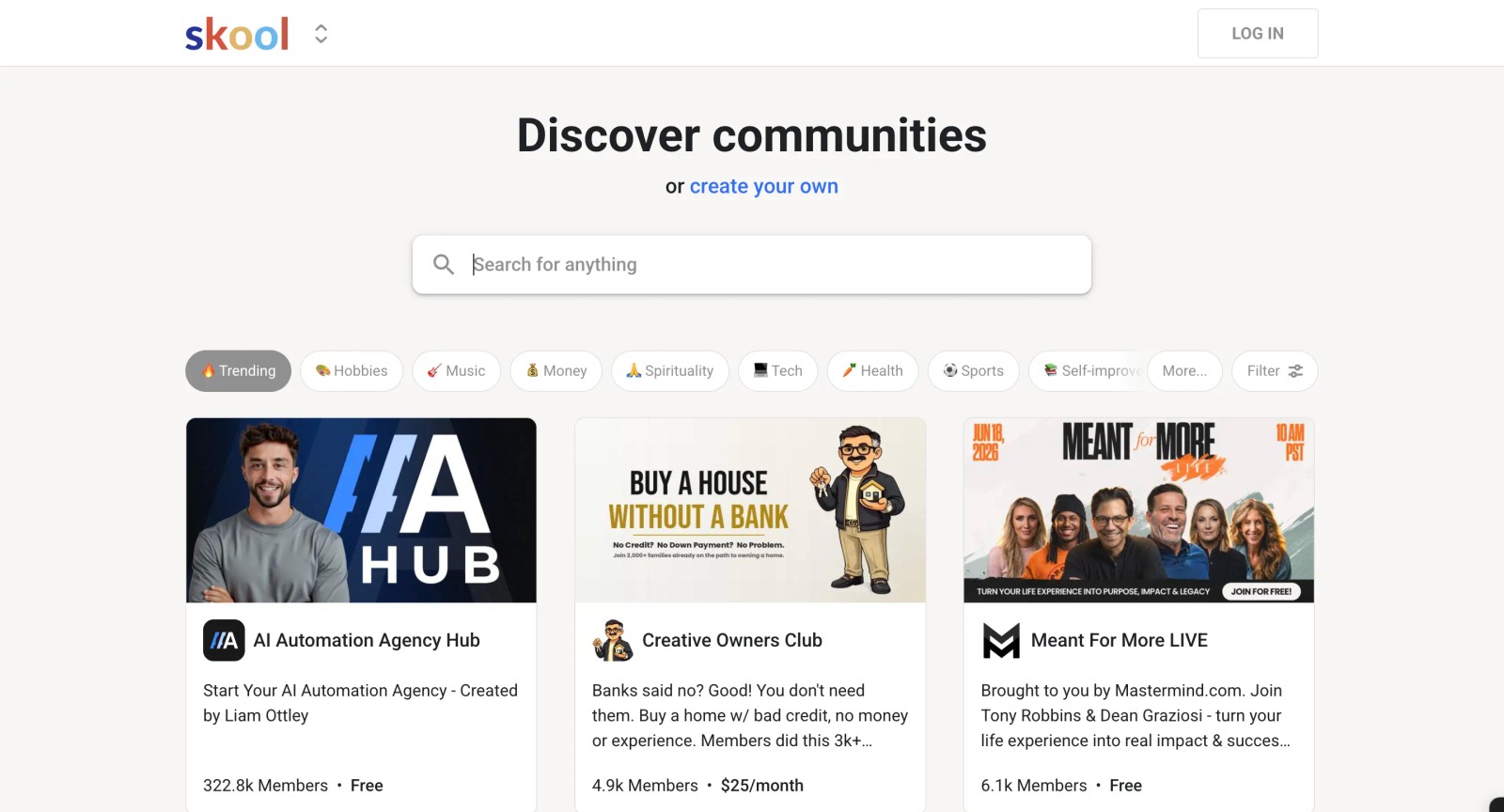
Skool combines a community feed with simple courses in one clean interface. Its appeal is simplicity: a single space where members post, discuss, and work through courses, with gamification (points and leaderboards) to drive daily engagement, which fits the same social-learning thesis Honor pursues.
Skool is popular with creators and coaches who want community and courses together without a complicated setup.
Core Capabilities
- Community feed with discussion and member posts
- Built-in courses attached to the community
- Gamification with points and leaderboards
- Events calendar for live sessions
- Simple, unified interface for members
- Basic analytics on activity and membership
Standout Strength
Skool keeps everything in one simple, engaging space. The gamified feed encourages members to return daily, which is exactly the kind of habitual engagement social learning depends on.
Best For
Creators and coaches who want a no-fuss community with simple courses and built-in gamification to keep members active.
Pricing Overview
- Flat $99 per month per community
- Includes unlimited members and courses
- 14-day free trial
Limitations
- Course and assessment features are basic compared with a full LMS.
- No structured peer review or graded assignments.
- Limited branding and customization.
Quick Comparison Insight
Simpler than Honor, with strong community engagement but light course tooling. Good for community-led learning; less suited to structured programs.
Circle
Overview
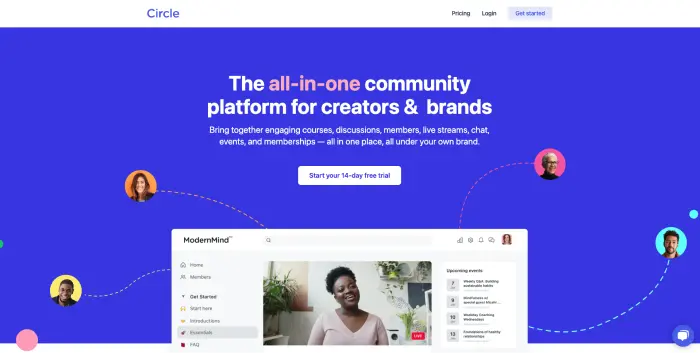
Circle is a community-first platform that has grown into a fuller learning and membership product. Brands use it to combine discussion spaces, courses, live streams, and paid memberships under their own branding, which makes it a natural alternative for teams prioritizing community-driven engagement like Honor does.
Circle has added AI features and stronger course tools, positioning it between a pure community tool and a collaborative learning platform.
Core Capabilities
- Community spaces with discussion, feeds, and member profiles
- Courses with modules, lessons, and progress tracking
- Live streams and events
- Paid memberships and subscriptions
- AI features for content and community management
- Custom branding and white-label options on higher tiers
- Integrations with payment, email, and automation tools
Standout Strength
Circle combines community spaces, courses, and paid memberships in a polished, brandable package. For organizations that want discussion at the center and structured learning alongside it, it sits closer to a full learning product than most community tools.
Best For
Community-led brands and creators that want to add structured courses and paid memberships to an active discussion space.
Pricing Overview
- Professional plan from $49 per month (billed annually)
- Higher tiers add white-label, advanced analytics, and more
- 14-day free trial
Limitations
- Course assessment and peer-review tools are lighter than a dedicated LMS.
- Full white-label and advanced features sit on higher-priced tiers.
- Best when community engagement is the primary goal.
Quick Comparison Insight
A community-led product with brandable courses and paid memberships layered on top. Worth considering when discussion is the primary draw and course completion is a secondary goal.
Coursera for Business
Overview
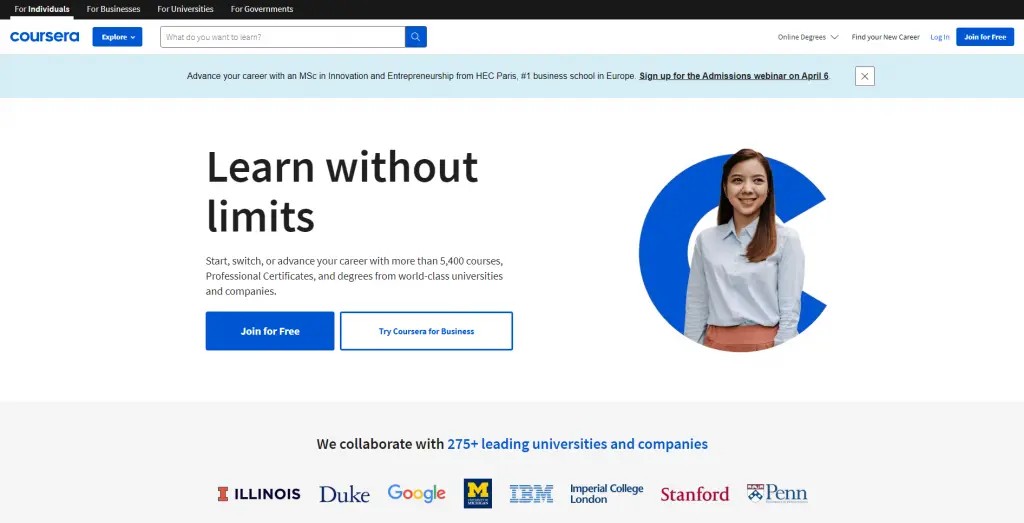
Coursera for Business takes a different approach from Honor. Rather than a platform for building your own social courses, it provides access to a large catalog of courses, professional certificates, and hands-on projects from universities and industry partners. Teams use it to upskill employees with external, credentialed content.
The catalog spans more than 6,000 courses and 130+ professional certificates from partners including Google, IBM, and leading universities, making it a content play rather than a social-learning build.
Core Capabilities
- Catalog of 6,000+ courses and 130+ professional certificates
- Guided projects and hands-on labs for applied skills
- Skills tracking and learner analytics dashboards
- Integration with institutional and enterprise LMS via LTI, SCORM, and API
- Professional certificates from Google, IBM, Meta, and others
- Mobile access with offline download
Standout Strength
The breadth and credibility of the catalog is the advantage. No internal team can author courses across every discipline with the depth Coursera's partner network provides, which makes it efficient for broad upskilling.
Best For
Organizations that want to upskill employees with university-grade external content rather than build their own social or cohort programs.
Pricing Overview
- Team plan from $399 per user per year (for 5 to 125 users)
- Enterprise plan with custom pricing
- Demo available; no general self-serve free trial for Business
- Note: Coursera begins charging content partners a 15% platform fee in 2026; learner pricing is unchanged
Limitations
- It is a content catalog, not a platform for building your own social or peer-driven courses.
- Course pedagogy and pacing are set by third-party authors, not your team.
- Limited peer interaction compared with social-learning platforms.
Quick Comparison Insight
A content play, not a social-learning build. Less comparable to Honor on peer interaction, but a strong choice when off-the-shelf, credentialed content is the goal.
Thinkific

Overview
Thinkific is a well-established platform for creators and businesses selling online courses. Its core strength is self-paced course delivery with built-in payments, but it has added community and AI authoring tools, which broadens its overlap with social-learning use cases.
For teams that want to sell branded courses with the option to add a community, Thinkific is a mature, creator-friendly choice.
Core Capabilities
- Drag-and-drop course builder with video, text, and quizzes
- AI tools for course outlines and content drafting
- Built-in payments, coupons, and subscriptions
- Communities add-on for discussion and engagement
- Certificates and completion tracking
- Custom branding and a course storefront
- Integrations with email, analytics, and automation tools
Standout Strength
Thinkific makes it easy to package and sell self-paced courses under your own brand. Its payments, storefront, and creator tooling are mature and reliable.
Best For
Course creators and businesses selling self-paced courses who want optional community features alongside a strong storefront.
Pricing Overview
- Free plan with limited features and one course
- Paid plans from around $49 per month, scaling with features and capacity
- Free plan available; no time-limited trial needed to start
Limitations
- Primarily self-paced; live cohort and structured peer review are limited.
- Community is an add-on rather than the core of the experience.
- Less focused on social, group-based learning than Honor.
Quick Comparison Insight
Stronger on selling self-paced courses than on social learning. A fit when monetization and branding matter more than peer interaction.
Eduflow

Overview
Eduflow is a social learning tool built around active, collaborative course activities. Its standout feature is peer review: learners submit work, review each other's submissions against rubrics, and learn from giving and receiving feedback, which maps directly onto Honor's social annotation and peer-interaction model.
Eduflow works well as a layer for peer-driven learning and can integrate with an existing LMS for the structured, social parts of a program.
Core Capabilities
- Structured peer review with rubrics and feedback workflows
- Discussion activities and group assignments
- Flexible course builder with varied activity types
- Cohort and self-paced delivery options
- Analytics on participation and feedback quality
- Integrations with LMS platforms and productivity tools
Standout Strength
Eduflow makes peer review and social activities the structural backbone of a course. For programs where giving and receiving feedback drives the learning outcome, the activity model is designed from the ground up to support exactly that.
Best For
Teams and educators who want strong peer review and collaborative activities, either standalone or layered onto an existing LMS.
Pricing Overview
- Free tier for small groups and getting started
- Paid tiers scale with learners and features
- Free plan available to evaluate the platform
Limitations
- Narrower in scope than a full platform; focused on activities and peer review.
- Fewer monetization and storefront features than creator platforms.
- Branding and white-label options are limited.
Quick Comparison Insight
The closest match to Honor on peer review and social activities in isolation. Teams that need peer review embedded in a wider program, with live sessions, cohort scheduling, and a branded domain, will need a fuller platform to hold all the pieces.
How to Choose the Right Alternative
The right Honor Education alternative depends on how your team actually learns, not on which platform has the longest feature list. Here is how to map your situation to the options above.
If you want flexible delivery and white-label branding, Teachfloor is the most direct fit. It runs self-paced, social, live, and cohort programs in one platform, adds AI course creation and peer review, and puts everything on your own domain at a published $89 starting price.
If you run enterprise cohort and leadership programs, NovoEd is built for collaborative, high-stakes capability building at scale, with mature group and peer-review tooling.
If internal experts should create the content, 360Learning's collaborative authoring turns employees into contributors and keeps training current.
If community is the core, Mighty Networks, Skool, and Circle put discussion and membership first, with courses alongside. Choose based on how much course structure and branding you need.
If you teach live cohorts as an independent expert, Maven offers a creator-first, revenue-share model with built-in audience reach.
If you need credentialed external content, Coursera for Business provides university-grade courses for broad upskilling.
If you sell self-paced courses, Thinkific is a mature creator platform with payments and optional community.
If peer review is the priority, Eduflow makes feedback-driven activities the backbone of a course. For a wider view of this category, see our roundups of the best peer-to-peer learning platforms and the most affordable LMS options.
The most useful question to answer first: do you want a platform to build and run your own interactive programs, or a catalog of content to assign? That single distinction narrows the list fast.
FAQ
What kind of platform is Honor Education?
Honor Education is a mobile-first social learning platform that combines asynchronous peer interaction, social annotation, real-time instructor feedback, and AI course enhancement. It is designed for high engagement and strong course completion, and it is sold to organizations and program teams through custom contracts rather than self-serve plans.
What is the best Honor Education alternative?
For most teams, Teachfloor is the strongest alternative. It offers the same emphasis on social and peer learning, adds flexible delivery (self-paced, live, and cohort-based in one platform), includes AI course creation and white-label branding, and starts at a transparent $89 per month with a 14-day free trial. NovoEd and 360Learning are strong enterprise-focused options, while Mighty Networks, Skool, and Circle suit community-led learning.
Is there a free Honor Education alternative?
Several alternatives offer free entry points. Thinkific and Eduflow have free plans, and 360Learning, Mighty Networks, Circle, and Teachfloor offer free trials so you can evaluate before committing. Maven is free to start and earns only when you earn through its revenue-share model.
Which Honor Education alternative is best for cohort-based learning?
Teachfloor, NovoEd, and Maven are the strongest for cohort-based learning. Teachfloor lets you combine cohorts with self-paced and social formats in one program, NovoEd is built for enterprise collaborative cohorts, and Maven is a creator-first platform for live cohort courses.
Which alternative is best for peer review and social learning?
Teachfloor and Eduflow both make structured peer review a core feature. Teachfloor combines peer review with community, live sessions, and white-label branding in one platform, while Eduflow focuses specifically on peer-review and collaborative activities you can layer onto an existing LMS.


