

Why Professional Services Firms Need a Specialized LMS
Professional services firms operate differently from product companies, and those differences reshape what they need from a learning management system. Consulting practices, law firms, accounting groups, and advisory businesses sell expertise. When that expertise stagnates or falls behind industry standards, the firm loses its competitive edge. Training is not a support function here. It is directly tied to revenue quality and client retention.
Billable utilization creates a unique training constraint. Every hour a consultant, lawyer, or accountant spends in training is an hour not billed to a client. Professional services firms need an LMS that delivers targeted, efficient learning without pulling people away from project work for longer than necessary. Long, generic courses that pad completion hours are counterproductive. The platform needs to support focused, role-specific content that professionals can fit around client commitments.
Certifications and continuing education are non-negotiable. CPAs need CPE credits. Lawyers need CLE hours. Project managers need PMP renewal units. Financial advisors need CE credits from FINRA or state regulators. A professional services LMS must track these certification programs across different governing bodies, automate renewal reminders, and generate audit-ready records. Firms that rely on spreadsheets for this tracking are one missed deadline away from a compliance problem.
Client-facing skills require more than content delivery. Professional services professionals need to develop soft skills like client communication, stakeholder management, and consultative selling. These skills do not transfer well through slide decks and quizzes. Firms benefit from platforms that support collaborative learning through case studies, role-playing, peer feedback, and group discussion, not just passive content consumption.
Multi-office and remote teams need consistent knowledge standards. A consulting firm with offices in five cities and remote practitioners across two time zones cannot afford knowledge silos. The LMS must serve as the single source of truth for methodologies, frameworks, and best practices. New hires in any location should go through the same structured onboarding process, and experienced professionals should access the same updated materials regardless of where they sit.
Knowledge retention is a firm-level risk. When a senior partner retires or a top consultant leaves, they take institutional knowledge with them unless the firm has captured it. An LMS that supports peer-authored content, recorded expert sessions, and searchable knowledge libraries helps professional services firms preserve and distribute the expertise that makes them valuable.
These requirements make professional services LMS selection meaningfully different from a general corporate training LMS purchase. The tools reviewed below are evaluated specifically against these industry needs.
What to Look for in an LMS for Professional Services
The criteria below separate a purpose-fit professional services LMS from a general-purpose training tool. These are the dimensions that matter most for firms where credentials, billable time, and multi-audience delivery are active constraints.
Certification and CPE/CLE tracking. The platform should map courses to credit types, track earned credits against renewal requirements, and send automated reminders before deadlines. This is not optional for firms where missed certifications mean professionals cannot legally practice. Look for platforms that can track multiple certification types per user and generate reports segmented by credential category.
Flexible content delivery. Professional services teams need a mix of self-paced modules for technical knowledge, live instructor-led sessions for complex topics, and peer learning activities for skill development. The LMS should handle all three without requiring a separate tool for each format. SCORM and xAPI support matters for importing third-party content from providers that specialize in legal, accounting, or management consulting curricula.
Integration with existing tools. Professional services firms live in Salesforce, Microsoft 365, project management platforms, and HRIS systems. The LMS needs to connect to these through native integrations or a capable API. Understanding LMS integrations upfront prevents purchasing a platform that exists in isolation from the firm's operational stack.
Multi-audience support. Many professional services firms train internal employees and external clients using the same platform. A law firm might train associates internally while offering compliance courses to corporate clients. A consulting firm might onboard employees while also delivering training to client teams. The LMS should support separate portals, branding, and content libraries for different audiences without requiring separate platform instances.
Reporting and analytics. Partners and practice leaders need visibility into training tracking data. Which practice areas are completing required training? Where are certification gaps? How does training completion correlate with project performance? The platform should provide learning analytics that go beyond completion counts and actually inform workforce planning decisions.
Scalability without bloat. A 50-person accounting firm and a 5,000-person consulting practice have different needs. The LMS should scale appropriately without forcing small firms into enterprise contracts or leaving large firms constrained by platform limitations.
10 Best LMS for Professional Services
The platforms below cover a range of firm sizes, specializations, and training approaches, each evaluated against the professional services criteria above. Unlike a general enterprise LMS or corporate LMS roundup, this list weighs vertical jobs first: tracking CPE, CLE, FINRA CE, and PMP renewals, developing billable client-facing skills, and running client and partner academies alongside internal training. The comparison table below summarizes starting price, free trial, and certification tracking before the detailed reviews.
| Platform | Best for | Starting price | Free trial | CPE/CLE certification tracking |
|---|---|---|---|---|
| Teachfloor | Onboarding cohorts, leadership programs, client academies | $89/mo | 14 days | Certificates and completion records; pair with a compliance LMS for multi-credential renewal cycles |
| Docebo | Large firms wanting AI-driven content discovery | Custom (improve/Enterprise) | Demo only | Strong, automated multi-credential renewals |
| Absorb LMS | Mid-size firms without a dedicated L&D team | Custom | Demo only | Strong, configurable renewal periods |
| TalentLMS | Small firms and first-time LMS buyers | $149/mo (up to 40 users) | Free plan | Basic, single-credential workflows |
| Litmos | Firms needing off-the-shelf compliance content fast | Custom (per-user) | 14 days | Moderate, with a 95,000+ course library |
| LearnUpon | Training internal teams and external clients together | Custom | Demo only | Solid, portal-level certification tracking |
| Cornerstone Galaxy | Large, multi-jurisdiction compliance programs | Custom (enterprise) | Demo only | Deepest, audit-grade multi-credential tracking |
| 360Learning | Capturing senior practitioner knowledge | $8/user/mo | Free trial | Basic, needs supplementary tools for complex credentials |
| Skilljar | Client and partner academies as a business line | Custom | Demo only | Assessment-based credentialing for external learners |
Teachfloor
Overview
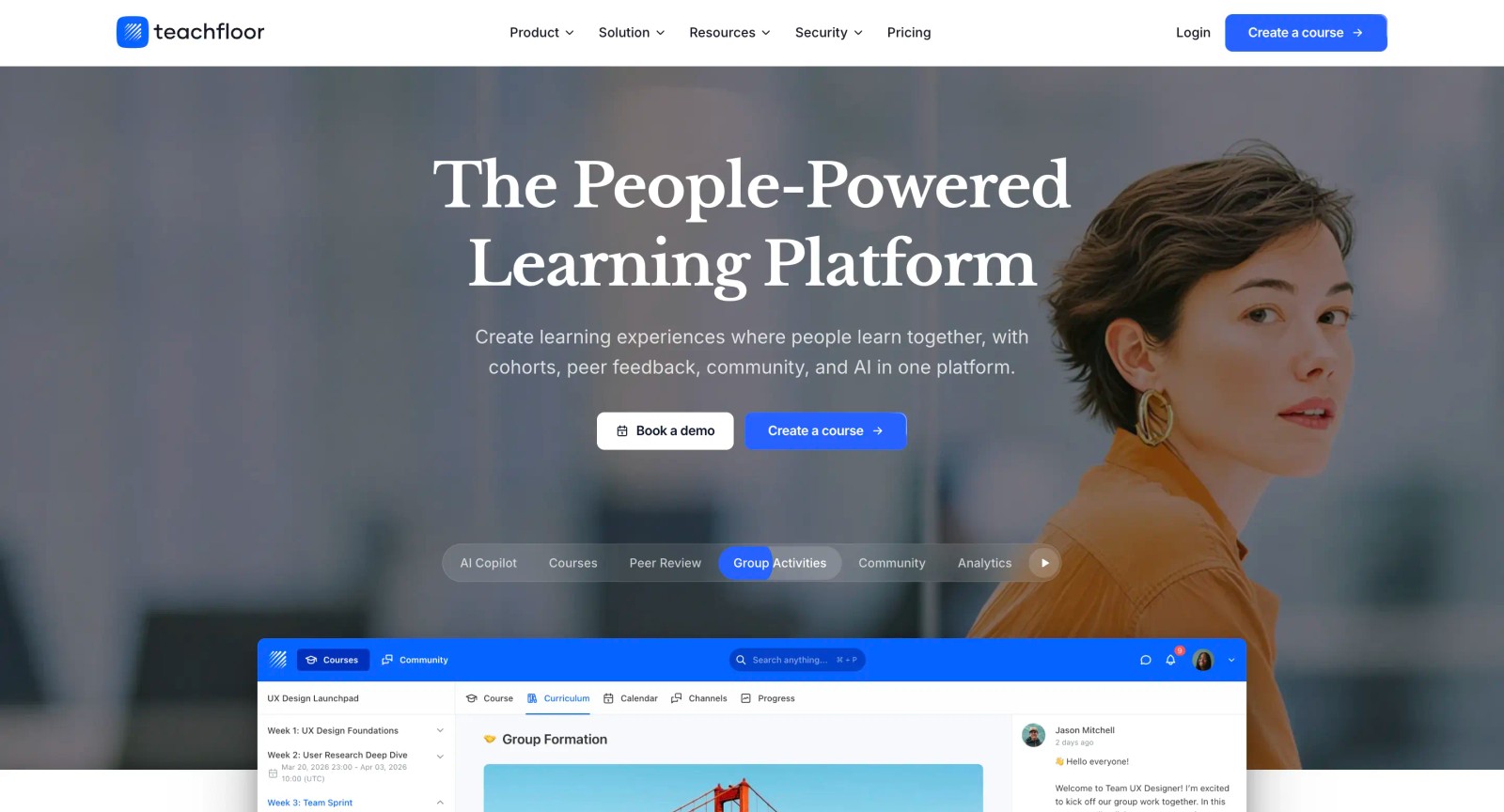
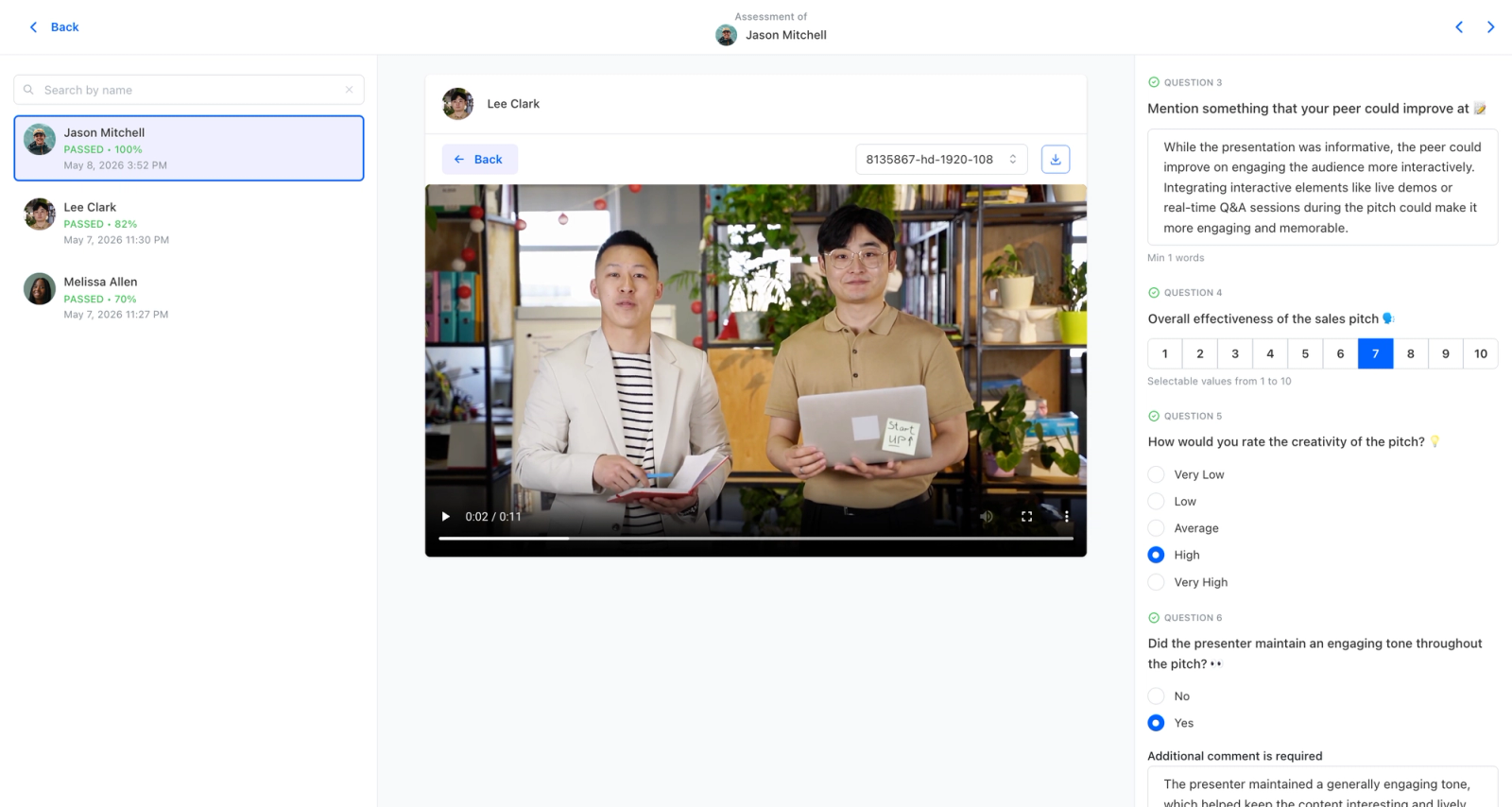
In professional services the product is the expertise, so training is not overhead; it is how a firm protects billable quality and client trust. Teachfloor fits consulting, legal, accounting, and advisory firms because it treats learning as something senior practitioners actively shape, not a passive library new associates click through. Its standout feature for this audience is rubric-driven peer review weighted into grades. A manager can review a junior consultant's deliverable or a mock client memo against a defined rubric, which mirrors how firms already develop talent through structured feedback on real work. Flexible delivery rounds out the model: live cohorts for practice-area ramp-up, self-paced modules for methodology content, and certificates that document internal competency or continuing-education completion, paired with analytics so practice leaders can see who has reached billable readiness.
Core Capabilities
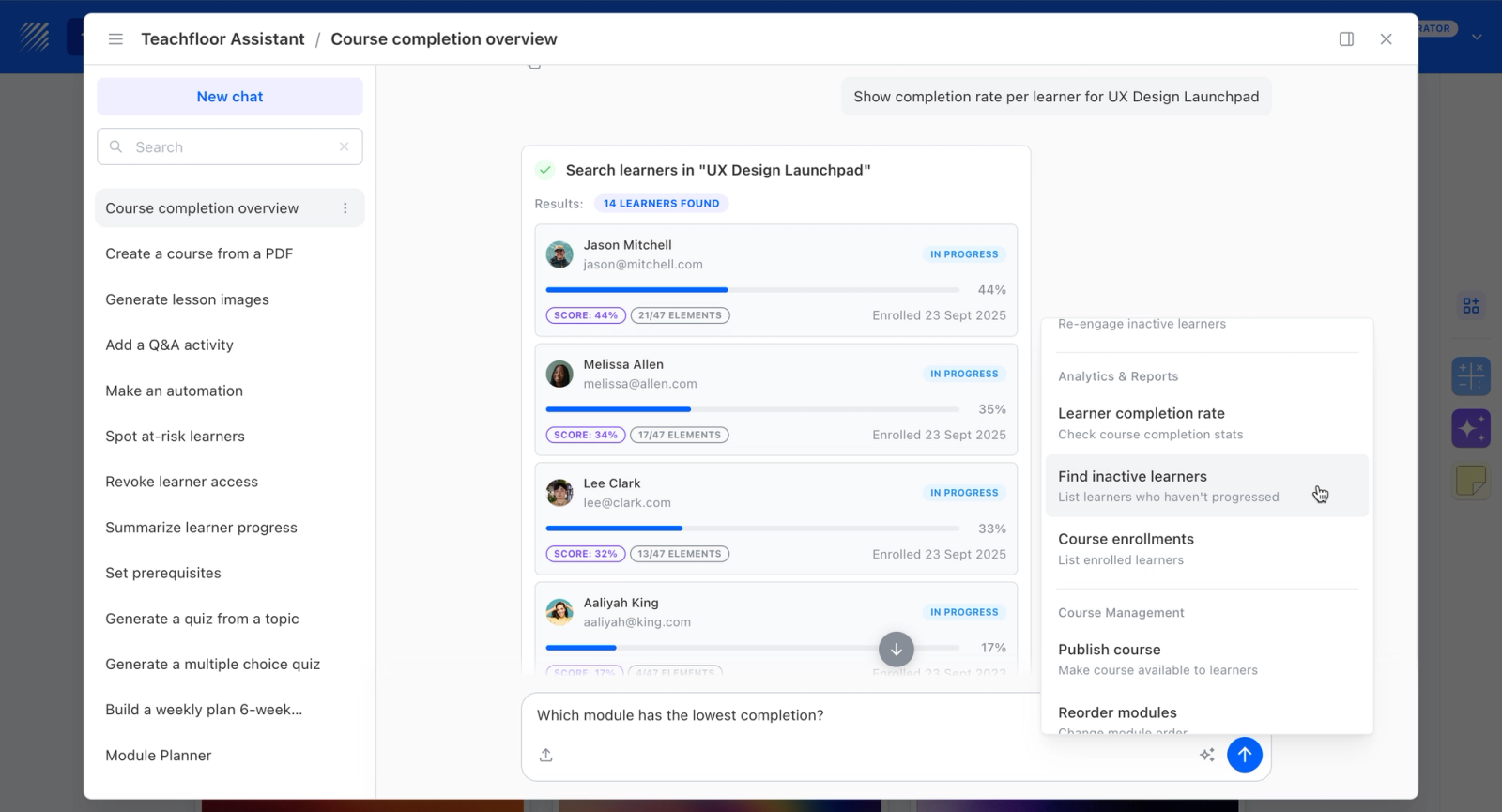
- Rubric-driven peer and manager review weighted into grades, which maps directly to how firms ramp consultants and associates through structured feedback on deliverables and mock client work
- Flexible delivery across live cohorts for practice-area onboarding, self-paced methodology modules, and discussion threads that capture how senior staff actually reason through engagements
- Certificates to document internal competency and continuing-education completion, plus analytics so practice leaders can see who has reached billable readiness
Best For
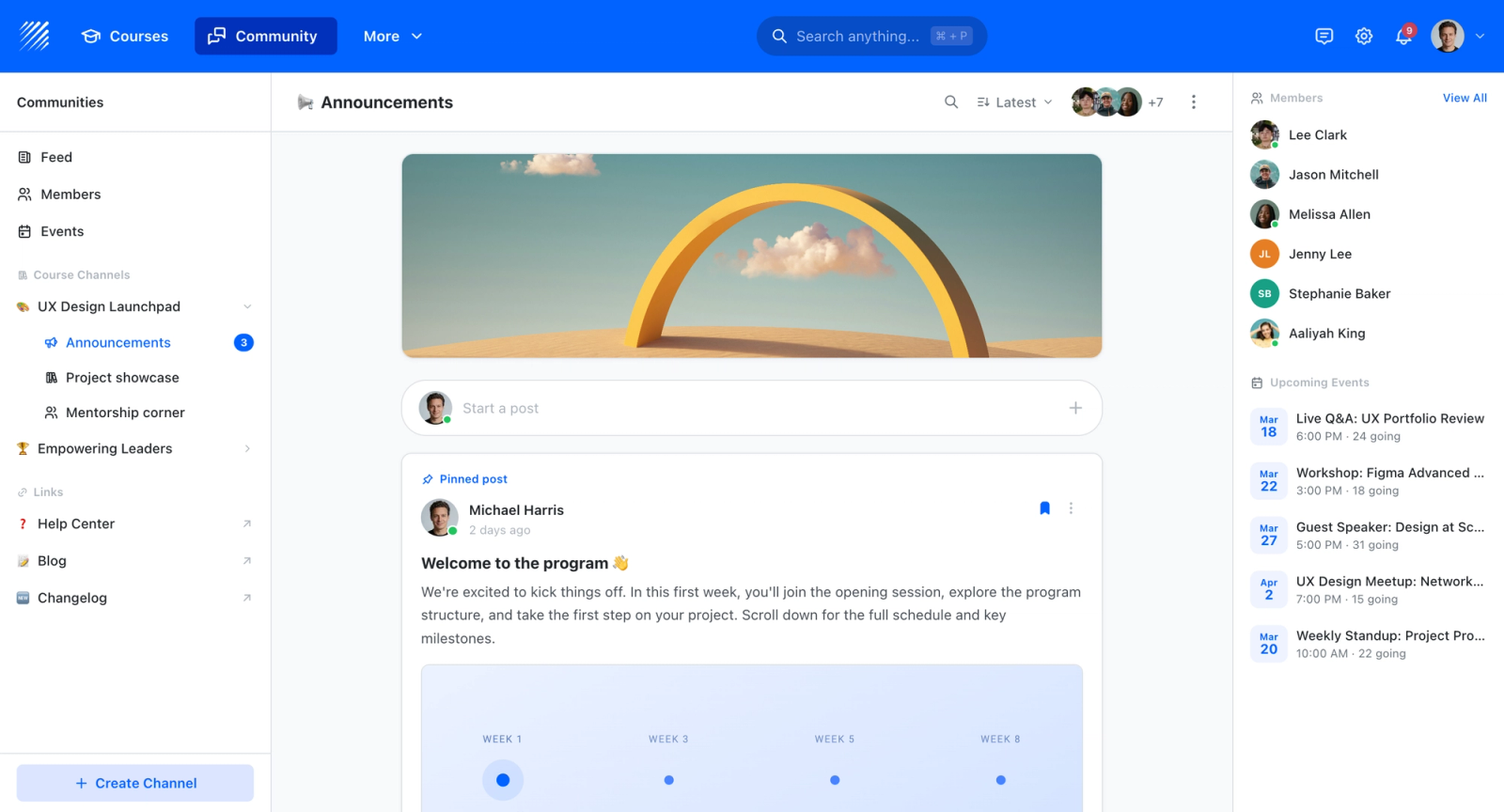
Consulting, legal, accounting, and advisory firms that develop talent through feedback on real work and want training tied to billable readiness and competency, rather than a generic course-completion system.
Pricing Overview
- Startup plan from $89 per month for up to 50 learners
- Full Features plan with custom pricing, white-label, SSO, and advanced integrations
- 14-day free trial; no permanent free plan
- Nonprofit discounts available
Limitations
- Not a formal accredited CPE provider or content library, so firms with strict CPE credit-tracking and accreditation requirements may need a specialized provider alongside it
- No native integration with PSA, time-tracking, or resourcing tools, so training data does not automatically link to utilization or staffing systems
- No free plan, and learner-based pricing scales with headcount across larger firms
Quick Comparison Insight
Best for professional services firms that build expertise through peer and manager review and want training tied to competency and billable readiness, rather than an off-the-shelf compliance catalog.
Docebo
Overview
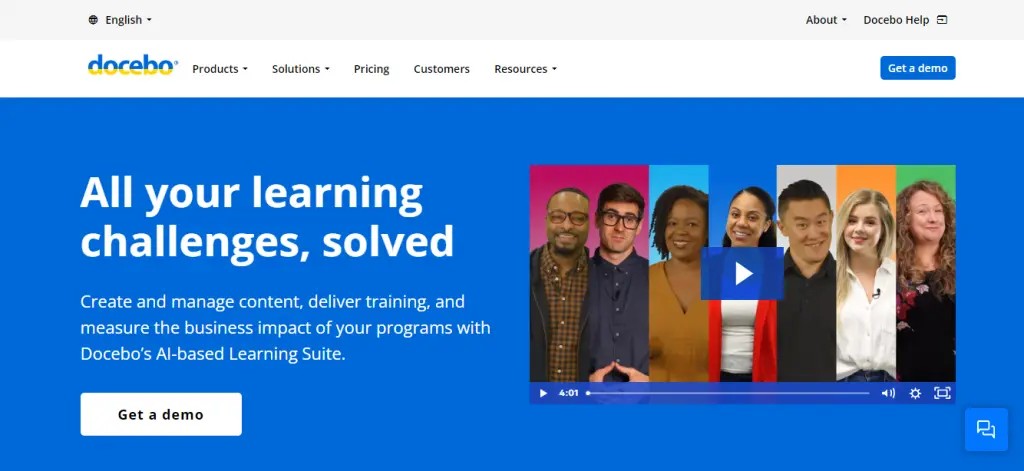
Docebo is an enterprise learning platform with a strong track record among large professional services firms. It uses machine learning to recommend content, auto-tag learning objects, and surface skill gaps, which matters for consulting and advisory organizations where keeping hundreds or thousands of professionals current on methodologies and industry knowledge is a continuous operational challenge.
Docebo's practical value comes from reducing administrative overhead. In a firm where practice leaders manage training alongside client delivery, automatic content surfacing based on role and learning history cuts manual course assignment and makes development more targeted.
Core Capabilities
- AI-powered content recommendations that match training to individual roles, skill gaps, and career trajectories within the firm
- Automated compliance and certification assignment with configurable rules for CPE, CLE, PMP, and other professional credential renewals
- Multi-domain architecture allowing separate branded portals for internal employees, clients, and partner organizations
- Content marketplace with access to third-party libraries from Skillsoft, OpenSesame, and other providers covering professional development topics
- SCORM, xAPI, and AICC support for importing custom and third-party course content
- Configurable learning paths that map to career progression within the firm, from junior consultant to partner track
- Integration hub connecting to Salesforce, Workday, BambooHR, Microsoft Teams, and 40+ enterprise platforms
- Advanced analytics with customizable dashboards for tracking completion rates, engagement, and certification status by practice area
- Social learning features including discussion boards, content sharing, and peer ratings
- Mobile app with offline access for professionals traveling between client sites
Standout Strength
Docebo's defining advantage is that AI-driven content discovery scales knowledge management across the organization. Instead of practice leaders manually curating training paths for every role, Docebo's recommendation engine surfaces relevant content based on what similar professionals in the firm have completed. For firms with multiple practice areas and geographies, that automation is a meaningful operational advantage.
Best For
Large consulting firms, Big Four-adjacent advisory practices, and professional services organizations with 500+ employees that manage training across multiple practice areas and geographies. Particularly strong for firms that also train clients or partners through an extended enterprise model and value data-driven approaches to workforce development.
Pricing Overview
- Custom pricing based on active users and modules selected
- Two tiers, improve (mid-market) and Enterprise, each with optional add-ons
- No free tier; free trial available upon request
- improve quotes commonly fall in the $30,000 to $50,000 per year range depending on active users
Limitations
- The AI recommendation engine needs a critical mass of usage data to deliver accurate suggestions, meaning smaller firms may not see full value in the first few months
- Advanced certification workflow configuration for niche professional credentials may require vendor-assisted setup
- The breadth of features can feel overwhelming for firms with simple training needs and no dedicated L&D staff
Quick Comparison Insight
The strongest AI capabilities on this list and excellent multi-audience support, but the platform's depth means it rewards organizations with dedicated learning administrators. Smaller firms with straightforward needs may find lighter alternatives more practical.
Absorb LMS
Overview
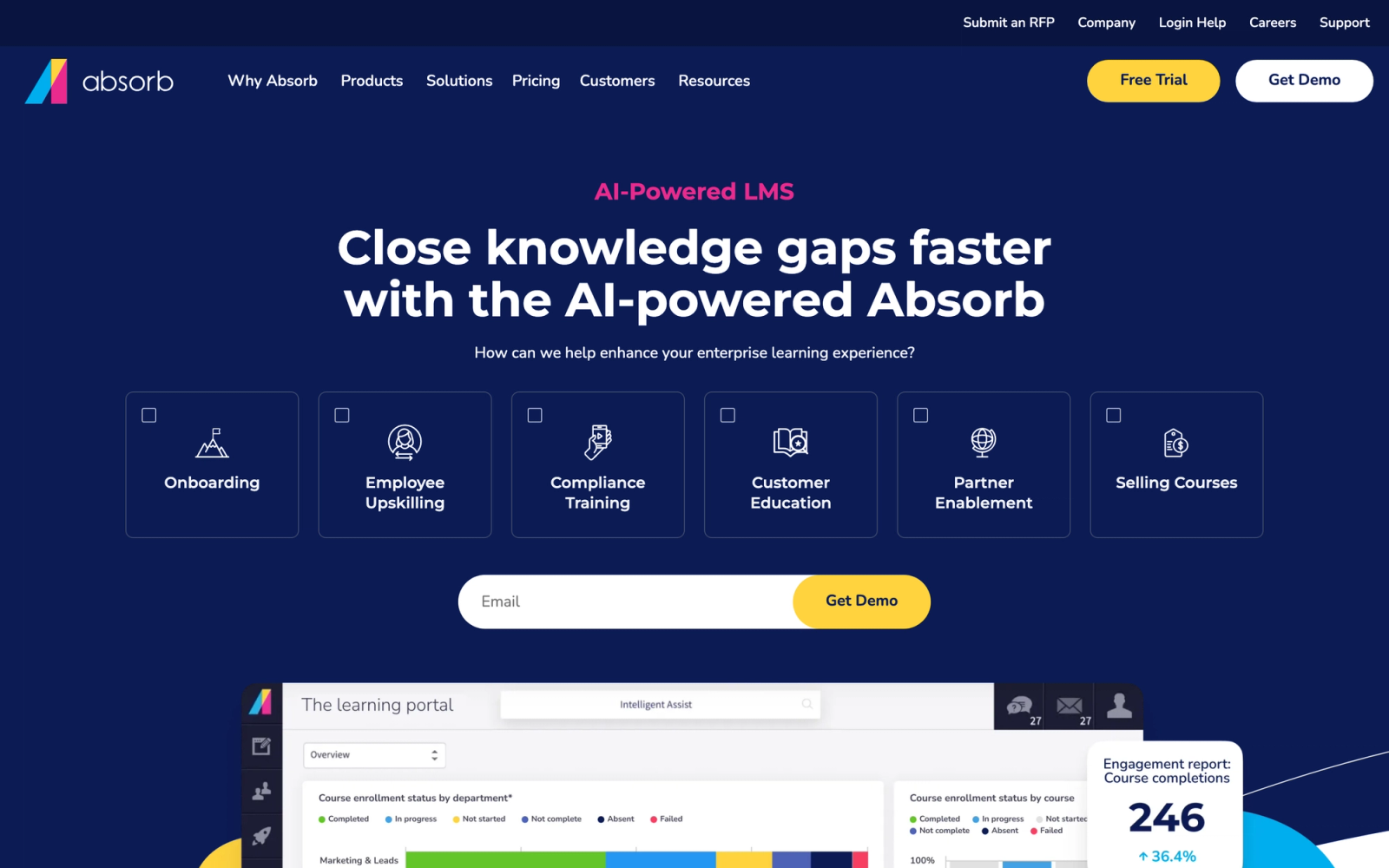
Absorb LMS combines enterprise-grade training features with one of the cleaner admin interfaces in the LMS market. For professional services firms where the person managing training is also managing client engagements, that simplicity is a genuine advantage. A compliance course should not require an LMS certification to configure.
Absorb is built for speed from zero to a functioning training program. Setting up certification tracking, building a course assignment workflow, and generating a completion report takes a fraction of the time required by more complex enterprise platforms. For mid-size professional services firms without a dedicated learning team, that time-to-value matters.
Core Capabilities
- Automated enrollment rules based on department, role, location, and custom fields, with automatic reassignment when professionals move between practice areas
- Certification tracking with configurable renewal periods, automated expiration notifications, and grace period settings for CPE, CLE, and other credentials
- Detailed audit logs capturing course access, completion timestamps, assessment scores, and certificate issuance
- Absorb Infuse technology that embeds training content directly into tools professionals already use, like intranet portals and CRM systems
- Native e-commerce for firms that sell training or continuing education externally
- SCORM 1.2, SCORM 2004, and xAPI support with a built-in content library through Absorb Amplify
- RESTful API for integrations with HRIS platforms, SSO providers, and internal reporting systems
- Intelligent Assist that automates routine admin tasks like user enrollment and report scheduling
- Mobile-responsive design with a learner app for professionals working from client sites
- Multi-language support for firms with international offices
Standout Strength
Absorb delivers serious training management without demanding serious admin effort. The Infuse technology is a standout differentiator: embedding a quick compliance refresher directly into the firm's project management tool or intranet means professionals encounter training where they already work, not in a separate system they have to remember to log into.
Best For
Mid-size professional services firms with 200 to 5,000 employees, particularly accounting practices, consulting firms, and advisory businesses that need strong certification tracking but lack a large L&D team. Also effective for firms that sell compliance training or continuing education to external audiences.
Pricing Overview
- Custom pricing based on user count; no publicly listed per-user price
- Free trial available upon request
- Implementation support included in enterprise plans
- Absorb Amplify content library available as an add-on
Limitations
- Multi-entity support is less mature than Docebo's or Cornerstone's, making it harder for firms with many subsidiary brands to maintain fully separate environments
- Collaborative learning features are limited compared to platforms built specifically for peer interaction and group activities
- The built-in content library covers broad professional topics but lacks depth in specialized consulting or legal training content
Quick Comparison Insight
The best balance of capability and ease-of-use on this list. Less powerful than Docebo or Cornerstone at the enterprise level, but far quicker to deploy and easier to manage for firms that do not have dedicated LMS administrators.
TalentLMS
Overview
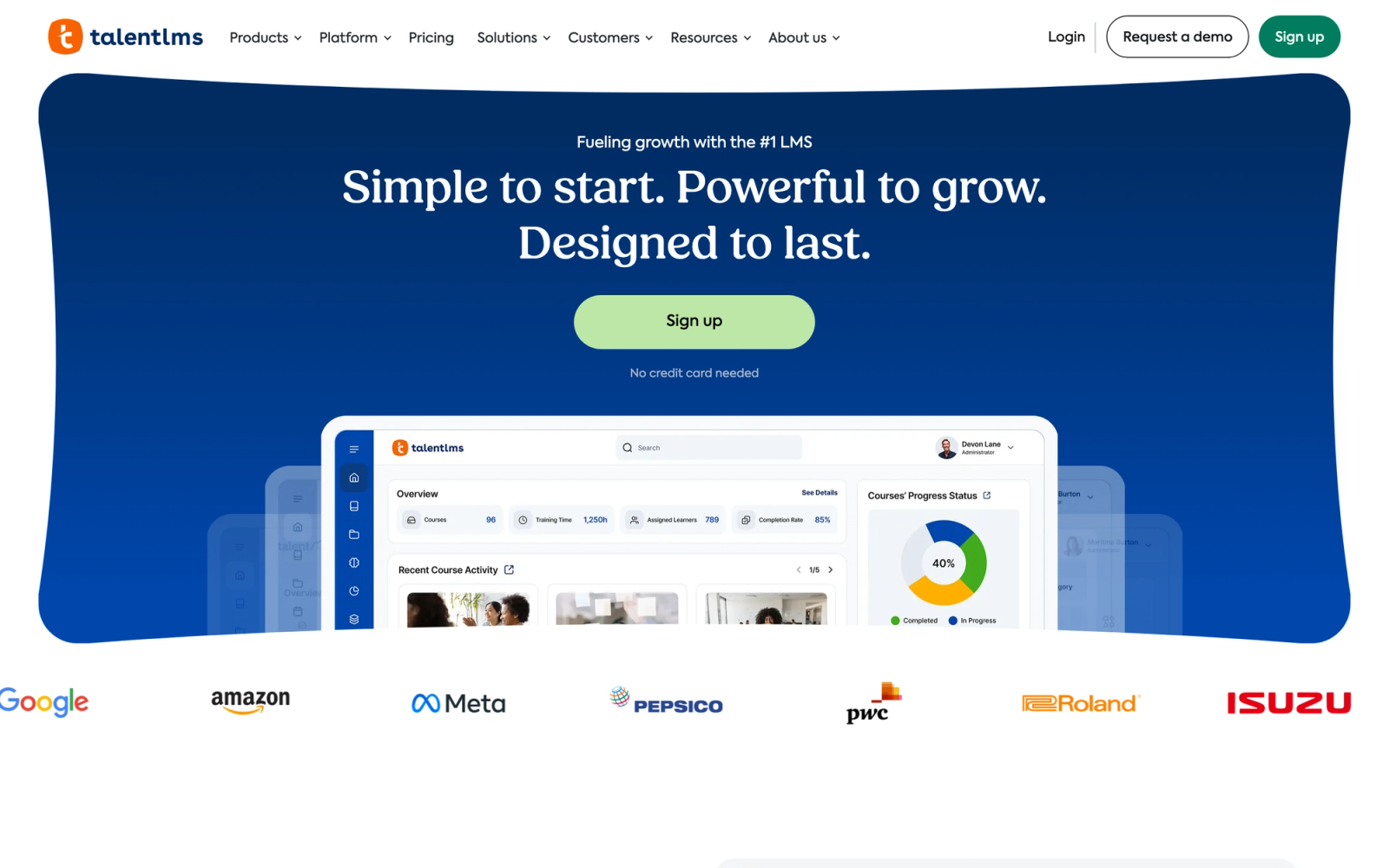
TalentLMS is built for organizations that want a functional LMS without the complexity or cost of an enterprise platform. For small to mid-size professional services firms, this matters. A 30-person accounting firm or a 100-person consulting boutique does not need the compliance engine of Cornerstone. They need a platform that lets them assign courses, track completions, manage basic certifications, and generate reports, all without a steep learning curve.
TalentLMS keeps setup genuinely fast. A firm can have a working training portal with branded courses, assigned learning paths, and automated reminders running within a day. For firms where the office manager or HR generalist handles training alongside other responsibilities, that accessibility is the key selling point.
Core Capabilities
- Course creation tools supporting SCORM, xAPI, video, documents, and native drag-and-drop course building
- Automated course assignments based on user groups with completion deadlines and reminder notifications
- Certification tracking with expiration dates and recertification workflows for professional license management
- Built-in assessment engine with multiple question types, passing scores, and retry limits
- Reporting dashboard with completion rates, user progress, and exportable CSV and PDF reports
- Branch and group hierarchy for organizing users by office location, practice area, or team
- Integrations with Zapier, BambooHR, Salesforce, and Slack
- White-labeling with custom domain, logo, and color scheme for a professional branded experience
- Gamification features with points, badges, and leaderboards
- Free plan for up to 5 users, making it risk-free to evaluate with real content
Standout Strength
TalentLMS costs a fraction of enterprise alternatives and works well for straightforward training needs. The free tier is genuinely useful for testing, and paid plans start at a flat monthly rate that small boutique firms can justify. When the alternative is tracking CPE hours in a spreadsheet, TalentLMS is a meaningful improvement.
Best For
Small to mid-size professional services firms with under 500 employees, including boutique consulting practices, small accounting firms, independent advisory businesses, and legal practices with basic employee training needs. A practical starting point for firms evaluating their first LMS purchase.
Pricing Overview
- Free plan for up to 5 users and 10 courses
- Core plan from $149 per month (about $119 billed annually) for up to 40 users
- Grow plan from $299 per month, scaling with user count up to 500 users
- Pro plan from $579 per month with priority support, automations, and SSO
- Enterprise pricing available for larger deployments
Limitations
- Certification tracking is basic compared to platforms built for complex multi-credential environments. Firms managing CPE, CLE, and PMP renewals simultaneously will need workarounds
- Multi-audience support is limited. Firms wanting separate branded portals for internal teams and external clients will find the architecture restrictive
- Reporting depth is adequate for simple compliance tracking but insufficient for firms that need practice-area-level analytics or detailed audit trails
Quick Comparison Insight
The most affordable option on this list with a genuine free tier, but designed for straightforward training scenarios. Professional services firms that outgrow basic certification tracking will need to migrate to a more capable platform.
Litmos
Overview
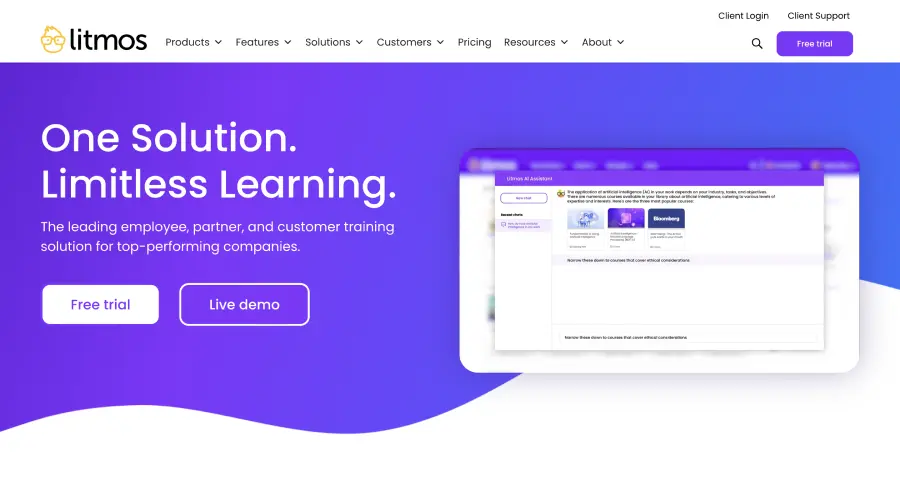
Litmos focuses on rapid deployment and a built-in content library, which addresses a practical problem for professional services firms: getting training operational quickly without developing all content in-house. For compliance-heavy practices subject to CPE requirements or mandatory ethics training, a library of pre-built courses available from day one means the firm does not have to choose between starting training and waiting for custom content to be developed.
Litmos differentiates on time-to-value. Its content library offers access to roughly 95,000 courses curated from hundreds of providers, covering compliance, professional skills, leadership, and industry-specific topics. For a firm that needs to get people trained on anti-bribery or data privacy immediately, that built-in library means training can start the same week the contract is signed.
Core Capabilities
- Content library with access to roughly 95,000 courses (including 2,500+ Litmos originals) covering compliance topics, professional development, leadership, and soft skills
- Automated course assignment with rules based on user roles and attributes, supporting recurring assignments and deadline enforcement
- Completion tracking with downloadable reports, individual transcripts, and aggregate dashboards
- Rapid deployment designed for organizations that need training operational in days
- SCORM 1.2, SCORM 2004, xAPI, and video support for custom content alongside the built-in library
- Gamification with badges, points, and leaderboards to drive engagement in optional professional development
- E-commerce module for firms monetizing continuing education or selling certification prep externally
- Pre-built integrations with Salesforce, BambooHR, Zendesk, and other business platforms
- Mobile app with offline access for professionals traveling to client sites
- Multi-language support for firms with international operations
Standout Strength
Litmos fits firms that need a working training program faster than they can develop custom content. The combination of a large pre-built library and rapid deployment means a firm can go from contract signature to employees completing compliance courses within a week. For smaller firms without dedicated content development resources, that speed advantage is significant.
Best For
Small to mid-size professional services firms with 100 to 3,000 employees that prioritize speed of deployment and access to ready-made content. Particularly effective for accounting practices needing CPE-eligible content quickly, consulting firms with compliance training requirements, and advisory businesses that want off-the-shelf professional development courses without the cost of custom development.
Pricing Overview
- Pricing varies based on user count and content library inclusion
- Per-user pricing typically in the $4 to $6 per user per month range for mid-size deployments
- Content library may be included or offered as an add-on depending on the plan
- Free 14-day trial available
Limitations
- Certification workflow automation is less sophisticated than Docebo or Cornerstone. Managing multiple credential types with different renewal cycles requires manual configuration
- The built-in content library covers broad professional topics but lacks depth in highly specialized consulting methodologies or niche legal training
- Multi-audience support is limited. Firms wanting distinct portals for employee training and client-facing education will find the architecture constrained
Quick Comparison Insight
Fastest time-to-value on this list thanks to the built-in content library, but less depth in certification management and multi-audience support than platforms designed for complex professional services environments.
LearnUpon
Overview
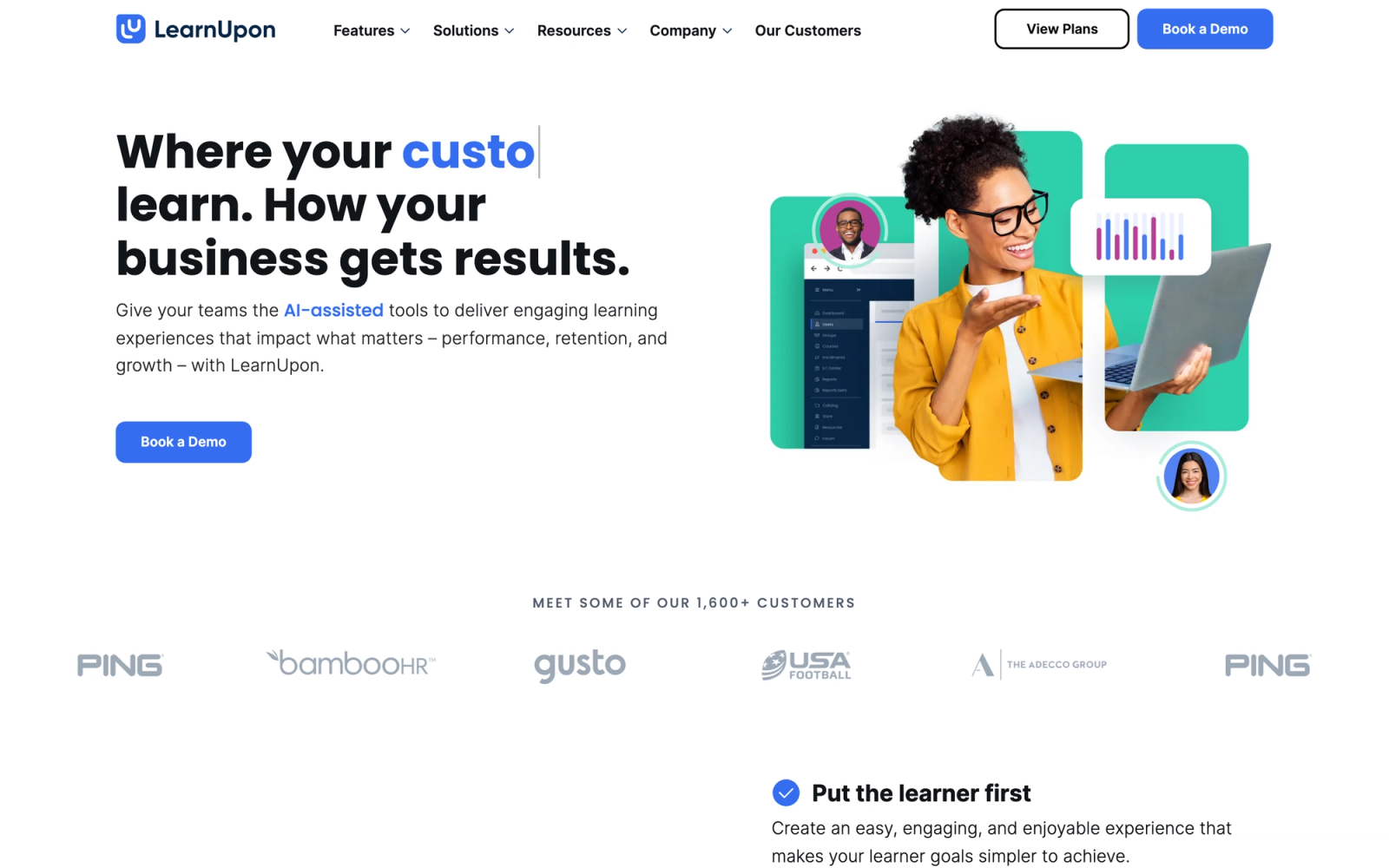
LearnUpon is built around a multi-audience architecture that makes it particularly relevant for professional services firms. Many consulting, legal, and advisory businesses need to train employees and clients from the same platform, and most LMS products handle this poorly. LearnUpon's portal system lets firms create distinct training environments for different audiences, each with its own branding, content library, and user management, all from a single admin console.
The multi-portal system is the platform's defining strength in practice. A consulting firm can maintain an internal employee training portal for methodology updates and compliance courses, a client portal for delivering post-engagement training, and a partner portal for channel education, without juggling separate platforms or complex workarounds.
Core Capabilities
- Multi-portal architecture supporting separate branded training environments for employees, clients, partners, and other audiences from one admin console
- Automated enrollment and certification tracking with configurable rules for credential renewals and deadline notifications
- SCORM, xAPI, and video content support with a built-in course builder for creating custom training materials
- Learning paths that map to role progressions, onboarding sequences, and certification requirements
- E-commerce integration for firms that sell training or continuing education programs externally
- Detailed reporting with portal-level analytics, custom report builders, and scheduled report delivery
- Integrations with Salesforce, BambooHR, Zapier, and webinar platforms for workflow automation
- Gamification with points, badges, and certificates to drive engagement
- Mobile-responsive learner experience for professionals accessing training from any device
- Dedicated customer success support included with all plans
Standout Strength
LearnUpon's multi-portal architecture solves a problem that other platforms address clumsily or not at all. Training both your consultants and your clients' teams from one platform, with completely separate branding and content, is a core use case for advisory and consulting businesses. LearnUpon was designed around this exact scenario.
Best For
Mid-size professional services firms with 200 to 5,000 employees that train multiple audiences. Consulting firms delivering client training alongside internal development, accounting practices offering CPE courses to both staff and clients, and advisory businesses with partner enablement programs. If your firm needs one platform for both employee training and client-facing education, LearnUpon handles that natively.
Pricing Overview
- Custom pricing based on user count and number of portals
- No free tier; demo available upon request
- All plans include dedicated customer success manager
- Enterprise pricing for large-scale multi-portal deployments
Limitations
- Collaborative learning features are basic. Firms wanting structured group activities, peer review workflows, or cohort-based programs will find the platform limited in this area
- The built-in content creation tools are functional but not as advanced as dedicated authoring platforms for firms developing complex custom courses
- Advanced analytics and custom reporting require the higher-tier plans, which increases cost for firms that need detailed practice-area-level insights
Quick Comparison Insight
The strongest multi-audience platform on this list. If training both internal teams and external clients from a single LMS is a priority, LearnUpon handles that better than any competitor here. Less depth in collaborative learning and content creation than specialized tools.
Cornerstone (Galaxy)
Overview
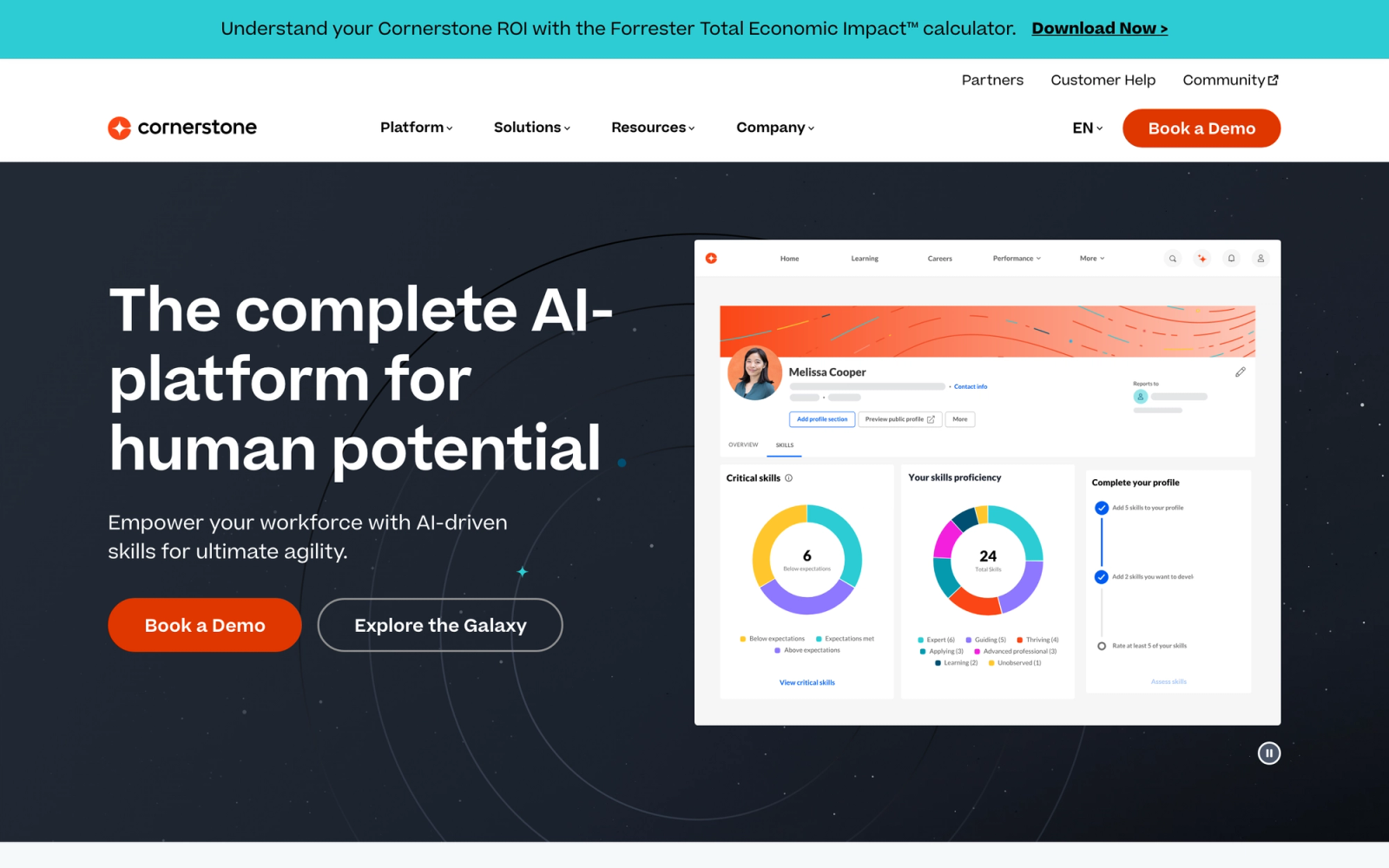
Now delivered as part of Cornerstone Galaxy (which folds in the former Saba, EdCast, and Grovo products), Cornerstone is one of the most established enterprise LMS platforms in the market, and its depth shows in the breadth of capabilities it offers large professional services organizations. For firms with thousands of employees, multiple practice areas, and complex certification requirements spanning several governing bodies, Cornerstone's compliance and talent management infrastructure is built to handle that layered complexity.
Cornerstone stands out for the sophistication of its compliance engine. This is not a bolt-on feature. The platform handles auto-enrollment based on role, practice area, geography, and credential type. It manages multiple certification renewal cycles simultaneously, escalates when deadlines approach, and produces audit-ready reports that compliance officers can hand directly to regulators or governing bodies.
Core Capabilities
- Auto-enrollment rules assigning training based on role, department, geography, and credential type, with automatic updates when professionals change practice areas
- Multi-credential certification tracking managing CPE, CLE, PMP, and other renewal cycles with automated expiration alerts and recertification workflows
- Multi-entity support for large firms with subsidiary brands, regional offices, and separate practice groups needing independent content libraries and reporting
- Audit-ready compliance reporting with scheduled exports, regulatory category filters, and tamper-evident activity logs
- Content marketplace with access to third-party libraries for professional development, leadership, compliance, and technical skills
- SCORM 1.2, SCORM 2004, xAPI, AICC, video, and document-based content support
- Integration with Workday, SAP, ADP, and other HRIS platforms for user provisioning and org hierarchy syncing
- Extended enterprise portals for training clients, partners, and contractors under separate access controls
- Skills and competency mapping tied to role-based learning paths and talent management workflows
- Mobile learning with offline content access for professionals traveling between client sites
Standout Strength
Cornerstone's compliance automation handles the scale and complexity that comes with managing thousands of professionals across multiple credential types and jurisdictions. The combination of auto-enrollment logic, multi-credential certification tracking, and audit-grade reporting means compliance teams can manage training for an entire global practice without relying on manual processes.
Best For
Large professional services firms with 2,000+ employees operating across multiple offices and jurisdictions. Consulting enterprises, Big Four and mid-tier accounting firms, large law firms, and multi-practice advisory businesses that need compliance training, talent management, and succession planning in a single platform. If your firm manages training requirements from multiple governing bodies simultaneously, Cornerstone handles that complexity.
Pricing Overview
- Custom enterprise pricing based on user count and modules selected
- Annual contracts with implementation fees typical for enterprise deployments
- No publicly listed per-user pricing; expect enterprise-tier investment
- Demo and pilot programs available through sales consultation
Limitations
- Implementation timelines extend to several months for complex deployments involving HRIS integration and multi-entity configuration
- The admin interface has a steeper learning curve than newer platforms. Configuring compliance workflows requires dedicated administrator training
- Pricing places it beyond the reach of smaller professional services firms and boutique practices
Quick Comparison Insight
More compliance depth and enterprise scalability than any other platform on this list, but the cost and implementation effort reflect that positioning. Professional services firms under 1,000 employees will likely find mid-market alternatives more practical.
360Learning
Overview
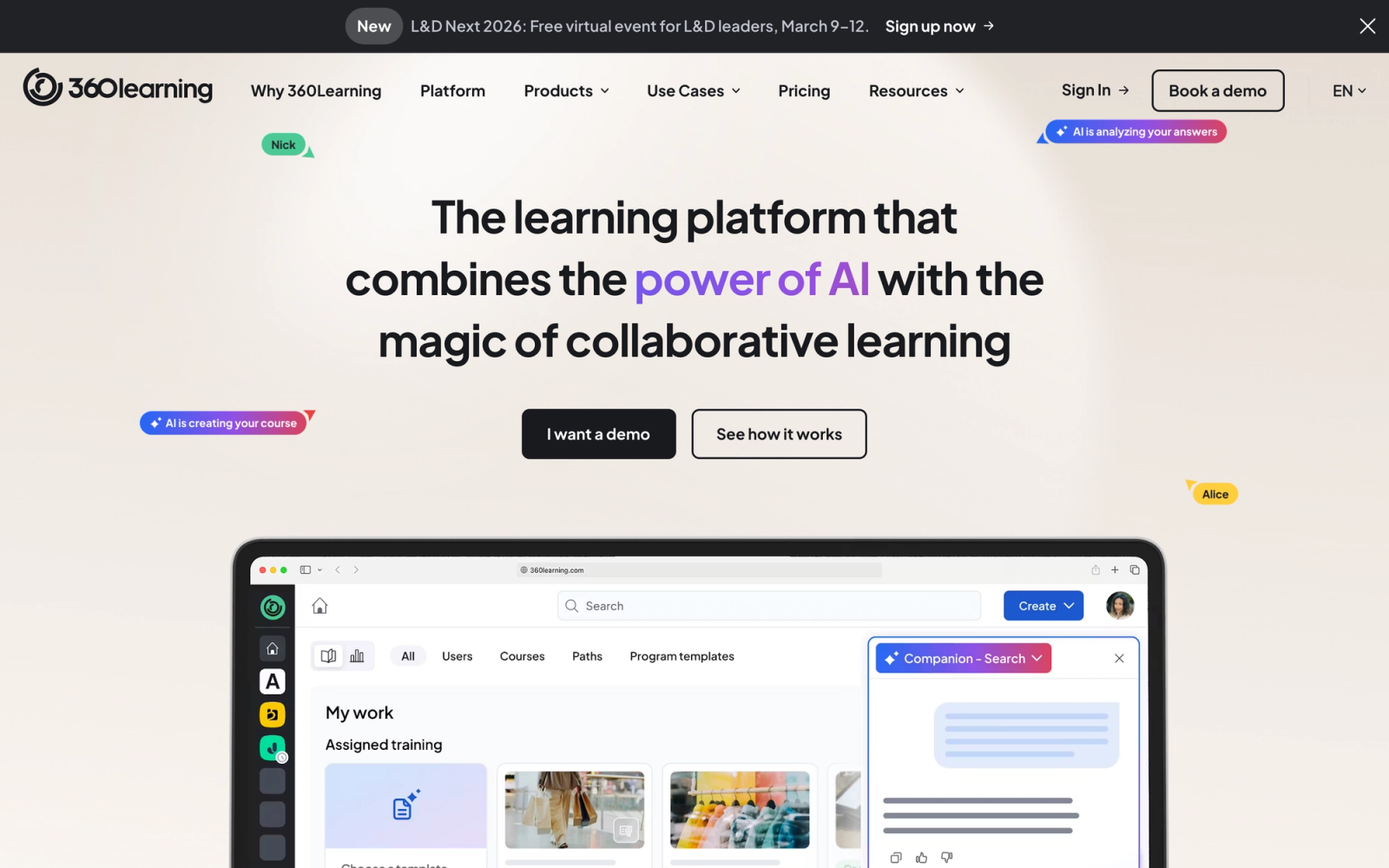
360Learning is built around collaborative authoring rather than top-down course development by an L&D team. Subject-matter experts within the firm create, share, and improve training content directly. For professional services firms where the real expertise lives with senior practitioners, not a central learning team, that distinction changes who produces training and how fast it reaches the people who need it.
The platform's clearest strength for professional services is speed of knowledge transfer. In a consulting firm, the most valuable training content lives with experienced partners and senior consultants. 360Learning gives those experts a fast path to turn that knowledge into courses without needing instructional design skills or L&D involvement.
Core Capabilities
- Collaborative course authoring that lets any team member create training content using a simple built-in editor, without requiring instructional design expertise
- Peer feedback loops where learners can react to, comment on, and suggest improvements to course content, keeping materials current and relevant
- Discussion-based learning built into every course, encouraging professionals to share real-world examples and challenge case studies
- Learning needs identification through upvoting and request features, letting the organization surface knowledge gaps organically
- SCORM and xAPI support for importing externally developed content alongside peer-authored materials
- Learning paths that combine peer-created content, imported courses, and live sessions into structured programs
- Automated enrollment and deadline tracking for compliance requirements
- Analytics tracking content quality, author contributions, learner engagement, and completion rates
- Integration with Slack, Microsoft Teams, HRIS platforms, and other business tools
- Mobile-responsive design for professionals accessing content from client sites or during travel
Standout Strength
360Learning solves the knowledge bottleneck problem. In most firms, the L&D team creates training content while the actual experts are billing client hours. 360Learning removes that bottleneck by giving subject-matter experts a fast, intuitive way to share their knowledge. A senior tax partner can record a video explaining a new regulation, add assessment questions, and publish it to the team in under an hour. That speed of knowledge transfer is a major advantage for firms where expertise is the product.
Best For
Mid-size professional services firms with 100 to 5,000 employees where subject-matter experts are willing to contribute to training content. Particularly strong for consulting firms with methodology knowledge that needs to be captured and distributed, accounting practices where regulatory changes require rapid content updates, and advisory businesses that value a bottom-up learning culture over top-down content delivery.
Pricing Overview
- Team plan starting at $8 per user per month
- Business plan with advanced features at custom pricing
- No free tier; free trial available
- Enterprise pricing for large-scale deployments
Limitations
- Certification tracking is basic compared to platforms like Cornerstone or Docebo. Firms with complex multi-credential compliance requirements will need workarounds or supplementary tools
- The collaborative authoring model depends on subject-matter experts actually creating content. If your firm's senior professionals are unwilling to contribute, the platform's core value proposition does not activate
- Multi-audience support for external client training is less developed than LearnUpon or Docebo's multi-portal architectures
Quick Comparison Insight
The strongest peer-authored content model on this list. Uniquely valuable for firms that want to capture practitioner knowledge at scale. Less suited for firms that primarily need compliance automation and external training delivery.
Skilljar
Overview
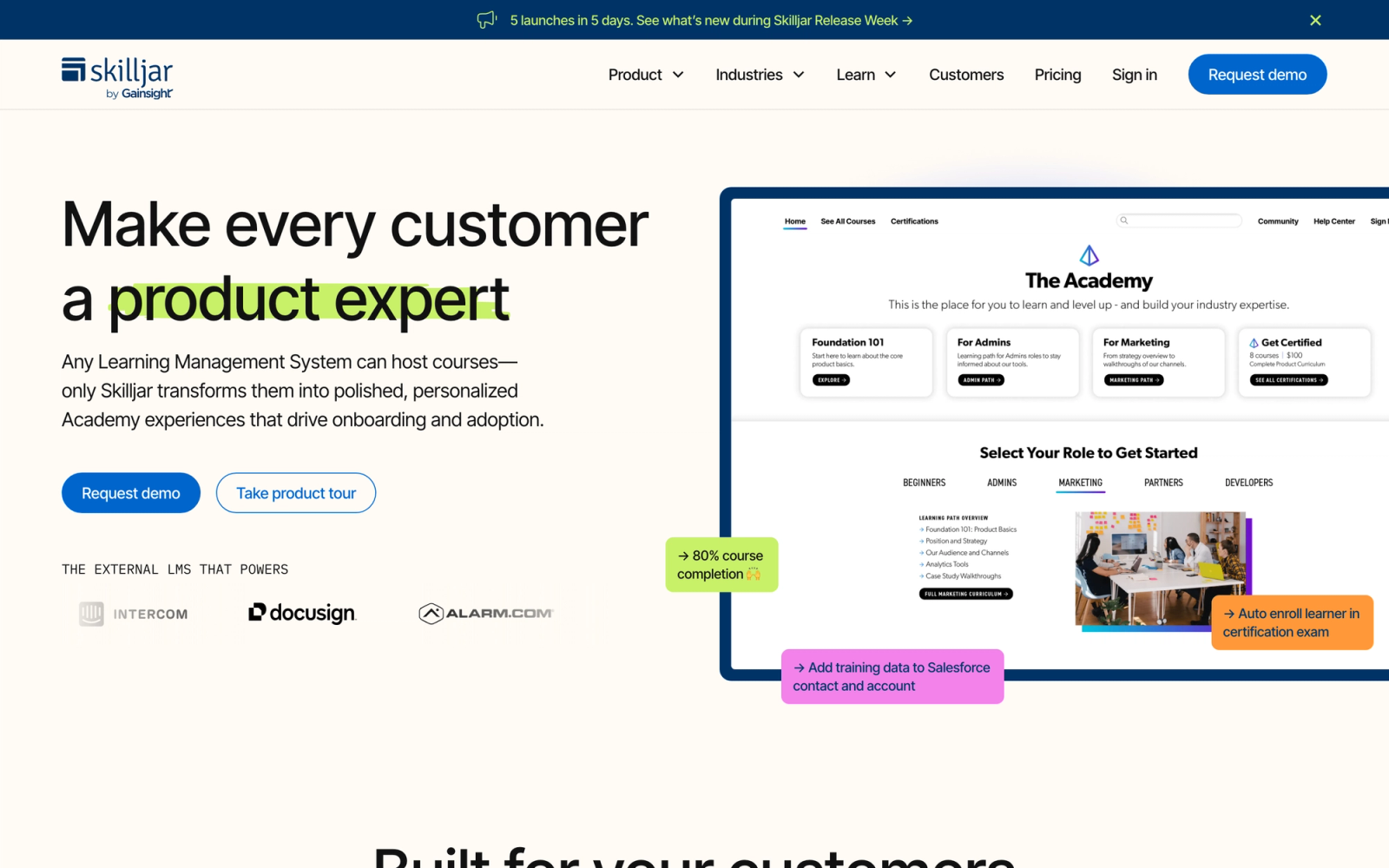
Skilljar is purpose-built for customer education, which gives it a distinct role compared to the other platforms on this list. Most entries here focus primarily on internal employee training. Skilljar is designed for the external-facing training many professional services firms deliver to clients, partners, and channel networks, including client onboarding, product enablement, and partner certification programs.
Where internal training platforms treat courses as administrative records, Skilljar treats every program as a product, with enrollment flows, payment processing, branding customization, and analytics built around the external learner experience. For a consulting firm that delivers training as part of an engagement, or an advisory business that certifies partner organizations, that architecture is a better fit than adapting a general-purpose LMS to an external audience it was not designed for.
Core Capabilities
- Customer education platform with enrollment flows, branded learning experiences, and learner analytics designed for external audiences
- E-commerce with flexible pricing models including free, paid, subscription, and bundled course packaging
- Certification management with assessment-based credentialing, certificate generation, and verification pages
- Multi-tenant architecture supporting separate branded academies for different client segments or partner tiers
- SCORM and video content support alongside native course building tools
- Deep Salesforce integration for connecting training data to customer success and revenue metrics
- Learning path design with prerequisites, sequential completion, and role-based content access
- Advanced analytics tracking learner engagement, certification rates, and program ROI
- SSO support and integration with marketing automation platforms for learner acquisition and lifecycle management
- White label LMS capabilities with custom domains, branding, and CSS customization for a fully branded academy experience
Standout Strength
Skilljar fits firms where external training is a business line, not just an add-on. The platform's Salesforce integration means training engagement data flows directly into customer health scores, renewal forecasts, and account management workflows. For consulting firms where trained clients renew at higher rates, that data connection turns training from a cost center into a measurable revenue driver.
Best For
Professional services firms that deliver training to external audiences as part of their service offering. Consulting firms providing client enablement programs, technology advisory businesses running partner certification, and advisory practices that monetize training through paid academies or continuing education programs. Less suited for firms where internal employee training is the primary use case.
Pricing Overview
- Custom pricing based on learner count and feature requirements
- No publicly listed pricing; contact sales for quotes
- Professional and Enterprise tiers available
- Demo available upon request
Limitations
- Skilljar is designed for external education. Firms that primarily need internal employee training and compliance tracking should look at other platforms on this list first
- Internal learning features like performance management integration, employee development paths, and compliance automation are not the platform's focus
- Pricing can be significant for firms with large external learner populations, especially at scale
Quick Comparison Insight
The strongest external training platform on this list. If your firm delivers client-facing education as a service or business line, Skilljar does this better than any general-purpose LMS. Not the right choice if internal employee training is your primary need.
How to Choose the Right LMS
Selecting an LMS for a professional services firm depends on your firm's size, training priorities, and the audiences you need to serve. Here is how to narrow the decision based on your specific situation.
If your highest-impact programs depend on interaction and structured feedback, Teachfloor handles onboarding cohorts, leadership development, and client-facing skills training through a mix of self-paced, social, live, and cohort formats in one branded platform.
If you need enterprise-grade compliance and talent management, Cornerstone (now part of Cornerstone Galaxy) offers the deepest certification tracking, audit reporting, and multi-entity support for large firms managing CPE, CLE, FINRA CE, and PMP credentials across jurisdictions. Docebo offers a comparable feature set with stronger AI content discovery and a more modern interface.
If simplicity and speed of deployment matter most, Absorb LMS delivers strong compliance features without demanding a dedicated admin team. TalentLMS goes further on simplicity and cost for firms under 500 employees, and Litmos adds a large pre-built content library that removes the need to develop materials from scratch.
If you train both internal teams and external clients, LearnUpon's multi-portal architecture handles this better than any general-purpose option here, while Skilljar takes external customer and partner education further when client training is a distinct, revenue-bearing business line.
If capturing senior practitioner knowledge is a priority, 360Learning's collaborative authoring lets experts publish courses without routing everything through an L&D bottleneck.
Before making a final decision, pilot your top two candidates with a real training program and real users. Test the certification tracking against your actual credential requirements, run the reports your compliance team or practice leaders will actually need, and weigh per-learner cost against your firm's LMS budget. The right LMS solves your specific operational pain points, not the one with the longest feature list. For broader context on category pricing, the G2 Corporate LMS category and Capterra's LMS directory collect verified buyer reviews across these vendors.
FAQ
What makes an LMS for professional services different from a general corporate LMS?
Professional services firms sell expertise, so training is tied directly to service quality and revenue. The LMS must track credentials like CPE, CLE, FINRA CE, and PMP renewal units, fit training around billable utilization, support collaborative development of client-facing skills, and often serve both internal staff and external clients. Requirements for specific credit types come from bodies such as AICPA for CPE, so the platform must produce records that satisfy the governing body your firm reports to.
What is the best LMS for the interactive, cohort-based programs professional services firms run?
Teachfloor is the strongest fit for onboarding cohorts, leadership development, and certification prep that benefit from group discussion. It combines flexible delivery (self-paced, social, live, and cohort-based), built-in community and peer review, live Zoom sessions, and AI course creation, all under white-label branding. For firms whose billable skills develop through practice and feedback rather than passive content, that interactivity is the differentiator.
Can a professional services firm use one LMS for both employee training and client education?
Yes. LearnUpon and Docebo support multi-portal architectures for separate branded environments, Skilljar specializes in external academies, and Teachfloor's white-label domains let a small team run internal and client-facing collaborative programs side by side. The experience is better with a platform designed for multi-audience delivery than with one bolted on.
How should professional services firms track CPE and CLE credits in an LMS?
Look for platforms that map courses to specific credit types, track earned credits against renewal requirements per user, and send automated reminders before deadlines. Cornerstone and Docebo handle multi-credential tracking most thoroughly, while Absorb LMS and LearnUpon cover mid-size needs well. Because CLE rules vary by state bar, confirm the platform can generate jurisdiction-specific reports before committing.
What is the best LMS for small professional services firms?
TalentLMS offers the lowest barrier to entry with a free plan and setup a non-technical administrator can manage, and Litmos adds a large content library that saves small firms from building materials from scratch. Boutiques that run structured onboarding or leadership cohorts should also consider Teachfloor's $89 per month Startup plan, which adds community and live learning at a comparable price.
How do professional services firms handle training around billable utilization constraints?
The practical approach is choosing an LMS that supports microlearning and mobile access so professionals can complete focused modules between client engagements. For programs that need deeper engagement, cohort-based formats with set schedules help people plan training time around project commitments rather than competing with them.


