

What Certification Programs Need from an LMS
Running a certification program is operationally different from running a standard training course. The stakes are higher, the compliance requirements are stricter, and the administrative burden is larger. A generic LMS can handle content delivery, but certification programs demand a set of capabilities that most learning platforms were never designed for.
Certificate generation and management. Certificates need to carry the right credentials: learner name, certification title, issue date, expiration date, unique verification ID, and often a QR code or verification URL. The LMS should generate these automatically upon course completion, and ideally let you customize templates with your branding and accrediting body logos. Manual certificate creation does not scale past a few dozen learners.
Continuing education credit tracking. Many certification programs require learners to accumulate CE credits over a defined period. The LMS needs to track credit accrual per learner, map credits to specific courses or activities, and alert learners when credits are approaching expiration. Without this, program administrators end up managing spreadsheets, which creates risk and eats time.
Proctored assessments. Certification exams carry weight only if the results are trustworthy. Look for platforms that support browser lockdown, webcam monitoring, identity verification, or integration with third-party proctoring services. The level of proctoring you need depends on your industry. Healthcare and financial services certifications typically require stricter controls than professional development credentials.
Ecommerce and payment processing. If you sell certifications externally, the LMS needs to handle course catalogs, shopping carts, payment gateways, coupon codes, and tax management. Bolting a separate ecommerce layer onto a basic LMS creates friction for buyers and reporting headaches for your team.
Compliance records and audit trails. Regulated industries need detailed records: who completed what, when, with what score, and whether that record has been tampered with. Audit trail functionality, tamper-proof completion logs, and the ability to export records in formats that satisfy regulatory reviewers are not optional for these programs.
Recertification workflows. Certifications expire. The LMS should automate recertification reminders, enroll learners in renewal courses, track renewal windows, and update certificate status without manual intervention. A certification program without automated recertification management will lose learners and create compliance gaps.
What to Look for
Choosing an LMS for certification is a different decision than choosing one for general employee training. The criteria shift from "can it deliver content?" to "can it manage an end-to-end credentialing operation?"
Assessment integrity. How does the platform verify that the person taking the exam is who they claim to be, and that they completed it without outside help? Proctoring options, time limits, question randomization, and anti-cheat measures all factor in. The right level depends on the stakes of your credential.
Certificate customization and verification. Can you design certificates that match your brand and meet accreditation requirements? Is there a public verification URL so employers or regulatory bodies can confirm a certificate is valid? Verification is what makes a digital certificate credible.
Recertification automation. Does the platform handle expiration tracking, renewal notifications, and automatic re-enrollment? Manual recertification processes break down quickly at scale. The difference between a well-run certification program and a chaotic one often comes down to how well recertification is automated.
Reporting depth. Certification programs generate audit and compliance reporting needs that go beyond standard learning analytics. You need per-learner completion histories, aggregate pass/fail rates, credit accumulation reports, and the ability to generate documentation for accreditation reviews.
Ecommerce readiness. If your certifications are a revenue stream, the LMS needs native ecommerce or a tight integration with payment processors. Evaluate the checkout experience from the buyer's perspective, not just the admin's. A clunky purchasing flow loses customers.
Scalability. Certification programs often start small and grow rapidly. A platform that works well for 200 learners may struggle at 20,000. Consider pricing models, performance under load, and whether the vendor has a track record with organizations of your target size.
8 Best LMS for Certification Programs
The platforms below each take a distinct approach to certification management. Some are built for enterprise compliance at scale. Others cater to training companies selling certifications as their primary business. The analysis below maps each platform to the criteria above to help narrow the field based on your specific use case.
Tool Cert Generation CE Tracking Proctoring Ecommerce Best For Docebo ✓ ✓ ✓ ✓ Enterprise certification at scale Absorb LMS ✓ ✓ ✓ ✓ Mid-to-large orgs needing compliance + ecommerce LearnUpon ✓ ✓ Partial ✓ Multi-audience certification delivery Thought Industries ✓ ✓ ✓ ✓ Training companies selling certifications TalentLMS ✓ Basic Partial ✓ SMBs launching first certification program LearnWorlds ✓ Basic Partial ✓ Solopreneurs and small academies Academy of Mine ✓ ✓ ✓ ✓ Niche certification and CE providers Teachfloor ✓ ✗ ✗ ✓ Cohort-based certification with peer assessment
| Tool | Best for | Starting price | Free trial |
|---|---|---|---|
| Teachfloor | Teams running Certification Programs that want learners to actually | $89 per mo | 14-day |
| Docebo | Enterprise organizations with 1,000+ learners running certification | Custom | Demo |
| Absorb LMS | Mid-to-large organizations (500 to 10,000+ learners) that need both | Custom | Demo |
| LearnUpon | Organizations delivering certifications to two or more distinct | $599 per mo | Demo |
| Thought Industries | Training companies, professional associations, and software vendors | Custom | Demo |
| TalentLMS | Small and mid-size businesses (10 to 1,000 learners) launching their | Free | Yes |
| LearnWorlds | Independent educators, consultants, and small training academies | $24 per mo | Demo |
| Academy of Mine | Continuing education providers, professional associations, and | $599 per mo | Demo |
Teachfloor
Overview
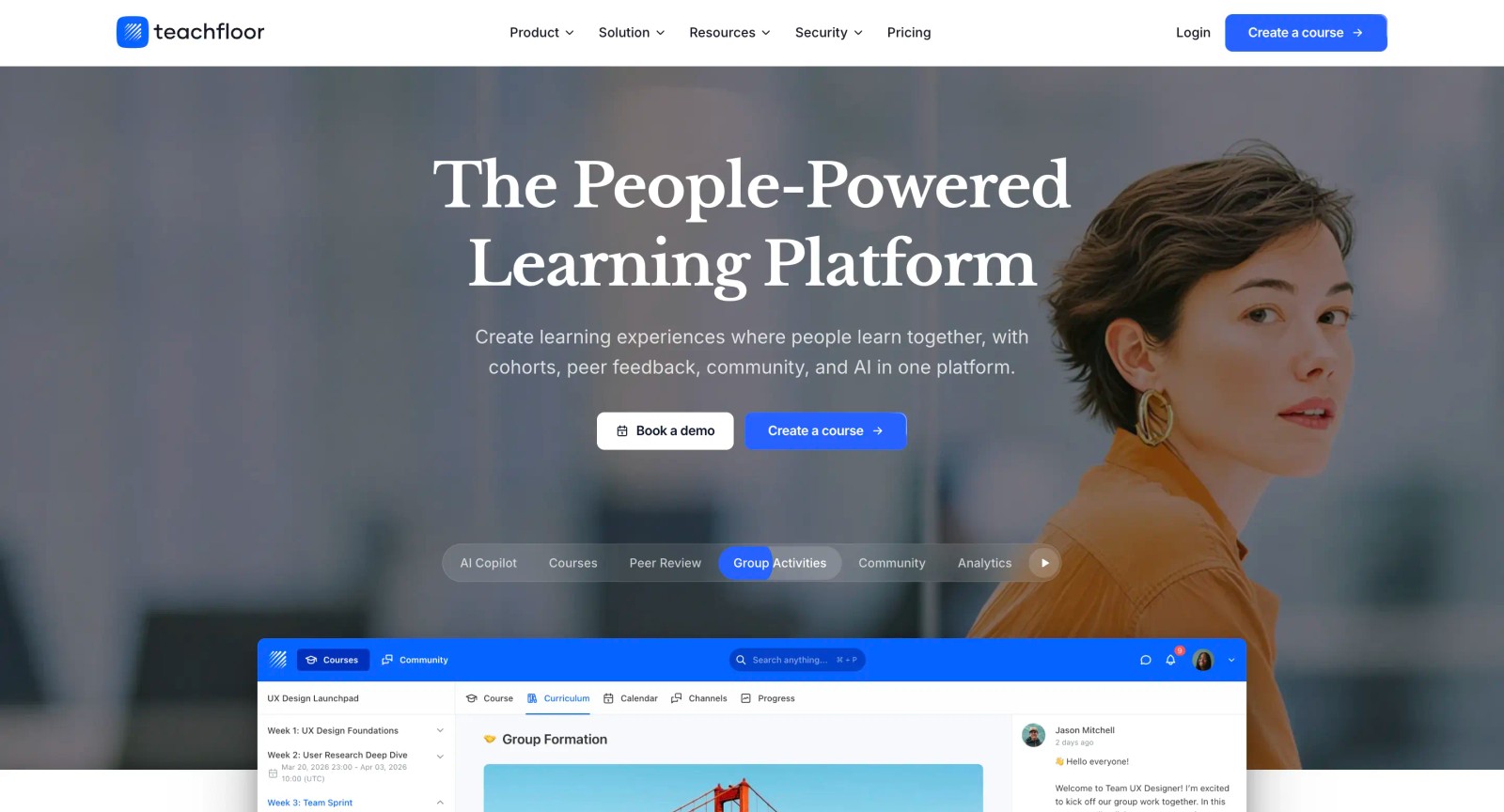
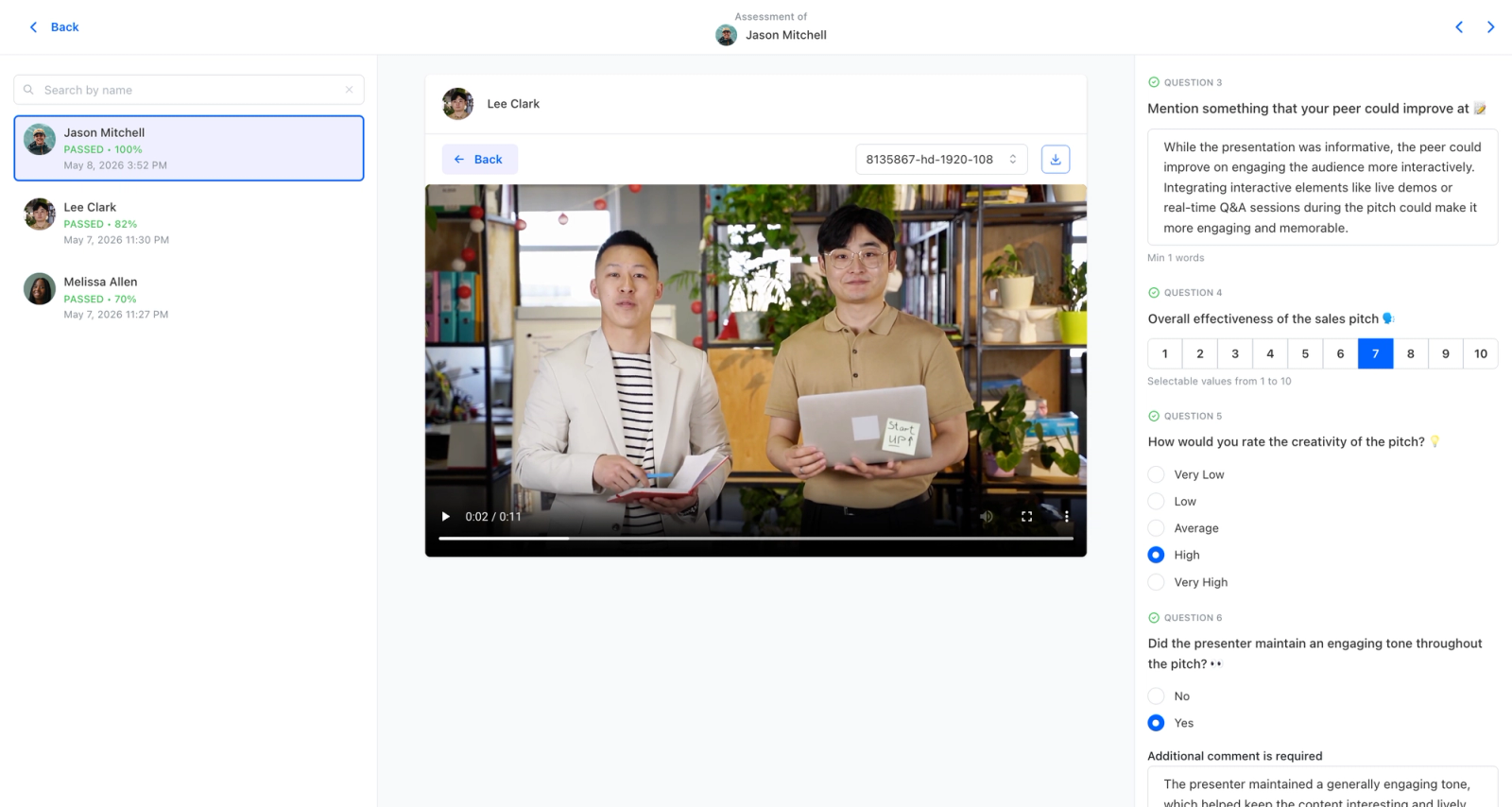
Certification programs turn training into something with weight behind it, a credential a learner can show an employer or a regulator, and that raises the bar on how the assessment is built and how the certificate is issued. Teachfloor is a flexible learning platform that supports this with quizzes and exams, automatically generated certificates carrying the program's branding, and white-label delivery on the issuer's own domain so the credential looks like it belongs to the organization, not a third-party tool. Where it stands apart from most certification platforms is the option to weight rubric-driven peer review into the final grade, which suits programs certifying applied skill rather than just recall, where a graded portfolio or peer-assessed submission proves competence better than a multiple-choice score. Analytics and multi-branch structure let an issuer run certification cohorts for distinct audiences while tracking pass rates and completions centrally.
Core Capabilities
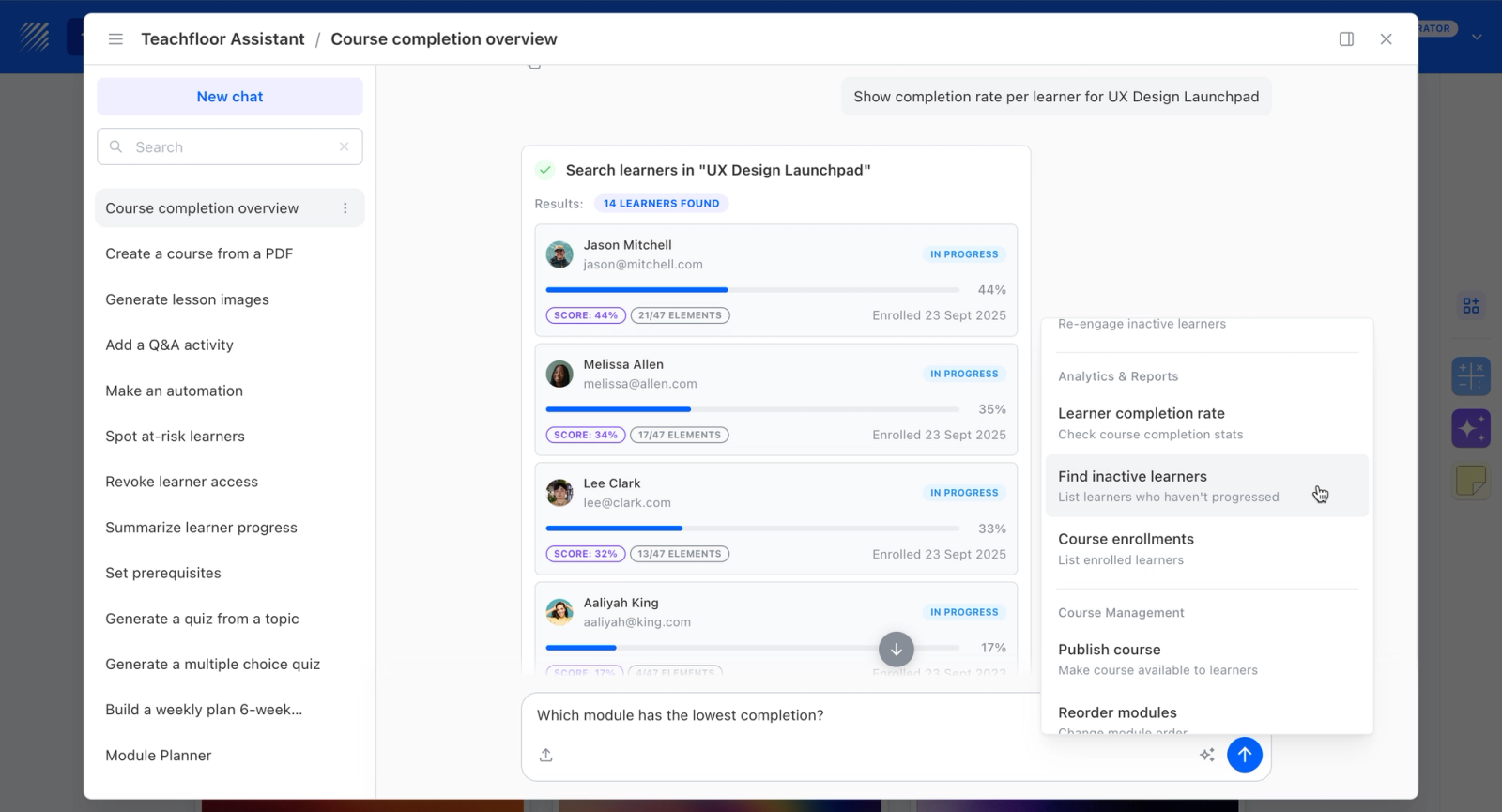
- Quizzes and exams plus auto-generated, branded certificates delivered white-label on the issuer's own domain, so the credential carries the organization's identity
- Optional rubric-driven peer review weighted into the grade, suited to programs certifying applied skill where a graded submission proves competence better than a multiple-choice score alone
- Multi-branch structure and analytics to run certification cohorts for distinct audiences while tracking pass rates, completions, and certificate issuance centrally
Best For
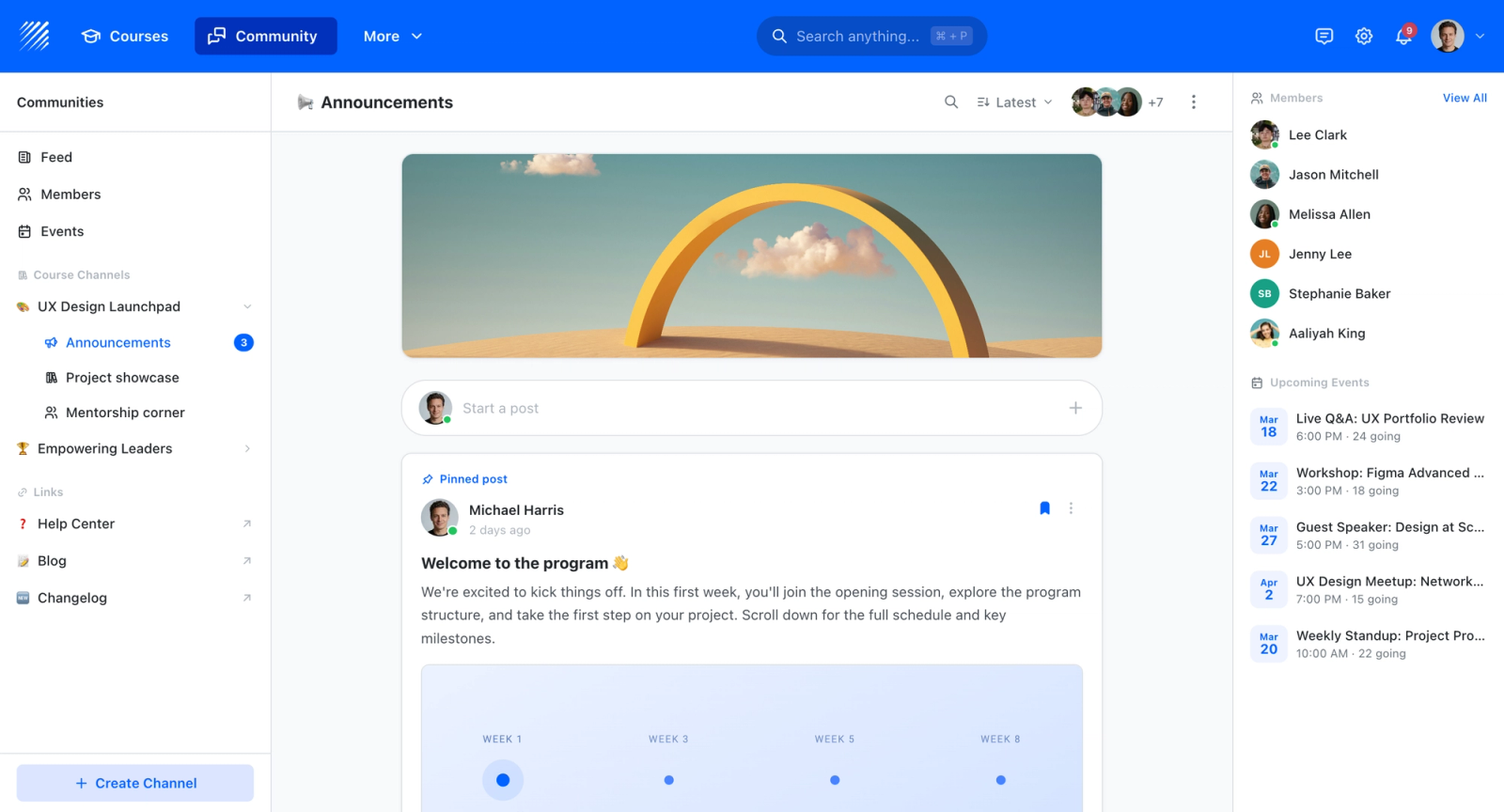
Organizations and training businesses running certification programs that want branded, on-domain certificates and the option to assess applied skill through graded peer review, not just exam scores.
Pricing Overview
- Startup plan from $89 per month for up to 50 learners
- Full Features plan with custom pricing, white-label, SSO, and advanced integrations
- 14-day free trial; no permanent free plan
- Nonprofit discounts available
Limitations
- No built-in remote proctoring or identity verification, so high-stakes exams requiring proctored conditions need a dedicated proctoring tool alongside it
- Not a specialized continuing-education or recertification-management system like Academy of Mine, so complex CE-credit tracking and renewal cycles may need additional tooling
- No native ecommerce storefront for selling certifications at scale the way LearnWorlds offers, and there is no free plan
Quick Comparison Insight
Best for certification programs that want branded, on-domain credentials and the option to assess applied skill through graded peer review, distinct from platforms optimized for remote proctoring or structured CE-credit management.
Docebo
Overview
Docebo is an enterprise learning platform that positions itself at the intersection of AI-driven learning and large-scale compliance management. It serves organizations running certification programs across thousands of learners, often in regulated industries like healthcare, financial services, and technology.
The depth of automation is what separates Docebo from most certification platforms. From enrollment rules to certificate issuance to recertification reminders, the platform handles multi-step certification lifecycles without constant manual oversight. Where many LMS platforms treat credentialing as a secondary feature, Docebo builds compliance workflows into the core product.
Core Capabilities
- Automated certificate generation with customizable templates, flexible fields, and unique verification IDs
- CE credit tracking with configurable credit types, accumulation rules, and per-learner credit ledgers
- Integration with third-party proctoring services for high-stakes certification exams
- AI-powered content recommendations that guide learners through prerequisite paths before certification attempts
- Multi-domain architecture for delivering certification programs to different audiences (internal, partner, customer) from a single instance
- Advanced reporting engine with scheduled reports, custom dashboards, and audit-ready export formats
- Native ecommerce with Shopify integration for selling certifications externally
- Recertification workflows with automated expiration tracking, renewal notifications, and re-enrollment triggers
- SCORM, xAPI, and AICC compliance for importing content from external authoring tools
- SSO, API access, and a broad integration marketplace for connecting to CRM, HRIS, and other enterprise systems
Standout Strength
Docebo handles the full credentialing lifecycle from initial enrollment through recertification without gaps that require manual intervention. The AI-powered skill mapping and prerequisite enforcement keep learners from reaching certification exams unprepared, which reduces failure rates and cuts the support load on program administrators.
Best For
Enterprise organizations with 1,000+ learners running certification programs in regulated industries. Particularly strong for companies that need to certify internal employees, external partners, and customers from a single platform. L&D teams with dedicated administrators who can invest time in initial configuration will get the most value.
Pricing Overview
- Custom enterprise pricing based on active users and feature modules
- No public pricing page; quotes are provided after a discovery call
- Free trial available for evaluation
Limitations
- Setup complexity is significant. Initial configuration requires dedicated time and often professional services support. This is not a platform you deploy in an afternoon.
- Pricing is opaque and skews toward enterprise budgets. Small organizations or independent certification providers may find it cost-prohibitive.
- The admin interface has a learning curve. New administrators typically need several weeks to feel comfortable navigating the full feature set.
Quick Comparison Insight
More powerful than most platforms on this list for enterprise-scale certification, but the complexity and cost make it a poor fit for smaller programs or organizations without dedicated LMS administrators.
Absorb LMS
Overview
Absorb LMS occupies the space between mid-market platforms and full enterprise systems. It is popular with organizations that need strong compliance tracking and certification management but want a cleaner, more intuitive interface than what most enterprise LMS platforms offer.
Absorb's handling of compliance and ecommerce in a single product is its clearest differentiator at this tier. Many platforms do one or the other well; Absorb manages both without requiring a separate module or third-party integration. For organizations that run internal compliance certification alongside external credential sales, that dual capability matters in practice.
Core Capabilities
- Customizable certificate templates with automated issuance based on completion, assessment scores, or multi-course criteria
- CE credit management with configurable credit types and per-learner tracking
- Built-in ecommerce engine with flexible pricing, bundles, subscriptions, and coupon management
- Integration with proctoring services for identity verification and exam monitoring
- Observation checklists for in-person competency verification tied to certification requirements
- Automated recertification with customizable renewal windows and escalation notifications
- Detailed compliance reporting with filterable dashboards and scheduled report delivery
- SCORM and xAPI support for importing third-party content packages
- Absorb Infuse, an embeddable learning widget that lets you deliver certification content within external applications
- REST API and native integrations with Salesforce, BambooHR, and other business systems
Standout Strength
Absorb's strength for certification is its balance of compliance depth and usability. The admin interface is cleaner than most competitors at this tier, which means less training time for program administrators. The Absorb Infuse technology is also unique: it lets you embed certification training directly into the tools your learners already use, reducing the friction of switching to a separate learning platform.
Best For
Mid-to-large organizations (500 to 10,000+ learners) that need both internal compliance certification and external certification sales. Strong fit for regulated industries, corporate training departments, and associations that manage professional development credits. Teams that value a polished learner experience alongside administrative depth.
Pricing Overview
- Custom pricing based on active learner count
- No public pricing; quotes provided after consultation
- Free demo and trial available
Limitations
- The reporting engine is strong but can feel rigid when building highly custom reports. Some administrators find they need to supplement with external BI tools for advanced analytics.
- Content authoring is basic. You will likely need a separate authoring tool for anything beyond simple page-based courses.
- Pricing is not publicly disclosed, which makes budgeting difficult during the evaluation phase.
Quick Comparison Insight
More approachable than Docebo for mid-market teams, with a cleaner interface and faster deployment. Less configurable at the deep-enterprise level, but covers certification and ecommerce well in a single platform.
LearnUpon
Overview
LearnUpon is designed around a multi-portal architecture that makes it practical for organizations delivering certification programs to distinct audiences. You can run a certification track for internal employees, a different one for channel partners, and a third for paying external customers, all from a single account with separate branding, content, and access controls.
The setup process is fast compared to enterprise-tier platforms. Administrators can have a functional certification course with automated certificate issuance running within hours rather than days. LearnUpon prioritizes time to productivity, which is a genuine advantage for teams that cannot afford a lengthy implementation cycle.
Core Capabilities
- Multi-portal architecture with separate branding, user bases, and content libraries per audience
- Automated certificate generation with custom templates, expiry dates, and downloadable PDF output
- Learning path builder for sequencing prerequisite courses before certification exams
- Built-in ecommerce with Stripe and PayPal integration for selling certification courses
- Webinar and virtual classroom integrations (Zoom, Microsoft Teams, GoToWebinar) for blended certification delivery
- Automated recertification reminders and renewal enrollment workflows
- SCORM and xAPI support for importing externally authored content
- ILT (instructor-led training) management for scheduling and tracking in-person certification sessions
- Salesforce, Zapier, and API integrations for connecting certification data to CRM and HR systems
- Gamification elements including points and leaderboards to drive certification completion
Standout Strength
The multi-portal model is what sets LearnUpon apart for certification. Organizations that serve multiple audiences, such as associations certifying members while also training internal staff, get clean separation without managing multiple LMS instances. Each portal gets its own branding and content library while sharing a centralized reporting backend.
Best For
Organizations delivering certifications to two or more distinct audiences: internal teams, partners, and external customers. Associations, franchise operations, and software companies running customer certification programs. Teams that need fast deployment without a lengthy implementation cycle.
Pricing Overview
- Plans start at approximately $599 per month for up to 50 active users (Essential plan)
- Pricing scales with active user count and the number of portals
- Premium and Enterprise tiers add features like Salesforce integration, white-labeling, and advanced automation
- Free trial available
Limitations
- Proctoring is not built in. You will need third-party tools or manual oversight for high-stakes certification exams.
- The native assessment builder covers standard question types but lacks advanced item banking and adaptive testing capabilities.
- Reporting is solid for standard metrics but less flexible than Docebo or Absorb for deeply custom compliance reports.
Quick Comparison Insight
Faster to deploy than Docebo, with better multi-audience support than Absorb. Less suited for high-stakes proctored certification exams, but strong for organizations managing multiple certification programs across different learner groups.
Thought Industries
Overview
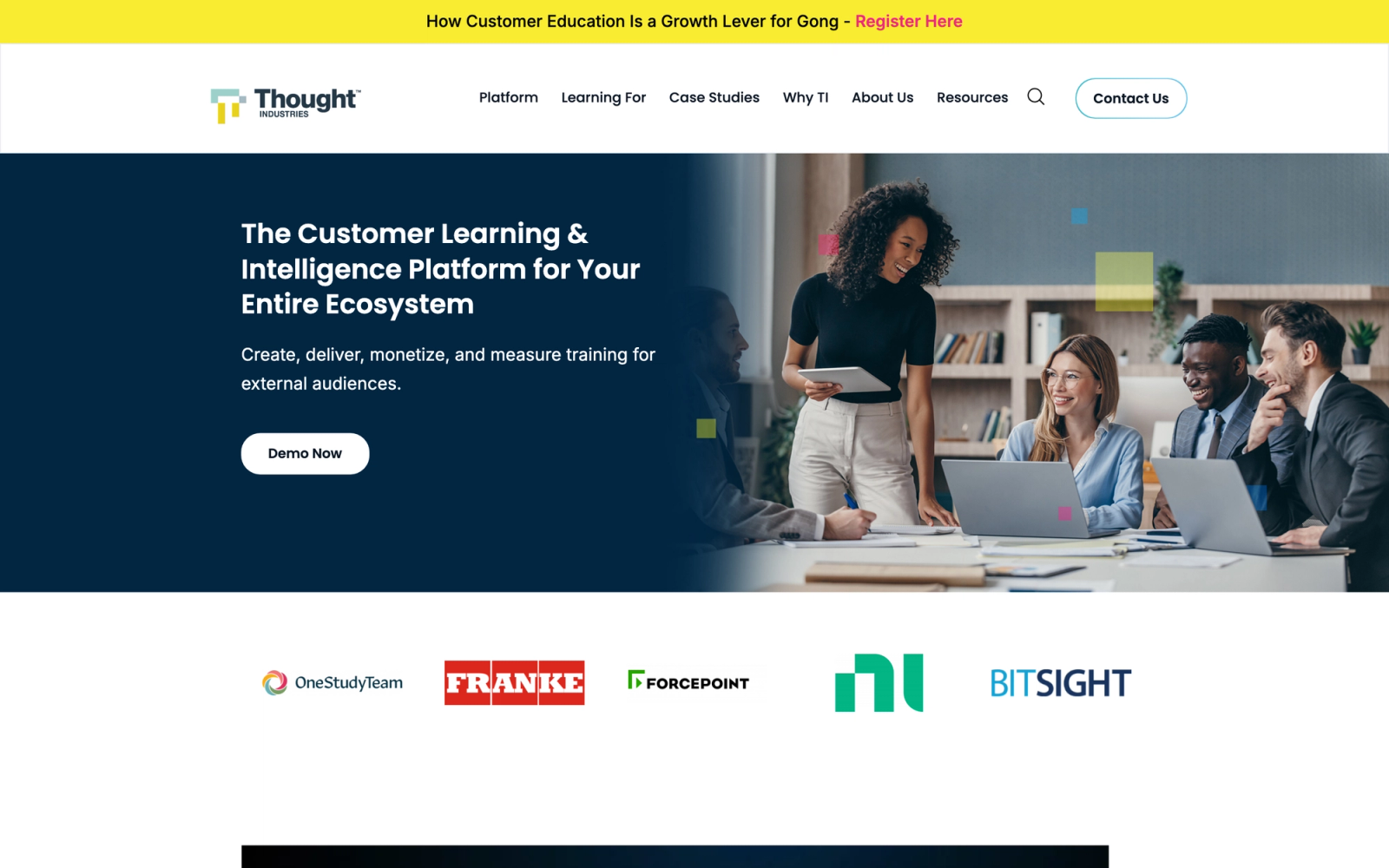
Thought Industries is built specifically for training companies, associations, and organizations that treat learning as a revenue-generating business. While other platforms on this list add ecommerce as a feature, Thought Industries makes it the foundation. The entire architecture is designed around selling, delivering, and managing external-facing certification and education programs.
The platform is built around the buyer journey as much as the learner journey. Catalog pages, checkout flows, subscription models, and bundled licensing are first-class features rather than configuration workarounds. For organizations where certification revenue is a primary business line, this matters because internally focused LMS platforms were never designed to manage conversion funnels, pricing tiers, and buyer analytics alongside learning outcomes.
Core Capabilities
- Purpose-built ecommerce with flexible pricing models: one-time purchase, subscription, bundles, seat licensing, and bulk sales
- Custom-branded storefronts with catalog browsing, category filtering, and promotional landing pages
- Automated certificate generation with configurable completion criteria and branded templates
- CE credit tracking with accreditation management and credit-to-course mapping
- Integration with proctoring tools for secure certification assessments
- Multi-tenant architecture for delivering certification content to different customer segments
- Content authoring tools with interactive elements, assessments, and multimedia support
- Detailed revenue analytics alongside learning analytics for tracking both business and educational outcomes
- CRM integrations (Salesforce, HubSpot) for connecting certification purchases to customer records
- Webhooks and API for building custom workflows between the LMS and external business systems
Standout Strength
Organizations choose Thought Industries because it treats certification as a business, not just a learning event. The revenue tracking, commercial analytics, and buyer-centric UX give certification providers tools that no internally focused LMS offers. If your certification program has revenue targets, conversion metrics, and customer acquisition goals, this platform speaks that language natively.
Best For
Training companies, professional associations, and software vendors that sell certification programs as a core business line. Organizations managing large external certification catalogs with complex pricing structures. Teams that need to track both learning outcomes and revenue performance in a single platform.
Pricing Overview
- Custom pricing based on learner volume and feature requirements
- No public pricing page; enterprise quotes provided after consultation
- Demo available upon request
Limitations
- Priced for commercial training businesses, not small internal certification programs. Organizations certifying only internal staff will find the cost-to-value ratio unfavorable.
- The platform's commercial focus means some traditional LMS features (like extensive compliance tracking for internal regulatory requirements) are less developed than in compliance-first platforms like Absorb.
- Initial implementation requires meaningful configuration to set up storefronts, pricing models, and content taxonomies.
Quick Comparison Insight
Stronger than any other platform on this list for selling certifications as a product. Less suited for organizations focused purely on internal compliance certification where revenue generation is not a factor.
TalentLMS
Overview
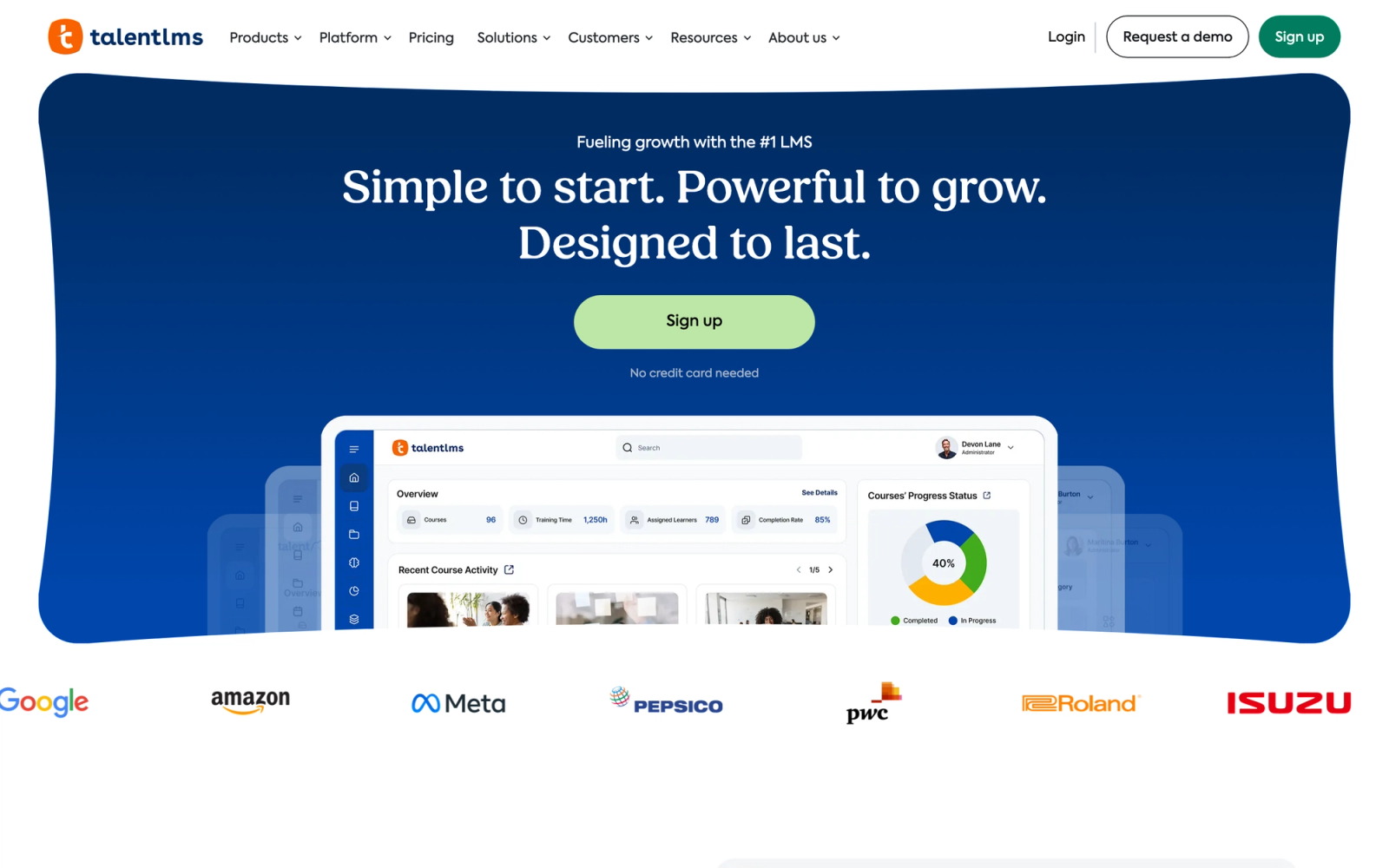
TalentLMS is positioned as an accessible, straightforward LMS that gets certification programs running quickly without the configuration overhead of enterprise platforms. Developed by Epignosis, it targets small and mid-size organizations that need core certification functionality, automated certificates, learning paths, ecommerce, without the complexity or price tag of tools like Docebo or Thought Industries.
The interface is intentionally simple, and the platform walks administrators through course creation, assessment building, and certificate assignment in a logical sequence. Organizations launching their first formal certification program can reach a working setup in well under an hour. At this stage, that ease of entry often matters more than feature depth.
Core Capabilities
- Automated certificate issuance upon course or learning path completion with customizable PDF templates
- Built-in assessment engine with multiple question types, time limits, passing scores, and retake policies
- Learning paths for sequencing courses into multi-step certification tracks
- Native ecommerce with Stripe and PayPal integration for selling certification courses
- Branch functionality for managing separate certification programs with distinct branding and user groups
- SCORM and xAPI support for importing externally authored content
- Automated notifications for course deadlines, certification expiry, and recertification reminders
- Gamification features including badges, points, and leaderboards
- Integrations with Zapier, Salesforce, and other tools via REST API
- Custom domain and white-label options for branded certification portals
Standout Strength
Speed to launch. TalentLMS gets certification programs operational faster than any other platform on this list. The trade-off is depth, but for organizations that need a working certification system within days rather than months, TalentLMS delivers where heavier platforms create implementation bottlenecks.
Best For
Small and mid-size businesses (10 to 1,000 learners) launching their first certification or training delivery program. Non-technical teams that need minimal setup time. Organizations with straightforward certification requirements, a set of courses, an exam, and a certificate, without complex CE credit tracking or high-stakes proctoring.
Pricing Overview
- Free plan available for up to 5 users and 10 courses
- Paid plans start at $89 per month (Core plan, up to 40 users)
- Pricing scales by user count; higher tiers add features like custom reports and automation
- Annual billing discounts available
Limitations
- CE credit tracking is limited to basic certificate expiration. It does not offer the granular credit type management or accumulation tracking that regulated certification programs require.
- No native proctoring. High-stakes certification exams will need external proctoring solutions integrated manually.
- Reporting is adequate for basic metrics but lacks the depth needed for complex compliance audits or accreditation reviews.
Quick Comparison Insight
Faster and cheaper than Docebo or Absorb, but with less certification-specific depth. A strong starting point for SMBs that may graduate to a more capable platform as their certification program matures.
LearnWorlds
Overview
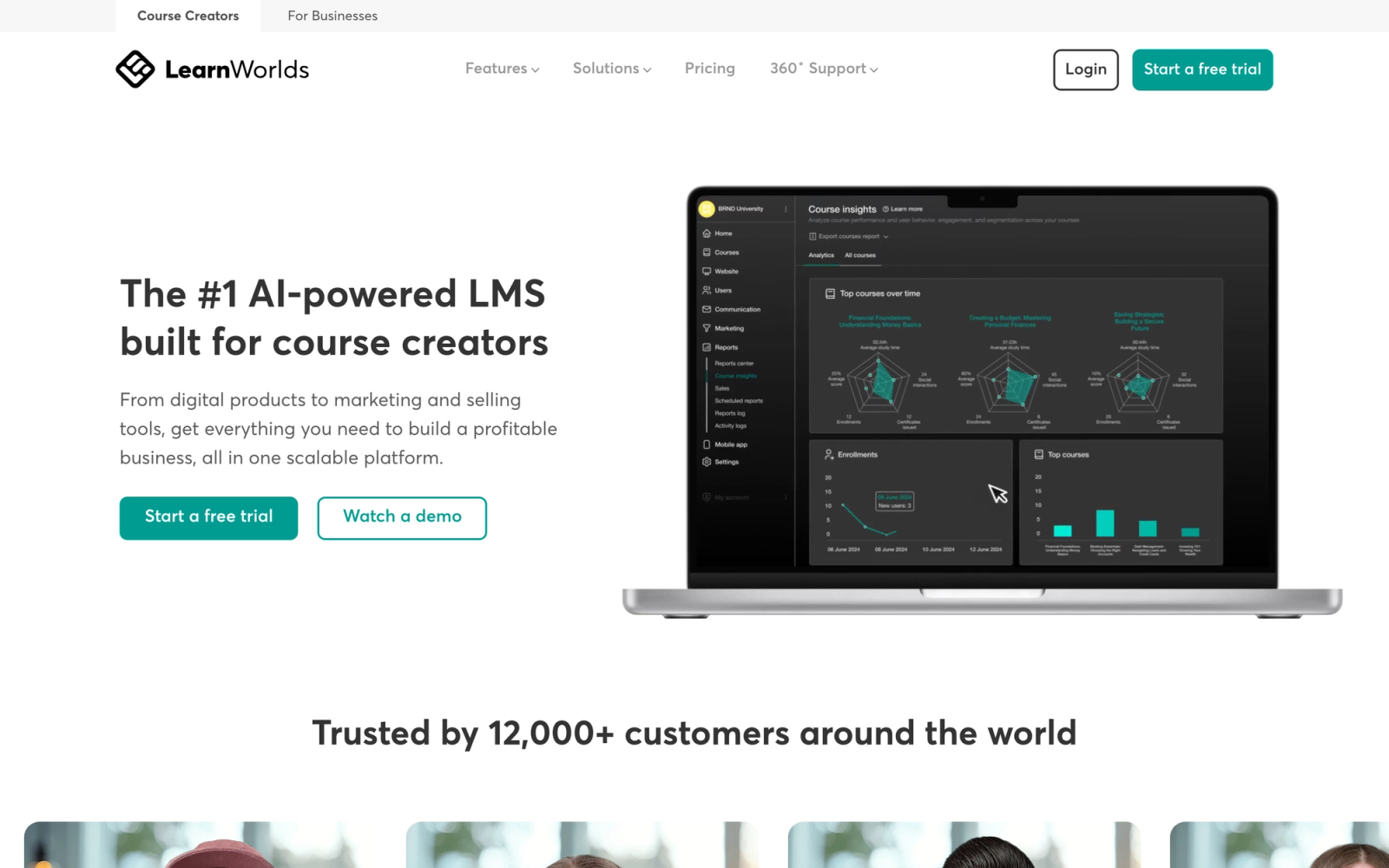
LearnWorlds is an online course platform that blends content creation, ecommerce, and certification tools into a package aimed at independent educators, small training businesses, and niche certification providers. It occupies a different market segment than enterprise LMS platforms. Where Docebo or Absorb target large organizations with dedicated L&D teams, LearnWorlds targets individuals and small teams building a certification business from scratch.
The course builder is where LearnWorlds differentiates itself most clearly. Interactive video with in-video questions, embedded text overlays, and branching paths give certification providers tools to create engaging assessment-ready content without a separate authoring tool. For a solopreneur or small team, having authoring, delivery, ecommerce, and certification in one platform eliminates the need to stitch together multiple services.
Core Capabilities
- Interactive video player with in-video quizzes, text overlays, and viewer engagement tracking
- Customizable certificate builder with flexible fields, branding options, and unique certificate IDs
- Built-in exam builder with question pools, randomization, time limits, and passing thresholds
- Full ecommerce with flexible pricing, payment plans, bundles, subscriptions, and coupon codes
- White-label school builder with custom domains, branded checkout, and mobile-responsive design
- Course compliance engine with completion tracking and mandatory progress requirements
- SCORM support for importing content from external authoring tools
- Site builder with landing pages, blog, and SEO tools for marketing certification programs
- Drip content scheduling for pacing learners through certification preparation material
- Integrations with Zapier, Mailchimp, and payment gateways (Stripe, PayPal)
Standout Strength
LearnWorlds gives small certification providers a complete business platform, not just an LMS. The combination of content creation, ecommerce, website building, and certification management in a single tool means a solo practitioner or small team can launch a credentialed program without needing separate tools for hosting, payments, marketing, and delivery.
Best For
Independent educators, consultants, and small training academies building and selling certification programs online. Particularly suited for niche professional certifications where the program creator is also the subject matter expert. Teams of one to ten that need an online teaching platform, not just a learning management system.
Pricing Overview
- Starter plan at $24 per month (billed annually)
- Pro Trainer plan at $79 per month with custom certificates and full ecommerce
- Learning Center plan at $249 per month with advanced features and bulk user management
- Free trial available
Limitations
- CE credit tracking is minimal. LearnWorlds tracks completion and issues certificates, but it does not provide the structured CE credit management that regulated professions demand.
- No native proctoring integration. Certification providers needing exam security will have to manage it externally.
- Designed for individual course creators, not organizations managing hundreds of certification tracks. The platform's architecture starts to feel constrained at larger operational scale.
Quick Comparison Insight
More affordable and creator-friendly than any enterprise platform on this list, but less suited for organizations with complex compliance requirements. Best thought of as a certification business builder rather than an enterprise credentialing system.
Academy of Mine
Overview
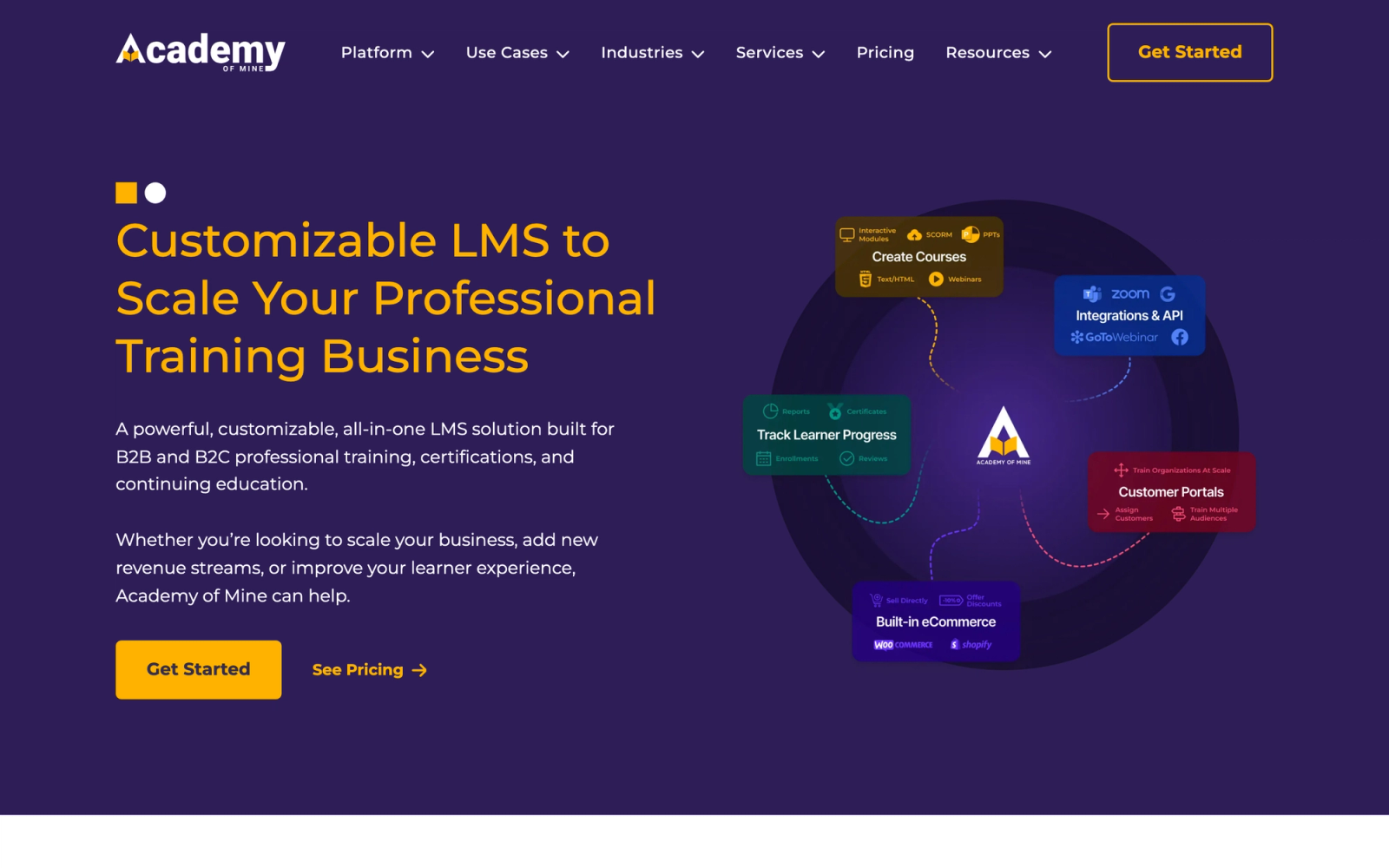
Academy of Mine is a specialized LMS built specifically for continuing education providers and certification bodies. While platforms like Docebo and Absorb serve broad learning management needs and add certification features on top, Academy of Mine was designed from the ground up for organizations whose primary business is issuing and managing professional credentials.
The CE-specific functionality is what separates Academy of Mine from general-purpose platforms. Credit type configuration, accreditation body management, CE transcript generation, and compliance reporting are not add-ons, they are the core product. The admin interface reflects the workflow of a certification administrator rather than a general L&D manager. For organizations in healthcare, accounting, real estate, or other regulated fields where CE compliance is the central concern, that specificity translates directly into less configuration overhead and fewer workarounds.
Core Capabilities
- complete CE credit management with configurable credit types mapped to specific accreditation bodies
- Automated certificate and CE transcript generation with compliance-ready formatting
- Built-in proctored assessment options with identity verification and secure exam delivery
- Full ecommerce with course catalogs, payment processing, bundles, and promotional pricing
- White-label portals for delivering branded certification programs to external audiences
- SCORM and xAPI support for importing externally authored content
- Recertification management with automated renewal tracking, expiry alerts, and re-enrollment workflows
- Compliance reporting designed for accreditation audits with per-learner activity histories
- Zoom and webinar integrations for blended certification delivery combining live and self-paced components
- API access for connecting certification data to external CRM and association management systems
Standout Strength
Academy of Mine was purpose-built for CE and certification management. Organizations in regulated industries choose it because the platform already understands their workflow. Credit types, accreditation body rules, transcript formats, and audit requirements are native to the system rather than configured through generic custom fields. This reduces implementation time and ongoing administrative overhead for certification-specific operations.
Best For
Continuing education providers, professional associations, and certification bodies in regulated fields like healthcare (CME, CNE), accounting (CPE), real estate, and legal services (CLE). Organizations where CE compliance tracking and accreditation reporting are the primary LMS requirements, not secondary features.
Pricing Overview
- Plans start at approximately $599 per month
- Pricing scales with active learner count and feature tier
- Custom enterprise quotes available for large-scale deployments
- Free demo available
Limitations
- The platform's specialization means it is less versatile than broader LMS platforms. Organizations that also need general employee onboarding or non-certification training may find it limiting.
- The user interface, while functional, is not as polished as some competitors. It prioritizes administrative capability over visual refinement.
- Smaller community and integration stack compared to mainstream LMS platforms like Docebo or Absorb.
Quick Comparison Insight
More specialized for CE and certification than any other platform on this list. Less versatile as a general-purpose LMS, but for organizations whose entire operation revolves around professional credentialing, the fit is tighter than broader platforms can offer.
How to Choose the Right LMS for Certification
The right platform depends on the type of certification you run, not just the size of your organization. Here is how to match your situation to the tools above.
If you run a regulated certification program in healthcare, finance, or legal services, CE credit management and audit-ready compliance reporting are non-negotiable. Academy of Mine is purpose-built for this. Absorb LMS and Docebo also handle it well, with broader feature sets for organizations that need general training alongside certification.
If you sell certifications as a product, the ecommerce experience matters as much as the learning experience. Thought Industries is the strongest option for organizations where certification is a revenue line with conversion funnels, pricing flexibility, and buyer analytics. LearnWorlds offers a more affordable version of this for smaller operations.
If you certify multiple audiences from a single organization, LearnUpon's multi-portal architecture handles the separation of internal, partner, and customer certification programs cleanly. Docebo's multi-domain setup also serves this need at a larger scale.
If you are a small business launching your first certification, TalentLMS gives you the fastest path from zero to a functioning certification program. The feature set is simpler, but the time-to-value is unmatched. As your program grows, you can evaluate more specialized platforms.
If your certification is competence-based and involves group assessment, Teachfloor provides the collaborative learning infrastructure that self-paced platforms do not. This applies to bootcamps, professional development cohorts, and programs where peer review is part of the credentialing process.
If you need enterprise-scale compliance certification, Docebo and Absorb are the strongest contenders. Docebo offers more depth and AI-driven automation; Absorb offers a cleaner interface and faster onboarding process. Both handle thousands of learners across complex organizational structures.
Start with the certification requirements, not the feature list. Define what your credential demands, then match the platform to those demands. A simpler platform that fits your workflow will outperform a complex one that requires months of configuration to approximate it.
FAQ
What is an LMS for certification?
An LMS for certification is a learning management system with built-in features for managing credentialing programs: certificate generation, assessment management, completion tracking, and often ecommerce for selling certifications. Unlike general-purpose LMS platforms, a certification-focused LMS typically includes recertification workflows, CE credit tracking, and compliance reporting designed for organizations that issue formal credentials.
Can I issue certificates with any LMS?
Most modern LMS platforms can generate basic completion certificates. The difference is in the details. A basic LMS might produce a PDF with a name and date. A certification-focused LMS adds verification URLs, unique certificate IDs, expiration dates, accreditation body logos, and automated reissuance for renewals. If your certificates need to be verifiable and carry professional weight, you need more than a basic template generator.
What is CE credit tracking in an LMS?
CE (Continuing Education) credit tracking refers to the LMS's ability to assign credit values to courses, track credit accumulation per learner over time, map credits to specific accreditation bodies, and generate compliance reports. This is critical for professions like healthcare, accounting, and legal services where practitioners must earn a defined number of CE credits within a renewal period to maintain their license or certification.
Do I need proctoring for my certification program?
It depends on the stakes and regulatory context. Professional certifications in healthcare, financial services, and cybersecurity typically require some form of proctored assessment to maintain credibility. Internal company certifications or professional development credentials may not. Evaluate whether your credential's value depends on assessment integrity, and if it does, choose a platform that supports browser lockdown, webcam monitoring, or third-party proctoring integration.
How much does a certification LMS cost?
Pricing varies widely. TalentLMS starts with a free plan and paid tiers from $89 per month. LearnWorlds starts at $24 per month. Enterprise platforms like Docebo, Absorb, and Thought Industries use custom pricing that typically ranges from several hundred to several thousand dollars per month depending on user volume and feature requirements. The right budget depends on your learner count, feature needs, and whether certification is a cost center or a revenue stream.


