


Why Logistics Companies Need Specialized Training
Logistics and supply chain operations run on precision. A single gap in warehouse safety training, a missed compliance update on hazardous materials handling, or an undertrained driver can cascade into delays, regulatory fines, or workplace injuries. The training challenge in this industry is distinct from what most corporate L&D teams face.
Workforce distribution. Logistics companies operate across warehouses, distribution centers, ports, and fleets spread over wide geographies. Training cannot rely on classroom sessions when your workforce clocks in at thirty different facilities across multiple time zones. A standard LMS built for desk-based employees will not solve this problem.
High turnover, fast onboarding. The logistics sector consistently faces turnover rates above the national average. When new hires cycle through quickly, onboarding has to be fast, standardized, and repeatable. Every week a new employee spends underperforming is a measurable cost in picking errors, shipping delays, or safety incidents.
Regulatory compliance pressure. From OSHA requirements and DOT regulations to HAZMAT certification and food safety standards, logistics companies carry a heavy compliance burden. Training records must be auditable, certifications must be tracked with expiration dates, and refresher courses must be assigned automatically. Generic employee training platforms often lack the compliance tracking depth that logistics operations demand.
Frontline and deskless learners. Most logistics workers do not sit at desks. They operate forklifts, load trucks, manage inventory on warehouse floors, or drive routes. Training has to reach them on mobile devices, in short sessions that fit between shifts or during downtime. A platform that requires a desktop browser and hour-long modules will see poor completion rates in this environment.
Operational continuity. Supply chain disruptions are costly. Training programs in logistics are not optional development perks; they directly protect throughput, safety, and regulatory standing. The LMS you choose needs to function as operational infrastructure, not just a content library.
What to Look for in an LMS for Logistics
Before evaluating specific platforms, it helps to define the criteria that matter most for logistics and supply chain training. Not every feature that sounds impressive on a vendor's marketing page will move the needle for your operation.
Mobile-first delivery. If the platform does not work well on a smartphone or tablet without a reliable Wi-Fi connection, it will not reach your frontline workers. Look for native mobile apps with offline access and content that renders cleanly on small screens.
Compliance management depth. You need more than a checkbox. The right LMS should handle certification tracking with expiration alerts, automatic re-enrollment for refresher training, audit-ready reporting, and digital signature capture for acknowledgment of safety policies. For teams managing compliance training programs, these features are non-negotiable.
Rapid content deployment. When a new safety regulation drops or a process changes at a distribution center, you need to push updated training to the affected workforce within days, not weeks. Look for platforms that support fast authoring, targeted content assignment by role or location, and push notifications to learners.
Multilingual support. Logistics workforces are frequently multilingual. An LMS that supports content in multiple languages, with the ability to assign the correct language version automatically based on learner profile, removes a significant friction point.
Integration with operational systems. Your LMS should connect to your HRIS, WMS, or TMS so that new hires are automatically enrolled, role changes trigger new training paths, and completion data flows back into your operational records. Without these integrations, you end up with manual data entry and gaps in coverage.
Scalability without complexity. Whether you have 200 employees or 20,000 across dozens of facilities, the platform should scale without requiring a dedicated IT team to administer it. Simple user management, bulk enrollment, and location-based organization structures matter more than flashy features.
Reporting and analytics. You need visibility into completion rates by location, overdue certifications, assessment scores by role, and training impact on operational KPIs. The ability to generate learning analytics reports for safety audits on demand is a practical necessity.
8 Best LMS for Logistics and Supply Chain Training
The platforms below range from enterprise-grade systems built for large distributed workforces to more focused tools designed for frontline and deskless workers. Each addresses a different combination of the requirements outlined above. The notes below highlight where they genuinely differ and where each one falls short.
ToolMobile AppCompliance TrackingOffline AccessMultilingualBest For TalentLMSYesYesNoYesSMBs needing a fast, affordable setup Absorb LMSYesYesYesYesMid-to-large operations with complex compliance SAP LitmosYesYesYesYesGlobal supply chains with SAP stacks DoceboYesYesYesYesEnterprises needing AI-driven automation AxonifyYesYesYesYesFrontline workforce microlearning iSpring LearnYesYesYesYesTeams with heavy PowerPoint-based content eduMeYesLimitedNoYesDeskless worker onboarding at scale TeachfloorYesLimitedNoYesCollaborative and instructor-led programs
Teachfloor
Overview
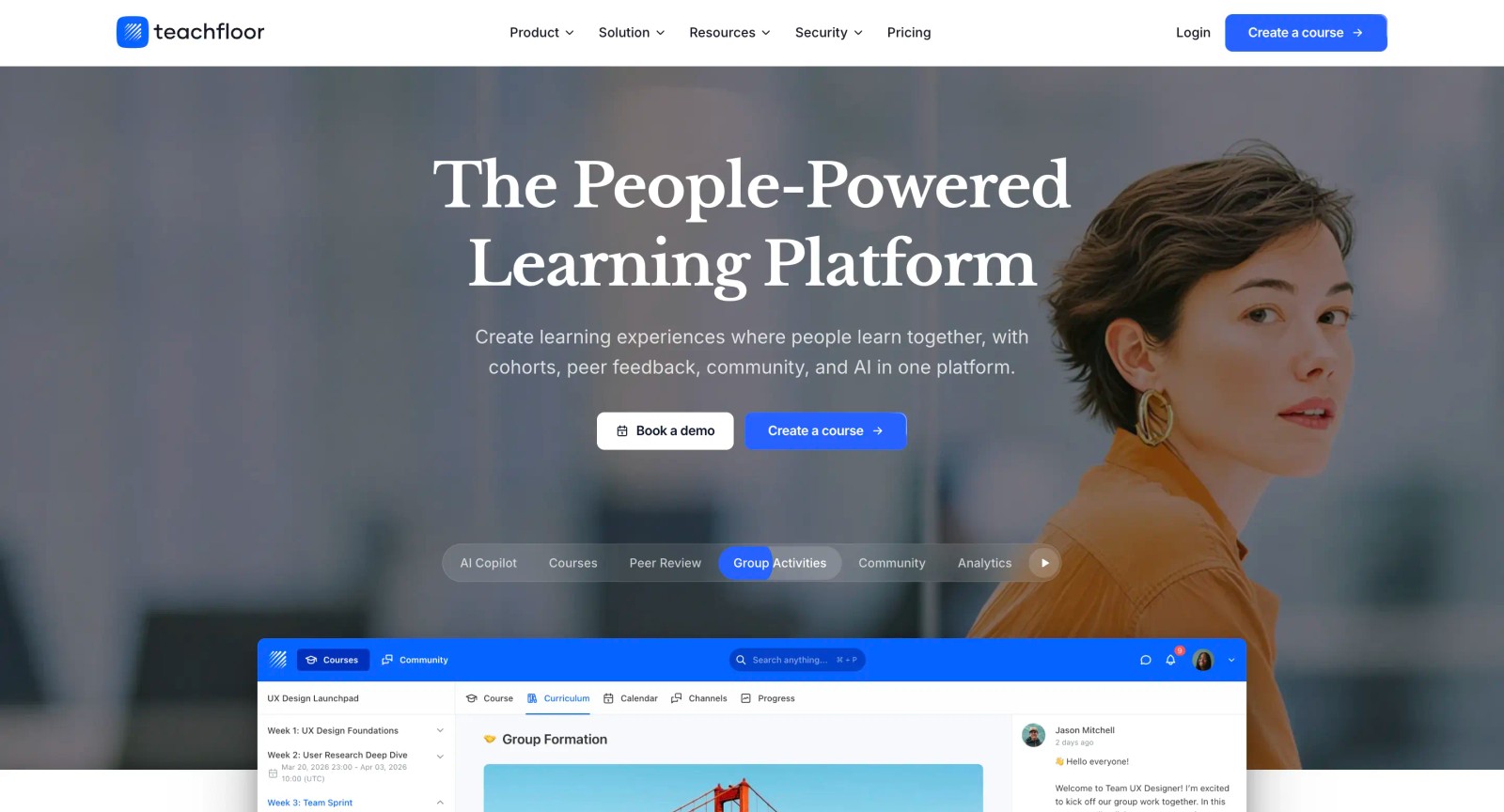
Teachfloor is a flexible learning platform built around the reality that logistics workers are rarely at a desk. Hazmat handling, warehouse safety, and DOT-style refreshers can run as self-paced modules a driver completes on a phone between routes, while a new distribution center intake can run as a live cohort with an instructor. Multi-branch workspaces let each site or region manage its own training and records while a network-wide roll-up gives central visibility. When a regulation or handling procedure changes, AI-assisted authoring speeds the updated module to the affected workforce, and SCORM support lets you import compliance content you already own.
Core Capabilities
- Mobile-accessible modules sized for completion between shifts, on a phone, without a desktop or company device
- Self-paced compliance modules with certificates for hazmat handling, warehouse safety, and similar topics where a missed update means fines
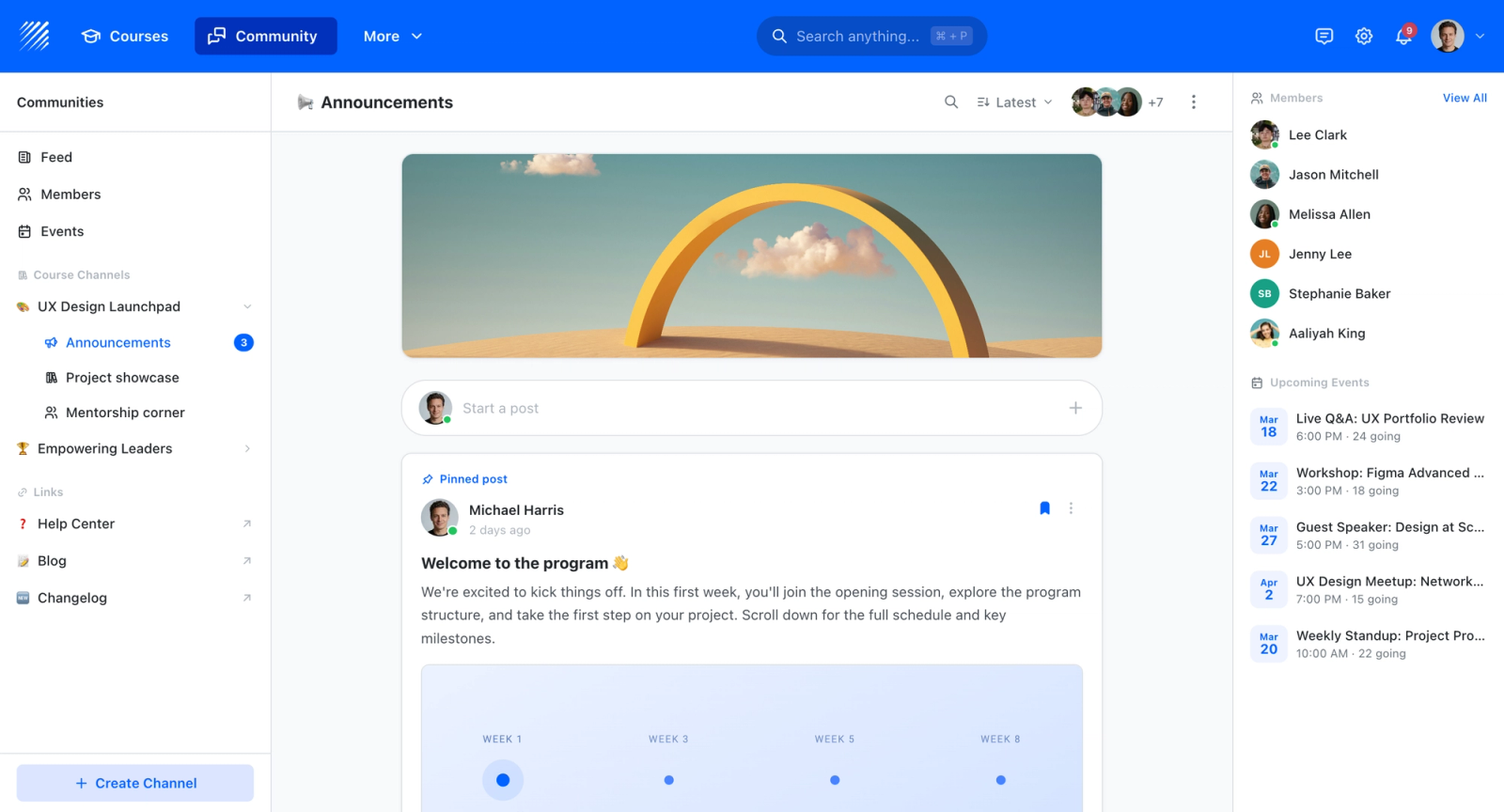
- Multi-branch workspaces so warehouses, DCs, and fleet regions manage their own training and records under one network-wide roll-up
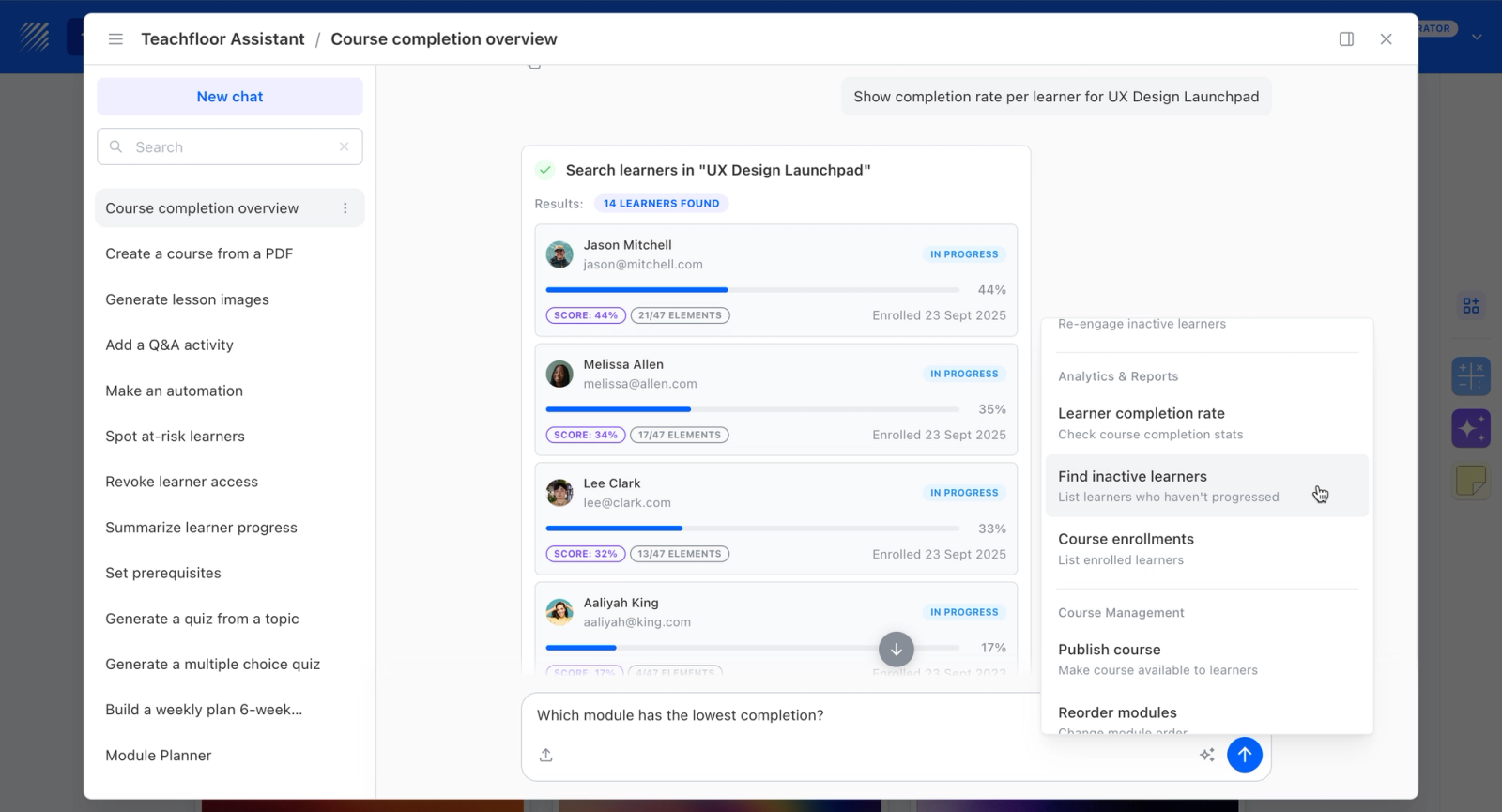
- AI-assisted authoring to push out an updated handling procedure or regulatory change fast across a distributed workforce
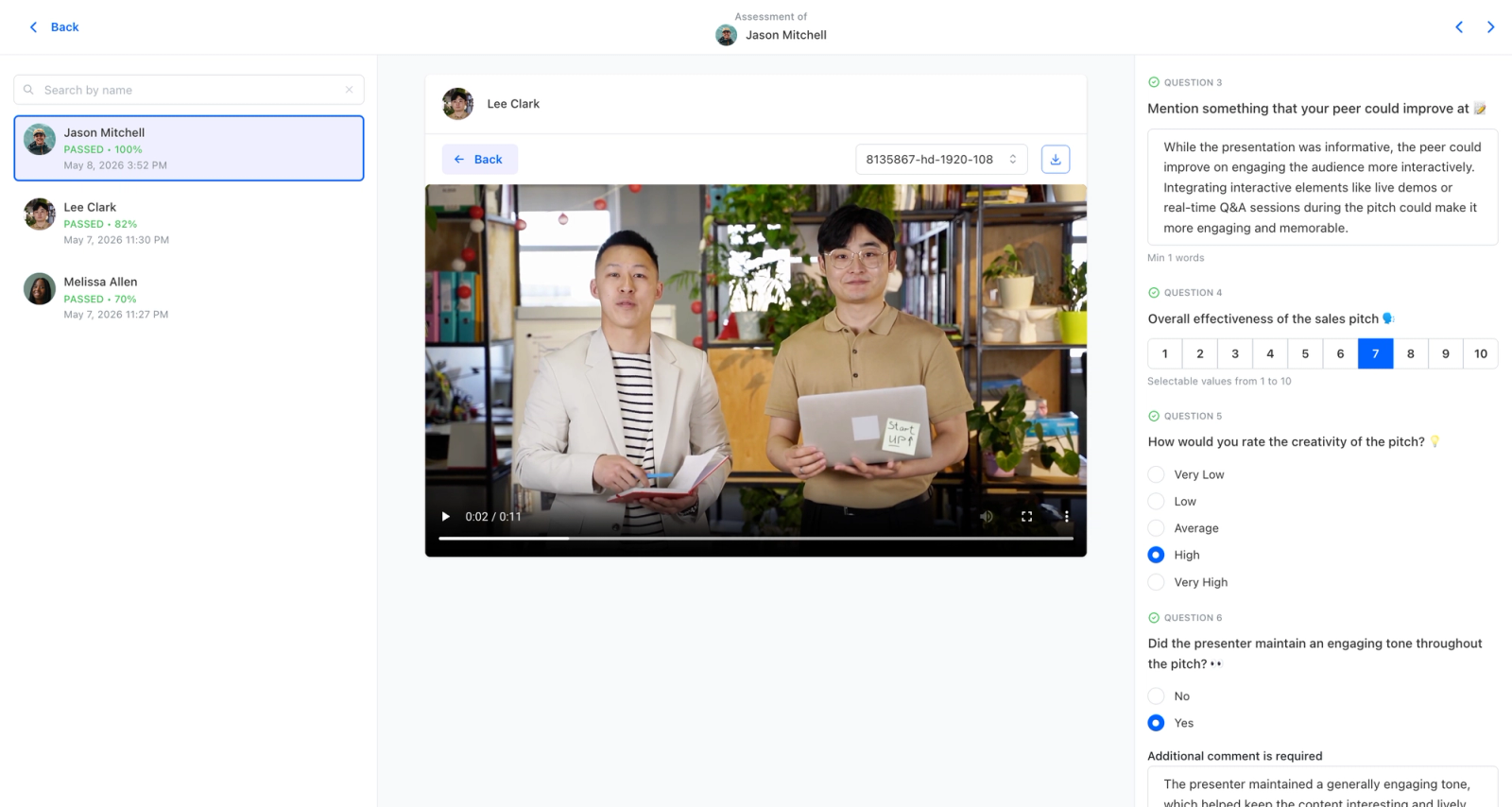
- SCORM support and analytics to import existing compliance courses and keep a verifiable completion record by site and worker
Best For
Logistics and supply-chain operators with a distributed, deskless workforce who need mobile compliance training and certification across many sites, managed separately but visible centrally.
Pricing Overview
- Startup plan from $89 per month for up to 50 learners
- Full Features plan with custom pricing, white-label, SSO, and advanced integrations
- 14-day free trial; no permanent free plan
- Nonprofit discounts available
Limitations
- No offline-first mode, which matters for drivers and remote yards with patchy connectivity; eduMe-style fully offline-tolerant delivery is not the design
- Not a frontline microlearning specialist, so if your model is short daily reinforcement bursts, a purpose-built deskless tool may fit closer
- No grandfathered free tier once the 14-day trial ends
Quick Comparison Insight
Mobile compliance training and certification for a deskless, multi-site logistics workforce with per-region records; less ideal where offline access or pure daily microlearning is the requirement.
TalentLMS
Overview
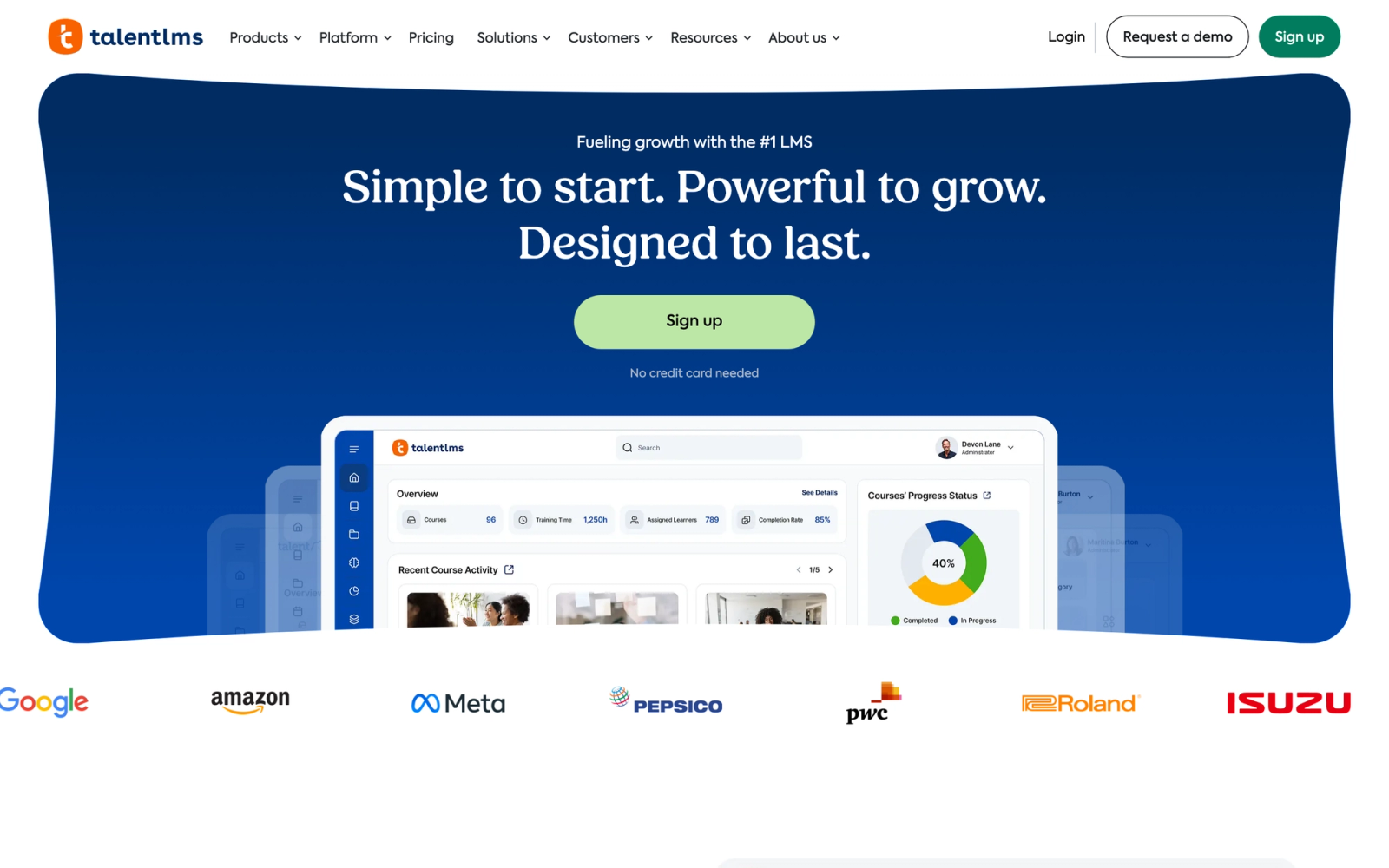
TalentLMS is a cloud-based learning management system built for speed of deployment. It positions itself as one of the most accessible LMS platforms on the market, and that reputation holds up. A working training course can be live within 30 minutes of account creation, faster than most platforms at this price point.
For logistics companies, TalentLMS works well as a starting point. It handles the fundamentals of corporate training without requiring a dedicated L&D team to configure it. The interface is clean, the learning curve is minimal, and the pricing stays manageable even as you add users. Where it falls short is in the depth of compliance tracking and the sophistication of its mobile experience compared to platforms purpose-built for deskless workers.
Core Capabilities
- Built-in course authoring with support for SCORM, xAPI, and cmi5 content packages
- Automated certification management with expiration tracking and renewal assignments
- Custom learning paths that sequence courses by role, department, or location
- Branch feature that lets you create separate training portals for different warehouses or regions
- Native video conferencing integration for live safety briefings and instructor-led sessions
- Gamification engine with points, badges, and leaderboards to drive completion rates
- Reporting dashboard with scheduled report delivery and exportable completion data
- REST API and integrations with Zapier, BambooHR, Salesforce, and other HR tools
- Multi-language support covering over 30 languages with custom language packs
- Single sign-on (SSO) via SAML 2.0 for smooth access across enterprise systems
Standout Strength
Companies choose TalentLMS because it removes the typical implementation barrier. There is no lengthy onboarding process, no required consulting engagement, and no minimum contract length on most plans. For logistics operations that need training running this quarter rather than next year, that speed is a practical differentiator.
Best For
Small-to-midsize logistics companies with 50 to 500 employees that need a functional LMS without a large L&D team or IT department to support it. Particularly strong for organizations standing up their first formal training program or replacing a manual, spreadsheet-based tracking process.
Pricing Overview
- Free plan available for up to 5 users and 10 courses
- Paid plans start at $89 per month (up to 40 users)
- Pricing scales based on active user count
- Custom enterprise pricing available for larger deployments
Limitations
- No native offline access for mobile learners, which limits usability in warehouses or vehicles with poor connectivity
- Compliance tracking covers the basics but lacks advanced features like digital signature capture and granular audit trail reporting
- Reporting is functional but not deep enough for organizations that need multi-dimensional analytics across dozens of locations
Quick Comparison Insight
Faster to deploy than any other platform on this list, but less specialized for frontline logistics workers than Axonify or eduMe. A strong generalist with trade-offs in compliance depth.
Absorb LMS
Overview
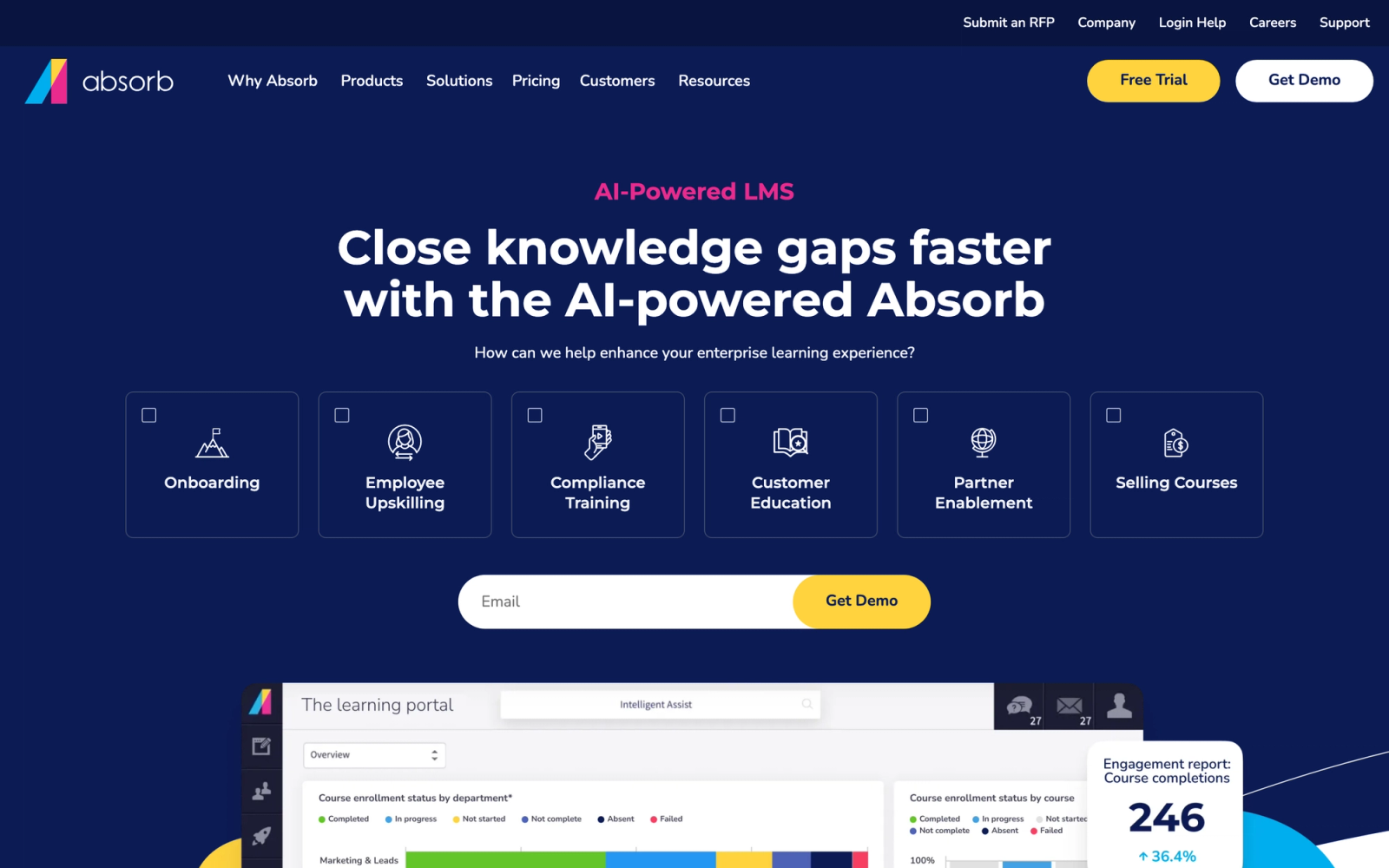
Absorb LMS sits in the mid-to-enterprise tier of the LMS market and has built a strong reputation among organizations that need to manage compliance-heavy training at scale. The platform blends a polished admin experience with the operational depth that logistics companies require.
Absorb handles the administrative complexity of large, distributed workforces better than most mid-market platforms. Department hierarchies, automated enrollment rules by role or location, and audit-ready compliance reports are all available without heavy custom configuration. The initial setup takes more time than TalentLMS, but the payoff is meaningfully more control over how training is structured and tracked.
Core Capabilities
- Intelligent Assist feature that uses AI to recommend admin actions and surface at-risk learners
- Advanced compliance engine with certification tracking, automated re-enrollment, and expiration alerts
- Absorb Infuse technology for embedding training directly into operational tools and workflows
- Native mobile app with offline content access and automatic sync when connectivity returns
- Observation checklists for in-person skill verification on warehouse floors or loading docks
- Custom reporting with scheduled delivery, dashboard widgets, and real-time data visualization
- Multi-tenant architecture for managing separate training environments by region or business unit
- E-commerce module for organizations that also sell training to partners or contractors
- SCORM, xAPI, and AICC content support with a built-in authoring tool (Absorb Create)
- Open API and pre-built integrations with Salesforce, ADP, BambooHR, and Workday
Standout Strength
Organizations choose Absorb LMS when they need compliance tracking that holds up under audit scrutiny. The combination of automated certification management, observation checklists for hands-on skills, and detailed audit trail reporting gives safety and compliance teams the infrastructure they need to prove training completion to regulators like OSHA or DOT.
Best For
Mid-to-large logistics and supply chain companies with 500 or more employees across multiple facilities that manage significant compliance requirements. Strong fit for organizations that need a single platform to handle both digital training and verification of hands-on skills in the field.
Pricing Overview
- Custom pricing based on number of learners and feature requirements
- No publicly listed starting price; requires a sales conversation
- Free demo available on request
Limitations
- Pricing is opaque and generally higher than mid-market alternatives, which can be a barrier for smaller logistics operations
- Initial setup and configuration require more time and planning than lighter platforms like TalentLMS
- The built-in authoring tool (Absorb Create) is functional but does not replace dedicated authoring software for complex interactive content
Quick Comparison Insight
More compliance depth than TalentLMS and stronger offline mobile capabilities, but at a higher price point and with a longer implementation timeline. A serious option for operations where audit readiness is a top priority.
SAP Litmos
Overview
SAP Litmos combines a learning management system with a built-in content library of over 2,000 courses, many covering topics directly relevant to logistics operations: workplace safety, forklift certification, HAZMAT handling, OSHA compliance, and supply chain fundamentals. That combination of platform and ready-made content is what distinguishes it from most competitors.
For logistics companies already operating within the SAP stack for ERP, warehouse management, or transportation management, SAP Litmos offers a natural integration path. But even outside the SAP stack, the platform stands on its own. The interface is straightforward, the mobile app supports offline learning, and the built-in content library can have a new logistics team running through compliance training on day one without any custom course development.
Core Capabilities
- Pre-built content library with 2,000+ courses including safety, compliance, and supply chain topics
- Automated learning paths with rule-based assignment triggered by role, department, or hire date
- Compliance tracking with certification management, automated renewals, and audit-ready reporting
- Native mobile app with offline playback for warehouse and field-based learners
- Built-in video assessment tools for recording and evaluating hands-on task demonstrations
- AI-powered content recommendations based on learner role and training history
- Custom branding and white-labeling for different business units or training audiences
- Integration with SAP SuccessFactors, Workday, and other HRIS platforms
- Support for SCORM 1.2, SCORM 2004, xAPI, and AICC content standards
- Task automation engine for assigning training based on triggers from connected HR systems
Standout Strength
The built-in content library is a genuine time-saver for logistics teams. Rather than building safety and compliance courses from scratch, training managers can deploy pre-built, professionally produced content covering the most common logistics training requirements. For organizations with lean L&D resources, this eliminates weeks of content development.
Best For
Mid-to-large logistics companies with 300 or more employees that need a combination of LMS functionality and ready-made training content. Particularly strong for organizations in the SAP stack or those without a dedicated instructional design team to create custom courses.
Pricing Overview
- Pricing is per user per month, with volume discounts for larger deployments
- Starts at approximately $6 per user per month for the platform tier
- Content library access may be bundled or priced separately depending on the plan
- Free trial available
Limitations
- The admin interface, while functional, feels less modern than competitors like Absorb or Docebo and can require more clicks for routine tasks
- Reporting customization is adequate but does not match the depth of enterprise-focused analytics in Absorb or Docebo
- Some of the pre-built content may require supplementation with company-specific procedures and policies
Quick Comparison Insight
The strongest out-of-the-box content library in this list, which reduces time to launch. Less configurable than Absorb or Docebo for complex, multi-site training architectures, but a faster path to having training live.
Docebo
Overview
Docebo is an enterprise learning platform that has invested heavily in AI-driven automation across the training lifecycle. It handles content discovery, learner recommendations, automated enrollment, and analytics with a level of intelligence that most LMS platforms in this list do not attempt.
For large logistics operations, Docebo's value proposition centers on reducing administrative overhead. When you manage training across thousands of employees in dozens of facilities, the manual work of assigning courses, tracking completions, and chasing overdue certifications becomes a full-time job. Docebo's automation layer handles much of that. The platform also supports extended enterprise training, which matters for logistics companies that need to train third-party carriers, warehouse partners, or contract drivers through a separate portal.
Core Capabilities
- AI-powered content tagging, learner skill gap analysis, and personalized learning recommendations
- Deep compliance automation with certification tracking, escalation workflows, and audit logs
- Extended Enterprise module for training external partners, contractors, and suppliers
- Multi-domain architecture for running separate branded learning portals per region or business unit
- Docebo Flow for embedding learning directly into workplace applications and operational tools
- Social learning features including content sharing, expert Q&A, and peer-contributed knowledge
- Strong API stack with over 400 integrations including Salesforce, Workday, and Microsoft Teams
- Mobile app with offline access, push notifications, and QR code-triggered training
- Advanced analytics dashboards with custom report builder and scheduled exports
- Virtual classroom integrations with Zoom, Webex, and Microsoft Teams for blended training programs
Standout Strength
Companies choose Docebo when the scale of their training operation demands automation. The AI engine does not just recommend content; it identifies skill gaps, predicts compliance risk, and automates the enrollment workflows that would otherwise require manual intervention. For logistics companies with thousands of workers and dozens of certification requirements, that automation translates directly into headcount savings on the admin side.
Best For
Enterprise logistics and supply chain organizations with 1,000 or more employees that need to automate complex training operations across internal teams and external partners. Strong fit for companies managing training programs that span multiple business units, geographies, and third-party relationships.
Pricing Overview
- Custom enterprise pricing; no publicly listed per-user rates
- Pricing depends on number of active users, modules selected, and deployment complexity
- Free demo available; contracts are typically annual
Limitations
- The platform's depth means a longer implementation cycle, often 8 to 12 weeks for enterprise deployments
- Pricing places it beyond the reach of smaller logistics operations; this is an enterprise investment
- The breadth of features can feel overwhelming for teams with simpler training needs who do not require AI-driven automation
Quick Comparison Insight
More powerful and automated than any other platform on this list, but with a corresponding increase in cost and implementation effort. If your logistics operation is large enough to justify it, Docebo reduces the ongoing admin burden in ways that simpler platforms cannot.
Axonify
Overview
Axonify was built from the ground up for frontline workers, and that focus shows in every aspect of the platform. Unlike traditional LMS platforms that adapt desktop-first designs for mobile use, Axonify starts with the assumption that the learner is standing in a warehouse, working a shift, and has three to five minutes between tasks.
The platform uses microlearning, spaced repetition, and gamification to deliver training in short, daily sessions. For logistics operations struggling with low completion rates on traditional eLearning, Axonify takes a fundamentally different approach. It is not a content library that employees are assigned to complete; it is a daily training habit that adapts to each learner's knowledge gaps and reinforces critical information over time.
Core Capabilities
- Adaptive microlearning engine that delivers personalized 3 to 5 minute daily training sessions
- Spaced repetition algorithm that reinforces knowledge based on individual retention patterns
- Built-in gamification with daily challenges, rewards, and leaderboards to drive engagement
- Compliance tracking with certification management and automated re-enrollment triggers
- In-app communication tools for pushing critical safety updates and operational announcements
- Task verification feature for confirming hands-on procedural compliance on the floor
- Detailed analytics linking training completion to operational KPIs like safety incidents or error rates
- Mobile-first design with an app that works on personal devices and shared kiosks
- Content marketplace with pre-built logistics and safety topics available for immediate deployment
- Integration with HRIS platforms for automated user provisioning and role-based assignment
Standout Strength
Axonify's core advantage is behavior change, not just content delivery. The combination of daily microlearning, adaptive algorithms, and direct ties between training data and operational outcomes gives logistics managers something most LMS platforms do not: measurable evidence that training is actually reducing errors, safety incidents, or procedural non-compliance on the warehouse floor.
Best For
Logistics and distribution companies with large frontline workforces (500 or more hourly workers) that struggle with low training engagement on traditional LMS platforms. Ideal for organizations that need to reinforce safety protocols, standard operating procedures, and compliance knowledge through daily repetition rather than annual eLearning modules.
Pricing Overview
- Custom pricing based on number of frontline users
- No publicly listed per-user rate; requires a sales consultation
- Free demo and pilot program options available
Limitations
- Not designed for long-form training, certifications that require extended coursework, or instructor-led programs
- The microlearning-only approach may not cover all training needs; some logistics roles require deep procedural training that short sessions cannot fully deliver
- Pricing is positioned for enterprise frontline operations and may not be accessible for smaller logistics companies
Quick Comparison Insight
The opposite of a traditional LMS. Where platforms like Absorb or Docebo manage structured courses and certifications, Axonify focuses on daily knowledge reinforcement for frontline workers. Many large logistics operations use Axonify alongside a traditional LMS rather than as a replacement.
iSpring Learn
Overview
iSpring Learn pairs a clean, straightforward LMS with iSpring Suite, one of the most capable PowerPoint-based authoring tools on the market. For logistics companies that already create training materials in PowerPoint, this combination eliminates the friction of converting slides into interactive eLearning content.
The LMS itself is uncomplicated in the best sense. It focuses on reliable course delivery, progress tracking, and compliance management without trying to compete with enterprise platforms on AI-driven automation or with frontline tools on microlearning. The admin interface is straightforward enough that training managers without prior LMS experience can assign courses to groups and pull completion reports in minutes.
Core Capabilities
- Direct integration with iSpring Suite for converting PowerPoint presentations into interactive SCORM courses
- Role-play simulations and dialogue training for practicing customer-facing or safety scenarios
- Automated training assignments based on department, role, job title, or hire date
- Certification tracking with automatic re-enrollment when certifications approach expiration
- Mobile app with offline content access for learners in low-connectivity environments
- Built-in quiz and assessment engine with randomized question pools and timed assessments
- Organizational structure mirroring for managing training across departments and locations
- Calendar-based scheduling for instructor-led training sessions and live webinars
- Detailed learner progress reports with completion rates, quiz scores, and time-spent metrics
- SCORM 1.2, SCORM 2004, xAPI, and cmi5 content standard support
Standout Strength
The PowerPoint-to-eLearning pipeline is iSpring's competitive edge. Logistics companies often have subject matter experts who create training content in PowerPoint because that is what they know. iSpring Suite converts those presentations into interactive courses with quizzes, branching scenarios, and mobile-compatible formatting without requiring the SME to learn a new authoring tool.
Best For
Small-to-midsize logistics companies with 100 to 1,000 employees where training content is primarily created by operations managers or safety officers in PowerPoint. A strong fit for teams that want to produce professional eLearning content without hiring instructional designers or purchasing a separate authoring tool.
Pricing Overview
- iSpring Learn starts at $3.70 per user per month (billed annually, 100-user tier)
- iSpring Suite authoring tool is priced separately, starting at $770 per author per year
- Bundle pricing available when purchasing both the LMS and authoring tool together
- 30-day free trial available for both products
Limitations
- The LMS is less configurable than enterprise platforms like Absorb or Docebo for complex multi-site training architectures
- No native AI-driven features for content recommendations or automated skill gap analysis
- The full value of the platform depends on purchasing iSpring Suite separately, which adds to the total cost of ownership
Quick Comparison Insight
The most accessible content creation pipeline of any platform in this list. Less sophisticated than Docebo or Absorb for enterprise-scale administration, but significantly easier for operations teams to create and update training content without L&D support.
eduMe
Overview
eduMe is a training platform designed specifically for deskless and frontline workers. The entire experience is built around the assumption that your learner is on a mobile phone, has limited time, and may not have company email. Training is delivered through shareable links, QR codes, or embedded within workforce management apps, removing the typical login and access barriers that plague traditional LMS adoption with frontline teams.
For logistics companies, eduMe addresses one of the most persistent training challenges: actually getting hourly workers to complete training. By eliminating app downloads, login credentials, and lengthy course modules, eduMe cuts the friction between training assigned and training completed more directly than traditional LMS platforms.
Core Capabilities
- Passwordless access via magic links, QR codes, or deep links embedded in messaging apps
- Microlearning lesson builder optimized for mobile-first, short-form content delivery
- Embedding within workforce platforms like Workday, Fountain, Beekeeper, and UKG via deep links and native integrations
- Knowledge checks and assessments integrated directly into lesson flows
- Automated training assignment triggered by workforce management system events (hire, role change)
- Multi-language content support with automatic language detection based on device settings
- Real-time completion dashboards with filtering by team, location, and manager
- Video-based learning support with in-app video recording for learner submissions
- NPS and feedback surveys integrated into training completion flows
- API-based integration for connecting with HRIS, WMS, and custom internal systems
Standout Strength
eduMe removes every barrier between a frontline worker and their training. No downloads, no passwords, no desktop required. For logistics operations where the biggest problem is not content quality but training access and completion rates among hourly workers, eduMe solves the distribution problem that traditional LMS platforms struggle with.
Best For
Logistics companies with large hourly or contract workforces (delivery drivers, warehouse associates, gig workers) that need to push training quickly with minimal friction. Particularly effective for high-turnover environments where traditional LMS onboarding is too slow and completion rates on standard eLearning platforms are low.
Pricing Overview
- Custom pricing based on number of active learners per month
- No publicly listed per-user rate
- Free demo and pilot programs available
Limitations
- Not designed for long-form certification training or courses that require extended seat time and proctored assessments
- Compliance tracking features are more basic than dedicated compliance-focused platforms like Absorb or SAP Litmos
- The platform's simplicity means fewer administrative controls and less configurability for complex training structures
Quick Comparison Insight
Solves the engagement and access problem for frontline logistics workers better than any traditional LMS, but does not replace a full compliance management platform. Many logistics companies use eduMe for onboarding and daily training while maintaining a separate system for formal certifications.
How to Choose the Right LMS for Your Logistics Operation
The eight platforms above cover a wide range of training needs, and the right choice depends on your specific operational context. Rather than ranking them generically, here is how to match your situation to the right tool.
If compliance management is your primary concern, Absorb LMS and SAP Litmos are the strongest options. Both offer deep certification tracking, audit-ready reporting, and the administrative controls that safety and regulatory teams need. Absorb gives you more configurability; SAP Litmos gives you a faster start with its built-in content library.
If your biggest challenge is getting frontline workers to actually complete training, Axonify and eduMe take fundamentally different approaches to the same problem. Axonify uses daily microlearning to build a training habit over time. eduMe removes every access barrier to maximize completion on individual training assignments. Both work well for large hourly workforces, and some organizations use them together.
If you need to get a training program running quickly with limited L&D resources, TalentLMS and iSpring Learn offer the fastest paths. TalentLMS is the simpler, more generalist option. iSpring Learn is the better choice if your training content lives in PowerPoint and you want to convert it into interactive eLearning without hiring a designer.
If you manage a large, complex logistics operation with thousands of employees, Docebo's AI-driven automation reduces the administrative workload that comes with enterprise-scale training management. The investment is higher, but the automation pays for itself when you are managing certifications, compliance, and training assignments across many sites.
If your training need involves structured, instructor-led programs for leadership development, cross-functional workshops, or partner certification, Teachfloor fills a gap that traditional LMS platforms are not designed for. It is not a replacement for compliance training infrastructure, but a complement for programs that require active participation and collaboration.
Consider running pilot programs with two or three platforms before committing. Most of these vendors offer free trials or demos, and a two-week pilot with a real team at a real facility will tell you more than any feature comparison chart. Pay attention to adoption and completion rates during the pilot; those metrics reveal more about platform fit than any demo can.
FAQ
Can a general-purpose LMS work for logistics training?
It can, but you will likely need to supplement it. General-purpose platforms handle course delivery and basic tracking well. Where they often fall short is in the logistics-specific details: offline mobile access for warehouse workers, deep compliance tracking with certification expiration management, integration with WMS or TMS systems, and multilingual support for diverse frontline teams. The platforms in this list address those gaps to varying degrees.
How important is mobile and offline access for logistics training?
For any organization with frontline, deskless workers, it is critical. Warehouse associates, drivers, and distribution center staff rarely have consistent desktop access or reliable Wi-Fi during their shifts. Platforms like Absorb LMS, SAP Litmos, Axonify, and iSpring Learn offer offline mobile access that syncs completion data when connectivity returns. If your workforce is primarily desk-based, this matters less.
Should we build custom training content or use a pre-built library?
Most logistics companies need both. Pre-built content libraries like the one in SAP Litmos cover general safety, compliance, and soft skills topics well. But company-specific procedures, site-specific safety protocols, and proprietary operational processes require custom content. A platform like iSpring Learn makes custom content creation accessible to non-designers, while Docebo and Absorb support importing content built in external authoring tools.
What is the typical implementation timeline for a logistics LMS?
It varies significantly by platform. TalentLMS can be operational within a week for smaller deployments. iSpring Learn and SAP Litmos typically take two to four weeks. Enterprise platforms like Absorb LMS and Docebo often require 8 to 12 weeks for full implementation, including integration setup, content migration, and administrator training. Plan for a pilot phase at one facility before rolling out across your full operation.
How do we measure the ROI of logistics training?
The most direct metrics are reductions in safety incidents, compliance violations, and operational errors after training deployment. Track these alongside completion rates and assessment scores. Platforms like Axonify are specifically designed to correlate training data with operational KPIs. For broader measurement, compare onboarding time-to-productivity for new hires before and after implementing structured training. The cost of a single workplace injury or regulatory fine often exceeds the annual cost of an LMS, which makes the ROI case straightforward when the data supports it.


