

Choosing the right LMS isn’t easy. You scroll through websites, watch demos, and after a while, everything starts to sound the same. Every platform claims to be “intuitive” and “powerful,” but once you dive in, the differences really start to show.
Tovuti and Brightspace are two names you’ll keep running into, and for good reason. Both are well-built, both have loyal users, and both solve very different problems. I’ve spent plenty of time inside each platform in testing, tweaking, breaking things, fixing them again, and I can tell you they have completely different personalities.
This article walks you through what those differences actually feel like in real use. You’ll get the real picture of what works, what doesn’t, and where each platform shines. And if neither fits perfectly, I’ll also share a third option that quietly combines the best parts of both: Teachfloor. It’s the LMS that manages to be simple without being shallow, and smart without being overwhelming.
Inside Tovuti
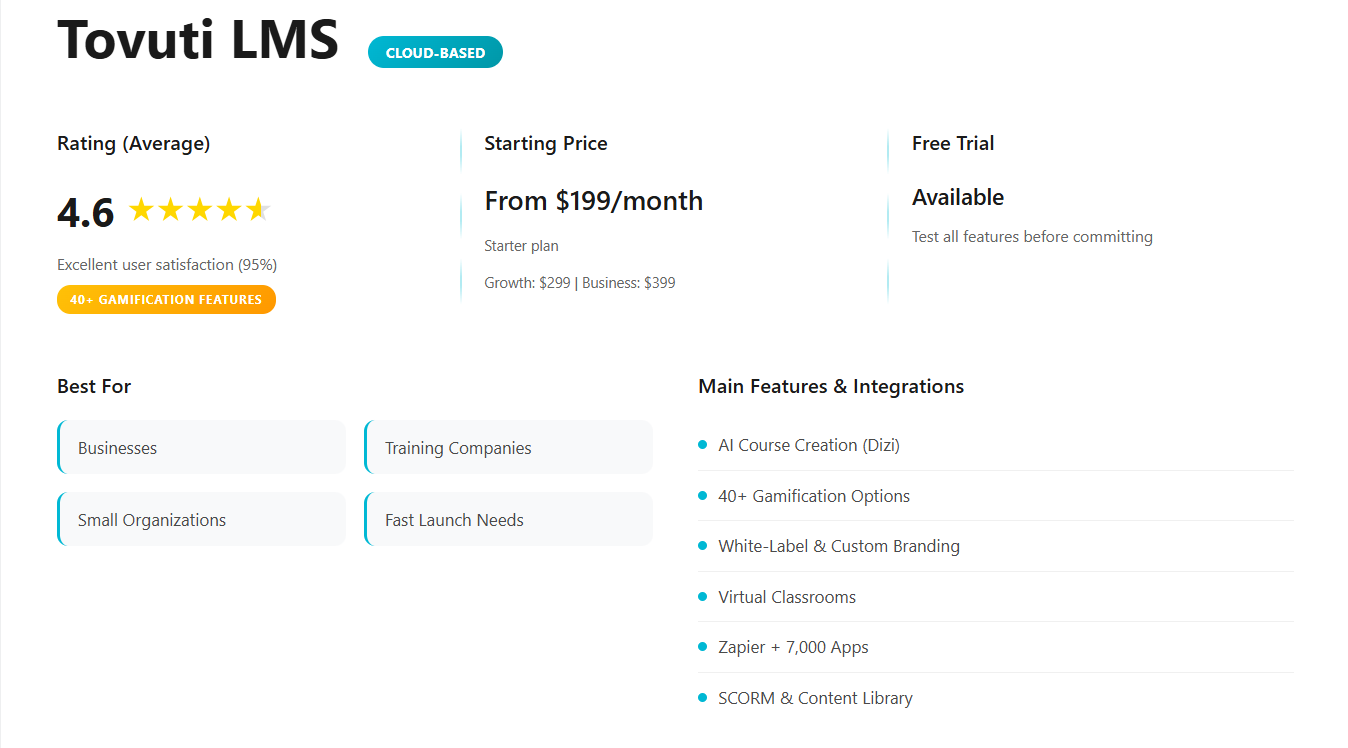
Tovuti is a modern, cloud-based LMS built for teams that want to move fast. It’s popular among businesses, training companies, and smaller organizations that care about engagement but don’t want to spend months setting up an LMS. The platform focuses on ease of use and interactivity, blending gamified elements with flexible course creation.
Tovuti feels light and approachable. Teams that want to launch training without a long technical setup tend to reach operational status quickly on this platform.
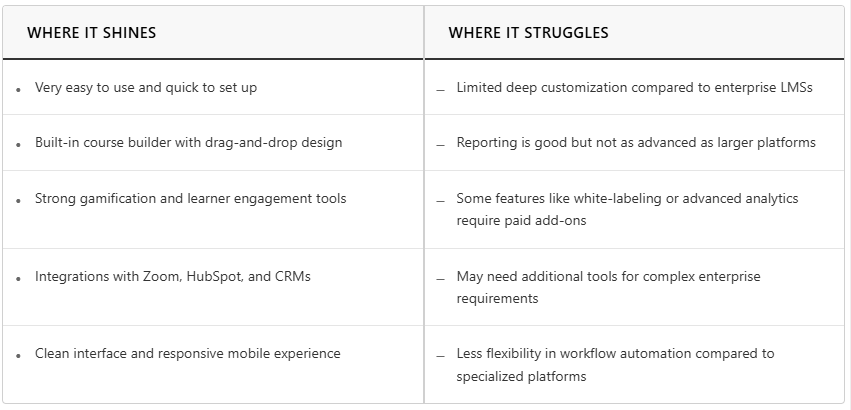
Where it shines and where it struggles
Inside Brightspace
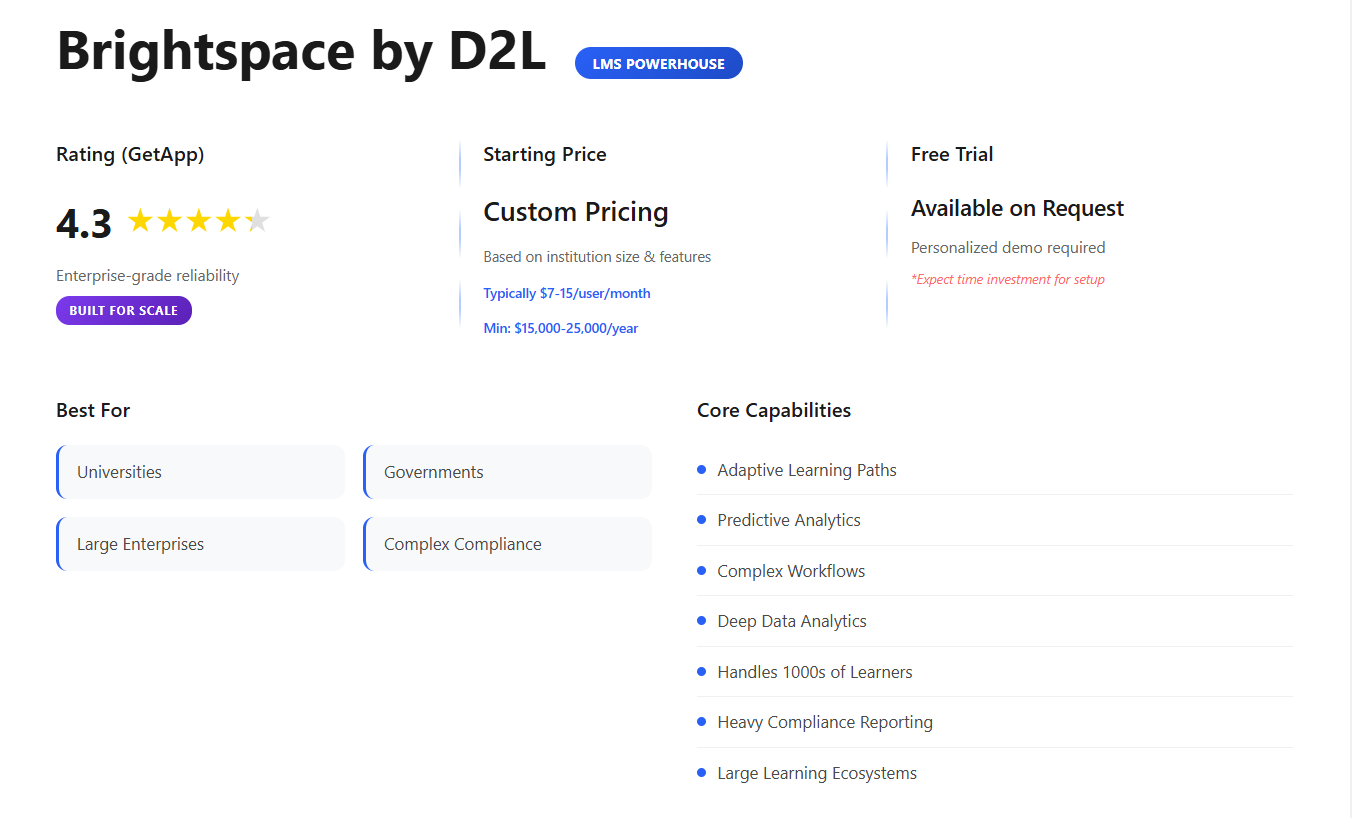
Brightspace by D2L is the powerhouse of the LMS world. It’s designed for universities, governments, and large enterprises that need precision, compliance, and deep data analytics. It takes longer to learn, but once you do, it’s incredibly capable. The system supports adaptive learning paths, predictive analytics, and complex workflows for large learning stacks.
Brightspace is built for scale. Organizations that need to support thousands of concurrent learners, meet strict compliance requirements, or run sophisticated reporting workflows will find it capable, but the implementation demands real time and budget investment.
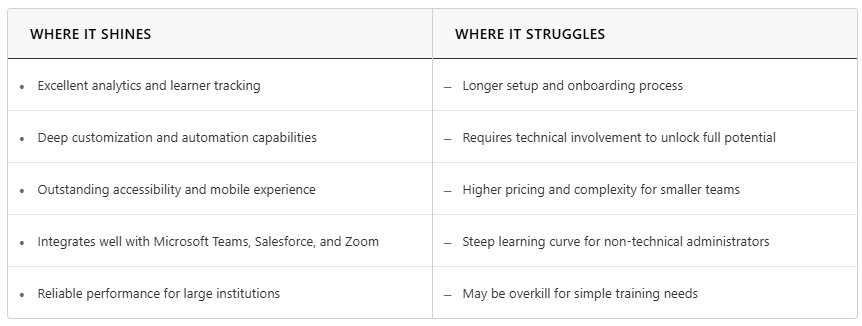
Where it shines and where it struggles
Tovuti vs Brightspace: Course Building
If you’ve ever tried building a course in both platforms, you’ll notice the difference within minutes.
Tovuti feels like a tool made for someone who wants to get things done fast. You log in, click “Create Course,” and before you know it, you’re dragging in videos, adding a quick quiz, and tweaking the layout without touching a single line of code. It’s built for trainers, not technicians. You can pull in SCORM or xAPI files easily, or just upload your own content straight from your desktop.
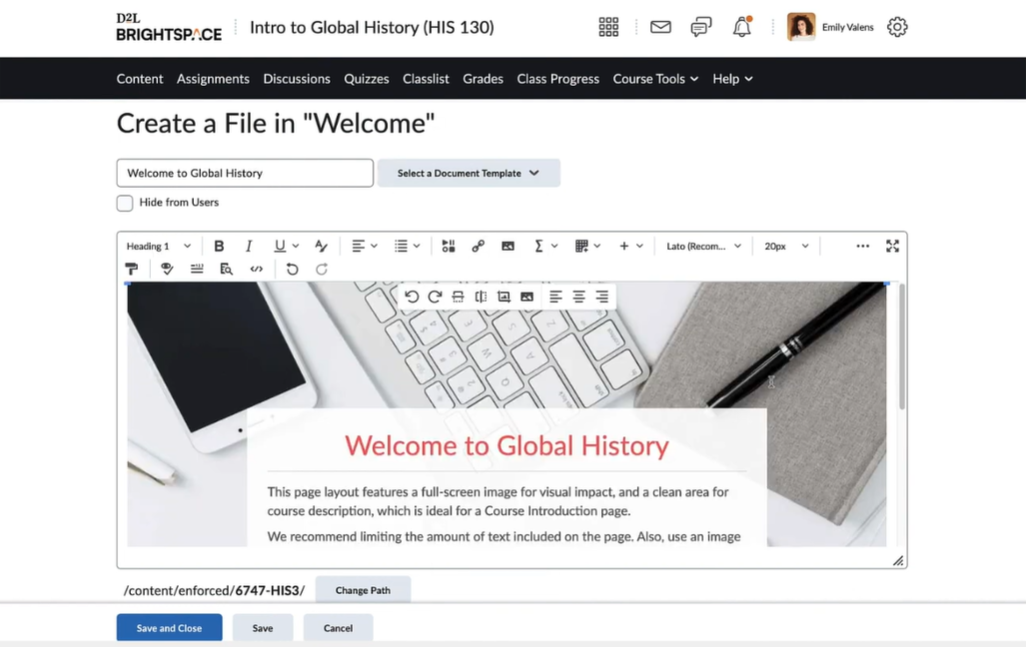
Brightspace, on the other hand, feels heavier but more deliberate. It’s not trying to be quick, it’s trying to be precise. The authoring tools are deeper, built around structured learning paths and outcomes. You can create adaptive learning rules, set release conditions (“show this unit only after 85% quiz score”), and even tie everything back to competencies.
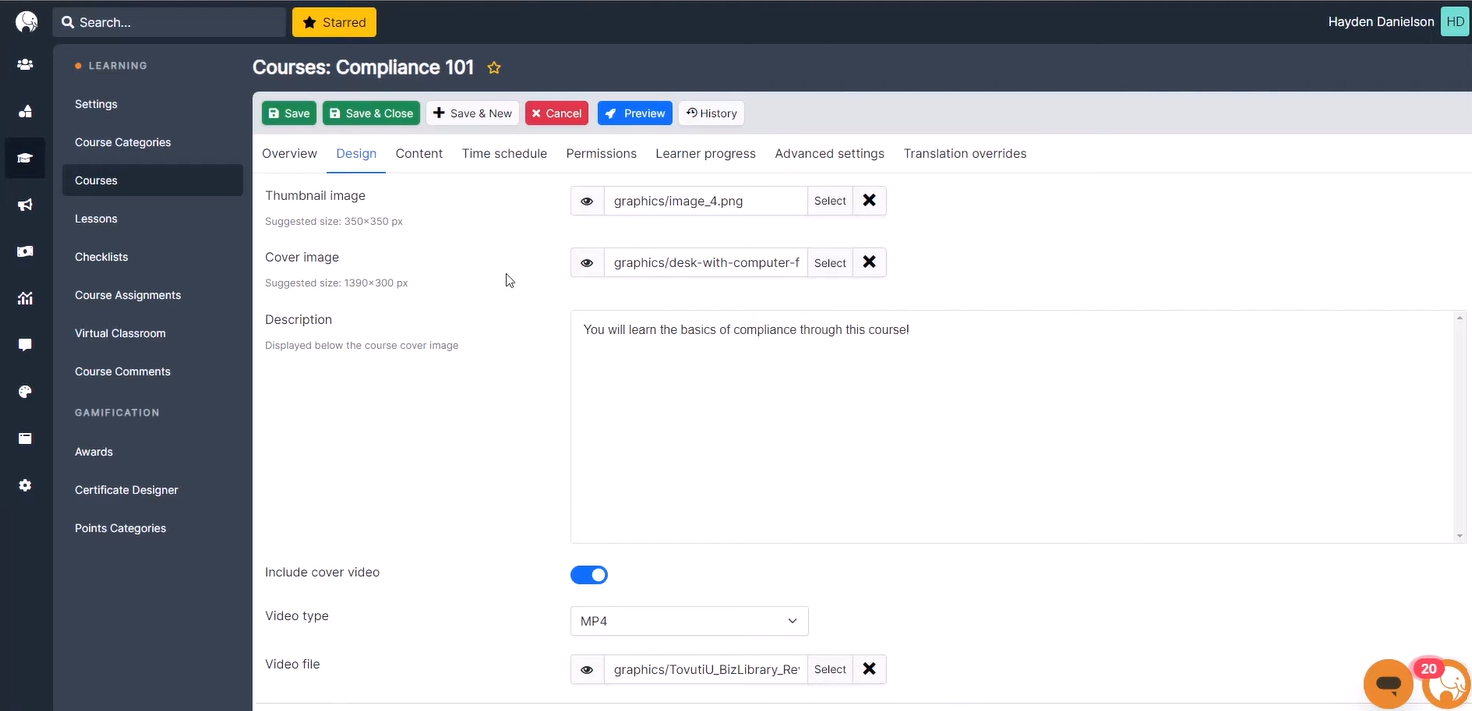
If Tovuti is like Canva for course creators, Brightspace is more like Adobe InDesign. One gets you publishing fast; the other gives you surgical control.
Tovuti vs Brightspace: Engagement & Gamification
This is where Tovuti gets fun. It wants your learners to feel like they’re playing.
You can set up leaderboards, challenges, and points within minutes. In testing, it resembled a mobile game: people log in just to see if they’ve climbed up the ranks.
Brightspace takes a more academic path here. It’s less about “gamification” and more about personalized learning journeys.
- You can automate content adjustments so if a learner struggles on one quiz, they get extra resources next time.
- You can trigger custom messages, encouragement, nudges, or even gentle reminders.
- Discussions and peer feedback threads feel natural, not bolted on.
If you’re training a sales team or onboarding new hires, Tovuti’s engagement tools feel instantly rewarding. If you’re running a semester-long course with 300 students, Brightspace’s intelligent agents and adaptive design win every time.
Tovuti vs Brightspace: Assessments & Analytics
Tovuti gives you the essentials with clean, visual dashboards and easy quiz builders. You can see who’s completed what, how long they took, and export it all with a click. For small and mid-sized teams, it’s perfect. You don’t need a data analyst to figure out what’s going on.
Brightspace? It’s another level. I’ve seen institutions use its analytics to spot when students are about to disengage before they actually drop off. The predictive analytics engine measures activity patterns, quiz performance, and even forum participation. It’s almost eerie how accurate it gets.
Where Tovuti gives you clarity, Brightspace gives you foresight. The difference is like reading a report versus running a forecast. Both have their place, one helps you react fast, the other helps you plan ahead.
Tovuti vs Brightspace: Integrations
Integrations tell you how well an LMS plays with the rest of your digital world.
With Tovuti, setup is painless. You can connect Zoom or Teams, sync data with HubSpot or Salesforce, and plug in payment gateways if you sell courses. It’s built for business and it behaves like it. You don’t need IT approval for every connection; most things just work out of the box.
Brightspace integrates at a more enterprise level. If you’re in higher ed or a corporate giant, this is where it shines. It ties into student information systems, HRIS platforms, and supports deep API and LTI integrations. But it does take planning, you’ll probably involve your IT team to get it humming smoothly.
In short:
- Tovuti → Quick, plug-and-play, great for smaller tech stacks
- Brightspace → Complex, enterprise-grade, built for big stacks
Tovuti vs Brightspace: Mobile & Accessibility
Mobile access is one of those things you don’t think about until you need it, like trying to approve a quiz from your phone five minutes before a meeting.
Tovuti’s responsive interface does a solid job. Everything scales nicely, and learners can complete modules or watch videos without frustration. It’s clean, easy to use, and does exactly what you need.
Brightspace goes deeper with its dedicated mobile app. It’s not just a mini version of the desktop site. It’s optimized for learning on the move. Learners can download lessons for offline access, submit assignments, or receive push notifications for due dates.
Accessibility is another area where Brightspace leads. It adheres tightly to WCAG and ADA guidelines, meaning it’s ready for learners with visual, auditory, or mobility needs right out of the box.
Tovuti handles common accessibility requirements adequately, but Brightspace builds WCAG and ADA compliance into the platform architecture rather than treating it as an add-on, which matters significantly for public institutions and organizations subject to accessibility regulations.
Tovuti vs Brightspace: Ease of Use and Implementation
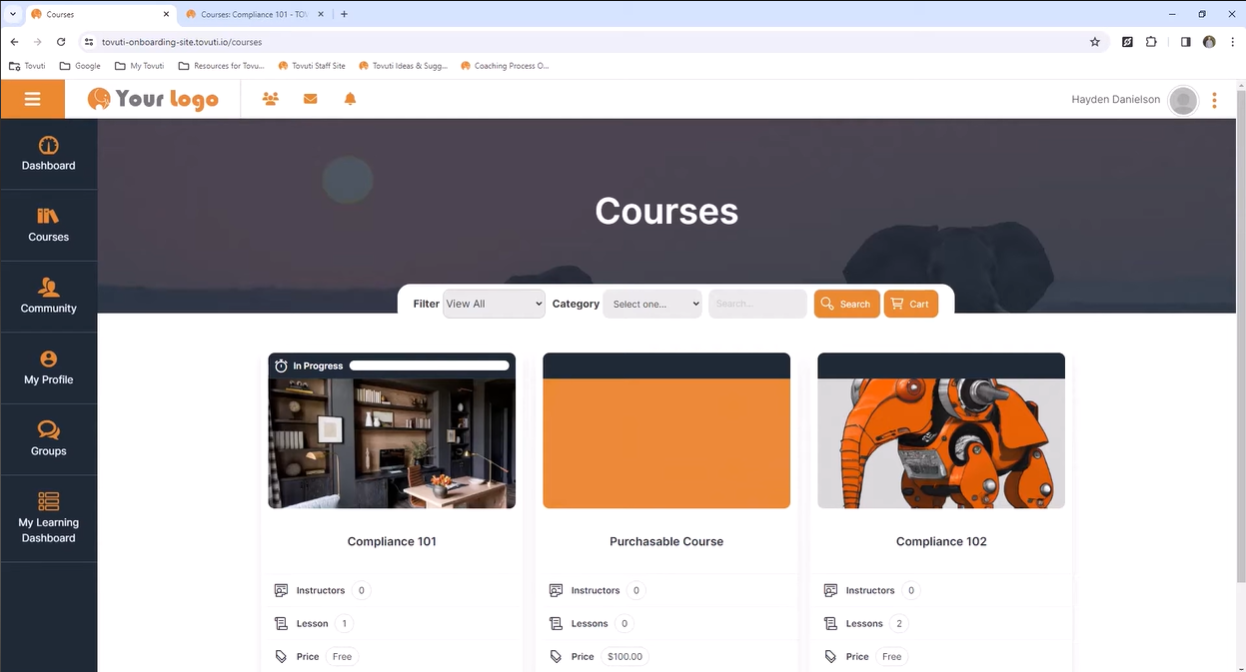
Tovuti feels effortless. You log in and somehow, everything just clicks. I’ve seen people build their first course before they even finish their coffee. The drag-and-drop layout, clean dashboard, and quick setup mean most teams are running within a couple of weeks. It’s simple in the best way, you don’t need IT, you just get started.
Brightspace, though, takes patience. It’s not confusing, just… layered. The setup can stretch a few months if you’re syncing systems or tailoring every rule. But once it’s tuned, it’s brilliant. You can automate learning paths, personalize lessons, and track almost anything. It’s the difference between a ready-to-drive car and a custom-built engine.
Tovuti is quick and intuitive, while Brightspace takes longer to learn but rewards you with unmatched control once mastered.
Tovuti vs Brightspace: Customer Support and Reliability
Tovuti’s support feels personal. You message them, and a real person replies fast, often with screenshots or quick fixes. It’s friendly, human, and easy to trust. The platform itself stays stable with rare downtime.
Brightspace runs tighter, ticket-based, professional, and dependable. It’s built for institutions that need 24/7 reliability. You might not get small-talk, but you’ll get fast resolutions and near-perfect uptime. It’s not cozy, but it’s rock solid.
Tovuti feels personal and approachable; Brightspace delivers enterprise-level precision and round-the-clock reliability.
Tovuti vs Brightspace: Pricing and Value for Money
Before comparing the numbers, it’s worth looking at how both platforms think about pricing.
Tovuti
When it comes to tovuti pricing, it is refreshingly straightforward. It’s not “cheap,” but it’s fair, you know what you’re getting for what you pay.
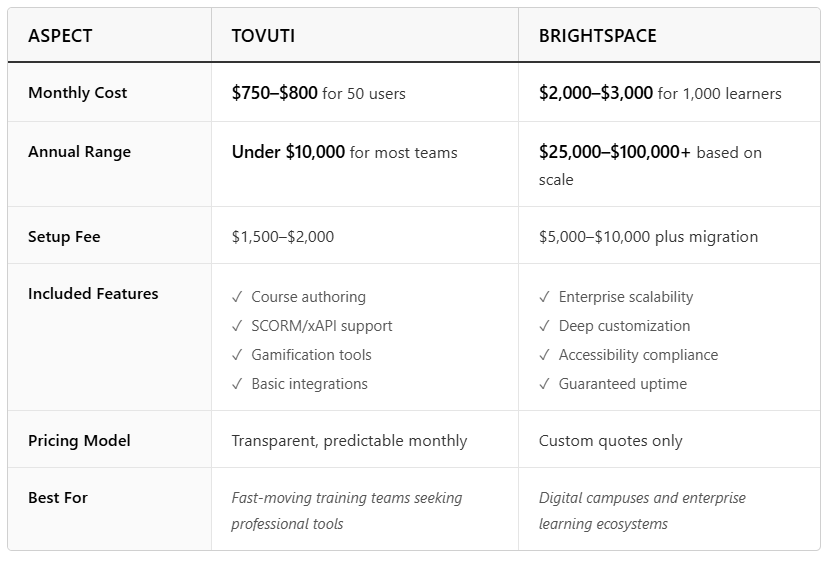
It usually starts around $750, $800 per month for about 50 active users, with a setup fee that sits in the $1,500, $2,000 range. That’s your foundation, and it’s enough to get fully operational.
Here’s what you get out of the box:
- Hosting and built-in course authoring
- SCORM/xAPI support
- Gamification tools (leaderboards, badges, points)
- Integrations with Zoom, Teams, HubSpot, and more
If you add on advanced analytics, eCommerce, or white-label branding, the total goes up but it still tends to stay under $10,000 per year for most small to mid-sized teams.
Tovuti feels like that solid, dependable subscription that never surprises you on your invoice. It’s perfect for teams that want professional-grade tools without paying enterprise rates.
Brightspace
Brightspace pricing plays in a different league. You won’t find a price list on their site, every quote is custom. But after years of seeing their deals in action, the numbers are usually in this range:
- Around $25,000, $35,000 per year for roughly 1,000 learners
- Larger deployments (corporate or university scale) can hit $100,000+ annually
- Setup and migration typically cost an extra $5,000, $10,000
It’s a big spend, but that’s because Brightspace is built for big operations. You’re paying for scalability, deep integrations, accessibility compliance, and guaranteed uptime.
If Tovuti is the smart choice for fast-moving training teams, Brightspace is the kind of system you commit to when you’re running a digital campus or enterprise learning stack.
Highlight: Tovuti wins for affordability and clarity, while Brightspace justifies its higher price with scale, customization, and enterprise-grade reliability.
Tovuti vs Brightspace: Alternative
If you’ve tried both Tovuti and Brightspace, you know how different they feel. One is quick and simple, the other is big and powerful. Teachfloor, though, sits right in the middle; it’s modern, flexible, and surprisingly human. It gives you the tools to create structured, engaging learning programs without needing an IT department or a huge budget.

What makes Teachfloor stand out is how naturally it blends live sessions, community, and self-paced learning. You can build programs that feel less like traditional online courses and more like interactive learning experiences. Everything happens in one place, such as lessons, discussions, peer feedback, analytics, and certificates.
Here are the top features that make Teachfloor a strong alternative:
- Cohort-based learning
- Blended live and self-paced courses
- Peer review system
- Community discussions
- Simple visual course builder
- Real-time analytics
- Integrated video and assignments
- Certificate generation
- White-label customization
- TeachAI features
- Affordable, transparent pricing
In short, Teachfloor combines the ease of Tovuti with the structure of Brightspace, all while adding a more social and engaging learning experience that fits how people actually learn today.
Tovuti vs Brightspace: Final Verdict (2025)
After spending real time with both platforms, the takeaway is clear. Tovuti is the go-to option if you want something that works out of the box. It is fast to set up, simple to use, and ideal for smaller teams or organizations that value ease and speed over deep customization. Brightspace, on the other hand, is designed for scale. It takes longer to learn but offers the depth and reliability that large institutions and enterprises depend on.
If you find yourself wishing for something that captures the best of both worlds, Teachfloor fits right in. It has the accessibility of Tovuti and the structure of Brightspace, without the complexity or cost that usually comes with big LMS platforms. Teachfloor feels like a modern learning space built for people, not just administrators.


