


Why Financial Services Need a Specialized LMS
Financial services operate under a level of regulatory scrutiny that most industries never encounter. Banks, insurance companies, investment firms, and credit unions must train employees on rules that change frequently, vary by jurisdiction, and carry serious penalties for non-compliance. A general-purpose LMS can technically deliver training content, but it rarely handles the specific demands that regulators and auditors expect.
Regulatory compliance is not optional. Organizations subject to oversight from bodies like the SEC, FINRA, FCA, or OCC must demonstrate that employees completed mandated training on time and that the organization can prove it. This means the LMS needs automated enrollment for compliance courses, deadline tracking with escalation workflows, and audit-ready completion records. Missing a regulatory training deadline can trigger fines, consent orders, or reputational damage that no remedial action fully repairs.
Audit trails must be tamper-proof and granular. When regulators or internal auditors request training records, vague completion data is not sufficient. Financial institutions need time-stamped logs showing exactly who completed what, when they completed it, what score they achieved, and whether they accessed supplementary materials. The compliance training infrastructure in financial services must produce exportable records that stand up to external examination.
Data security is a baseline requirement, not a premium feature. Financial institutions handle sensitive client data, transaction records, and proprietary trading information. The LMS that hosts their training must meet standards like SOC 2 Type II, support encryption at rest and in transit, and provide role-based access controls that prevent unauthorized data exposure. Many institutions also require single sign-on through enterprise identity providers and IP-based access restrictions.
Certification tracking across multiple jurisdictions. A bank operating in several states or countries must track different licensing requirements for different roles. Series 7, Series 63, insurance producer licenses, anti-money laundering certifications, and continuing education credits all have distinct renewal cycles and jurisdiction-specific rules. The LMS must map certifications to roles, send automated renewal reminders, and generate compliance reports segmented by region.
Anti-money laundering and sanctions training at scale. AML and KYC (Know Your Customer) training is not a once-a-year checkbox exercise for serious financial institutions. Regulations require ongoing education that reflects current typologies, red flags, and enforcement trends. The LMS needs to support version-controlled course updates, ensure that updated content is reassigned to relevant employees, and track completion across distributed branch networks.
These requirements separate financial services LMS selection from a general corporate training platform decision. The tools reviewed below are evaluated specifically on how they address these industry demands.
What to Look for in an LMS for Financial Services
Before comparing platforms, it helps to establish the criteria that matter most for financial institutions. Not every feature marketed by LMS vendors is equally relevant to this industry.
Compliance workflow automation. Look for platforms that can auto-enroll employees in required courses based on role, department, location, or license type. Manual enrollment does not scale when you have thousands of employees across dozens of regulatory categories. The LMS should also support escalation paths: manager notifications when deadlines approach, automatic reminders, and lockout mechanisms for employees who fall behind on mandatory training.
Audit and reporting depth. The reporting engine needs to go beyond basic completion rates. Financial institutions require reports filterable by regulatory category, jurisdiction, business unit, and time period. The ability to export audit-ready PDFs or CSV files that satisfy external examiners is non-negotiable. If your compliance team spends hours manually compiling training data for an audit, the LMS is not doing its job.
Security and infrastructure certifications. At minimum, look for SOC 2 Type II attestation, GDPR compliance for European operations, and support for SAML/SSO integration. Some institutions also require on-premise or private cloud deployment options, especially for training that involves proprietary financial data or client information. Check whether the vendor undergoes annual penetration testing and has an incident response plan.
Content flexibility. Financial institutions need to deploy a mix of third-party compliance content (from providers like NAVEX, SAI Global, or Traliant), internally developed courses, and live instructor-led sessions. The LMS should support SCORM, xAPI, video hosting, document-based learning, and virtual classroom integration without requiring workarounds. Understanding how LMS integrations connect with content providers is critical here.
Scalability and multi-entity support. Large financial groups often have multiple subsidiaries, business units, or regional operations that need separate branding, content libraries, and reporting hierarchies, all managed from a central admin console. The LMS should support multi-tenant or multi-entity configurations without requiring separate instances.
Certification and license management. Beyond tracking course completions, the LMS should manage the full lifecycle of professional certifications: tracking earned credits, mapping credits to license requirements, generating compliance status dashboards, and triggering recertification workflows automatically. This is the operational heart of an LMS requirements checklist for financial institutions.
8 Best LMS for Financial Services
The platforms below range from enterprise suites to mid-market solutions. Each is evaluated against the financial services criteria outlined above. I have organized them to cover a range of organization sizes, deployment models, and compliance capabilities.
Teachfloor
Overview
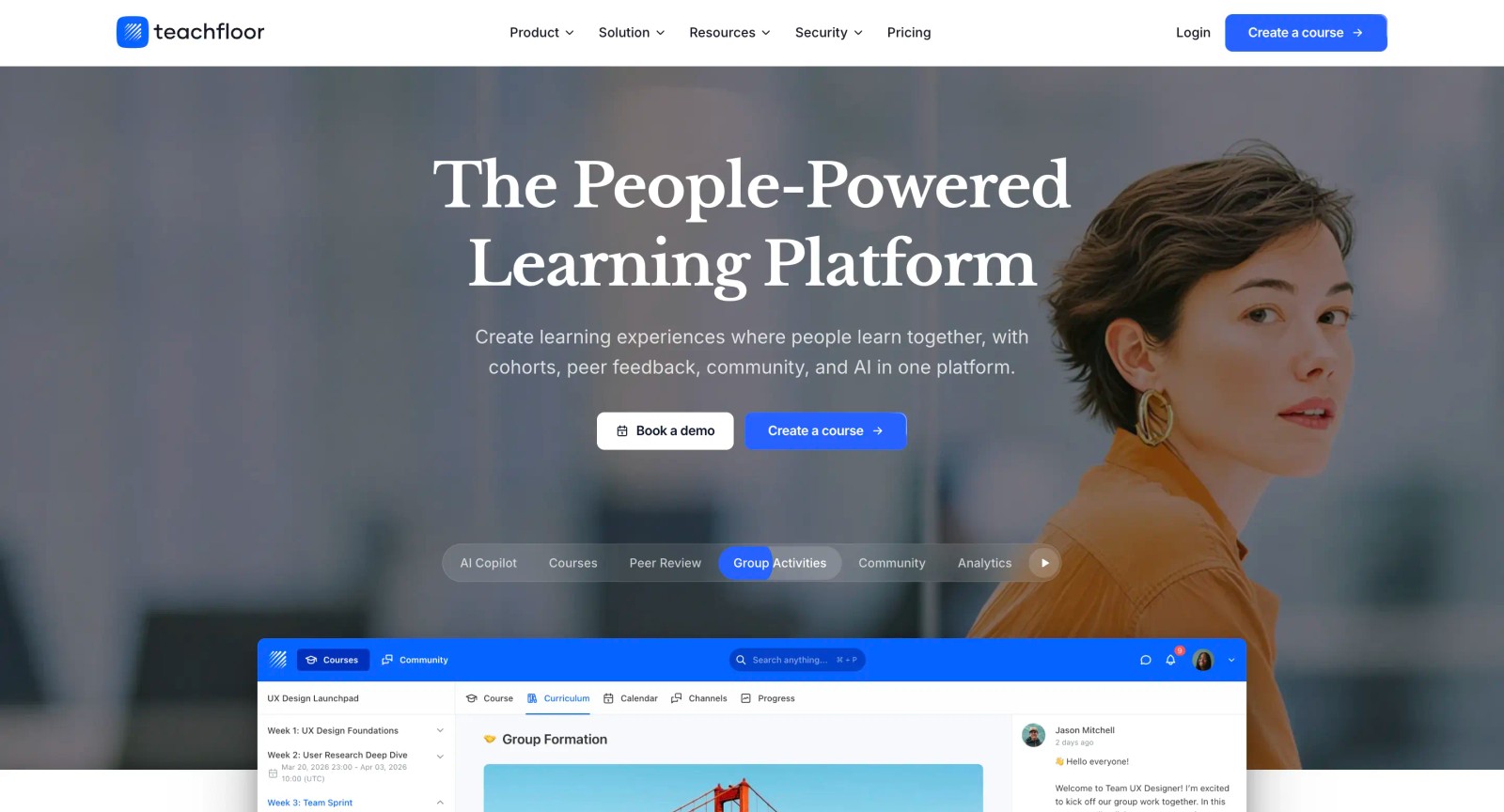
Banking and financial services run on documented compliance, so the training platform has to answer who completed what and when without anyone scrambling before an exam. Teachfloor handles mandatory courses such as AML, KYC, fraud awareness, and conduct training as required paths, with assessments that gate completion and certificates that record the result with a date attached. Beyond mandatory compliance, the cohort and peer review tools are useful for developing skills like client advisory or credit analysis, where employees learn by working through real scenarios and giving each other feedback.
Core Capabilities
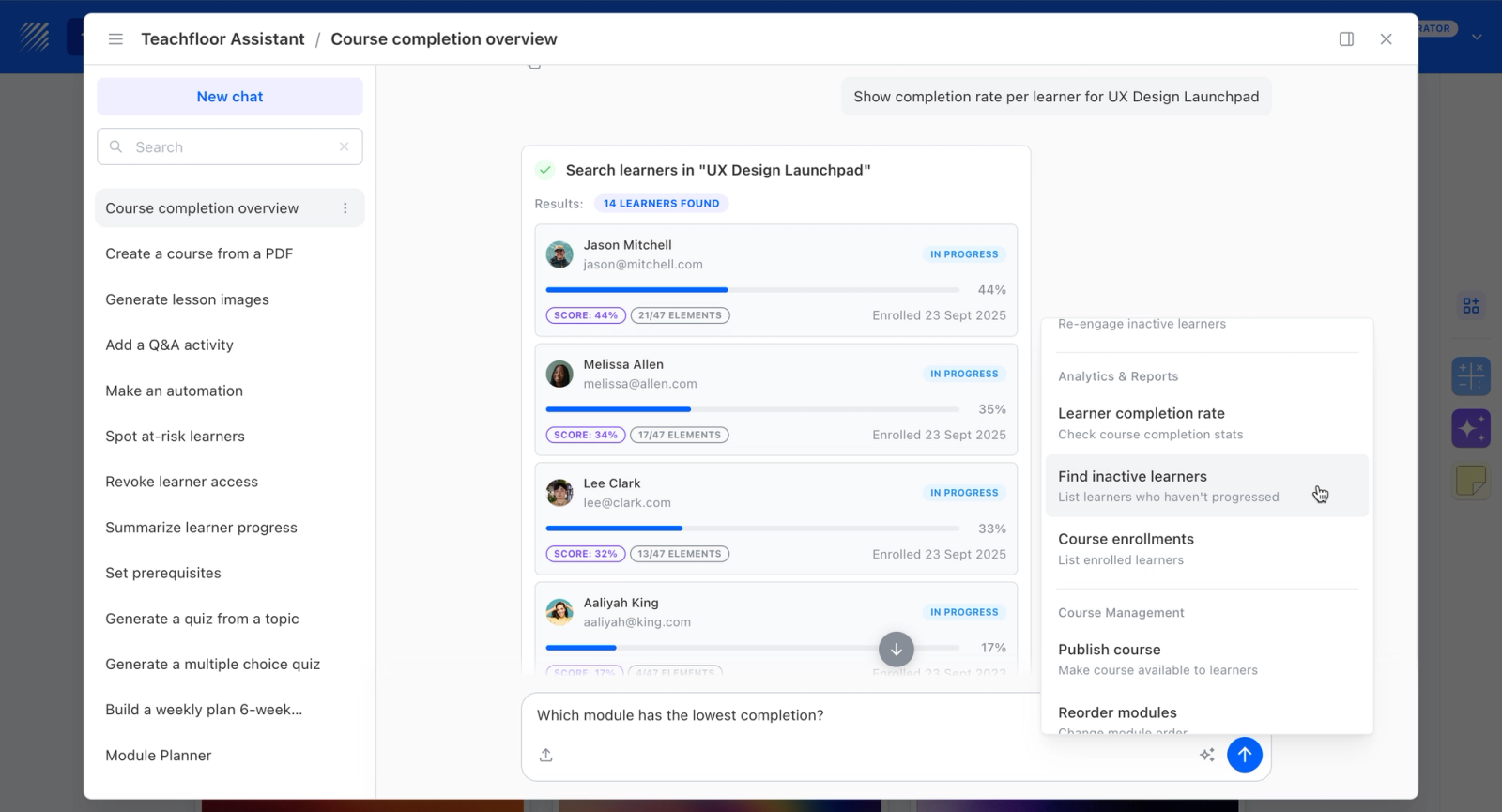
- AI course creation that turns documents, videos, and outlines into structured courses
- Flexible delivery: self-paced, social, live, or cohort-based, mixed within one program
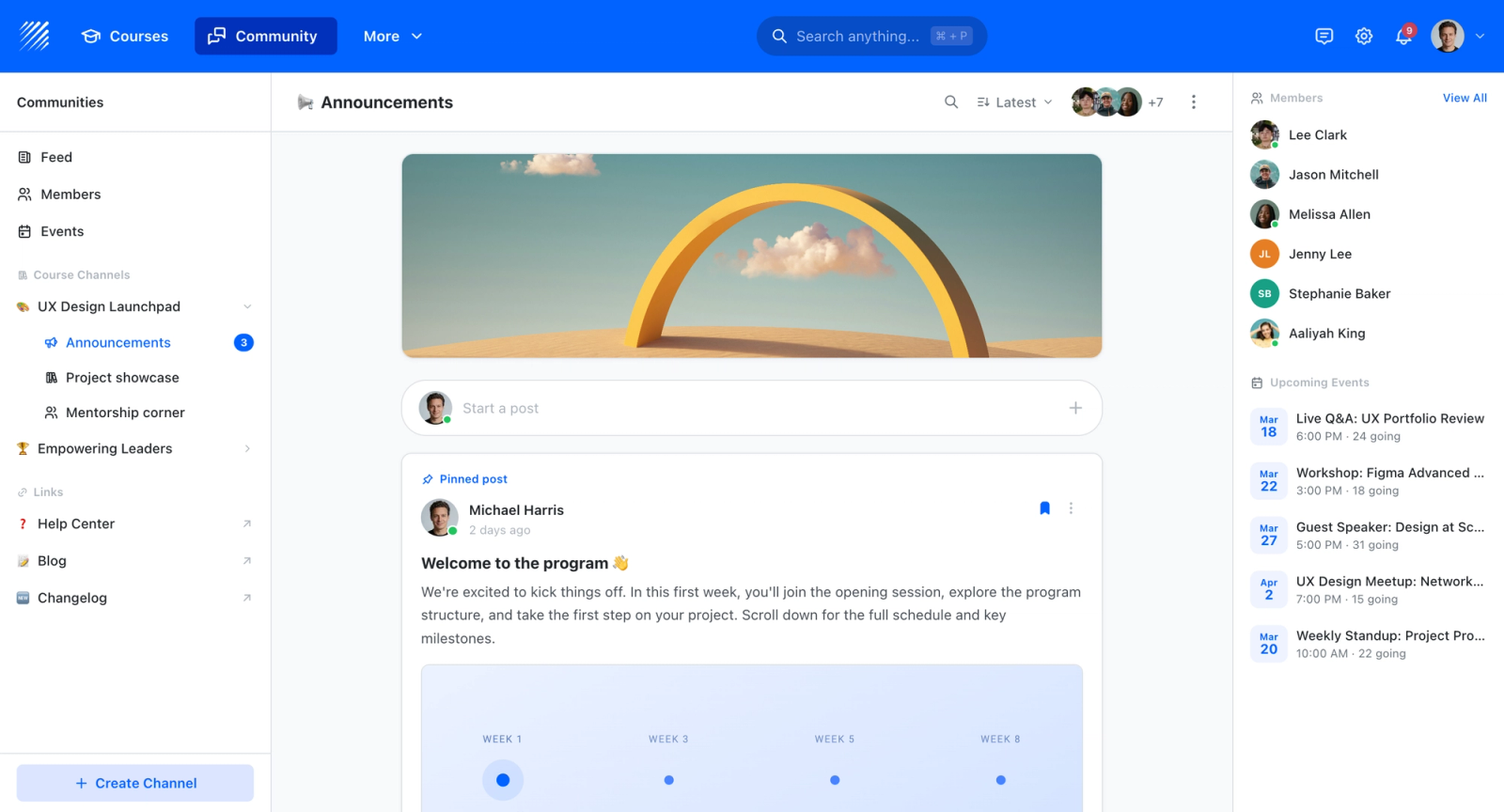
- Community and discussion spaces that keep learners engaged between sessions
- Peer review and collaborative assignments for active, social learning
- Live sessions with Zoom and Google Meet for instructor-led training
- White-label branding on your own custom domain
- Certificates, payments, and enrollment management for paid or external programs
- Analytics on completion, participation, and engagement
Best For
Banks and financial firms that need audit-ready compliance training (AML, KYC, conduct) with completion reporting, plus a way to build advisory and analytical skills beyond box-ticking.

Pricing Overview
- Startup plan from $89 per month for up to 50 learners
- Full Features plan with custom pricing, white-label, SSO, and advanced integrations
- 14-day free trial; no permanent free plan
- Nonprofit discounts available
Limitations
- Not built to be a 10,000-seat self-paced content warehouse; that is a different category.
- The integration catalog is smaller than large enterprise suites.
Quick Comparison Insight
Cornerstone, SAP SuccessFactors, Docebo, and Saba are the familiar enterprise names for regulated finance. Teachfloor provides the certification and reporting backbone those programs need while layering in cohort learning and peer review, with a lighter administrative footprint.
Cornerstone OnDemand
Overview
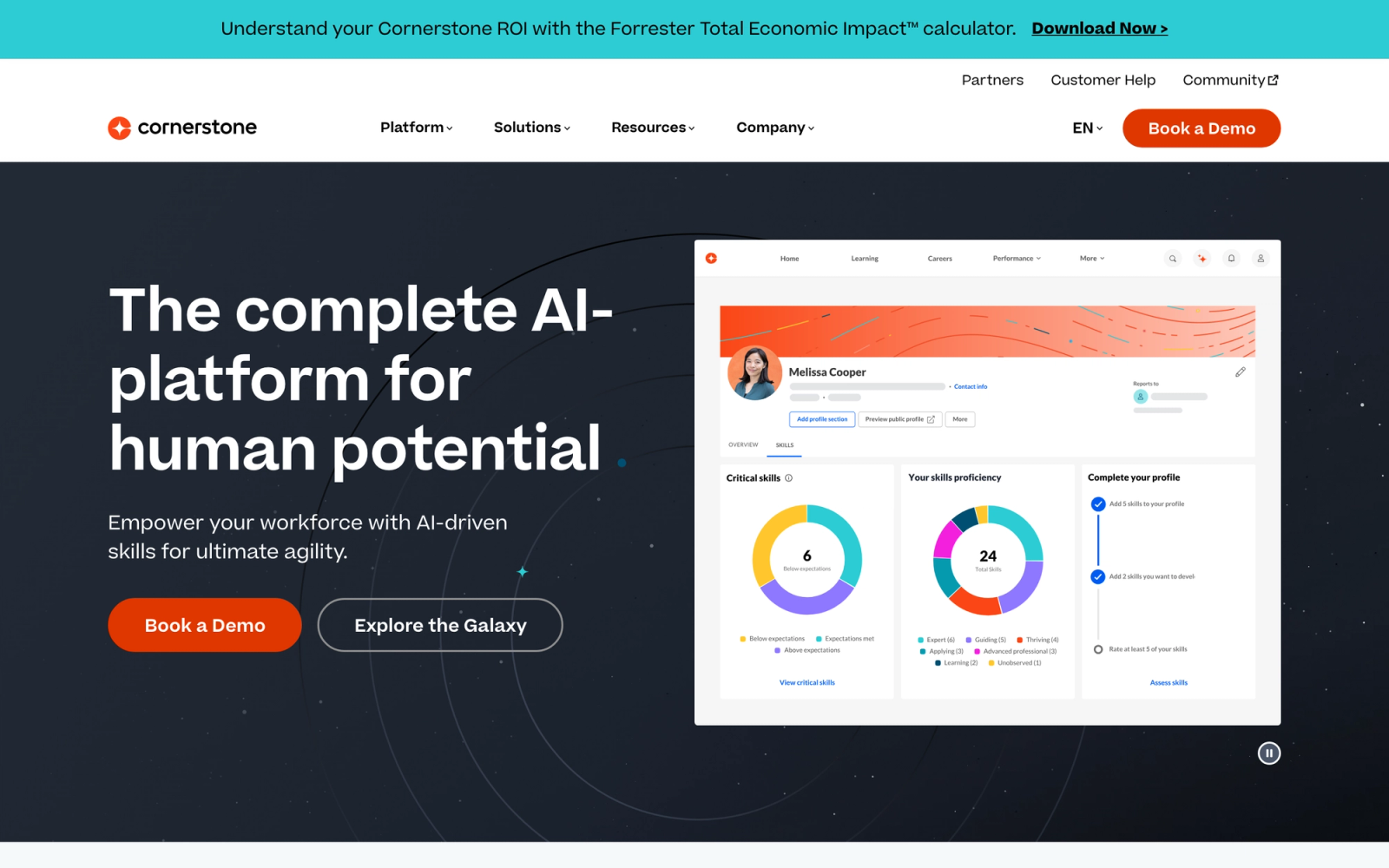
Cornerstone OnDemand is one of the most established enterprise learning platforms in the market, and its footprint in financial services is substantial. Banks, insurance companies, and investment firms with thousands of employees have relied on Cornerstone for compliance training management because the platform was built from the ground up to handle regulated industry requirements.
What I noticed first about Cornerstone is the depth of its compliance engine. This is not a generic LMS with a compliance module bolted on. The platform treats regulatory training as a first-class workflow, with auto-enrollment rules, escalation chains, and audit reporting that financial compliance teams can configure without IT involvement. For organizations where a missed training deadline triggers regulatory risk, that level of automation matters.
Core Capabilities
- Auto-enrollment rules that assign compliance training based on role, department, geography, and license type, with flexible updates when employees change positions
- Granular audit trail logging that records course access timestamps, completion scores, time spent, and assessment attempts in tamper-evident format
- Multi-entity support for financial groups with separate subsidiaries, each with independent branding, content libraries, and reporting hierarchies
- Built-in certification tracking with automated renewal workflows, expiration alerts, and compliance status dashboards segmented by jurisdiction
- Configurable compliance reporting with scheduled exports, regulatory category filters, and auditor-ready PDF generation
- Content management supporting SCORM 1.2, SCORM 2004, xAPI, AICC, video, and document-based learning objects
- Integration with major HRIS platforms (Workday, SAP, ADP) for automated user provisioning and organizational hierarchy syncing
- Extended enterprise capabilities for training external partners, brokers, and agents under separate portals with distinct access controls
- Mobile learning app with offline content access for branch employees and field representatives
- Skills and competency mapping tied to role-based learning paths, connecting employee development goals to compliance requirements
Standout Strength
Financial institutions choose Cornerstone because its compliance automation scales to enterprise complexity. The combination of auto-enrollment logic, multi-jurisdiction certification tracking, and audit-grade reporting means compliance teams can manage regulatory training for tens of thousands of employees across multiple business units without relying on spreadsheets or manual processes.
Best For
Large banks, insurance carriers, and diversified financial groups with 5,000+ employees operating across multiple jurisdictions. Particularly strong for organizations that need compliance training, talent management, and succession planning in a single platform. If your compliance team manages training requirements from FINRA, state insurance regulators, and internal policy simultaneously, Cornerstone handles that layered complexity.
Pricing Overview
- Custom enterprise pricing based on user count and modules selected
- Typical deployments involve annual contracts with implementation fees
- No publicly listed per-user pricing; expect enterprise-tier investment
- Demo and pilot programs available through sales consultation
Limitations
- Implementation timelines can extend to several months for complex financial institution deployments with HRIS integration and multi-entity setup
- The admin interface, while powerful, has a steeper learning curve than newer platforms. Configuring compliance workflows requires training for L&D administrators
- Pricing places it beyond the reach of smaller financial firms and credit unions with limited training budgets
Quick Comparison Insight
More compliance depth and enterprise scalability than any other platform on this list, but the implementation effort and cost reflect that positioning. Smaller financial firms will find lighter alternatives more practical.
Docebo
Overview
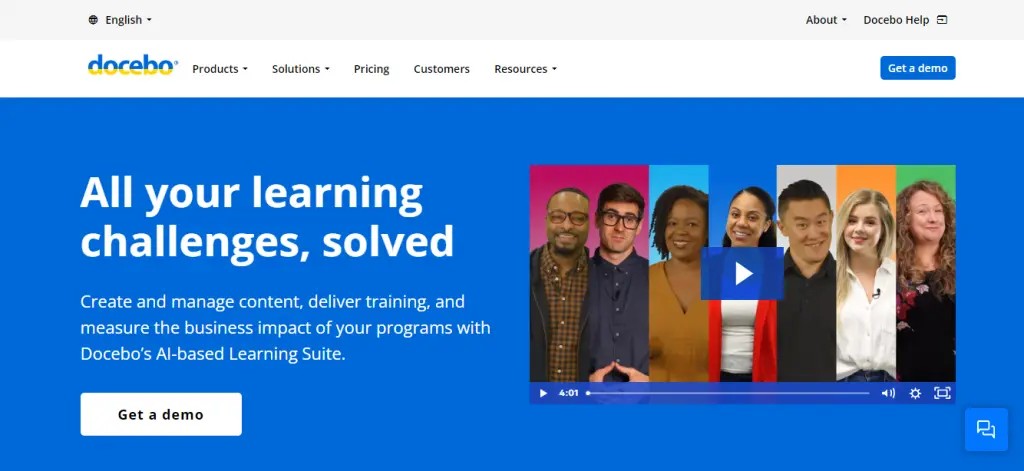
Docebo positions itself as an AI-powered learning platform, and that positioning is more than marketing language. The platform uses machine learning to recommend content, auto-tag learning objects, and surface skill gaps, capabilities that translate well into financial services environments where employees need to stay current on evolving regulations without relying solely on manual course assignments.
When I explored Docebo's compliance features, the combination of automated compliance workflows and genuinely useful AI-driven content discovery stood out. In a financial institution where regulations change quarterly, having an LMS that can surface relevant new content to the right employees based on their role and past training history reduces the burden on compliance teams significantly.
Core Capabilities
- AI-powered content recommendations that suggest compliance courses based on role, learning history, and identified skill gaps
- Automated compliance assignment with configurable rules for enrollment, deadlines, recertification cycles, and escalation notifications
- Audit reporting with exportable completion logs, time-stamped activity records, and filterable views by regulatory category or business unit
- Multi-domain architecture allowing separate branded learning portals for internal employees, external partners, and broker networks
- Built-in content marketplace with access to third-party compliance libraries from providers like Skillsoft and OpenSesame
- SCORM, xAPI, and AICC support alongside native video hosting and social learning capabilities
- Configurable learning paths that map to certification requirements, linking individual courses to professional license renewal credits
- Integration hub connecting to over 40 enterprise platforms including Salesforce, Workday, BambooHR, and Microsoft Teams
- Gamification engine with points, badges, and leaderboards to drive engagement in non-mandatory professional development training
- Advanced analytics with customizable dashboards tracking completion rates, engagement trends, and compliance status across the organization
Standout Strength
Financial firms choose Docebo because its AI layer reduces the manual overhead of managing compliance training at scale. Instead of compliance teams manually identifying which employees need updated AML training when regulations shift, Docebo's recommendation engine can surface relevant content automatically. For firms managing training across multiple product lines and regulatory frameworks, that automation is a meaningful operational advantage.
Best For
Mid-to-large financial institutions with 1,000 to 50,000 employees that want a modern UX combined with strong compliance features. Particularly well-suited for firms that manage both internal employee training and external channel partner education. If your organization values data-driven approaches to learning analytics and wants to reduce manual training administration, Docebo delivers on that promise.
Pricing Overview
- Custom pricing based on active users and modules selected
- Pricing tiers include Engage, Elevate, and Enterprise plans
- No free tier; free trial available upon request
- Expect mid-market to enterprise-level pricing depending on scale
Limitations
- The AI content recommendation engine requires sufficient training data to become accurate, meaning smaller organizations may not see its full value immediately
- Advanced compliance workflow configuration can require vendor-assisted setup for complex multi-jurisdiction requirements
- Some users report that the reporting interface, while capable, requires time to master for financial compliance-specific report building
Quick Comparison Insight
More modern interface and stronger AI capabilities than Cornerstone, but less depth in multi-entity compliance management for very large financial conglomerates. A strong middle ground for firms that value usability alongside regulatory rigor.
Absorb LMS
Overview
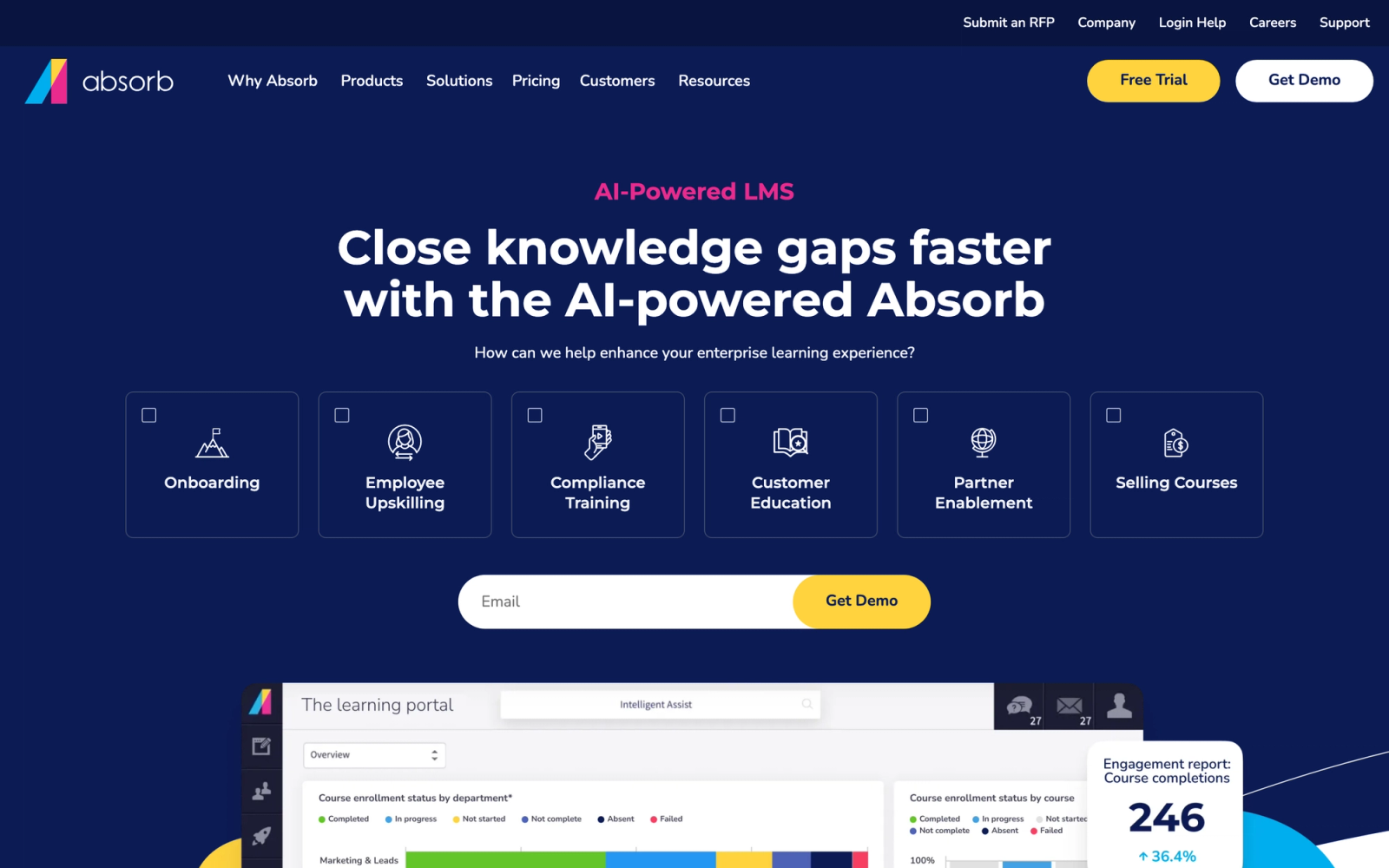
Absorb LMS has carved out a reputation for combining enterprise-grade features with an unusually clean admin experience. For financial services teams evaluating LMS platforms, this matters more than it might seem. Compliance administrators in banks and insurance firms often manage training alongside other responsibilities, and an LMS that requires extensive technical knowledge to operate becomes a bottleneck.
The first thing I noticed when testing Absorb is how quickly compliance workflows can be configured. Where other enterprise platforms require multi-day administrator training, Absorb's interface lets compliance teams set up auto-enrollment rules, certification tracking, and audit reports within a few hours. That speed-to-value makes it particularly attractive for mid-size financial firms that do not have dedicated LMS administrators.
Core Capabilities
- Automated compliance enrollment with rules based on department, role, location, and custom user fields, supporting flexible reassignment when roles change
- Certification tracking with configurable renewal periods, automated expiration notifications, and grace period settings
- Detailed audit logs capturing course access, completion timestamps, assessment scores, and certificate generation events
- Absorb Infuse technology that embeds learning content directly into other business applications (CRM, intranet, support tools) where employees already work
- Native e-commerce functionality for financial firms that sell continuing education or certification prep courses externally
- SCORM 1.2, SCORM 2004, and xAPI support with a built-in content library through Absorb Amplify
- RESTful API for custom integrations with HRIS platforms, single sign-on providers, and internal reporting tools
- Intelligent Assist powered by AI to automate routine admin tasks like user enrollment and report generation
- Mobile-responsive design with a dedicated learner app for branch and field employees
- Multi-language support covering 25+ languages for financial institutions with international operations
Standout Strength
Financial firms choose Absorb because it delivers enterprise compliance capabilities without the enterprise complexity. The admin interface is genuinely intuitive, which means compliance teams can manage training programs without heavy IT dependency. Absorb Infuse is also a differentiator: embedding compliance reminders and micro-learning directly into the tools employees use daily increases completion rates without disrupting workflow.
Best For
Mid-size financial institutions with 500 to 10,000 employees, particularly banks, credit unions, and insurance firms that need strong compliance tracking but lack a large dedicated L&D team. Also a strong choice for financial firms that sell certification programs externally through continuing education offerings.
Pricing Overview
- Custom pricing based on user count; no publicly listed per-user price
- Free trial available upon request
- Implementation support included in enterprise plans
- Absorb Amplify content library available as an add-on
Limitations
- Multi-entity support is less mature than Cornerstone's, making it harder for large financial conglomerates with many subsidiaries to maintain fully separate environments from a single console
- Advanced reporting customization, while improved in recent updates, still falls short of the depth that large compliance teams expect for complex regulatory reporting
- The built-in content library (Absorb Amplify) covers general compliance well but has limited depth in specialized financial services content like AML or sanctions training
Quick Comparison Insight
Easier to administer than Cornerstone or SAP SuccessFactors, with compliance features that satisfy most mid-market financial institutions. Less suited for global financial enterprises that need granular multi-jurisdiction compliance management across dozens of entities.
SAP SuccessFactors Learning

Overview
SAP SuccessFactors Learning is the enterprise learning module within SAP's broader Human Experience Management (HXM) suite. For financial institutions already operating within the SAP stack, this is not just another LMS option; it is the learning platform that integrates natively with their HR, payroll, and talent management infrastructure.
What distinguishes SuccessFactors Learning in financial services is the depth of its enterprise compliance architecture. This platform was designed for organizations where training compliance is audited by external regulators, where training records must integrate with HR data for workforce planning, and where deployment spans tens of thousands of employees across multiple countries. The trade-off is complexity: SuccessFactors Learning is not a platform you configure over a weekend.
Core Capabilities
- Enterprise compliance management with automated enrollment, regulatory deadline tracking, and configurable escalation workflows that integrate with SAP SuccessFactors Employee Central
- Curriculum-based learning paths that map to financial regulatory requirements, with prerequisite enforcement and sequential completion rules
- Audit reporting integrated with SAP's analytics framework, producing exportable compliance reports at organizational, regional, and individual levels
- Multi-country deployment support with locale-specific compliance configurations, language settings, and jurisdiction-based training rules
- Instructor-led training management with scheduling, resource booking, waitlisting, and attendance tracking for in-person compliance workshops
- SCORM, AICC, and xAPI content support alongside native integration with SAP Enable Now for performance support content
- Role-based access controls with integration to SAP Identity Management for enterprise-grade security and user provisioning
- Extended enterprise learning portals for training external agents, brokers, and partners under separate configurations
- Integration with SAP Concur for tracking training-related travel expenses and with SAP Analytics Cloud for advanced workforce intelligence
- Support for regulated industry workflows including digital signature capture, manager attestation, and completion verification protocols
Standout Strength
Global financial institutions choose SAP SuccessFactors Learning because it eliminates the integration gap between learning and HR data. When compliance training completion needs to flow into workforce planning, when audit reports need to reference organizational hierarchies maintained in SAP Employee Central, and when multi-country regulatory requirements demand locale-specific configurations, SuccessFactors handles that connectivity natively. No middleware, no custom integrations, no data reconciliation.
Best For
Global banks, multinational insurance companies, and large financial groups with 10,000+ employees that already use SAP for HR and enterprise operations. Particularly strong for institutions where compliance training data must integrate with broader talent management, workforce analytics, and regulatory reporting workflows. If your organization already invests in the SAP stack, SuccessFactors Learning is the natural choice for an enterprise LMS.
Pricing Overview
- Custom enterprise pricing as part of the SAP SuccessFactors HXM suite
- Typically sold as a module within a broader SAP license agreement
- Implementation costs are significant and usually involve SAP consulting partners
- Standalone learning module pricing available but less common
Limitations
- Implementation is resource-intensive, often requiring 6 to 12 months with SAP-certified implementation partners, which adds substantial cost beyond licensing
- The user interface, while functional, feels dated compared to modern LMS platforms like Docebo or Absorb. SAP has been updating the UX, but the learner experience still lags behind
- Organizations not already in the SAP stack face a steep barrier to adoption, both financially and operationally
Quick Comparison Insight
Deeper HR and compliance integration than any standalone LMS on this list, but only practical for organizations already committed to SAP. For non-SAP shops, the implementation overhead outweighs the integration benefits.
SAP Litmos
Overview
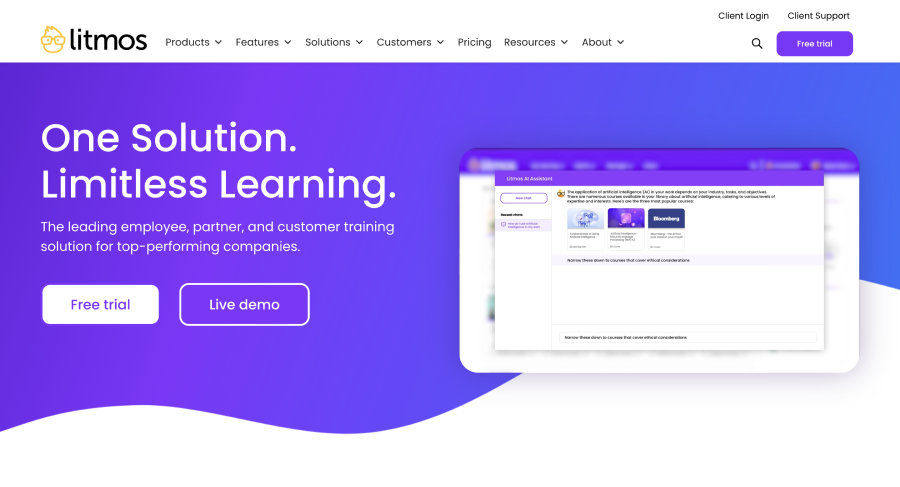
SAP Litmos takes a fundamentally different approach than its sibling, SAP SuccessFactors Learning. Where SuccessFactors targets large enterprise deployments with deep SAP integration, Litmos focuses on speed, simplicity, and a built-in content library that lets organizations launch training programs within days rather than months.
When I tested Litmos, what stood out was the time-to-value. For a financial firm that needs to get compliance training running quickly, maybe after a regulatory change or an acquisition that brings new employees into scope, Litmos removes the typical deployment friction. The platform comes with a substantial library of pre-built compliance courses, including content covering anti-money laundering, data privacy, workplace safety, and ethics, which means organizations can assign training before they have finished developing custom content.
Core Capabilities
- Built-in content library with 2,000+ pre-built courses including financial compliance topics like AML, data protection, anti-bribery, and workplace ethics
- Automated course assignment with rules based on user attributes, with support for recurring compliance assignments and deadline enforcement
- Completion tracking with downloadable compliance reports, individual learning transcripts, and aggregate dashboard views
- Rapid deployment architecture designed for organizations that need training operational within days, not months
- SCORM 1.2, SCORM 2004, xAPI, and video content support for custom course uploads alongside the built-in library
- Gamification features including badges, points, and leaderboards to encourage voluntary professional development alongside mandatory compliance
- E-commerce module for financial institutions that monetize continuing education or sell certification prep courses
- RESTful API and pre-built integrations with Salesforce, BambooHR, Zendesk, and other business platforms
- Mobile app with offline access for branch employees completing training between customer interactions
- Multi-language support for financial firms operating across language boundaries
Standout Strength
Financial firms choose Litmos when speed matters more than deep enterprise customization. The combination of a substantial built-in content library and rapid deployment means organizations can have employees completing AML training within a week of signing the contract. For smaller financial firms without a dedicated content development team, that built-in library is a genuine differentiator.
Best For
Small to mid-size financial institutions with 100 to 5,000 employees, particularly community banks, credit unions, and regional insurance companies that need compliance training running quickly without a large implementation project. Also a practical choice for financial firms that need a cost-effective platform with training management capabilities and a ready-made content library.
Pricing Overview
- Starting price varies based on user count and content library inclusion
- Pricing is per-user, typically in the $4 to $6 per user per month range for mid-size deployments
- Built-in content library may be included or available as an add-on depending on the plan
- Free 14-day trial available
Limitations
- Compliance workflow automation is less sophisticated than Cornerstone or SuccessFactors. Multi-jurisdiction certification tracking with automated renewal logic requires workarounds
- The built-in content library covers broad compliance topics well but lacks the depth of specialized financial services content from dedicated providers like NAVEX or Traliant
- Multi-entity management is limited; financial groups with multiple subsidiaries may find the single-portal architecture restrictive
Quick Comparison Insight
Faster to deploy and more affordable than SAP SuccessFactors Learning, but with significantly less depth in compliance automation and multi-jurisdiction management. Think of it as the practical choice for financial firms that need good-enough compliance tracking without enterprise complexity.
TalentLMS
Overview
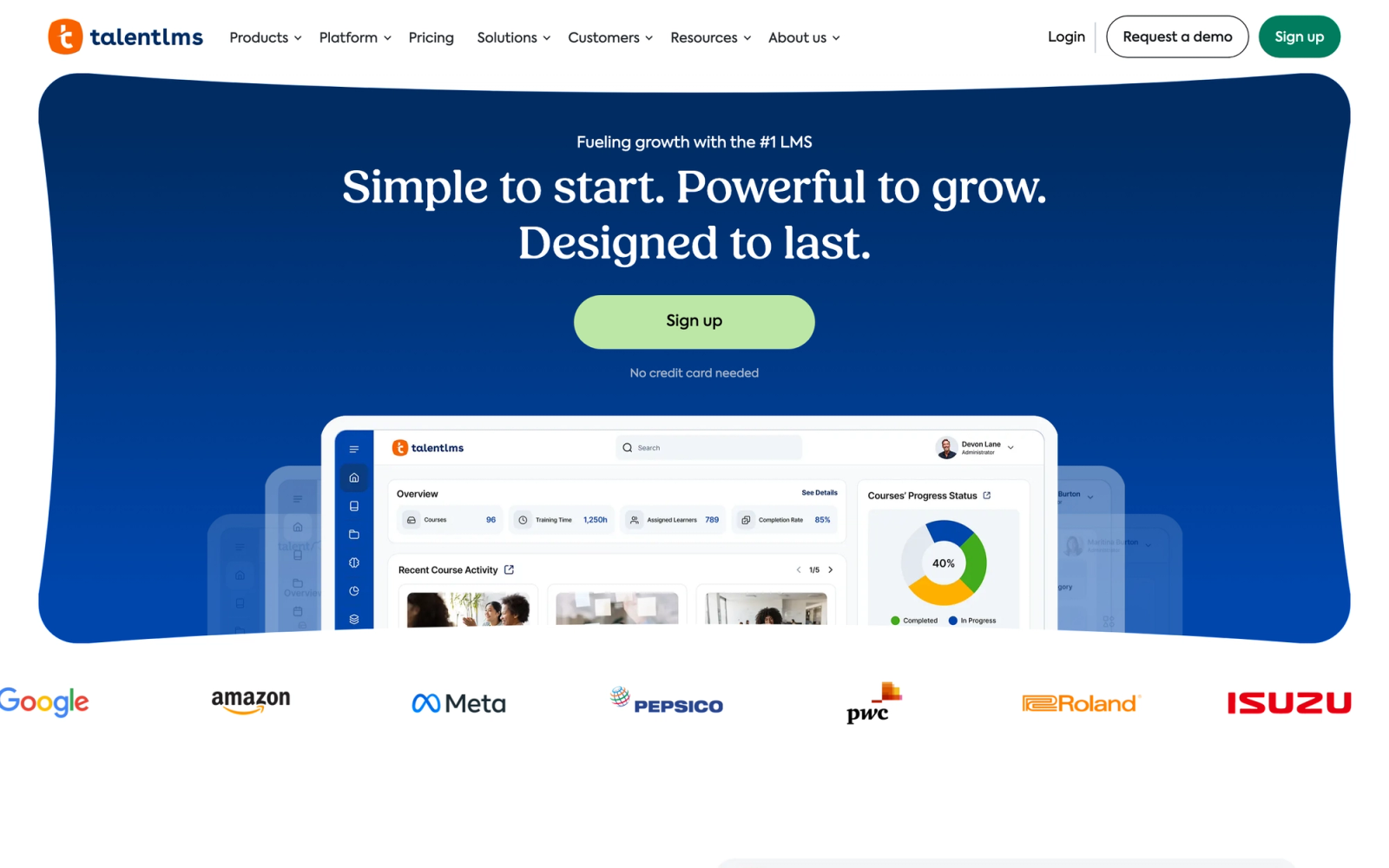
TalentLMS is built around a proposition that resonates with smaller financial institutions: an LMS should be simple to set up, affordable to maintain, and functional enough to handle core training requirements without requiring a dedicated administrator. For community banks, independent insurance agencies, and small credit unions, the enterprise platforms higher on this list represent overkill and budget overreach.
What I found when testing TalentLMS is that it delivers a genuinely straightforward experience. Creating a compliance course, assigning it to a group of employees, and pulling a completion report takes minutes, not hours. The platform is not designed for the compliance complexity of a multinational bank, but for organizations where the training manager is also the branch manager, that simplicity is the point.
Core Capabilities
- Course creation tools that support SCORM, xAPI, video, documents, and native course building with drag-and-drop simplicity
- Automated course assignments based on user groups, with completion deadlines and reminder notifications
- Certification tracking with expiration dates and recertification workflows for professional license management
- Built-in assessment engine with multiple question types, passing scores, and retry policies for compliance knowledge checks
- Reporting dashboard with completion rates, user progress, and exportable reports in CSV and PDF format
- Branch/group hierarchy that allows financial institutions to organize users by location, department, or team
- Integration with popular tools including Zapier, BambooHR, Salesforce, and Slack for workflow automation
- White-labeling with custom domain, logo, and color scheme for brand-consistent learner experience
- Gamification with points, badges, leaderboards, and custom completion certificates
- Free plan available for up to 5 users, making it accessible for very small financial firms to test before committing
Standout Strength
Small financial institutions choose TalentLMS because the total cost of ownership is dramatically lower than enterprise alternatives. The free tier lets organizations test the platform with real compliance content before spending anything, and paid plans start at price points that community banks and independent agencies can justify. When the alternative is tracking compliance training in spreadsheets, TalentLMS is a meaningful upgrade.
Best For
Small financial institutions with under 500 employees, including community banks, credit unions, independent insurance agencies, and small advisory firms. Also a practical entry point for financial firms exploring their first LMS purchase and wanting to understand their needs before committing to an enterprise LMS investment. Teams managing compliance alongside other responsibilities will appreciate the low administrative overhead.
Pricing Overview
- Free plan for up to 5 users and 10 courses
- Core plan starting at $89 per month for up to 40 users
- Grow plan at $139 per month with additional features like custom reports and onboarding
- Pro plan at $179 per month with priority support, automations, and SSO
- Enterprise pricing available for larger deployments
Limitations
- Compliance automation lacks the depth needed for multi-jurisdiction regulatory tracking. Organizations managing training requirements from multiple regulators simultaneously will outgrow TalentLMS
- Audit trail granularity is basic compared to enterprise platforms. Detailed time-stamped activity logging with tamper-evident records is not available at the same level as Cornerstone or SuccessFactors
- Multi-entity support is minimal, making it impractical for financial groups managing separate subsidiaries or broker networks from a single platform
Quick Comparison Insight
The most affordable option on this list with a genuine free tier, but limited to straightforward compliance tracking. Financial firms with complex regulatory requirements or growth ambitions will need to plan for migration to a more capable platform eventually.
Saba Cloud
Overview
Saba Cloud, now part of Cornerstone's portfolio following its acquisition, remains a distinct platform with its own strengths in the financial services space. Saba built its reputation on connecting learning with talent development, a combination that appeals to financial institutions where compliance training and career progression are deeply intertwined.
What sets Saba apart in financial services is its approach to compliance as part of a broader talent stack. Rather than treating regulatory training as a standalone administrative function, Saba ties compliance completion to performance reviews, succession plans, and competency frameworks. For financial institutions where regulatory training is not just a checkbox but a component of professional development, that integration adds genuine value.
Core Capabilities
- Compliance management engine with automated enrollment, deadline tracking, escalation notifications, and regulatory reporting built into the talent management workflow
- Competency mapping that connects compliance certifications to role requirements, performance evaluations, and succession planning criteria
- Advanced reporting with configurable dashboards, scheduled report delivery, and compliance status views segmented by business unit, region, and regulatory category
- Content management supporting SCORM, AICC, xAPI, video, virtual classroom sessions, and blended learning programs
- Social learning features including discussion forums, content sharing, and peer recommendations that can supplement formal compliance training
- Multi-audience architecture supporting separate learning environments for internal employees, external partners, and contractor populations
- Performance management integration that links training completion and skill development to individual performance goals and reviews
- Mobile learning with responsive design and offline content access for distributed financial workforces
- Intelligent learning recommendations that suggest relevant courses based on role, career aspirations, and compliance gaps
- Enterprise-grade security with SOC 2 and ISO 27001 certifications, SAML-based SSO, and configurable data retention policies
Standout Strength
Financial institutions choose Saba when they want compliance training to connect to the broader employee development story. The platform's integration between learning, performance, and succession planning means that completing a Series 7 prep course is not just a compliance checkbox; it feeds into career path tracking, performance reviews, and talent pool identification. For financial firms investing in employee development methods beyond minimum regulatory requirements, Saba provides that connective tissue.
Best For
Large financial enterprises with 5,000+ employees that view compliance training as part of a broader talent development strategy. Particularly strong for investment banks, insurance carriers, and wealth management firms where employee progression through regulatory certifications maps directly to career advancement and organizational planning.
Pricing Overview
- Custom enterprise pricing; contact vendor for current rates
- Pricing typically based on active user count and modules selected
- Implementation services available through Cornerstone's partner network
- Demo available upon request
Limitations
- The platform's future roadmap is subject to Cornerstone's integration strategy, which introduces uncertainty about long-term feature development as a standalone product
- The admin interface reflects Saba's enterprise heritage, meaning it requires more training for new administrators than newer platforms like Absorb or Docebo
- Organizations considering Saba should evaluate whether Cornerstone's own platform might be a more strategically sound long-term choice given the corporate ownership
Quick Comparison Insight
Stronger than most platforms at connecting compliance to talent development, but the Cornerstone acquisition introduces strategic questions about long-term platform direction. Organizations that value compliance-career path integration should weigh this carefully.
How to Choose the Right LMS for Financial Services
Selecting an LMS for a financial institution is not just a software decision. It is a compliance infrastructure decision that affects regulatory risk, audit outcomes, and operational efficiency. Here is how to approach the evaluation based on your specific situation.
If regulatory compliance automation is your primary driver, Cornerstone OnDemand and SAP SuccessFactors Learning offer the deepest compliance workflow engines. Both handle multi-jurisdiction certification tracking, automated enrollment, and audit-grade reporting at a level that satisfies external regulators. The deciding factor between them is your existing technology stack: SAP shops should evaluate SuccessFactors first, while organizations on Workday or other HRIS platforms will find Cornerstone integrates more flexibly.
If you need enterprise compliance without enterprise complexity, Absorb LMS and Docebo occupy a practical middle ground. Absorb wins on admin simplicity and speed of deployment. Docebo wins on AI-driven content discovery and modern learner experience. Both handle the compliance requirements of most mid-size financial institutions without the implementation timelines of Cornerstone or SuccessFactors.
If budget constraints are a real factor, TalentLMS and SAP Litmos serve smaller financial institutions where the choice is between a purpose-built LMS and a spreadsheet. TalentLMS offers a free tier and the lowest total cost of ownership. Litmos adds a built-in content library that saves content development costs. Neither handles complex multi-jurisdiction compliance, but both are significant upgrades over manual training tracking.
If compliance training needs to connect to talent development, Saba Cloud uniquely integrates learning completion with performance management, succession planning, and competency frameworks. For financial institutions that view regulatory certifications as career milestones rather than administrative checkboxes, Saba provides connective value that standalone compliance platforms do not.
If your highest-impact programs need interactive group learning, Teachfloor complements compliance platforms by providing the structured, cohort-based experience that analyst onboarding, leadership development, and advanced certification prep programs require. It is not a compliance LMS, but it fills the gap that compliance platforms leave in facilitated learning.
Before making a final decision, involve your compliance team, not just L&D, in the evaluation. Run a pilot with real compliance content and real audit report requirements. The LMS evaluation checklist process should include testing audit trail exports with your actual compliance officers to confirm the reports meet regulatory standards before you commit.
FAQ
What is the most important LMS feature for financial services compliance?
Automated compliance workflow management. This means the LMS should auto-enroll employees in required training based on their role and jurisdiction, track deadlines, send escalation notifications, and produce audit-ready completion reports. Manual enrollment and basic completion tracking is not sufficient for organizations under regulatory oversight. The compliance engine is what separates a financial services LMS from a generic learning management system.
Can a financial institution use one LMS for both compliance and professional development?
Yes, but with trade-offs. Enterprise platforms like Cornerstone and Saba Cloud handle both well. Mid-market platforms like Absorb and Docebo cover compliance training and general professional development effectively. Where a single platform typically falls short is in structured, interactive training experiences like cohort-based onboarding or leadership programs, which is where specialized platforms add value alongside the primary LMS.
How do financial services LMS platforms handle multi-jurisdiction compliance?
The strongest platforms (Cornerstone, SuccessFactors, Saba) allow administrators to configure compliance rules by jurisdiction, mapping specific training requirements to employees based on their location, license type, and regulatory body. This includes tracking different CE credit requirements for different states, managing FINRA-specific versus state insurance regulator requirements, and producing compliance reports segmented by jurisdiction. Mid-market platforms handle this partially through custom fields and manual configuration.
What security certifications should a financial services LMS have?
At minimum, look for SOC 2 Type II attestation, which verifies that the vendor maintains adequate security controls over time. GDPR compliance is essential for firms with European operations. ISO 27001 certification provides additional assurance of systematic information security management. Beyond certifications, verify that the platform supports SAML-based SSO, role-based access controls, data encryption at rest and in transit, and configurable data retention policies.
How long does it take to implement an LMS in a financial institution?
Timelines vary significantly by platform and organizational complexity. TalentLMS and SAP Litmos can be operational within one to two weeks for basic compliance training. Absorb LMS and Docebo typically require four to eight weeks for full configuration including compliance workflows and HRIS integration. Cornerstone and SAP SuccessFactors Learning implementations for large financial institutions can extend to six months or more, especially when multi-entity configurations, custom integrations, and data migration are involved. The employee onboarding process for the LMS itself, training administrators and rolling out to employees, adds additional time beyond technical implementation.


