


A volunteer coordinator is the person responsible for making sure volunteers know what to do, how to do it, and who to turn to when something changes. In real terms, that means turning goodwill into reliable support for the organization.
In learning-focused settings, this role shows up everywhere. I’ve worked with adult education centers in the US where volunteers supported literacy classes, and with European community programs where volunteers helped deliver publicly funded training. In both cases, the volunteer coordinator was the link between learning goals and day-to-day reality.
The responsibilities are practical and people-focused. Coordinators recruit volunteers, onboard them properly, explain expectations, and assign roles that fit skills and availability.
They also monitor how things are going and step in when something isn’t working. If a volunteer is unsure, overwhelmed, or underused, that’s the coordinator’s problem to solve.
The skills required are learned through experience. Clear communication matters more than polished presentations. Planning and organization keep programs running. Basic training skills help volunteers feel confident. Emotional awareness helps retain people who are giving their time freely.
When this role is handled well, volunteers become a real asset instead of a risk. For learning professionals, understanding the volunteer coordinator role helps build programs that deliver consistent outcomes and scale without burning people out.
Volunteer Coordinator Role: Duties and Responsibilities
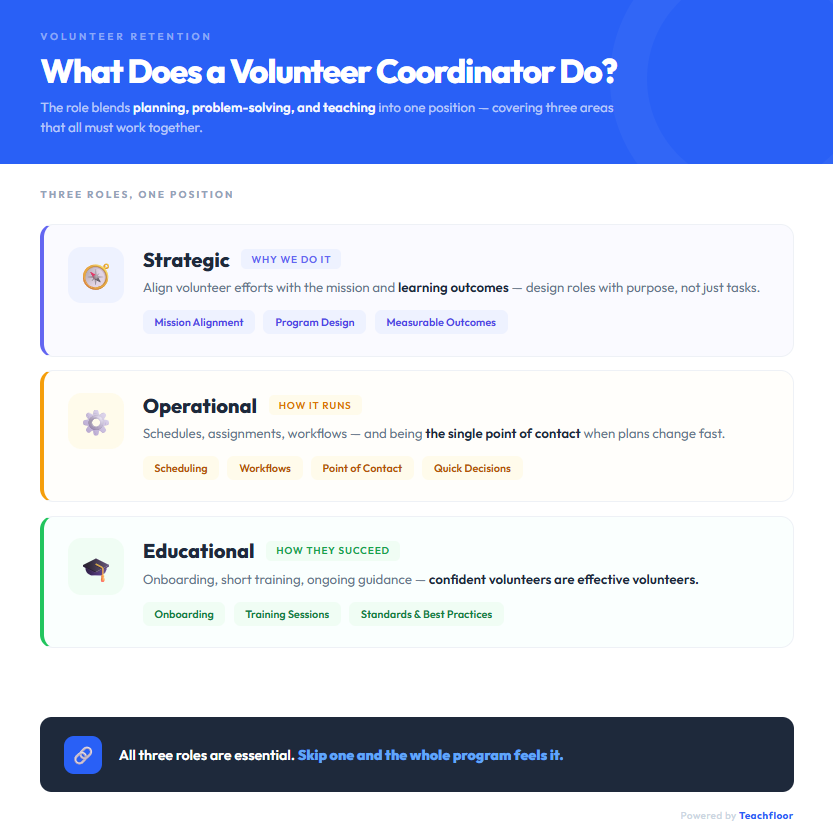
When people ask about the role of a volunteer coordinator, I often explain that it blends planning, problem-solving, and teaching into one position. The role covers three distinct areas that work closely together: strategy, operations, and education.
Each one shows up differently in day-to-day work, but all three are essential for a volunteer program to run well and support learning goals.
Strategic Role
At the strategic level, the volunteer coordinator makes sure volunteer efforts clearly support the organization’s mission and learning outcomes. In a US-based workforce development nonprofit, this might mean designing volunteer roles that reinforce job-readiness training instead of assigning volunteers to tasks that have little educational value.
In Europe, I’ve worked with community education programs where volunteer activities had to align with specific outcomes tied to public grants or EU-funded initiatives. This role involves planning structured volunteer programs that are intentional, measurable, and easy for volunteers to understand.
Operational Role
The operational role is where structure meets reality. Coordinating schedules, assignments, and workflows is a daily responsibility. Volunteers need clarity, consistency, and quick answers when plans change.
I’ve had days where a school visit was canceled at the last minute, and the difference between chaos and calm came down to having clear processes and a single point of contact. Acting as the main contact builds trust and keeps volunteers engaged.
Educational Role
The educational role focuses on helping volunteers succeed through learning. That means onboarding, short training sessions, and ongoing guidance that reinforces standards and best practices.
Whether it’s preparing food bank volunteers in the US to follow safety procedures or training cultural mediators in European museums, consistent learning support ensures volunteers feel confident and effective in their roles.
What Falls Under the JD of a Volunteer Coordinator?
When people ask what is a volunteer coordinators job description, I usually explain that the role looks simple on paper but plays out very differently in real life. It’s a practical, people-focused role that combines recruitment, organization, and ongoing coordination.
Core Responsibilities
This part of the role is all about building the right volunteer team and setting them up for success from day one. The goal is to bring people in, give them clarity, and place them where they can genuinely contribute.
- Recruiting and screening volunteers based on program needs and compliance requirements
- Reviewing applications and coordinating background checks where required, especially in US education and healthcare settings
- Conducting onboarding and orientation sessions to set expectations clearly
- Introducing volunteers to learning goals, policies, and day-to-day processes
- Matching volunteers to roles that fit their skills, experience, and availability
Administrative and Reporting Duties
This is the behind-the-scenes work that keeps volunteer programs credible and sustainable. It’s also the part leadership and funders rely on most, even if volunteers never see it.
- Maintaining accurate volunteer records and databases
- Tracking participation, hours, and role assignments
- Monitoring attendance and ongoing engagement
- Preparing reports for internal leadership, grant providers, or public institutions
- Supporting funding and compliance requirements through reliable documentation
Collaboration and Communication
Volunteer coordination rarely happens in isolation. This part of the job focuses on staying aligned with the people and partners who shape the learning experience.
- Working closely with instructors, facilitators, and program leaders
- Aligning volunteer support with learning activities and schedules
- Coordinating with community partners, universities, and local organizations
- Acting as a consistent point of contact for internal and external stakeholders
- Sharing updates, changes, and feedback to keep everyone aligned
Key Skills and Competencies of an Effective Volunteer Coordinator
After years in this role, I’ve learned that successful volunteer coordination has less to do with titles and more to do with skills you use every single day. The best volunteer coordinators are practical, clear, and calm under pressure.
Communication and Relationship-Building
Volunteers come from different backgrounds, age groups, and motivations. Some are students gaining experience, others are professionals giving back, and many are retirees looking for purpose. Keeping them engaged means speaking plainly, listening closely, and following up when you say you will.
In both US and European programs, I’ve found that short check-ins and clear written instructions prevent most issues before they start. Feedback matters too. When volunteers know what they’re doing well and where to improve, they stay committed.
Organizational and Planning Skills
Strong organization keeps volunteer programs running smoothly. Coordinating schedules, tracking availability, and adjusting plans when someone cancels are daily tasks. I’ve managed cohorts across multiple locations, including community centers in the US and adult learning hubs in Europe.
Without clear systems, even small programs become difficult to manage. Good planning also means anticipating busy periods and building in flexibility so volunteers are not overwhelmed.
Training and Learning Facilitation Skills
Volunteers learn by doing, but they still need structure. Effective coordinators support onboarding, provide simple training materials, and adapt guidance based on experience level. A university student volunteering for the first time needs more direction than a former educator supporting peer learning. Clear learning pathways help everyone feel confident.
Leadership and Emotional Intelligence
Leadership in this role is about trust. Conflicts happen, expectations shift, and emotions run high. Staying fair, calm, and consistent encourages retention and long-term engagement. Volunteers stay when they feel respected and supported.
Volunteer Coordinator Salary: What Can You Expect to Earn?
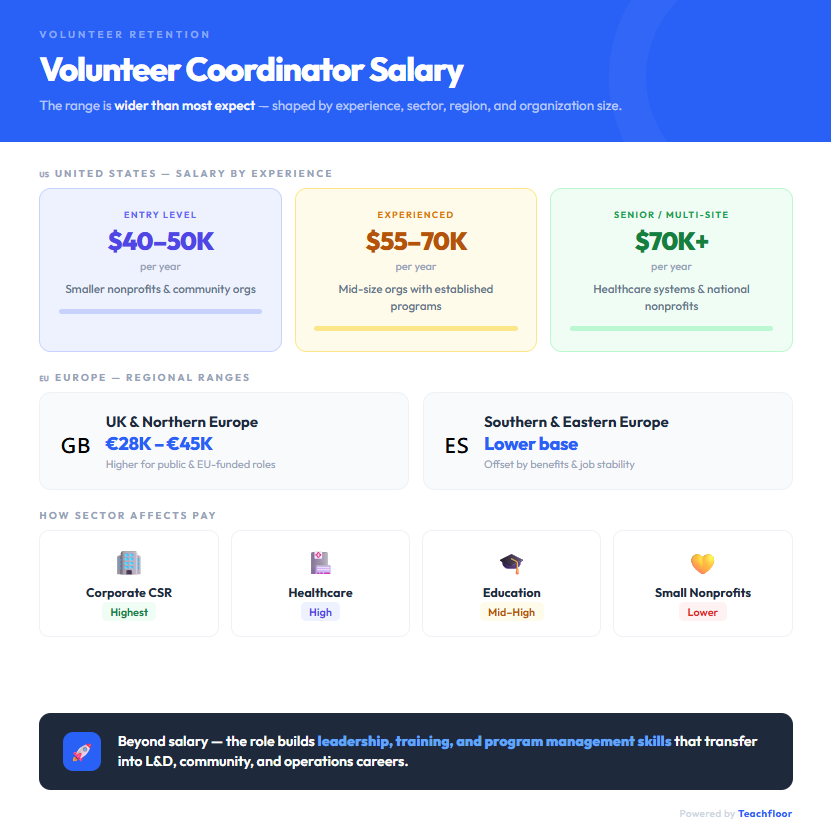
When people ask what is the salary of a volunteer coordinator is, I always explain that the range is wider than expected. In the United States, entry-level roles often fall between $40,000 and $50,000 per year, especially in smaller nonprofits or community organizations.
With experience, salaries commonly move into the $55,000 to $70,000 range. Senior or multi-site coordinators, particularly in healthcare systems or large national nonprofits, can earn more depending on scope and responsibility.
Across Europe, pay levels differ widely from one country to another. In the UK and Northern Europe, volunteer coordinators typically earn between €28,000 and €45,000 annually.
Roles connected to public institutions or EU-funded programs often sit at the higher end of that range. Southern and Eastern European organizations tend to offer lower salaries, though benefits and job stability can balance this out.
The industry itself also has a significant impact. Education and healthcare organizations usually pay more than small nonprofits, while corporate social responsibility teams often offer the strongest compensation packages. Organization size, funding stability, and geographic location all influence pay.
Beyond salary, many coordinators value the career path. The role builds leadership, training, and program management skills that transfer well into learning, community engagement, and operations roles over time.
Challenges Commonly Faced by Volunteer Coordinators
Even well-run volunteer programs come with challenges. Over the years, I’ve learned that most issues fall into a few recurring areas. Knowing where these pressure points are makes them easier to manage before they turn into bigger problems.
Recruiting and Retaining Volunteers
Finding volunteers is one thing. Keeping them engaged is another. In the US, volunteer availability often drops during exam periods or peak work seasons. In Europe, short-term contracts and project-based funding can make long-term commitment difficult. When volunteers feel underused or unclear about their role, they tend to drift away.
Balancing Learning Needs With Operational Demands
Volunteers want to learn, but programs still need to function day to day. Too much training can slow things down, while too little leaves people unsure of what to do. I’ve had to adjust onboarding many times to make sure volunteers felt confident without delaying service delivery.
Maintaining Consistency and Quality
Consistency becomes harder as programs grow. Different locations or cohorts often develop their own habits. Without shared standards, quality varies. I’ve seen this in both US food banks and European community education projects where teams operated independently.
Measuring Impact and Outcomes
Tracking hours is straightforward. Understanding results takes more effort. Funders, leadership teams, and public institutions increasingly expect clear evidence of impact. Turning volunteer activity into meaningful outcomes requires good data, clear goals, and ongoing review.
Career Path and Professional Development Opportunities
Most volunteer coordinators don’t start out aiming for the role. Many come from education, nonprofit work, community outreach, or even administrative positions. I’ve met coordinators in the US who began as classroom assistants or program volunteers themselves. In Europe, it’s common to see people move into the role from youth work, adult education, or publicly funded community projects.
With experience, the role opens doors. Strong coordinators often move into program management, learning and development roles, or community engagement leadership. Managing volunteers builds skills in planning, training, reporting, and stakeholder communication, all of which transfer well into more senior positions.
Professional development matters if you want to grow. In the US, certifications in nonprofit management, volunteer administration, or adult learning are widely recognized. European coordinators often benefit from project management training or courses tied to public sector standards. Conferences, peer networks, and short courses also play a big role. Staying connected to the field helps you learn what’s working and keeps your approach relevant.
Conclusion
After years in volunteer coordination, one thing is clear: when coordination works, everything else follows. Volunteers know their roles, learning stays consistent, and organizations can see real impact. When coordination is unclear, even strong programs struggle.
This is where the right learning infrastructure matters. Coordinators spend a lot of time onboarding volunteers, setting expectations, and supporting growth. When this work lives across emails and spreadsheets, it becomes hard to scale and sustain.

Many nonprofits use Teachfloor because it mirrors how volunteer programs actually work. Learning is not treated as static content but as shared, ongoing development tied to real roles. It helps centralize onboarding, deliver role-specific training, and support reflection and peer learning.
Teachfloor is especially useful for volunteer-driven programs because it supports:
- Clear, structured onboarding
- Cohort-based learning and community
- Live sessions and ongoing discussions
- Peer feedback and reflection
- Simple progress tracking without pressure
Used well, Teachfloor becomes part of the coordination process, not extra administration. It reduces repetition, supports volunteers more effectively, and helps organizations sustain engagement and impact.


