


Most volunteer programs do not struggle because of a lack of willing people. They struggle because volunteers are unsure how to start, what is expected of them, or how they fit into the bigger picture. That uncertainty often shows up as early drop-off, missed shifts, or quiet disengagement.
A well-designed volunteer onboarding process helps prevent those issues. It creates a clear path from interest to contribution and gives volunteers the confidence to show up and do their work well. This is just as true for nonprofits as it is for churches, where trust, responsibility, and community play a central role.
This guide is written for people responsible for building or improving volunteer programs. It breaks down how onboarding works in practice, what to prioritize at each stage, and how to support volunteers beyond their first day.
What Is the Volunteer Onboarding Process?
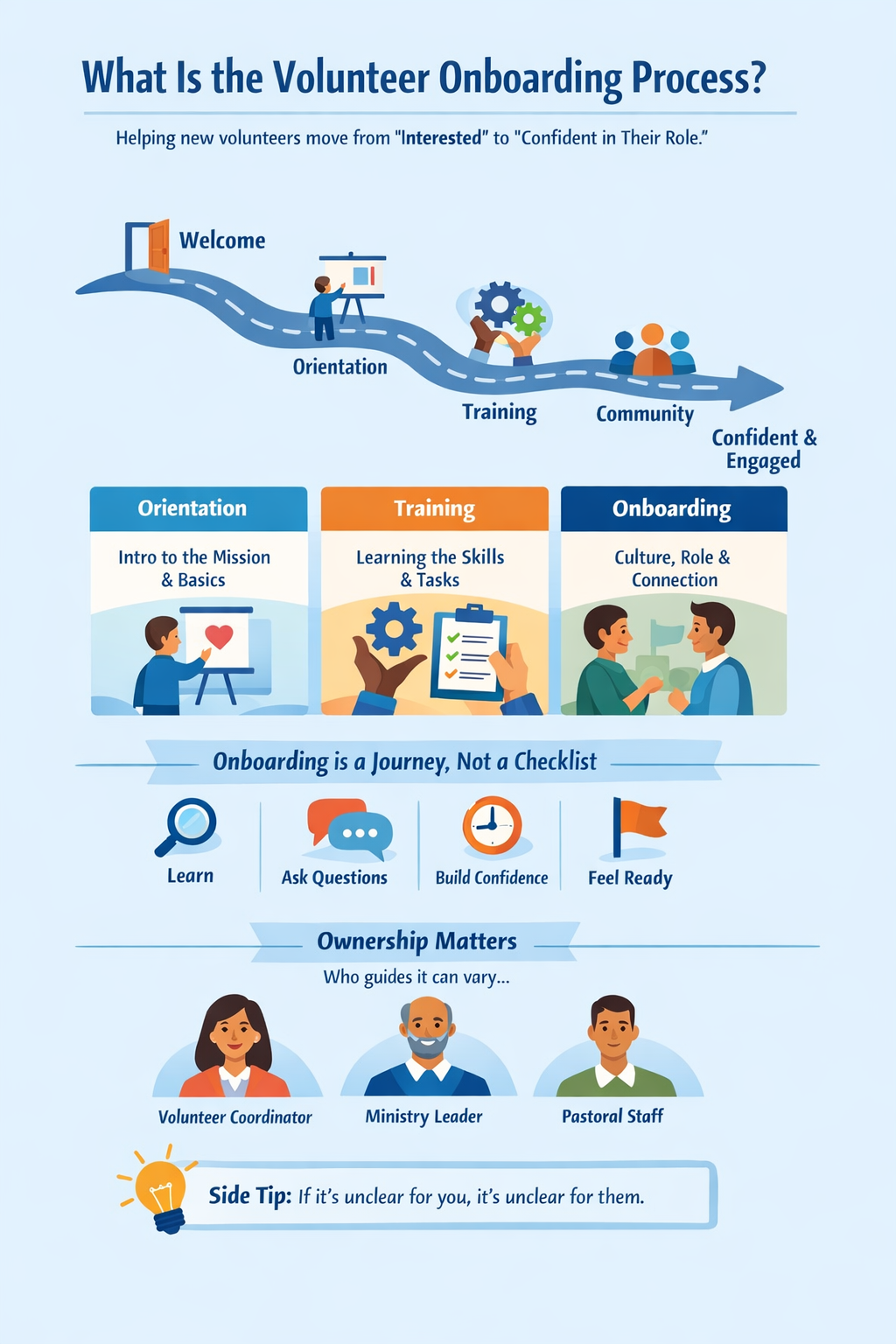
The volunteer onboarding process is the structured way you help new volunteers move from “interested” to “confident and effective in their role.” It covers everything that happens after someone says yes to volunteering and before they are fully settled and contributing with confidence. The goal is not speed. It is clarity, comfort, and readiness.
It helps to separate onboarding from related terms that are often mixed together:
- Orientation is usually a single moment or session. It introduces the organization, its mission, and basic expectations.
- Training focuses on skills and tasks. It teaches volunteers how to do the work.
- Onboarding connects both and extends beyond them. It brings people into the culture, the role, and the community over time.
Think of onboarding as a journey, not a checklist item. Volunteers need time to understand how things work, ask questions, and build confidence. Most issues with engagement or drop-off happen when onboarding ends too early.
Ownership of onboarding varies. In nonprofits, it often sits with a volunteer coordinator or learning and development lead. In churches, it is commonly shared between ministry leaders, volunteer coordinators, and pastoral staff. What matters most is not who owns it on paper, but that someone is clearly responsible for guiding volunteers through the full experience.
Side tip: If onboarding feels unclear internally, it almost always feels unclear to volunteers too.
The 5 Stages of the Volunteer Onboarding Process
A clear volunteer onboarding process works best when it follows a few predictable stages. This gives you structure while still allowing flexibility for different roles and ministries. Below is a practical way to think about onboarding from the volunteer’s point of view.
Stage 1: Pre-Onboarding and Expectations
Onboarding starts before a volunteer ever shows up.
At this stage, your main job is clarity. Volunteers should understand what the role involves, how much time it requires, and who they report to. Simple role descriptions and interest forms help set expectations early and prevent confusion later.
Applications and screening are also part of this phase. These steps should feel respectful and purposeful, not bureaucratic. In church volunteer onboarding, safeguarding and background checks are essential, especially for roles involving children or vulnerable groups. When explained clearly, these steps build trust rather than resistance.
Pre-boarding communication matters more than many teams realize. A short welcome email that confirms next steps, start dates, and points of contact helps volunteers feel prepared and valued.
Side tip: Silence between sign-up and day one is a common reason volunteers disengage before they even start.
Stage 2: Welcome and Orientation
The first day sets the tone.
A good welcome experience focuses on people, not paperwork. Volunteers should feel noticed, greeted, and supported. Orientation is where you introduce the mission, values, and how the organization operates day to day.
For churches, this stage often includes sharing the ministry vision and how volunteering connects to the broader faith community. Keep it grounded and practical. Volunteers want to know how their role fits into the bigger picture.
Social introductions matter here. Knowing names, faces, and where to go for help reduces anxiety and builds early belonging.
Stage 3: Training and Role Readiness
Once volunteers feel welcomed, they need to feel capable.
Training should match the role. General training covers shared expectations like safety, communication, and conduct. Role-specific training focuses on the actual tasks volunteers will perform.
Shadowing, mentoring, or buddy systems work well, especially for first-time volunteers. Learning alongside someone experienced lowers pressure and speeds up confidence.
Clear guidelines around safety, policies, and conduct protect both volunteers and the organization. These should be explained in plain language, not buried in documents.
Stage 4: Integration and Engagement
This stage is often overlooked, but it is where retention is shaped.
Early check-ins help you spot confusion or frustration before it turns into disengagement. Short conversations go a long way in helping volunteers feel supported.
As confidence grows, volunteers should be trusted with more autonomy. Feeling useful and relied upon is a strong motivator.
Team integration also matters. Volunteers who feel part of a group are far more likely to stay involved.
Side tip: Engagement usually drops when volunteers feel invisible, not when they feel busy.
Stage 5: Ongoing Support and Development
Onboarding does not stop after the first few weeks.
Ongoing support includes regular feedback, recognition, and simple thank-you moments. Volunteers want to know their contribution matters.
Over time, some volunteers will want to grow. Offering new responsibilities, skill development, or leadership pathways keeps experienced volunteers engaged and invested.
In both nonprofits and churches, this stage helps turn short-term helpers into long-term contributors who strengthen your community.
The 5 C’s of Volunteer Onboarding
The 5 C’s offer a simple way to check whether your volunteer onboarding process is doing what volunteers actually need. It is not a new system to add on top of your work. It is a lens you can use to spot gaps and improve what already exists.
Compliance
Volunteers need to understand the rules that keep everyone safe. This includes policies, safety practices, and safeguarding requirements. In church volunteer onboarding, this area carries extra responsibility, especially when working with children or vulnerable groups. When compliance is explained clearly and calmly, it builds trust instead of fear.
Side tip: Volunteers are more comfortable with rules when they understand the reason behind them.
Clarification
Most volunteer frustration comes from unclear expectations. Clarification means volunteers know what they are responsible for, where their role begins and ends, and who to contact when questions come up. This reduces stress and prevents volunteers from feeling overwhelmed or underused.
Culture
Culture answers the unspoken questions. How do we treat people here? What matters most? How do decisions get made? Volunteers are not just supporting tasks. They are stepping into a community. In churches, culture is often closely tied to mission and faith, which makes alignment even more important.
Connection
People volunteer to be part of something. Connection is about relationships, not structures. Simple interactions, friendly check-ins, and being known by name help volunteers feel they belong. Strong connections often matter more than perfect systems.
Side tip: A single meaningful relationship can be enough to keep a volunteer engaged long term.
Confidence
Confidence grows when volunteers feel prepared and supported. This comes from steady guidance, access to help, and permission to ask questions. Volunteers who feel confident are more likely to stay involved and take initiative.
Together, the 5 C’s matter because volunteers choose to give their time. In both nonprofit and church environments, these five areas help turn good intentions into consistent, meaningful contribution.
Volunteer Onboarding vs Church Volunteer Onboarding
At a foundational level, most volunteer programs share the same goals. Volunteers need to understand their role, feel welcomed, and know how to contribute safely and effectively. Whether the setting is a nonprofit, community group, or church, the volunteer onboarding process should provide structure, support, and a clear path into the work.
What changes in a church setting is the context.
The church volunteer onboarding process is closely tied to faith and mission. Volunteers are not only supporting activities. They are participating in ministry. This means onboarding often includes spiritual alignment, shared values, and an understanding of how service connects to the church’s purpose.
Churches also rely on a wide range of ministry-specific roles. A volunteer working with youth, for example, needs very different preparation than someone serving on a worship team or greeting at the door. Onboarding must be flexible enough to adjust training, expectations, and oversight based on the ministry involved.
Trust and ethics carry added weight in church environments. Safeguarding, confidentiality, and appropriate conduct are essential, especially when volunteers work with children or vulnerable individuals. Clear guidance protects both volunteers and the community.
Side tip: One onboarding framework can work across ministries, as long as the role-specific pieces are thoughtfully adapted.
When churches recognize these differences and plan for them, onboarding becomes both practical and meaningful for everyone involved.
Used consistently, this checklist supports both volunteers and the people responsible for onboarding them.
Volunteer Onboarding Checklist
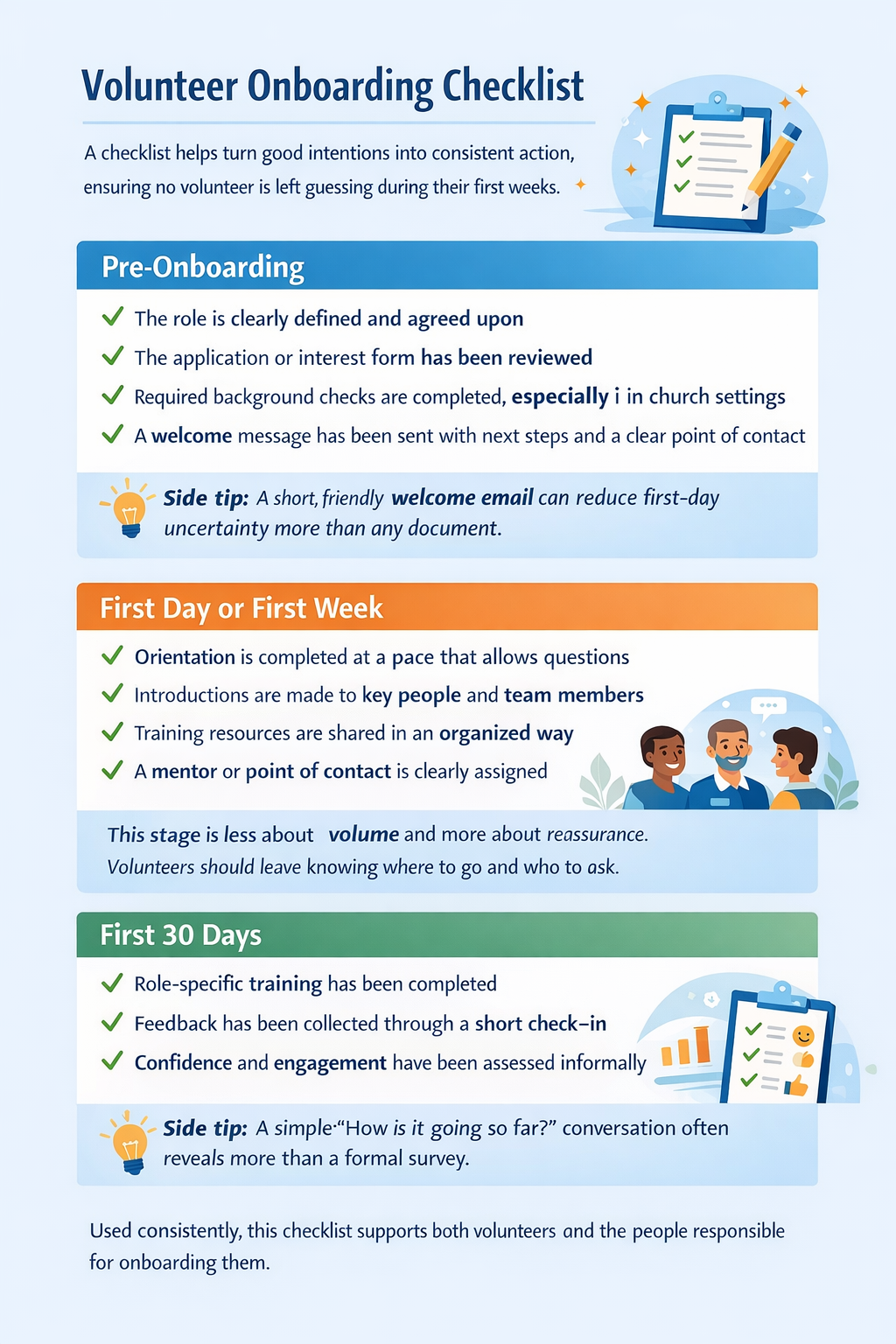
A checklist helps turn good intentions into consistent action. It gives your team a shared reference point and helps ensure no volunteer is left guessing during their first weeks. This checklist is designed to support a clear and steady volunteer onboarding process without adding unnecessary steps.
Pre-Onboarding
Before a volunteer arrives, confirm the basics.
- The role is clearly defined and agreed upon
- The application or interest form has been reviewed
- Required background checks are completed, especially in church settings
- A welcome message has been sent with next steps and a clear point of contact
Side tip: A short, friendly welcome email can reduce first-day uncertainty more than any document.
First Day or First Week
The focus here is orientation and connection.
- Orientation is completed at a pace that allows questions
- Introductions are made to key people and team members
- Training resources are shared in an organized way
- A mentor or point of contact is clearly assigned
This stage is less about volume and more about reassurance. Volunteers should leave knowing where to go and who to ask.
First 30 Days
This is where early engagement is shaped.
- Role-specific training has been completed
- Feedback has been collected through a short check-in
- Confidence and engagement have been assessed informally
Side tip: A simple “How is it going so far?” conversation often reveals more than a formal survey.
Used consistently, this checklist supports both volunteers and the people responsible for onboarding them.
Volunteer Onboarding Templates: What to Include
Templates help you create a consistent volunteer onboarding process without making the experience feel rigid. When used well, they save time for your team and reduce uncertainty for volunteers.
Welcome email
This should confirm the volunteer’s role, start date, and next steps. It works best when it also names a real person they can contact with questions. A clear, friendly tone helps volunteers feel expected and prepared.
Volunteer role description
This template should explain the purpose of the role, key responsibilities, expected time commitment, and any boundaries. Clear role descriptions prevent confusion and help volunteers decide if the role is a good fit.
First-week training plan
This outlines what the volunteer will learn during their first days, who they will work with, and when check-ins will happen. Structure matters, but flexibility helps volunteers learn at a comfortable pace.
For churches, onboarding templates often include a short ministry overview, a values or faith statement, and safeguarding guidelines.
Side tip: Templates are most effective when they support real conversations, not replace them.
Common Volunteer Onboarding Mistakes
Even well-intentioned teams run into the same onboarding challenges. Being aware of them makes them easier to avoid.
Ending Onboarding Too Early
One of the most common mistakes is treating onboarding as something that ends after orientation. Volunteers often need the most support after they begin serving, not before. When onboarding stops too soon, uncertainty shows up later as disengagement.
Overloading Volunteers With Information
New volunteers are sometimes given too much context at once. Policies, processes, and background information are important, but timing matters. When everything is shared upfront, very little is retained.
Failing to Follow Up
Without early check-ins, volunteers are left to guess whether they are doing things correctly. This silence can be misread as disinterest or lack of structure. Simple follow-ups help volunteers adjust and stay confident.
Assuming Good Intentions Are Enough
Motivation does not replace preparation. Even committed volunteers need guidance, practice, and clear boundaries to feel effective in their role.
Side tip: When volunteers disengage quietly, the cause is often unclear onboarding rather than lack of commitment.
Measuring Onboarding Success
Measuring onboarding does not require complex systems. What matters is whether volunteers stay, feel involved, and understand their role.
Early Retention
Early retention shows whether onboarding is working beyond the first interaction. When volunteers leave within the first few weeks, it often signals gaps in clarity or support rather than a lack of interest.
Engagement Levels
Engagement can be seen in small behaviors. Consistent attendance, questions, and participation usually indicate that volunteers feel connected and comfortable in their role.
Role Readiness
Role readiness is about confidence and understanding. Volunteers should know what they are responsible for and when to ask for help without hesitation.
Using Feedback to Improve
Feedback helps refine onboarding over time. Short check-ins or simple surveys reveal patterns and highlight where adjustments are needed.
Side tip: Looking at trends over time matters more than tracking individual moments.
Conclusion: Building an Onboarding Process That Works
A strong volunteer onboarding process is built through clear stages, practical frameworks, and steady follow-through. When onboarding is treated as an experience rather than a task, volunteers are more likely to stay engaged and feel confident in their role.
Intentional onboarding leads to stronger volunteer programs because it respects people’s time and effort. It reduces confusion, builds trust, and helps volunteers contribute more effectively from the start.
Every organization already has some form of onboarding in place. The opportunity is to review it with fresh eyes, identify gaps, and make small improvements that have lasting impact.


