


Why Look for a Lepaya Alternative?
Lepaya has built a strong reputation in corporate upskilling, particularly across European markets. Its managed service model pairs curated soft skills content with live trainers, which works well for organizations that want a hands-off approach to professional development. But that same model creates friction for teams with different needs, and there are specific reasons L&D leaders start exploring Lepaya alternatives.
Premium pricing tied to a managed service. Lepaya operates as a blended learning provider, not a self-serve platform. That means you are paying for content, trainers, and program management bundled together. For organizations that already have internal facilitators or subject matter experts, this model creates cost overlap. You are paying for services you may not need.
Limited self-serve content creation. Lepaya's strength is its pre-built curriculum delivered by its own trainers. If your team needs to create custom courses, upload proprietary training materials, or build role-specific learning paths, the platform does not prioritize those workflows. Teams that need authoring flexibility often hit a wall.
Narrow content focus on soft skills. Lepaya concentrates on power skills: communication, leadership, resilience, time management. That is valuable, but organizations that also need technical training, compliance modules, product knowledge courses, or domain-specific upskilling will need a second platform to cover those gaps.
European market orientation. Lepaya's operations, content, and trainer network are strongest in Europe. Global organizations or teams based primarily in North America or Asia-Pacific may find that regional coverage, language options, and time zone availability do not fully match their needs.
No self-hosted option. For enterprises in regulated industries that require data residency controls or on-premise deployment, Lepaya's SaaS-only model may not meet compliance requirements.
Limited LMS functionality. Lepaya is not a learning management system. It does not offer strong learner tracking, custom reporting dashboards, certification management, or the administrative controls that L&D teams expect from a platform they manage directly.
These are not criticisms of Lepaya's quality. The platform delivers well within its scope. But if your organization needs more control over content, broader topic coverage, or a self-serve learning management system, the alternatives below address those gaps directly.
What to Look for in an Upskilling Platform
Before comparing individual tools, it helps to define the criteria that matter most for your organization's upskilling strategy. The right platform depends on the specific gap Lepaya is not filling.
Content scope and customization. Determine whether you need a pre-built content library, the ability to create your own courses, or both. Some platforms offer thousands of ready-made courses but limited authoring tools. Others give you a blank canvas. Your training delivery methods should align with what the platform actually supports.
Self-serve versus managed delivery. Lepaya's managed model is a strength for some organizations and a constraint for others. Decide whether your team wants to run programs independently, or whether you still need vendor-supported facilitation and program design.
Technical training coverage. If your upskilling needs extend beyond soft skills into software development, data analysis, cloud infrastructure, or cybersecurity, verify that the platform covers those domains with depth, not just surface-level introductions.
Pricing model transparency. Some platforms price per user per month, others per seat in bulk, and some use custom enterprise quotes. Calculate total cost of ownership including implementation, content licensing, and any per-learner fees that scale with adoption.
Integration with existing systems. Check whether the platform connects to your HRIS, SSO provider, and existing LMS integrations. Smooth data flow between your learning platform and your HR tech stack matters for reporting and compliance.
Analytics and reporting depth. Basic completion tracking is table stakes. Look for platforms that provide skill gap analysis, manager dashboards, learning path progress, and the ability to tie training activity to business outcomes. Solid learning analytics separate serious upskilling platforms from content libraries with a progress bar.
Global scalability. For multinational teams, consider language support, regional content relevance, mobile accessibility, and time zone coverage for any live components.
10 Best Lepaya Alternatives
The platforms below span a wide range, from collaborative learning tools to enterprise LMS platforms to content marketplaces. Each addresses a different combination of the gaps outlined above. They are organized to cover distinct use cases rather than ten variations of the same approach.
Teachfloor
Overview
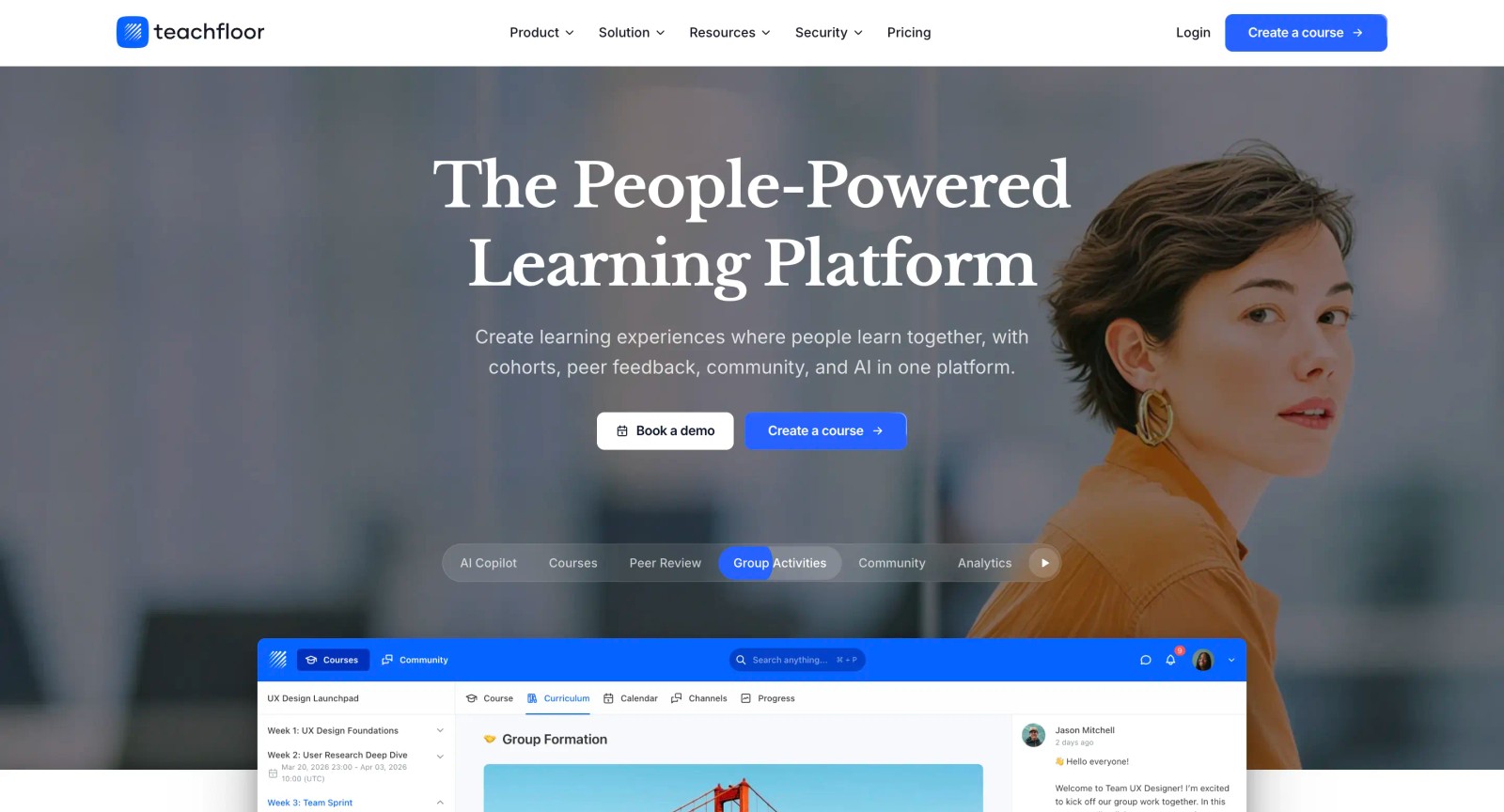
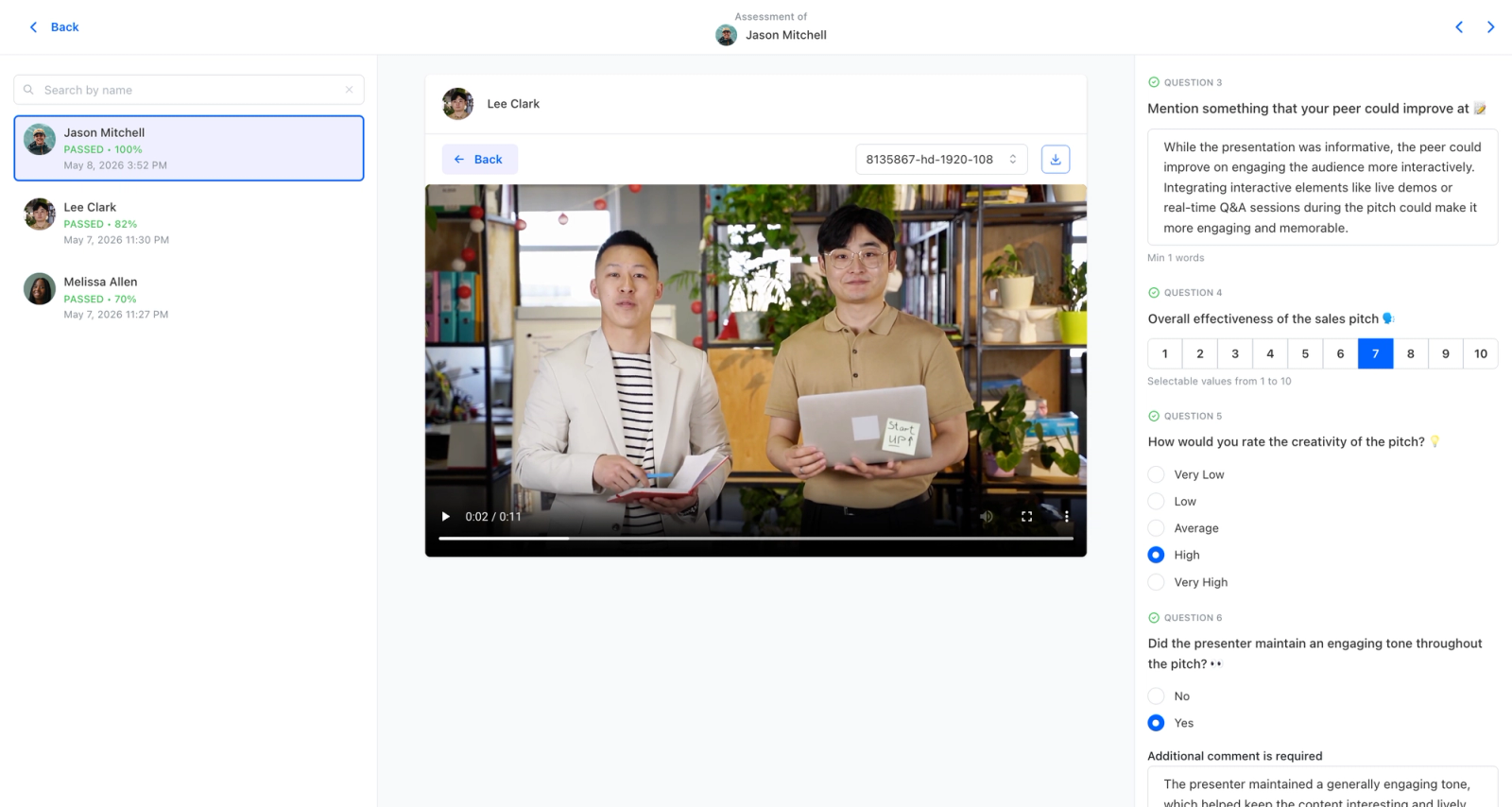
Teachfloor supports the blended power-skills model directly: you can run cohorts that combine live sessions with self-paced modules, then use peer review so learners practice feedback, communication, and leadership on each other's work against a structured rubric, which is how power skills actually develop. Discussion threads keep a cohort engaged between sessions, and drip scheduling paces a multi-week program so it builds rather than dumps. Unlike a managed service, you own the curriculum and run the program yourself.
Core Capabilities
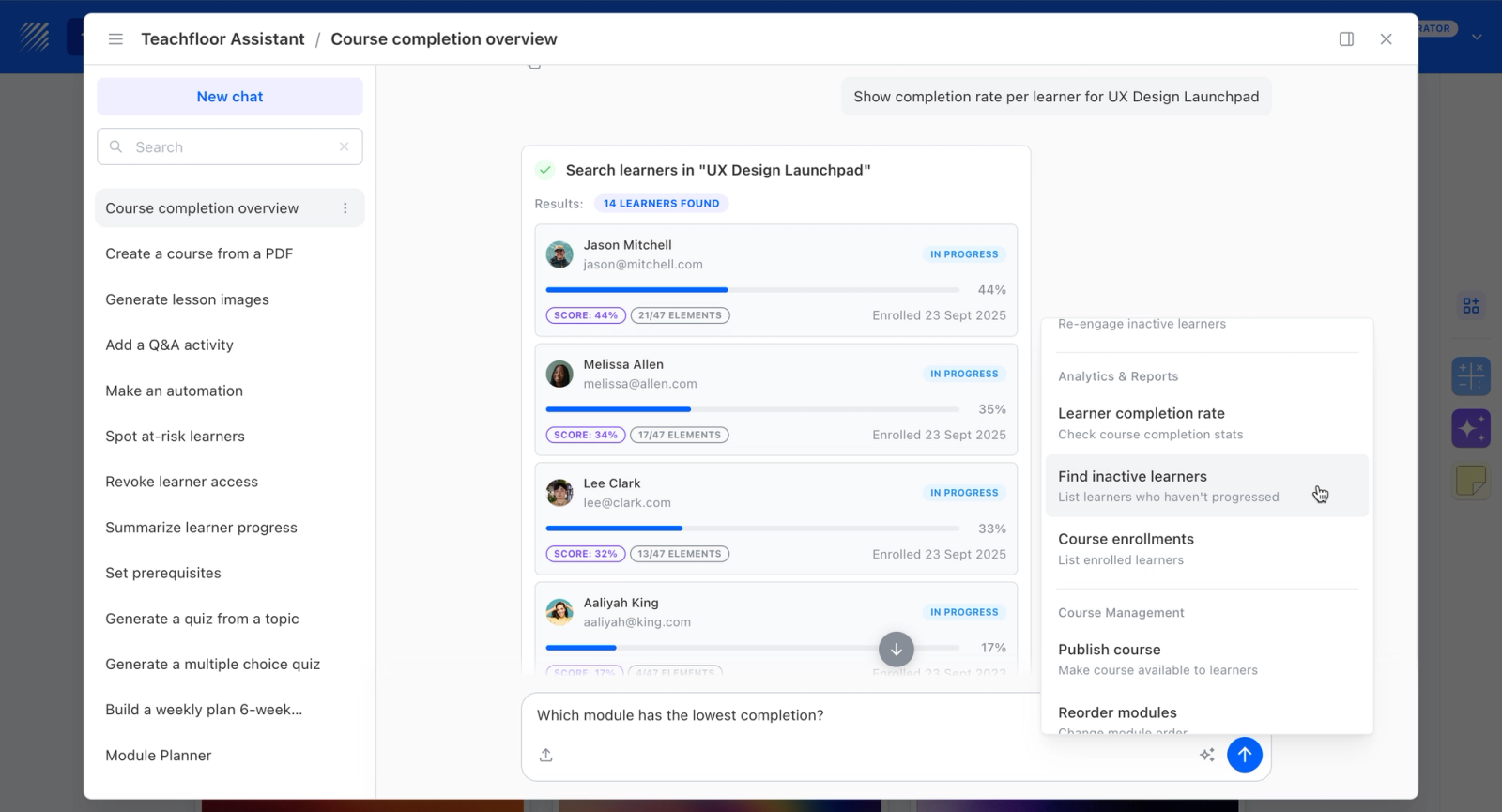
- AI course creation that turns documents, videos, and outlines into structured courses
- Flexible delivery: self-paced, social, live, or cohort-based, mixed within one program
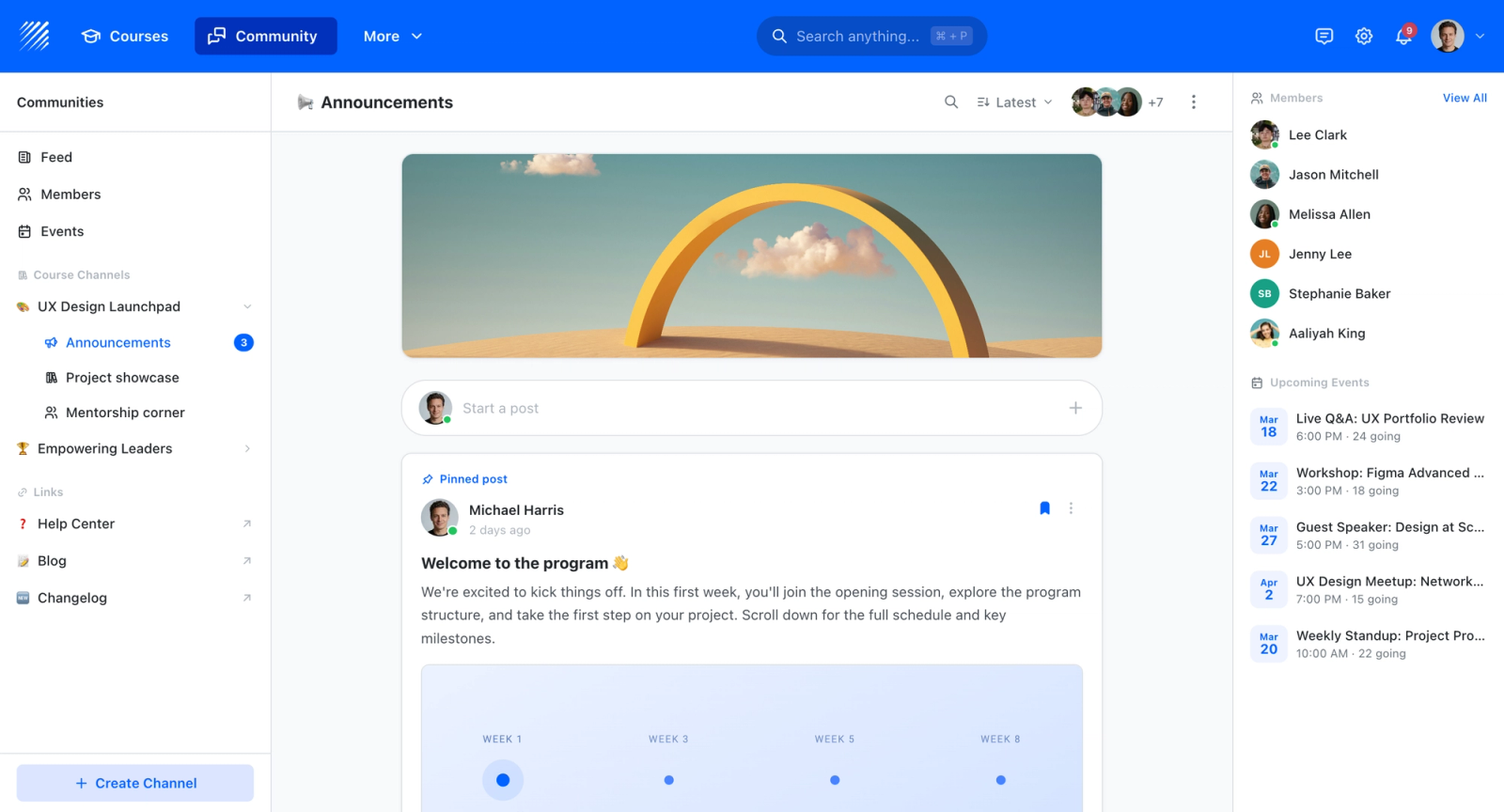
- Community and discussion spaces that keep learners engaged between sessions
- Peer review and collaborative assignments for active, social learning
- Live sessions with Zoom and Google Meet for instructor-led training
- White-label branding on your own custom domain
- Certificates, payments, and enrollment management for paid or external programs
- Analytics on completion, participation, and engagement
Best For
L&D teams running blended power-skills and upskilling programs that need live sessions plus structured peer practice, with full control over their own curriculum.
Pricing Overview
- Startup plan from $89 per month for up to 50 learners
- Full Features plan with custom pricing, white-label, SSO, and advanced integrations
- 14-day free trial; no permanent free plan
- Nonprofit discounts available
Limitations
- Not built to be a 10,000-seat self-paced content warehouse; that is a different category.
- The integration catalog is smaller than large enterprise suites.
Quick Comparison Insight
Udemy Business and Pluralsight are content libraries, and NovoEd leans enterprise services; Teachfloor lets you build and own facilitated, peer-practice-driven upskilling cohorts yourself without a managed-program contract.
Docebo
Overview
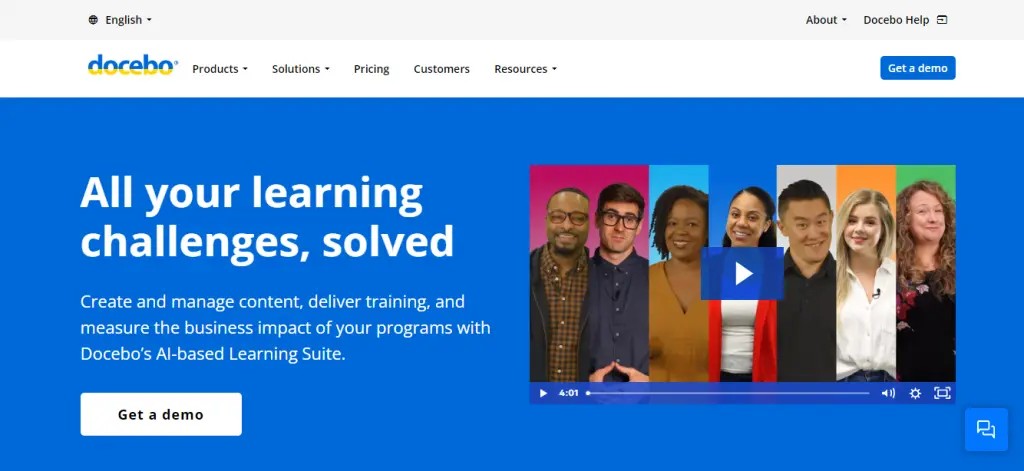
Docebo is an enterprise learning platform that combines AI-powered content recommendations, a strong LMS, and a content marketplace in a single system. Where Lepaya provides a curated, trainer-led experience, Docebo gives L&D teams full administrative control over how training is organized, delivered, tracked, and reported.
Docebo's depth shows in its configuration options. The platform supports formal learning paths, social learning, content curation from external sources, and compliance workflows within a single environment. It is not a simple content library. It is a full learning infrastructure platform that scales across departments and geographies.
Core Capabilities
- AI-powered content recommendations based on role, skill gaps, and learning history
- Built-in content marketplace with courses from third-party providers
- Custom learning path builder with branching logic and prerequisites
- White-label branding with custom domains for internal and external audiences
- Advanced reporting engine with customizable dashboards and scheduled report delivery
- Compliance management with automated recertification tracking and audit trails
- Social learning features including peer content sharing and expert Q&A boards
- SCORM, xAPI, and AICC support for third-party content import
- Native integrations with Salesforce, Workday, Microsoft Teams, and 400+ tools via API
- Multi-tenancy architecture for managing separate learning environments across business units
Standout Strength
Docebo's AI engine sets it apart from most LMS platforms. The system learns from user behavior to surface relevant content, identify skill gaps, and automate administrative tasks. For large enterprises managing thousands of learners across multiple departments, that automation reduces the manual workload on L&D teams significantly.
Best For
Mid-to-large enterprises (1,000+ employees) that need a centralized learning platform with deep administrative control, compliance tracking, and multi-department management. Particularly strong for organizations with complex reporting requirements and global teams that need localized content delivery.
Pricing Overview
- Custom enterprise pricing based on number of active users
- Pricing model: Annual contract with per-user fees
- Free demo available; no public free trial
Limitations
- Implementation complexity. Docebo's depth requires significant setup time, and many customers engage professional services or a dedicated implementation partner.
- Cost is higher than mid-market alternatives. The platform targets enterprise buyers, and pricing reflects that positioning.
- The native content creation tools are functional but not as intuitive as dedicated authoring platforms. Most teams supplement with a separate authoring tool.
Quick Comparison Insight
Far more configurable than Lepaya with full LMS capabilities, but requires a larger investment in setup and ongoing administration. Better suited for organizations that want to own their learning infrastructure.
NovoEd
Overview
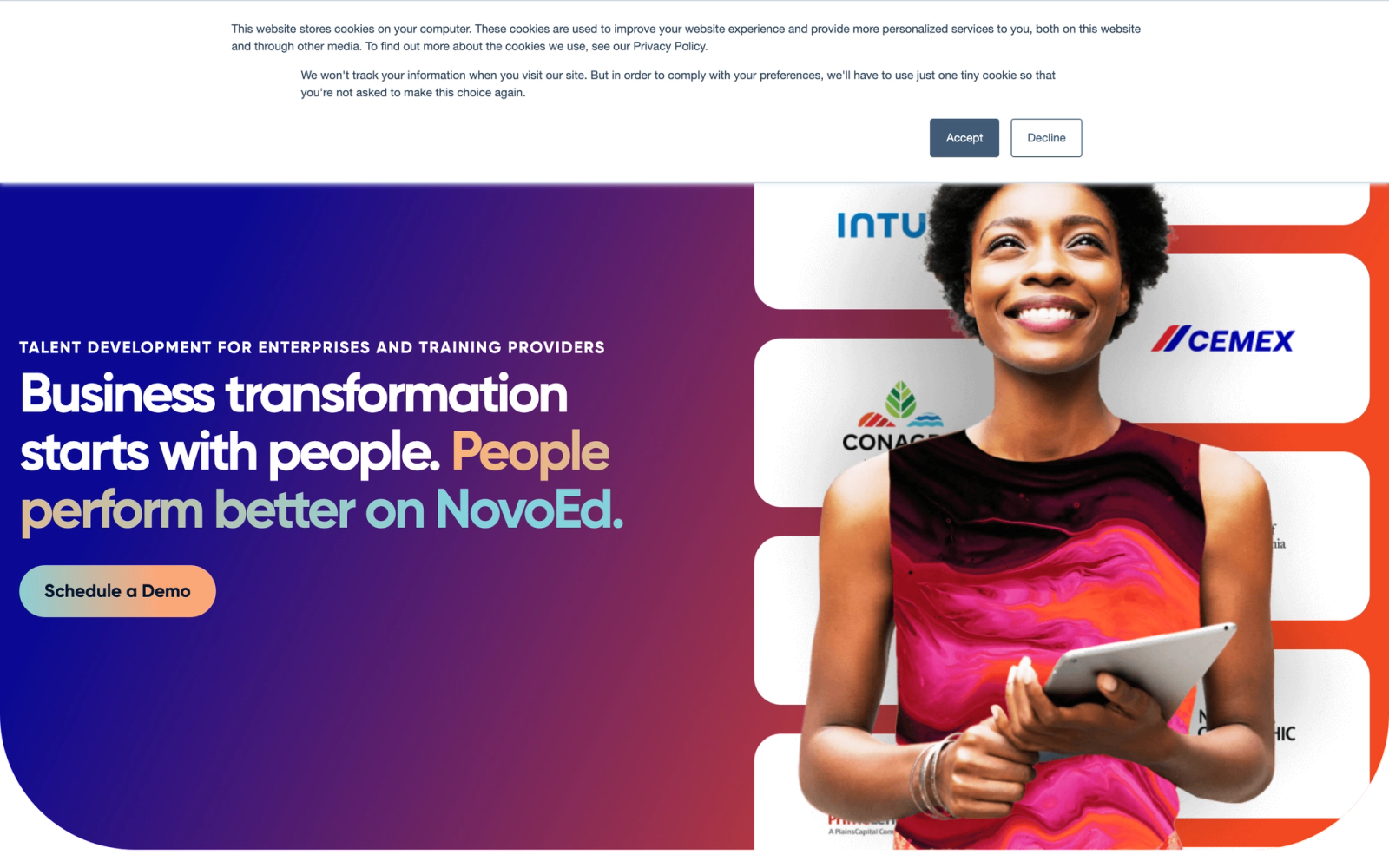
NovoEd focuses on high-impact learning experiences for leadership development, executive education, and organizational transformation programs. Unlike content libraries that prioritize volume, NovoEd is built around cohort-based learning with structured collaboration, mentoring, and capstone projects.
The platform's design philosophy mirrors what business schools and executive education programs look like, translated into a digital environment. The emphasis on group exercises, peer feedback, and mentor interactions defines the experience. This is not a platform where learners passively watch videos. It is designed to push participants into active application.
Core Capabilities
- Cohort-based program design with scheduled milestones, group assignments, and peer review workflows
- Built-in mentoring and coaching tools with 1:1 and group configurations
- Team-based projects and capstone assignments with rubric-based evaluation
- Video practice and submission tools for presentation and communication skills
- Discussion spaces integrated at the course section level
- Progress tracking with manager visibility into participant engagement and performance
- Custom branding and white-label options for branded learning academies
- Integrations with major HRIS and SSO providers
- Multi-language support for global program delivery
- Analytics dashboards with cohort comparison and completion benchmarking
Standout Strength
NovoEd is purpose-built for programs where the learning outcome depends on interaction, not just content consumption. Organizations choose it when passive video courses have failed to produce behavior change, particularly in leadership and management development. The structured collaboration model is what makes the training stick.
Best For
Enterprises running high-stakes leadership development, executive education, and organizational change programs. Ideal for L&D teams at Fortune 500 companies and business schools that need to replicate the intensity of in-person cohort programs in a digital format. If your corporate training prioritizes behavior change over content completion, NovoEd is designed for that outcome.
Pricing Overview
- Custom enterprise pricing
- Pricing model: Program-based or annual platform license
- No public free trial; demo available on request
Limitations
- Not designed for self-paced or on-demand content delivery. If you need a large library of courses that employees browse independently, NovoEd is the wrong fit.
- Higher price point than general-purpose LMS platforms, reflecting its focus on premium program experiences.
- Requires dedicated program design effort. The platform's value depends on how well you structure the cohort experience, not just on the technology itself.
Quick Comparison Insight
Shares Lepaya's emphasis on facilitated, structured learning, but gives your team full control over content and program design instead of relying on a vendor's curriculum.
Cornerstone OnDemand
Overview
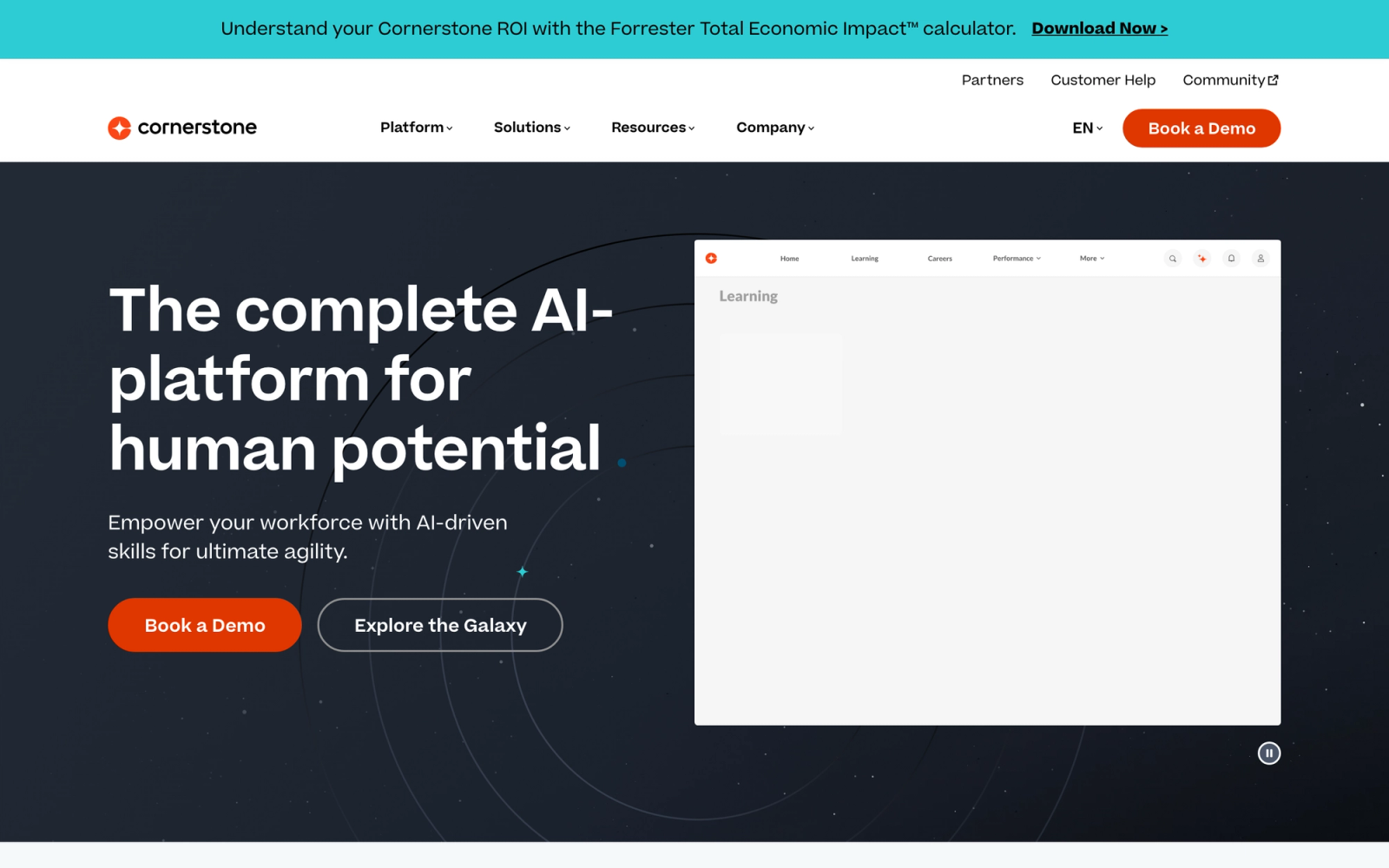
Cornerstone OnDemand is one of the most established enterprise talent management platforms in the market. Its learning module sits within a broader stack that includes performance management, recruiting, HR planning, and content subscriptions. For organizations that want upskilling embedded within their entire talent strategy, Cornerstone provides that unified layer.
What differentiates Cornerstone from Lepaya is scope. Lepaya delivers a focused upskilling service. Cornerstone provides the infrastructure to manage the full employee development lifecycle, from identifying skill gaps to delivering training to connecting learning outcomes with performance reviews. The trade-off is complexity. This is not a platform you configure in a week.
Core Capabilities
- Learning management with formal, informal, and social learning support
- Skill graph technology that maps employee skills to roles and identifies gaps
- Content subscriptions including Cornerstone Content Anytime with curated third-party courses
- AI-driven content recommendations and personalized learning paths
- Compliance training with automated tracking, audit trails, and certification management
- Performance management integration connecting learning to review cycles and development goals
- Extended enterprise learning for partner, customer, and contractor training
- Advanced reporting with custom dashboards, scheduled exports, and data visualization
- Mobile app with offline content access
- 50+ pre-built integrations including Workday, SAP, Salesforce, and Microsoft 365
Standout Strength
Cornerstone's integration of learning with talent management is its defining advantage. Skill gap analysis feeds directly into learning recommendations, which connect to performance goals and succession planning. For organizations that want a single system to manage the entire development pipeline, from skill identification to training delivery to career progression, that end-to-end visibility is difficult to replicate with separate tools.
Best For
Large enterprises (2,500+ employees) with mature L&D functions that need learning tightly integrated with performance management, succession planning, and compliance workflows. Particularly strong for regulated industries (financial services, healthcare, manufacturing) where audit trails and certification tracking are non-negotiable.
Pricing Overview
- Custom enterprise pricing based on modules selected and user count
- Pricing model: Annual subscription, often multi-year contracts
- No public free trial; demo available on request
Limitations
- Implementation timelines are measured in months, not weeks. Most deployments require a systems integrator or Cornerstone's professional services team.
- The user interface has improved over time but still feels dated in certain modules compared to newer platforms.
- Cost is enterprise-level. Smaller organizations or teams with simple upskilling needs will find the platform over-engineered for their requirements.
Quick Comparison Insight
Broader and deeper than Lepaya across the entire talent management lifecycle, but requires a significantly larger investment in both cost and implementation effort.
Degreed
Overview
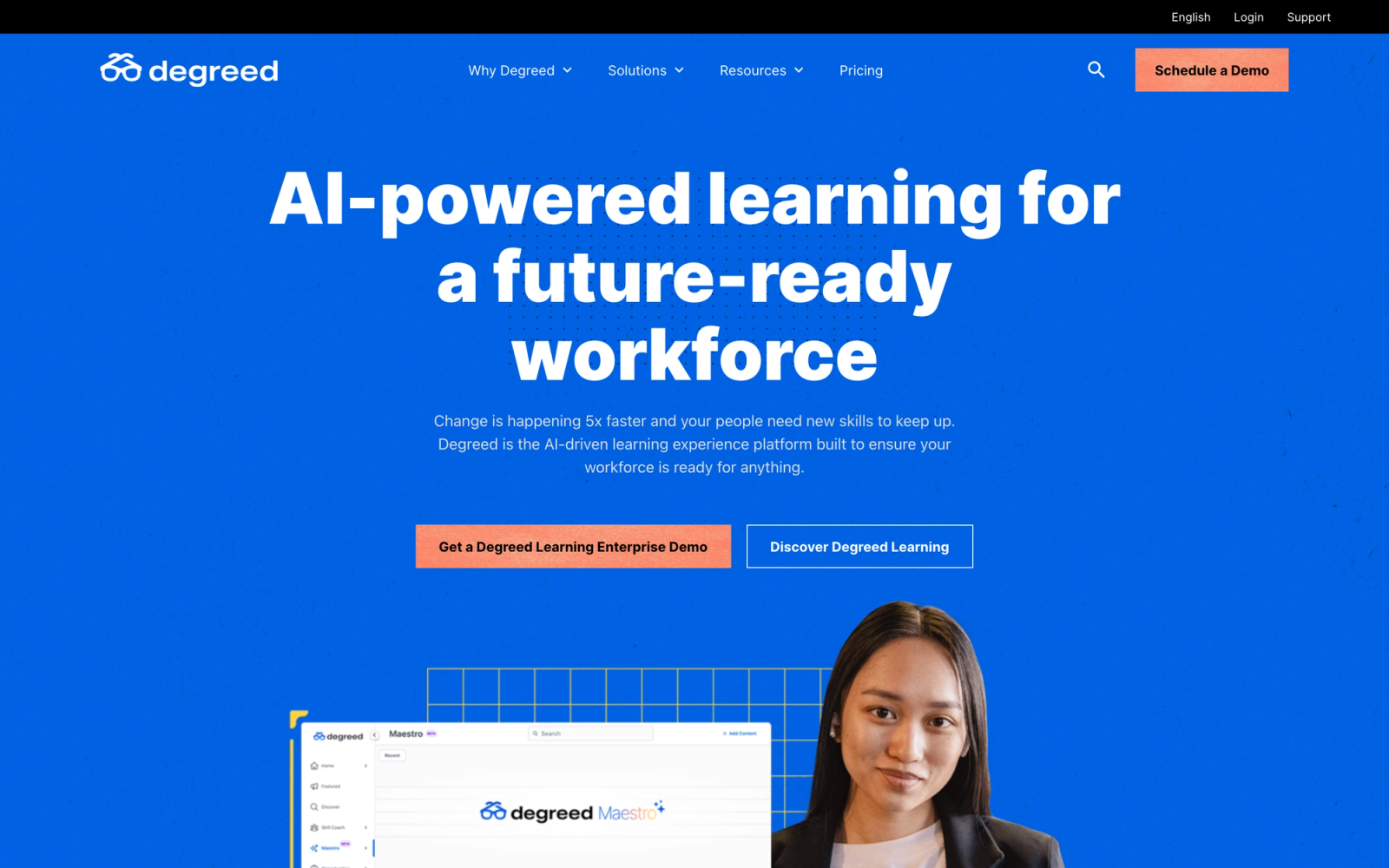
Degreed positions itself as a workforce upskilling platform, not a traditional LMS. The core idea is that learning happens everywhere, through formal courses, articles, books, podcasts, videos, and on-the-job experiences, and Degreed aggregates all of that activity into a single skill profile for each employee.
The experience of using Degreed feels different from most learning platforms. Instead of navigating a course catalog, employees see a personalized feed of learning resources pulled from multiple sources: internal content, licensed libraries (like Pluralsight, Coursera, or edX), and open web content. The platform's skill intelligence engine maps all of that activity to competency frameworks, giving L&D teams visibility into organizational skill development at scale.
Core Capabilities
- Unified learning experience aggregating content from internal libraries, third-party providers, and the open web
- Skill measurement and tracking with competency frameworks and self-assessment tools
- AI-powered content recommendations based on skill profiles and career goals
- Learning pathways curated by L&D teams or generated automatically from skill data
- Integration hub connecting 30+ content providers into a single search and discovery interface
- Manager dashboards showing team skill levels, learning activity, and development progress
- Peer-to-peer content sharing and expert endorsements
- Certification and credential tracking
- Mobile app with offline access and push notifications
- Open API with strong data export for custom analytics
Standout Strength
Organizations choose Degreed when they want to move beyond course completion as the primary learning metric. The skill intelligence engine provides a data layer that connects learning activity to actual skill development across the organization. For companies investing heavily in workforce transformation, that skill visibility is what drives strategic training KPIs and resource allocation decisions.
Best For
Large enterprises (5,000+ employees) with complex upskilling agendas and multiple content sources that want to unify the learning experience under a single platform. Strong fit for organizations pursuing strategic workforce planning where skill data needs to inform hiring, mobility, and succession decisions.
Pricing Overview
- Custom enterprise pricing
- Pricing model: Annual contract based on number of active users
- No public free tier; demo available on request
Limitations
- Degreed is designed for scale. Smaller organizations (under 1,000 employees) may find the platform over-engineered and the price point difficult to justify.
- The value of skill intelligence depends on data quality. If employees do not actively use the platform and log learning activity, the skill data becomes unreliable.
- Content aggregation works best when you already subscribe to multiple providers. Without those licenses, the content experience can feel thin.
Quick Comparison Insight
A strategic layer above Lepaya's focused training delivery. Degreed does not replace your content, it connects and measures all of it. Better for organizations that already have content but lack skill-level visibility.
Udemy Business
Overview
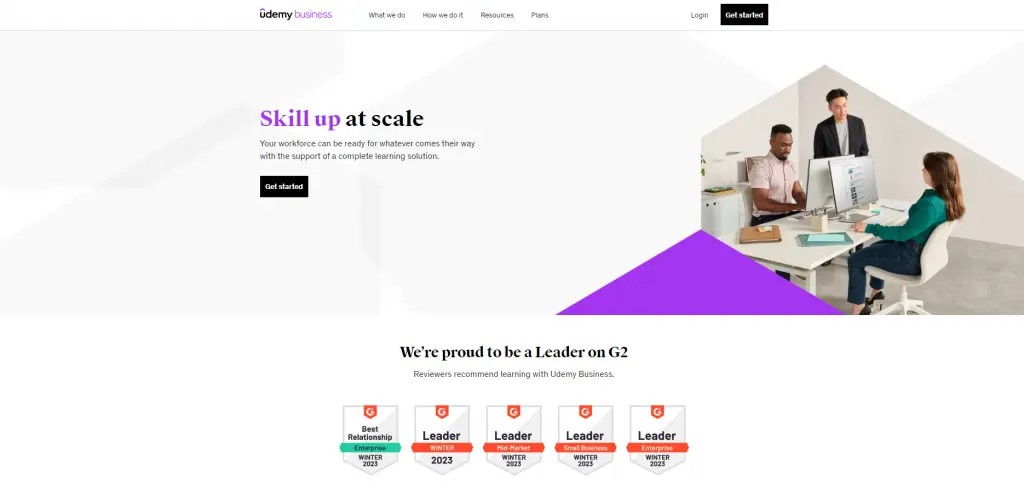
Udemy Business gives organizations access to a curated subset of Udemy's massive course marketplace, filtered for professional relevance and quality. The library spans technical skills (software development, data science, cloud computing, cybersecurity), business skills, and personal development, covering a far wider range of topics than Lepaya's soft skills focus.
Udemy Business stands out for the sheer breadth of its content. The catalog spans Python programming, negotiation tactics, project management methodologies, and far more. That range makes it useful for organizations where upskilling needs vary across departments. Engineering teams and marketing teams can use the same platform without either group finding the catalog irrelevant.
Core Capabilities
- Access to 27,000+ courses curated for enterprise use from Udemy's broader marketplace
- Technical skills coverage spanning software development, data science, IT operations, and cloud platforms
- Business and soft skills content including leadership, communication, and productivity
- Custom learning paths that L&D teams can build by combining courses from the library
- Coding exercises and hands-on labs for technical skill courses
- SSO integration with major identity providers
- Admin analytics dashboard with adoption metrics, popular courses, and team activity reports
- SCORM export for selected courses to import into an existing LMS
- Mobile app with offline download for on-the-go learning
- API access for custom reporting and user management
Standout Strength
Volume and variety at a predictable cost. Udemy Business gives every employee access to thousands of courses for a flat per-user fee. For organizations that need to cover both technical and non-technical training across a diverse workforce, that breadth eliminates the need to license multiple content providers.
Best For
Mid-size to large organizations (200+ employees) that need a broad, self-serve content library covering technical and business skills. Particularly strong for technology companies, consulting firms, and any organization where employees are expected to self-direct their professional development across diverse skill areas.
Pricing Overview
- Starting price: $30 per user per month (Team plan, billed annually)
- Enterprise plan: Custom pricing for organizations with 5,000+ employees
- Free trial available for the Team plan
Limitations
- Content quality varies. While the curated library filters out the lowest-quality courses, the instructor-driven model means some courses are better produced and more current than others.
- Limited LMS functionality. Udemy Business is a content platform, not a full learning management system. You cannot build custom courses, manage compliance workflows, or run blended programs natively.
- No live instructor-led training component. Unlike Lepaya's blended model, Udemy Business is entirely self-paced and on-demand.
Quick Comparison Insight
Far broader content coverage than Lepaya at a lower per-user cost, but entirely self-paced. Organizations that need structured facilitation alongside content will need to layer that on separately.
Pluralsight
Overview
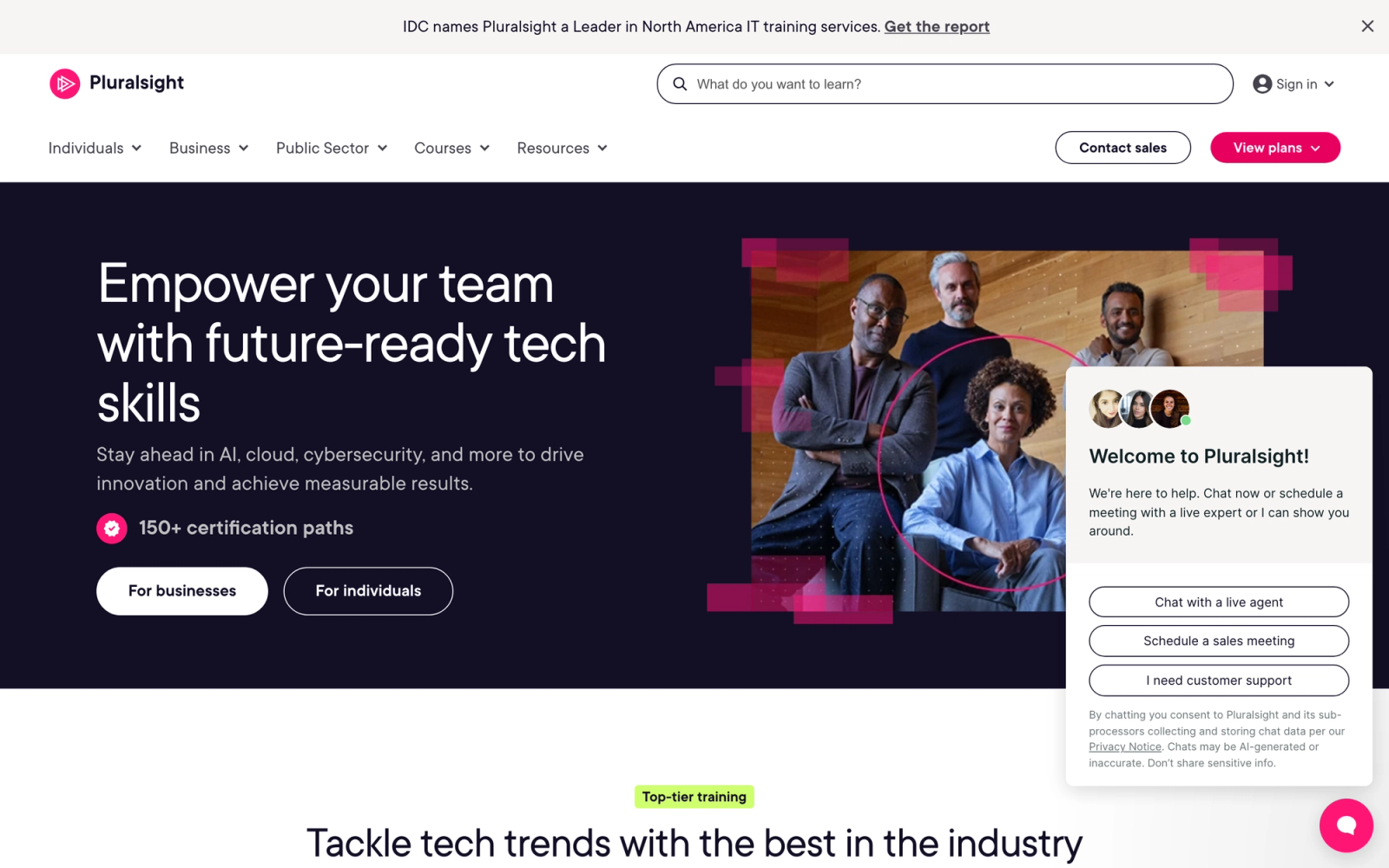
Pluralsight is a technology-focused learning platform built for engineering, IT, and data teams. Its course library, skill assessments, and hands-on labs are designed specifically for technical roles, covering software development, cloud infrastructure, cybersecurity, data engineering, and IT operations.
Where Lepaya focuses on soft skills with human trainers, Pluralsight goes deep on hard technical skills with a structured assessment methodology. The platform's Skill IQ assessments let learners and managers benchmark proficiency levels against industry standards, then Pluralsight recommends targeted courses to close the gap. That assessment-driven approach gives the training needs assessment a data foundation rather than relying on self-reporting.
Core Capabilities
- 7,500+ courses focused on technology, IT, and data skills
- Skill IQ assessments that benchmark proficiency and identify knowledge gaps
- Role IQ assessments that evaluate readiness for specific technical roles
- Hands-on labs and sandbox environments for cloud, security, and development practice
- Guided learning paths organized by role, technology, and certification objectives
- Cloud labs for AWS, Azure, and Google Cloud with real environment access
- Advanced analytics with team skill heatmaps, usage reports, and skill trend tracking
- Integration with LMS platforms via SCORM and LTI connectors
- SSO and SAML support for enterprise identity management
- Certification exam prep courses aligned with CompTIA, AWS, Microsoft, and Cisco certifications
Standout Strength
Pluralsight's Skill IQ and Role IQ assessments give L&D leaders an objective measure of technical proficiency across their teams. Instead of guessing where skill gaps exist, you get quantified data that maps directly to learning recommendations. For engineering and IT organizations, that precision is what makes the difference between targeted upskilling and generic course consumption.
Best For
Technology companies, engineering-heavy enterprises, and IT departments with 50+ technical staff who need measurable skill development in software, cloud, security, and data domains. Ideal for organizations pursuing cloud migration, DevOps transformation, or security certification programs.
Pricing Overview
- Starting price: $33 per user per month (Professional plan, billed annually)
- Enterprise plan: Custom pricing with advanced analytics, SSO, and API access
- Free 10-day trial available
Limitations
- Narrow focus. Pluralsight is excellent for technical skills but does not cover business, leadership, or soft skills. Organizations need a second platform for non-technical training.
- Course quality depends on the instructor. Some courses in rapidly evolving technology areas can become outdated before being refreshed.
- The platform does not support custom content creation. You cannot upload or author your own courses within Pluralsight.
Quick Comparison Insight
The technical counterpart to Lepaya's soft skills focus. Where Lepaya trains communication and leadership, Pluralsight trains engineering and IT. Most organizations that need both will end up using separate platforms for each.
360Learning
Overview
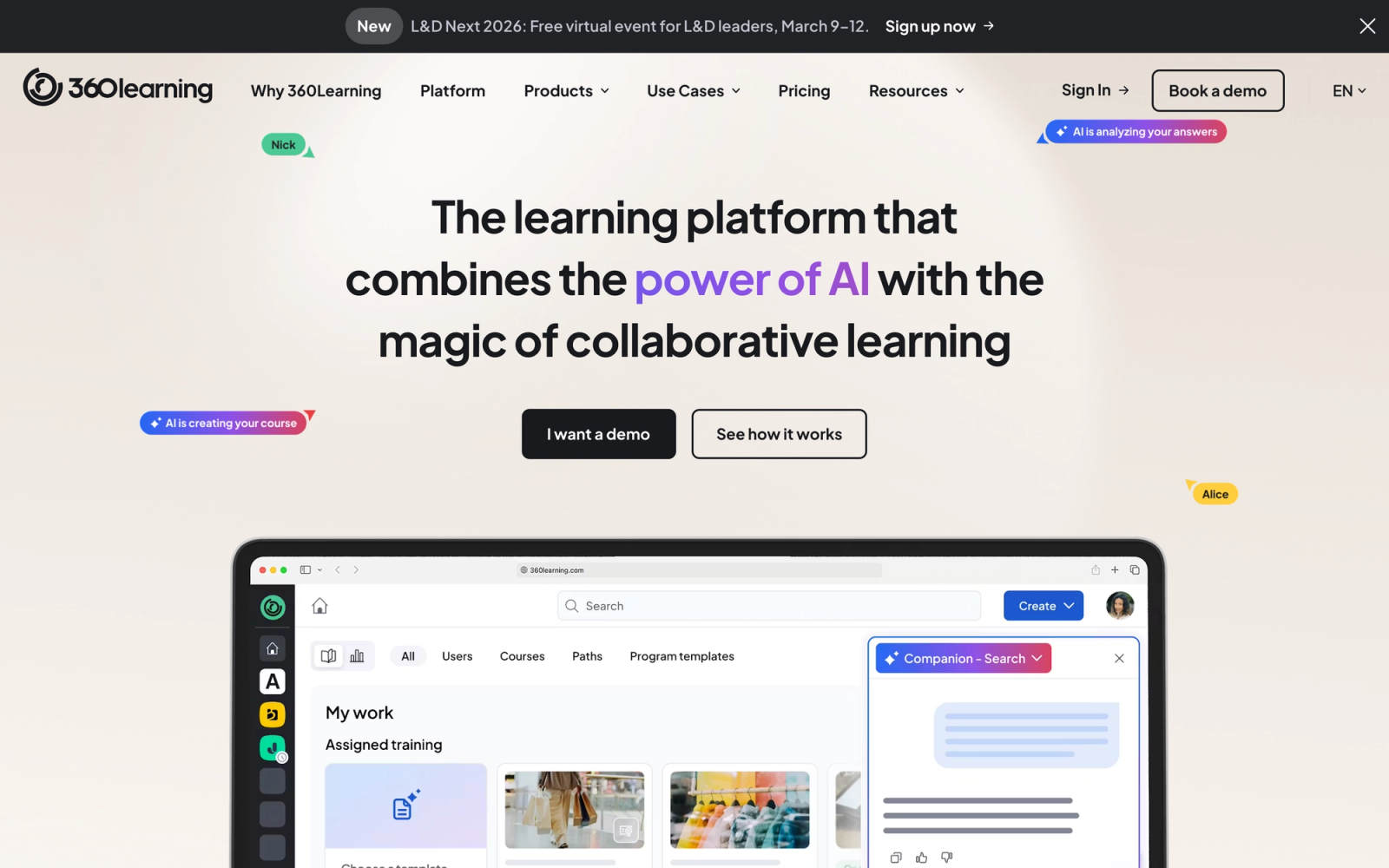
360Learning takes a fundamentally different approach to corporate upskilling. Instead of relying on a top-down content library or external trainers, it builds learning around collaborative authoring and peer input. The platform is designed for organizations that want their internal subject matter experts to create, iterate, and improve training content without needing instructional design skills.
The authoring workflow is fast. Creating a course feels closer to writing a collaborative document than building an e-learning module. The built-in reaction and feedback system lets learners flag outdated content, request clarifications, and suggest improvements, which keeps courses current through organic input rather than scheduled reviews.
Core Capabilities
- Collaborative course authoring with a drag-and-drop editor designed for non-instructional designers
- Reaction-based feedback system where learners can flag relevance issues, request updates, and rate content
- Built-in discussion forums and Q&A threads tied to specific course sections
- Automated learning path creation with prerequisites and skill-based sequencing
- Native integrations with HRIS platforms (Workday, BambooHR, SAP SuccessFactors)
- SCORM and xAPI compliance for importing third-party content
- Manager dashboards with team skill gap visibility and completion tracking
- Mobile-responsive learner experience with offline access
- Compliance training workflows with automated recertification reminders
- API access for custom integrations and data export
Standout Strength
Organizations choose 360Learning because it turns internal expertise into scalable training content. The collaborative authoring model means L&D teams do not have to build everything themselves. Subject matter experts across the organization contribute directly, and the feedback loop keeps content relevant. That is the opposite of Lepaya's model, where content comes from the vendor.
Best For
Mid-to-large enterprises (500+ employees) with distributed subject matter expertise that want to build a culture of internal knowledge sharing. Strong fit for L&D teams that need to scale employee training without growing headcount, and for organizations where technical and operational knowledge lives with frontline experts rather than a central training team.
Pricing Overview
- Starting price: Custom pricing based on number of users
- Pricing model: Per-user monthly subscription
- Free 30-day trial available
Limitations
- The collaborative model requires cultural buy-in. If subject matter experts are not willing to author content, the platform's core value proposition diminishes.
- Pre-built content library is smaller than dedicated content marketplaces like Udemy Business or LinkedIn Learning.
- Advanced reporting requires the higher-tier plan, which increases cost for organizations that need detailed analytics.
Quick Comparison Insight
More flexible than Lepaya for custom content creation, but requires your organization to invest in internal authoring rather than relying on vendor-provided training.
Absorb LMS
Overview
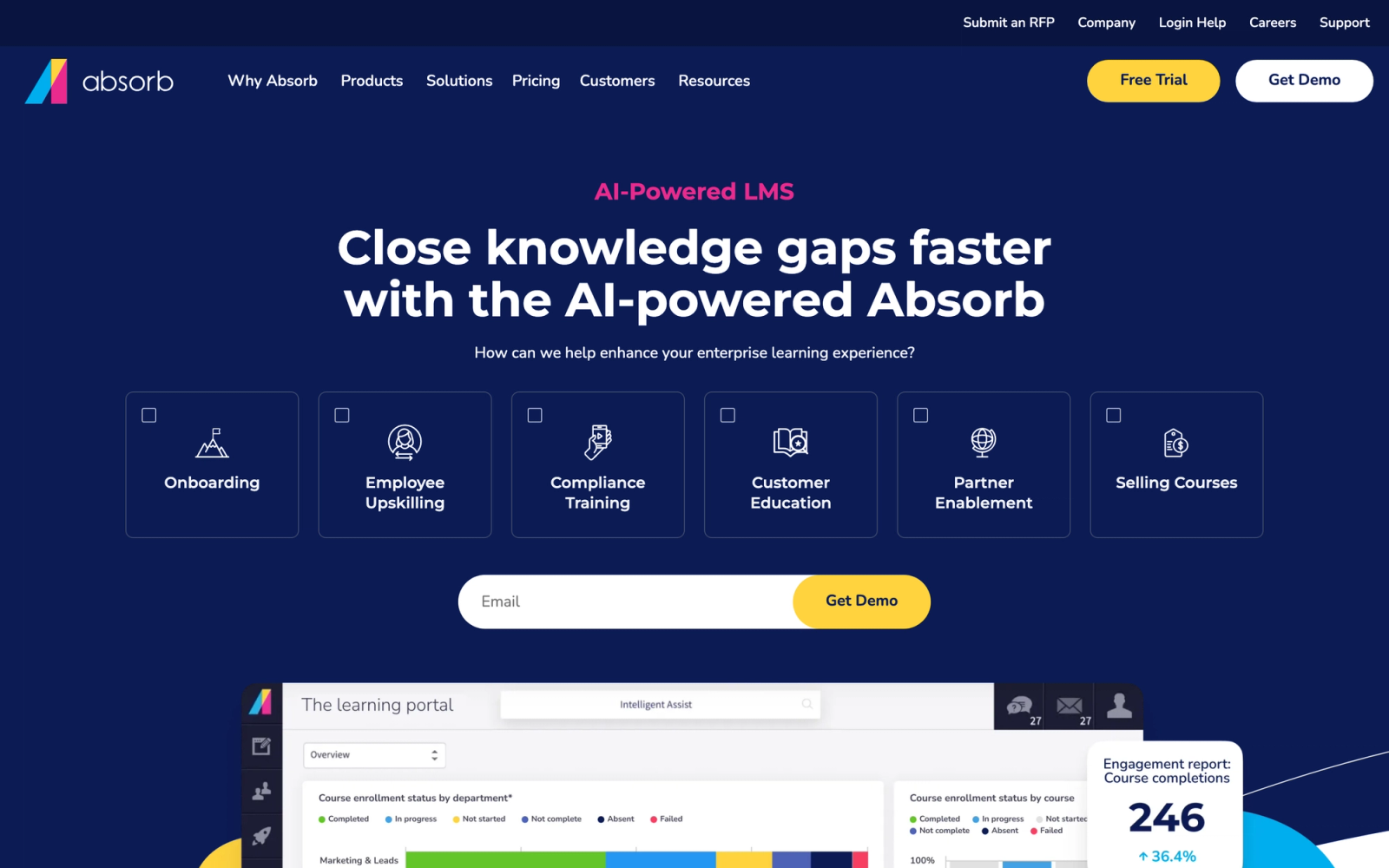
Absorb LMS is a cloud-based learning management system designed for organizations that need strong administrative control, clean reporting, and a polished learner experience. It sits in the mid-to-enterprise market and supports internal employee training, customer education, partner enablement, and compliance programs.
The interface is clean compared to many enterprise LMS products. The learner experience feels modern, and the admin dashboard stays organized without requiring weeks of training to navigate. Absorb positions itself as an LMS that L&D teams actually want to use, not just one that checks enterprise procurement boxes. That usability matters when a platform's value depends on daily adoption by administrators and learners alike.
Core Capabilities
- Intuitive course management with support for SCORM, xAPI, video, documents, and live sessions
- Custom learning paths with conditional enrollment and prerequisite logic
- Built-in ecommerce for selling courses externally
- Compliance training with automated recertification, audit trails, and due date tracking
- Absorb Engage add-on for social learning, messaging, and learner community features
- Absorb Infuse for embedding learning content into other business applications
- Custom reporting with saved templates, scheduled delivery, and visual dashboards
- Multi-tenancy for managing separate learning portals for different audiences
- SSO, SAML, and API support for enterprise integration
- Mobile app with offline content sync and push notifications
Standout Strength
Absorb balances enterprise-grade functionality with an interface that does not feel enterprise-heavy. The combination of strong compliance workflows, custom reporting, and a genuinely usable admin experience makes it a natural choice for L&D teams that have outgrown simpler tools but want to avoid the complexity of platforms like Cornerstone. The ability to also serve external audiences through the same platform, using custom-branded portals, adds versatility that Lepaya's internal-only model does not offer.
Best For
Mid-size to large organizations (500+ employees) that need a full-featured LMS for internal training and optionally customer or partner education. Strong fit for organizations in regulated industries that need compliance tracking, and for companies that want to monetize their training content. L&D teams evaluating an LMS evaluation checklist will find Absorb checks most enterprise requirements without the implementation burden of larger platforms.
Pricing Overview
- Custom pricing based on number of active users and modules selected
- Pricing model: Annual subscription
- Free demo and guided trial available on request
Limitations
- Native content creation is basic. Absorb is a delivery and management platform, not an authoring tool. Most teams pair it with a separate course builder.
- The Engage and Infuse add-ons carry additional cost, which can push total investment above initial expectations.
- Reporting, while strong, requires some configuration time to build the custom views that match your specific KPIs.
Quick Comparison Insight
Absorb provides the LMS infrastructure that Lepaya lacks entirely. If your primary need is administrative control, compliance, and reporting rather than curated content delivery, Absorb fills that gap.
How to Choose the Right Alternative
The right Lepaya alternative depends on which limitation is driving your search. Rather than recommending a single platform, here is how to match your primary need to the right tool.
If you need to create custom training content internally, 360Learning is the strongest option. Its collaborative authoring model lets subject matter experts across your organization contribute directly, without bottlenecking content creation through a central L&D team.
If you need a full LMS with compliance and administrative control, Docebo or Absorb LMS will serve you well. Docebo offers more AI-driven automation and a broader integration stack. Absorb provides a cleaner interface and a faster implementation path. Both give you the learning management layer that Lepaya does not include.
If you need technical skills training, Pluralsight is the clear choice for engineering and IT teams. Udemy Business covers a broader range including both technical and business skills at a lower price point. LinkedIn Learning offers the widest topic coverage but with less depth per course.
If your upskilling strategy is about organizational skill mapping and measurement, Degreed provides the data infrastructure to connect learning activity to skill development across your workforce.
If you need structured leadership or executive development programs, NovoEd is built for high-stakes cohort programs where collaboration and application matter more than content volume.
If you need to integrate learning with talent management and performance reviews, Cornerstone OnDemand provides that end-to-end system, though at a significant investment in cost and implementation time.
If you want to run your own cohort-based programs with full operational control, Teachfloor gives you the infrastructure to build structured, interactive learning experiences without depending on a vendor's curriculum or trainers.
Start with the pain point, not the feature list. Define what is not working with your current approach, and match that gap to the platform that addresses it most directly.
FAQ
Is Lepaya only for soft skills training?
Lepaya's curriculum focuses primarily on what it calls "power skills," which include communication, leadership, resilience, collaboration, and time management. It does not cover technical skills like software development, data analysis, or IT certifications. Organizations that need both soft skills and technical training typically pair Lepaya with a technical learning platform, or replace it with a single platform that covers both domains.
Can I use Lepaya's content independently without their trainers?
Lepaya operates as a managed learning service, not a self-serve content platform. The content is designed to be delivered with Lepaya's own trainers as part of structured programs. You cannot license the content library separately to use with your internal facilitators. If self-serve content access is a priority, platforms like Udemy Business, LinkedIn Learning, or Pluralsight provide that model.
What is the typical cost of switching from Lepaya to an LMS?
The cost varies significantly depending on the platform. Self-serve content libraries like Udemy Business start around $30 per user per month. Full LMS platforms like Docebo and Absorb use custom enterprise pricing that typically starts in the five-figure annual range. Factor in implementation costs, data migration, content creation or licensing, and employee onboarding time on the new platform. The total cost of switching goes beyond the subscription fee.
Do any Lepaya alternatives offer both content and facilitated delivery?
NovoEd supports facilitated cohort programs but with your own facilitators and content rather than vendor-provided ones. Teachfloor provides the operational infrastructure for live, instructor-led cohort programs with built-in collaboration tools. Cornerstone OnDemand can integrate virtual instructor-led training sessions within its learning paths. None of these replicate Lepaya's fully managed model, but they give your team more control over the facilitation process.
Which alternative works best for global teams?
For broad content coverage across languages and regions, LinkedIn Learning and Udemy Business offer the widest geographic reach. Cornerstone OnDemand and Docebo provide multi-language LMS interfaces with localized administration. Degreed aggregates content from global providers, making it effective for multinational organizations with diverse learning needs across regions.


